

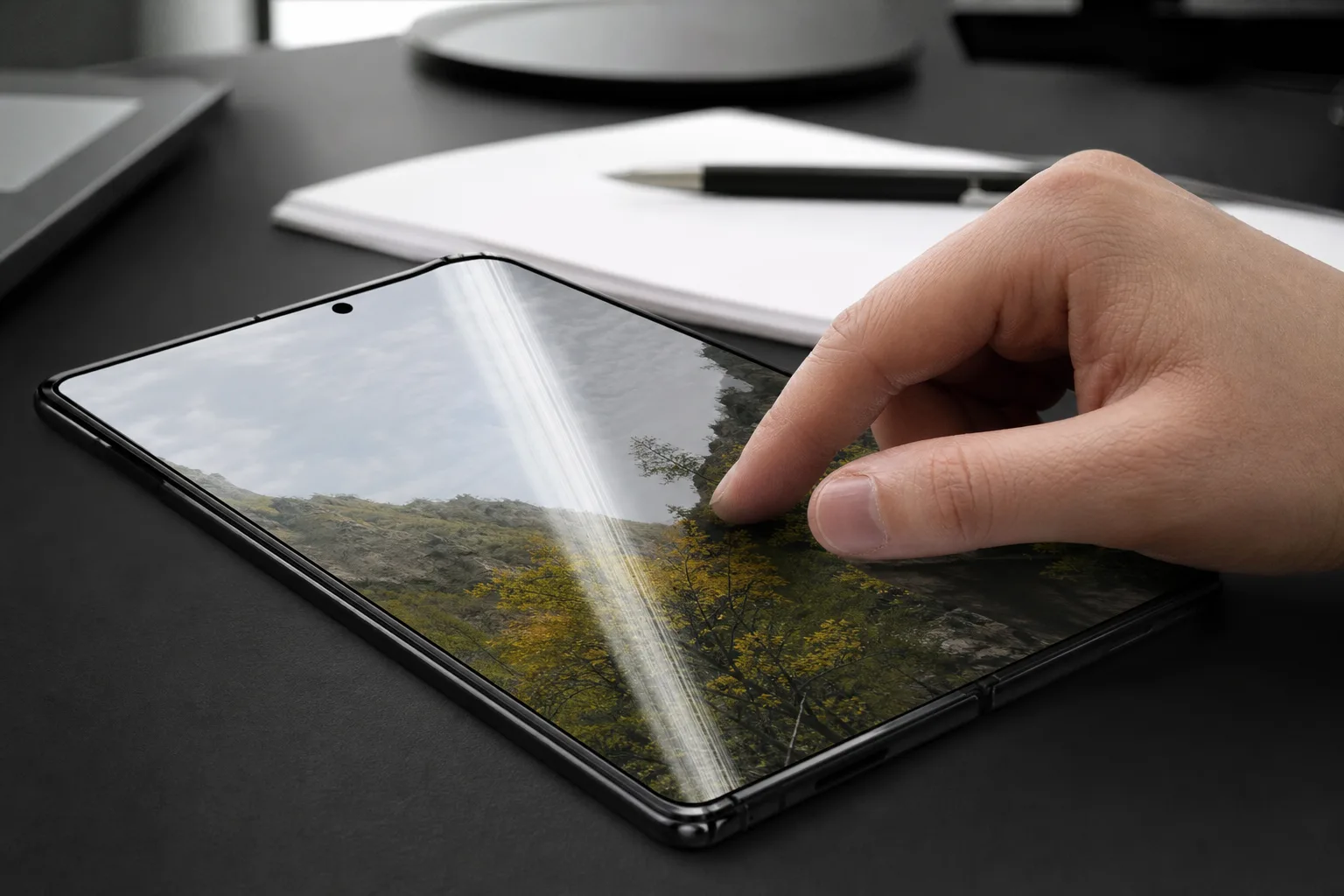
- The Z Fold 8 crease looks more pronounced after several days of folding, particularly when overhead light catches the panel.
- Reports indicate the Z Fold 8 crease remains difficult to feel, separating its visual appearance from the tactile experience.
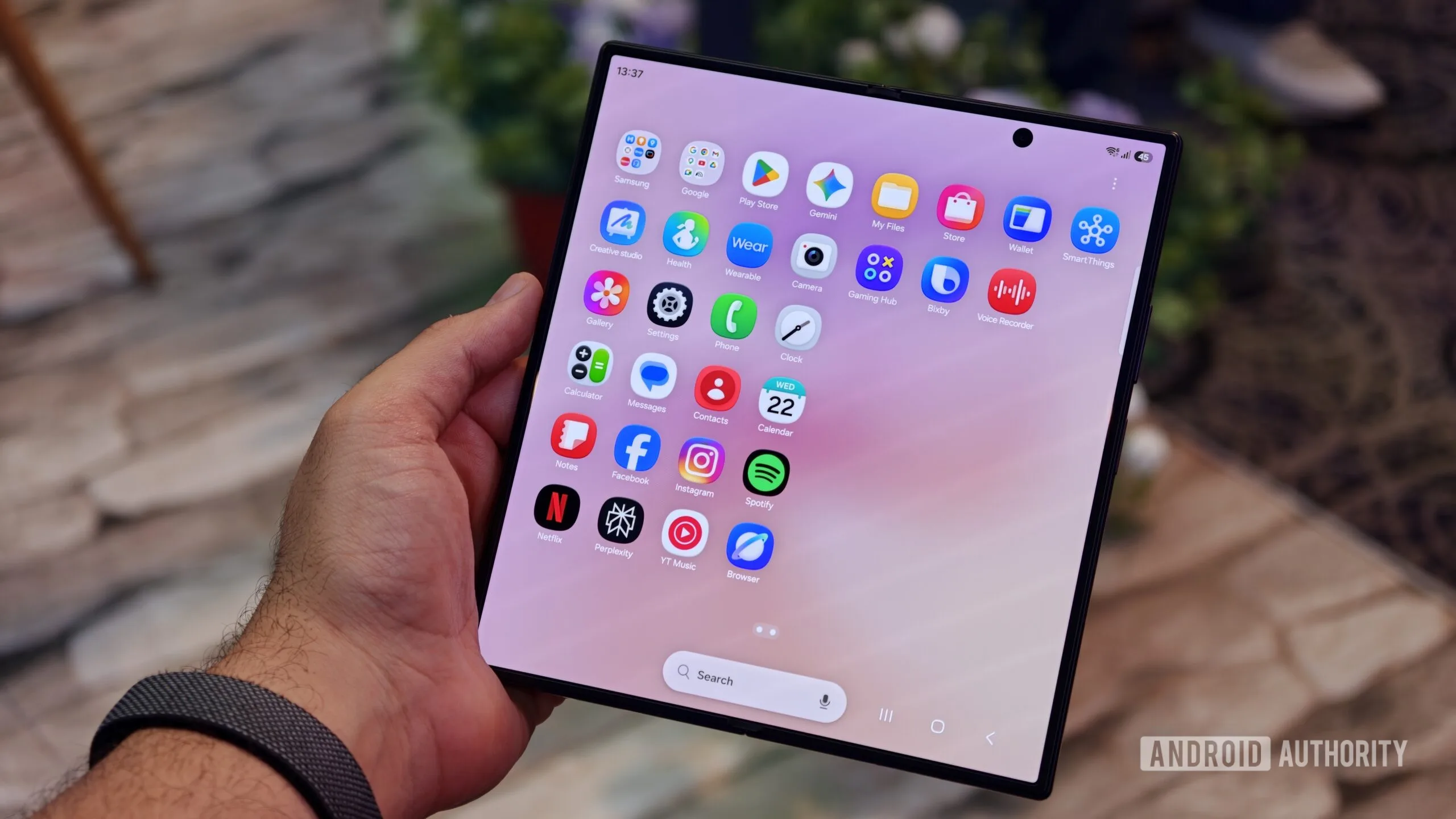
- Samsung’s latest hinge and display construction appear to reduce the old central groove rather than eliminate it permanently.
- Shoppers should inspect retail units in person because foldable-screen impressions are notoriously hard to judge in photographs.
Table of Contents
The Z Fold 8 crease looks different after a week
Samsung has spent years trying to make the foldable-phone crease fade into the background. With the latest models, the company seemed closer than ever. But the Z Fold 8 crease is already prompting a useful reality check: after about a week of regular opening and closing, it can look more obvious than it did on day one.
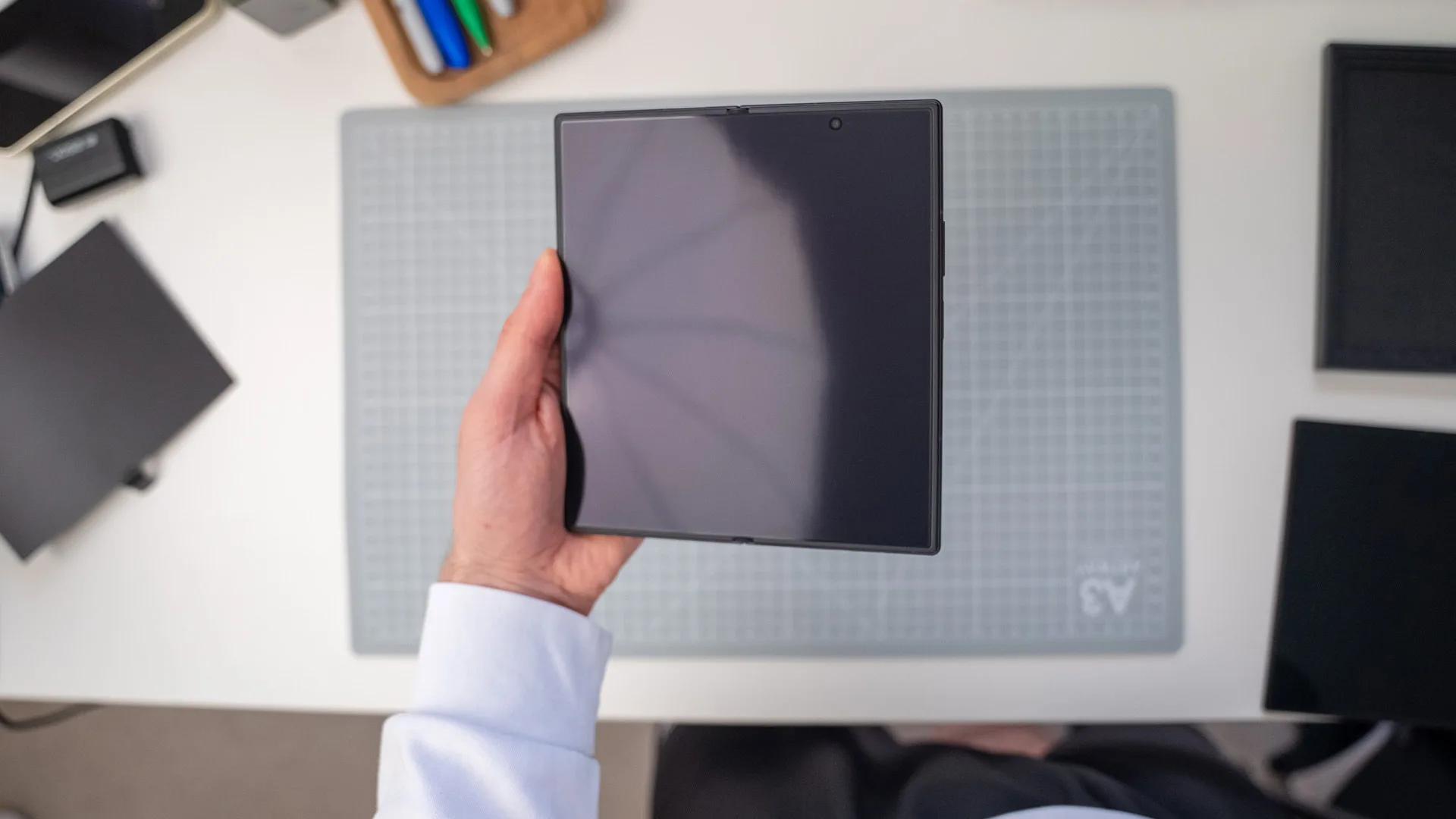
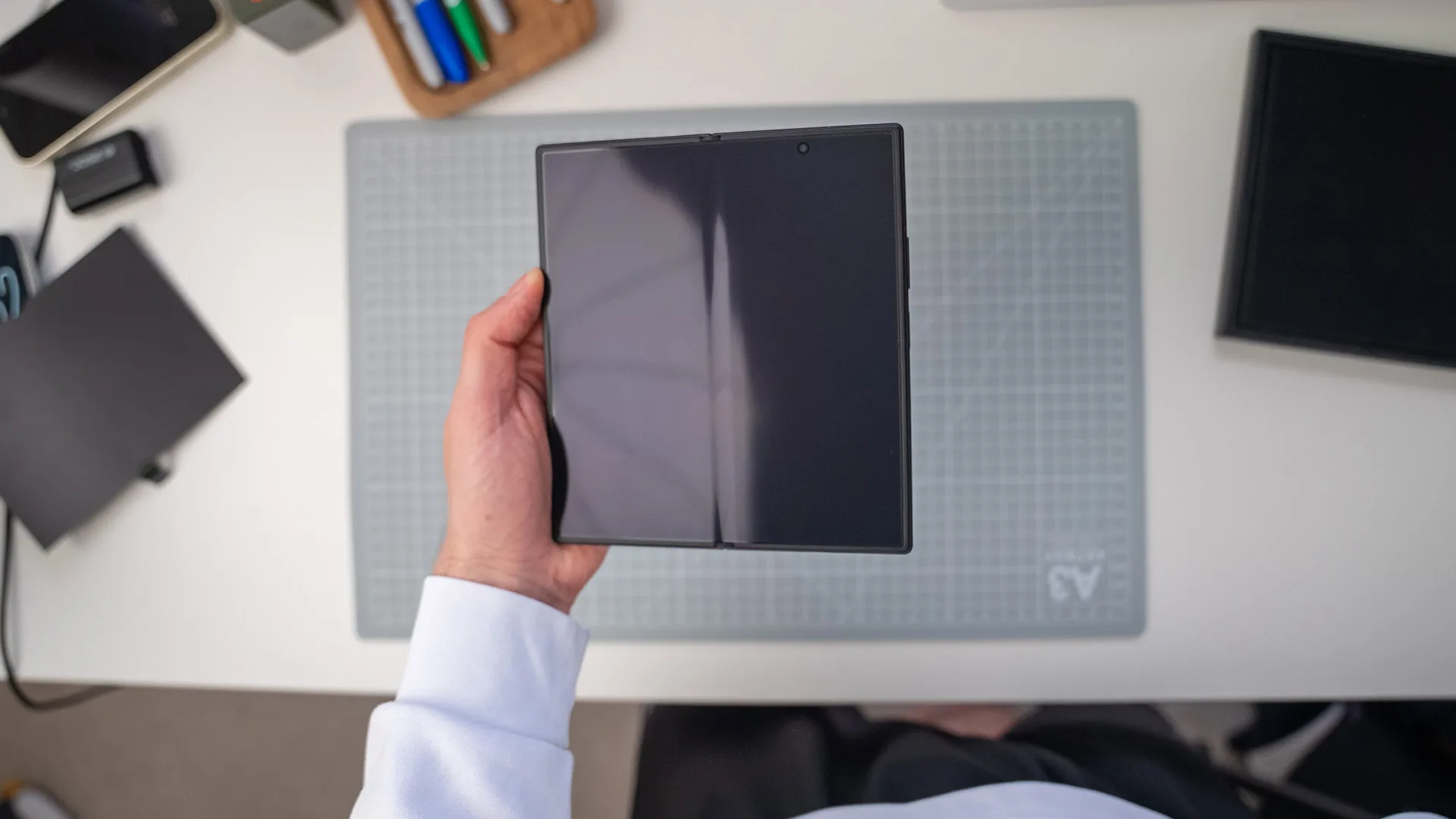
That sounds worse than it appears. Photos shared by users and a week-long comparison published by Android Authority show a line emerging more clearly across the middle of the inner display. Yet the same reporting found that the panel still feels unusually flat under a finger. Samsung may not have eliminated the crease, but it has made it less intrusive in the way that matters most when you are actually using the phone.
That distinction is easy to miss in the online outrage cycle. A photograph taken under a hard ceiling light can make a folded OLED look like it has a trench down the middle. Turn the device slightly, brighten the display, and the effect can shrink dramatically. Foldables are unusually vulnerable to this sort of camera-versus-reality mismatch.
Why the Z Fold 8 crease becomes easier to see
The core mechanics are straightforward. A foldable OLED is a layered sheet of flexible materials repeatedly bending along the same axis. The hinge controls that bend, while the display stack has to absorb thousands of cycles without cracking, delaminating, or becoming unpleasant to touch. Even a very carefully engineered panel retains a memory of that motion.
Samsung has described its newer construction as Flex Titanium, a name that points to a redesigned support structure beneath the panel. The goal is familiar: spread pressure across the fold, soften the bend, and prevent the tactile dip that made early Galaxy Fold models feel like experimental hardware. The Z Fold 8 crease seems to benefit from that work, even if light reveals the contour after the material settles in.
Think of a new leather wallet. It arrives stiff and perfectly shaped; use it for a few days and the folds become visible. That does not mean it has failed. It means the material has started behaving like a thing designed to bend. The analogy only goes so far — a phone deserves much more scrutiny than a wallet — but it helps explain why a visible crease and a damaged screen are not the same diagnosis.
The before-and-after images are still relevant, though. Samsung’s marketing has encouraged buyers to expect an almost invisible fold. When the Z Fold 8 crease becomes easier to spot in a week, the company has to accept that customers will judge the claim literally. “Creaseless” is a dangerous word in a product category where buyers have been trained to inspect the center line first.
Feel matters more than the photos suggest
My read is that the tactile result is the headline here. Previous generations of foldables often had a crease you could both see and feel, especially while scrolling through text or using a stylus. That tiny interruption made the panel feel less like a tablet and more like a clever compromise. If the Z Fold 8 crease stays nearly imperceptible to a fingertip, Samsung has solved a much more meaningful part of the problem.
Android Authority’s hands-on observations make precisely that case: the crease looked more visible after use, but the surface remained as smooth as it had been fresh out of the box. With the screen illuminated, the visual line is also far less distracting than a reflection-heavy close-up would suggest. Anyone who has tried photographing a glossy television panel knows the problem; lighting can turn a minor surface contour into the only thing your eye sees.
A week is not a durability verdict. It tells us how the display settles into normal use, not how it will look after six months in a pocket, a summer in a hot car, or thousands of hinge cycles. Samsung will need longer-term evidence to demonstrate that the Z Fold 8 crease does not deepen materially over time. The history of the category gives consumers every reason to wait for that evidence.
Samsung has improved the compromise, not escaped it
Samsung is hardly alone here. Google’s Pixel Fold line, OnePlus’ Open, and foldables from Honor and Oppo have all tried different hinge geometries and panel stacks to make the middle of the screen disappear. Some have looked flatter at first glance than Samsung’s devices. But any inward-folding phone still asks a flexible display to bend repeatedly. Physics remains annoyingly hard to out-market.
What Samsung has in its favor is scale and experience. The company has kept shipping foldables while rivals have entered, exited, or stayed on the sidelines. Remember when Google killed Stadia? Hardware buyers are right to wonder whether a first-generation bet will receive long-term support. Samsung’s persistence in foldables counts for something, especially around repairs, accessories, and software support. Readers can track the company’s official product announcements through Samsung Newsroom.
Still, a smoother fold is only part of the purchase decision. The Z Fold 8’s wide inner display is appealing for multitasking, reading, and getting real work done without carrying a tablet. But foldables remain expensive devices with more moving parts, a softer inner screen than conventional glass slabs, and repair costs that can make ordinary phone accidents feel like a small tax audit.
What prospective buyers should do now
Don’t cancel a purchase because of a moody photo. But don’t buy on the promise of a magically permanent blank canvas either. The Z Fold 8 crease appears to be a visual compromise that becomes somewhat more apparent with early use, while remaining far less noticeable to the touch than older designs.
That makes an in-store visit unusually valuable. Open the phone, tilt it under the shop lights, scroll through a white webpage, then run a finger across the center. Those are the tests product renders cannot provide. If the line bothers you in those conditions, it will bother you at home. If it fades into the background, Samsung may have finally pushed the crease from daily annoyance to occasional reminder that your phone folds in half — and frankly, that is progress, even if the word “creaseless” still gets ahead of the engineering.

