- The iPhone 18 release may put Apple’s Pro phones and first foldable model on shelves in fall 2026.
- A second iPhone 18 release wave could bring the standard model, iPhone 18e, and iPhone Air 2 in spring 2027.
- Component costs and tight memory supply could push iPhone 18 Pro pricing up by an estimated $100 to $300.
- Apple’s rumored foldable could cost $2,000 or more while replacing Face ID with Touch ID.
Table of Contents
The iPhone 18 release may break Apple’s September habit
Apple’s autumn iPhone event has become one of consumer tech’s few remaining calendar fixtures. You know the routine: leaks all summer, polished videos in September, preorders before the leaves have fully turned. But the rumored iPhone 18 release schedule would mess with that muscle memory in a meaningful way. Rather than unveil the whole family at once, Apple may reserve fall 2026 for its premium devices and wait until spring 2027 for the mainstream iPhone 18.
That would mean the iPhone 18 Pro, iPhone 18 Pro Max, and Apple’s long-rumored folding phone arrive first. The ordinary iPhone 18, a lower-cost iPhone 18e, and a second-generation iPhone Air could follow roughly six months later. Apple hasn’t confirmed any of this, and its product roadmap can change late in the process. Even so, the split makes more sense than it might seem.
Apple has spent years widening the gap between its base iPhones and the Pro tier. A split iPhone 18 release would formalize that divide: the fall becomes a showcase for people willing to pay for the newest silicon, cameras, and unusual form factors; spring becomes the moment for everyone else.
There’s a business case, too. The iPhone remains Apple’s largest revenue engine, but concentrating almost every model launch into one quarter creates a giant annual spike followed by a long wait. A spring refresh could smooth demand, give carriers a second promotional moment, and stop the standard model from feeling like the understudy at its own launch. Samsung already spreads its Galaxy S and foldable announcements across the year. Apple may simply be admitting that one September show can no longer carry an increasingly messy product family.
Fall 2026 could belong to the Pros and the foldable
The premium half of the rumored iPhone 18 release centers on familiar names at first. The iPhone 18 Pro and Pro Max are expected to retain broadly similar industrial designs to their iPhone 17-era predecessors, with a smaller Dynamic Island among the likely visual changes. Both could move to Apple’s A20 processor, reportedly manufactured on a 2nm process. In plain English: more performance and better power efficiency, assuming the manufacturing yields cooperate.
The more interesting camera rumor is a variable-aperture main lens. That hardware would let the camera physically alter how much light it takes in, rather than relying solely on computational processing. Proper cameras have done this forever; phones usually fake the effect with software because space is tight. If Apple can make it work without a bulky camera bump, users could get greater control over low-light shots and depth of field. The catch is that early reporting is less clear on whether the feature lands on both Pro phones or stays exclusive to the Pro Max.
Speaking of the Max, it may become slightly thicker to accommodate a larger battery. That’s a trade I’d take without hesitation. The industry’s obsession with shaving fractions of a millimeter off high-end phones has often produced the kind of battery anxiety nobody enjoys. A flagship should survive a hard day, not merely photograph one beautifully.
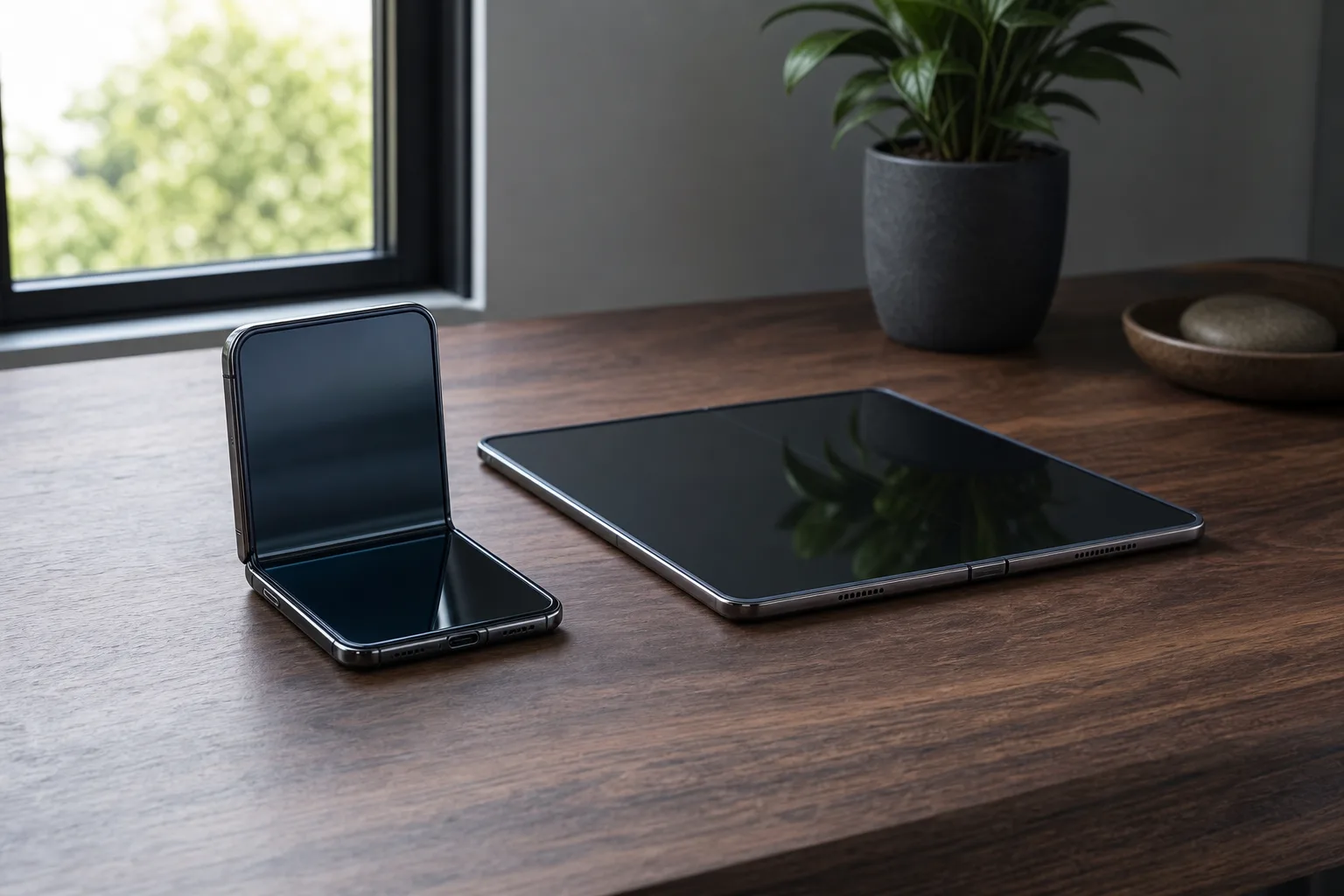
Then there’s the foldable, perhaps branded as an iPhone Ultra. Reports point to an outer display around 5.5 inches and an inner screen near 7.8 inches, effectively turning the open device into a compact tablet. That puts it closer to an iPad mini-shaped workspace than a novelty flip phone. Apple may pair that larger canvas with new multitasking features, while using Touch ID instead of Face ID and limiting the rear system to two cameras.
Those specifications reveal Apple’s likely priorities. A foldable iPhone wouldn’t be trying to win a camera-spec sheet war; it would sell the promise of carrying a phone and small tablet in one pocketable object. Samsung has spent years proving there’s a market for that idea, even if the category remains expensive and a little fragile around the edges. Apple’s contribution, if it arrives, will be judged ruthlessly on the crease, durability, software polish, and whether iPad-style multitasking feels natural on iOS.
The iPhone 18 release may come with a painful price reset
The bad news is that the premium iPhone 18 release may also bring higher prices. Reports have tied possible increases to rising DRAM costs, with estimates ranging from $100 to $300 for the Pro models. Apple can negotiate aggressively with suppliers, and it may recover some ground through display or other component pricing. But memory is not optional, and the company has already shown a willingness to adjust prices elsewhere when its costs rise.
That makes a starting price above the current Pro range plausible, though not guaranteed. The folding iPhone is in a different universe altogether: expectations put it somewhere around $2,000 to $2,500. Frankly, that sounds less like a phone purchase and more like buying a laptop with a cellular plan attached. Apple will need a clear answer to the obvious question: why not buy an iPhone and an iPad separately?
A pricey foldable could, however, give Apple room to position the iPhone 18 Pro as comparatively reasonable. It’s an old retail trick. Put a $2,300 option on the shelf and a $1,300 phone suddenly looks almost restrained.
Spring 2027 may reshape the standard iPhone lineup
The second wave of the rumored iPhone 18 release is where Apple’s lineup could get genuinely complicated. The standard iPhone 18 is expected to receive an A20 chip, more memory, a smaller Dynamic Island, and Apple’s C2 cellular modem. Apple has been gradually working to reduce its reliance on Qualcomm modems, a difficult transition with major technical and financial stakes. That is not a switch Apple can flip without consequences.
Yet the standard model may also make compromises, potentially including a less ambitious display and more shared parts with the iPhone 18e. That could be smart if it keeps the entry price stable. It could be a problem if the regular phone starts feeling deliberately hobbled. Nobody likes buying a new device and immediately seeing the corners where a company saved money.

The iPhone 18e is expected to continue Apple’s newer affordable-phone strategy with updated silicon and 9GB of memory. Meanwhile, the iPhone Air 2 could fix the biggest complaint surrounding a thin, style-first handset: value. A second rear camera, likely an ultra-wide, and a larger battery would make it easier to recommend to people who want something lighter without giving up basic flagship expectations.
My read is that the iPhone 18 release split is less about novelty than control. Apple has too many iPhone identities now: budget-minded, mainstream, Pro, Max, Air, and potentially foldable. Separating them gives each model oxygen. It also sets up fall 2027 rather neatly, when persistent reports suggest Apple could mark the iPhone’s 20th anniversary with another high-end device. Whether customers embrace two iPhone seasons a year is the real test. Apple may be changing a tradition because the old one has finally become too crowded to scale.
Frequently Asked Questions
When is the iPhone 18 release expected?
Current reporting points to a split schedule. Apple could introduce the iPhone 18 Pro, iPhone 18 Pro Max, and a foldable iPhone in fall 2026, then follow with the standard iPhone 18, iPhone 18e, and iPhone Air 2 in spring 2027. Apple has not confirmed these plans.
Why would Apple split its iPhone launches?
Apple could stick with the split schedule because it would better spread iPhone sales throughout the year.
How much could the iPhone 18 Pro cost?
Analyst estimates cited in current rumor reporting put a potential increase at roughly $100 to $300 over the prior Pro models. Higher memory costs appear to be the main factor, though Apple could offset part of that increase through component deals elsewhere in the supply chain.
Will Apple’s foldable iPhone have Face ID?
The rumored foldable is expected to use Touch ID rather than Face ID.