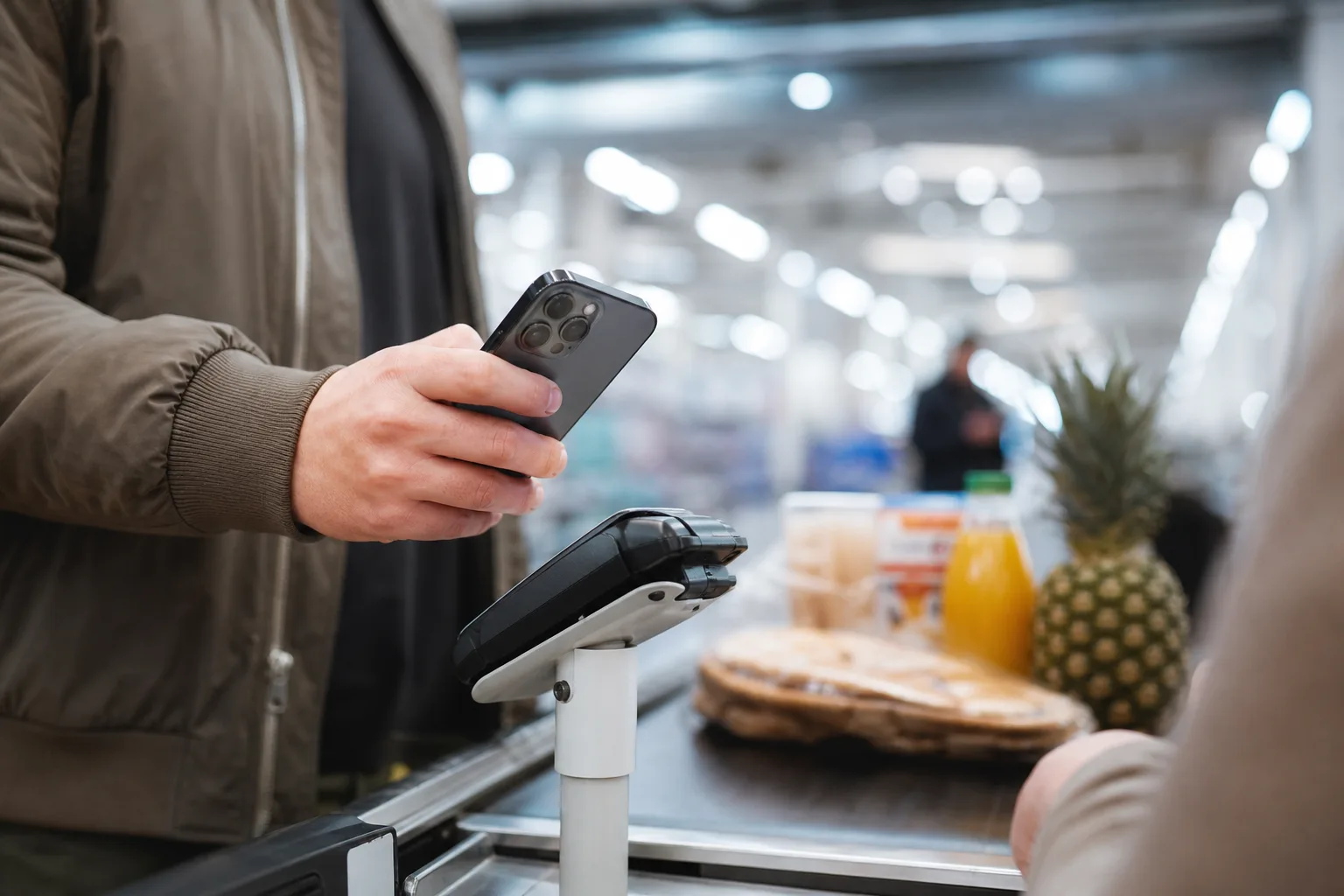
- Apple Pay at Walmart ends the retailer’s unusually long resistance to the contactless checkout standard used across most major chains.
- Apple Pay at Walmart offers a quicker, more familiar checkout flow than opening Walmart’s app and navigating its QR-code payment screen.
- Walmart Pay remains valuable to the retailer because it connects purchases, digital receipts, loyalty incentives, and customer data.
- Walmart may need meaningful savings or exclusive perks if it wants shoppers to choose its own payment system over a simple tap.
Table of Contents
Apple Pay at Walmart finally catches up with the checkout counter
Apple Pay at Walmart is happening at last, alongside Google Pay, contactless cards, and other NFC-based payment options. For shoppers, this is less a dramatic retail reinvention than the removal of an oddly persistent annoyance: one of America’s biggest stores had made paying by phone harder than it needed to be.
Walmart had long steered customers toward Walmart Pay, its app-based system that asks users to pull up a QR code rather than simply tap a phone or watch at the terminal. That approach made sense on a corporate spreadsheet. At the register, though, it often felt like being asked to use a library card catalogue when everyone else has search.
Walmart says contactless payments are joining its existing methods, including cash, cards, and Walmart Pay. That phrasing matters. Walmart hasn’t abandoned its homegrown option; it has finally accepted that shoppers expect the payment tools already sitting in their pockets.
For years, the company was perhaps the most conspicuous holdout in a US retail market where tap-to-pay has become routine. Industry estimates cited in reporting put contactless acceptance at roughly 85% of American retailers. Plenty of smaller merchants got there first. Walmart, with its enormous store footprint and technology budget, took its time.
Why Apple Pay at Walmart is a real usability win
The appeal is brutally simple. Tap your iPhone, Apple Watch, Android phone, or contactless card; authenticate if needed; move on. Apple Pay at Walmart replaces an awkward series of app taps and camera scans with a gesture that typically takes seconds.
That consistency is the bigger deal. Walmart Pay has worked, but it has never felt especially dependable from a user-experience standpoint. The relevant button has shifted around the Walmart app over time, and scanning the code at a checkout terminal can lead shoppers into the app rather than directly to payment. Anyone who has fumbled through this while a line gathers behind them knows the feeling.
Contactless payments also bring a security advantage that gets lost in the convenience pitch. Digital wallets generally use tokenization: the merchant receives a transaction-specific token instead of the actual card number. If a retailer’s systems are compromised, that token is far less useful to an attacker than a reusable account number. Apple explains the model in the source, and it is one reason mobile wallets have become normal rather than niche.
There’s a mundane benefit, too. People increasingly leave home with a phone and perhaps a watch, not a wallet thick with cards. The checkout system should fit that behavior. Asking them to install, sign into, and navigate a retailer-specific app just to buy detergent was always a high-friction ask.
Walmart Pay still has a job to do
Don’t mistake Apple Pay at Walmart for a full surrender. Walmart Pay gives the company something Apple and Google cannot: a direct relationship with the transaction and the shopper’s broader Walmart account. It can pair digital receipts with purchase histories, membership benefits, personalized offers, and reminders to buy the same household staples again.
That data is not a side project. Walmart has built a sprawling retail-media business around its ability to connect advertising with what people actually purchase. A payment method tied tightly to its app can feed that machine, while also making it easier to push pickup orders, delivery subscriptions, pharmacy services, and Walmart+ benefits.
There’s also the fee question. Wallet payments still ultimately ride card networks, but retailers have historically bristled at the economics and platform control associated with third-party payment systems. For a company selling billions of dollars in goods annually, even small per-transaction costs get management’s attention.
Walmart Pay also reduces paper receipts and, at participating fuel stations, supports discounts such as the company’s extra three cents per gallon for app users. Those incentives are modest, yet they show the likely path ahead: Walmart won’t win customers back to QR codes because QR codes are charming. It will need to make the choice financially useful.
The retailer now has to make its own wallet worth the bother
My read is that most shoppers will choose the least complicated option once Apple Pay at Walmart reaches their local store. Tap-to-pay is already familiar, fast, and available on devices they use everywhere else. The QR-code workflow is competing against muscle memory, which is a hard thing to beat.
Walmart could change that equation with a clear reward: an instant basket discount, stronger Walmart Cash offers, faster returns, or member-only fuel pricing. A one percent discount on eligible purchases would get people’s attention far more effectively than another prompt to open an app. In an era when grocery bills remain painfully visible, a few dollars saved at checkout carries more weight than brand loyalty.
For now, Apple Pay at Walmart is a victory for basic customer choice, and frankly it should have arrived sooner. The more interesting question is whether Walmart turns its payment app into a genuinely rewarding commerce tool—or lets it become a relic of the QR-code phase of retail, filed somewhere next to cashierless-store hype and the memory of Google killing Stadia.