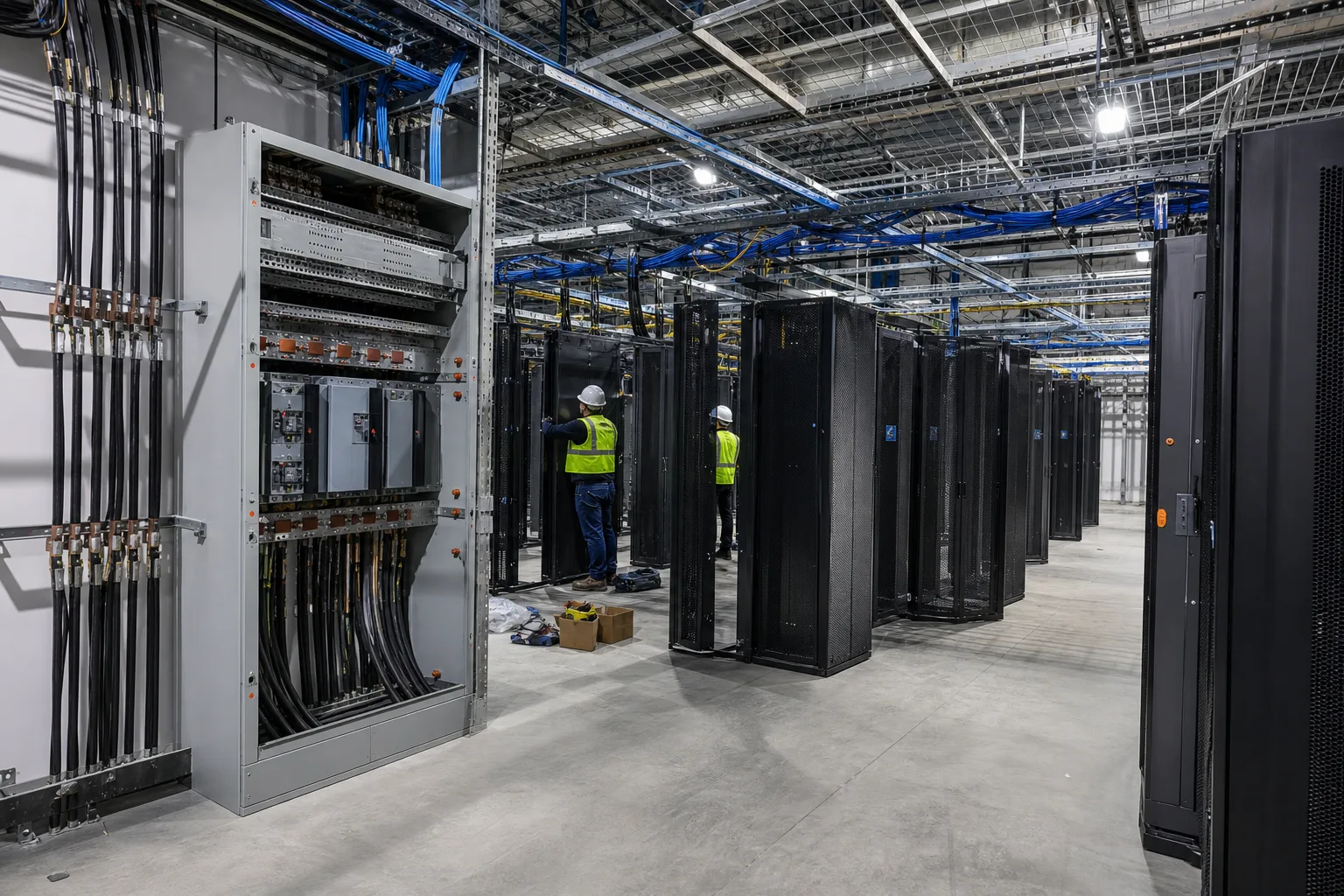
- The Nvidia Cloverleaf partnership gives the chipmaker a minority stake in a developer that prepares power-ready data center sites.
- The Nvidia Cloverleaf partnership shows Nvidia is helping finance the physical infrastructure required to keep AI hardware orders moving.
- Cloverleaf Infrastructure raised $300 million after its 2024 founding and works between utilities, land developers and data center operators.
- Nvidia also committed $1.5 billion to SB Energy’s OpenAI-linked Ohio data center project, another sign that it is moving deeper into infrastructure.
Table of Contents
Nvidia Cloverleaf partnership puts power at the center of AI
AI’s real bottleneck may not be chips anymore. It may be electricity. The Nvidia Cloverleaf partnership is a pretty blunt acknowledgement of that fact: Nvidia is reportedly taking a minority stake in a young infrastructure developer that helps turn prospective data center sites into places where enormous AI clusters can actually be built.
Cloverleaf Infrastructure sits in the decidedly unglamorous but suddenly essential layer between utilities and data center operators. Founded in 2024, the company helps arrange power sources and other site-development basics. That may sound mundane beside racks of Blackwell GPUs and Jensen Huang keynotes, but it’s where plenty of AI projects now get stuck. You can order all the accelerators you want; without transmission capacity, substations, permits and a credible plan for megawatts of power, you have an expensive warehouse full of delayed ambition.
The companies did not disclose financial terms. The Wall Street Journal reported that Nvidia’s investment could reach several hundred million dollars, while Reuters reported that Nvidia now holds a minority stake. Cloverleaf had already raised $300 million in 2024, an eye-catching sum for a company working on the infrastructure plumbing behind the data center boom.
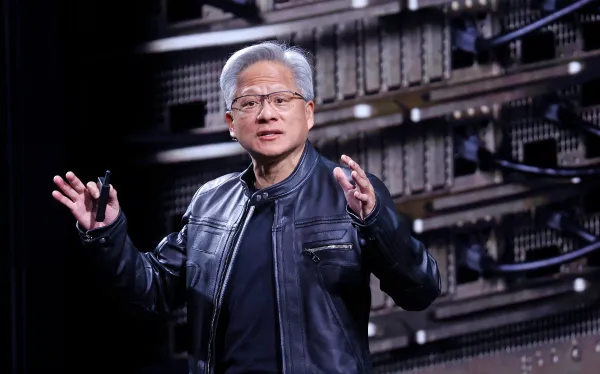
My read is that Nvidia is no longer content to be the company waiting at the end of the supply chain for an order. It wants to help clear the path that makes those orders possible. That’s logical business strategy, even if it should make customers, regulators and investors pay closer attention to how circular this AI spending cycle is becoming.
Why the Nvidia Cloverleaf partnership matters more than another investment
Nvidia’s core business remains selling the computing systems that train and run large AI models. But demand for those systems depends on customers building data centers at a speed that would have seemed absurd only a few years ago. The snag is that modern AI facilities can draw electricity on the scale of small cities. Utility interconnections can take years. New transmission is slow, politically contentious and breathtakingly expensive. Local communities are increasingly asking hard questions about water use, grid reliability and whether their power bills will rise.
That puts companies such as Cloverleaf in a valuable position. They are not merely finding a patch of land and calling it a campus. The useful work is identifying sites with viable power access, coordinating with utilities and building the foundation on which data center owners can move faster. In a market where time to power may matter as much as chip availability, that’s a scarce capability.
The Nvidia Cloverleaf partnership follows a wider pattern. Nvidia has used its enormous financial strength to invest across the AI stack: cloud providers, model makers, startups and now the physical systems surrounding them. Earlier this week, Nvidia said it would invest $1.5 billion in SB Energy, which is developing an OpenAI-linked data center project in Ohio. Taken together, those moves look less like isolated venture bets and more like an effort to keep the AI construction pipeline from seizing up.
There’s a practical reason for that urgency. Nvidia can produce more capable chips, and server builders can assemble more systems, but neither solves a utility’s queue for a grid connection. The company’s own data center business is ultimately tethered to construction schedules and power contracts that it historically had little reason to influence. Now it does.
There is a flywheel here, and it deserves scrutiny
Calling the Nvidia Cloverleaf partnership strategic is accurate, but a little too polite. Nvidia is putting capital into the conditions that create future demand for Nvidia equipment. Its investments can help a developer secure financing, attract partners and move a project toward groundbreaking. Once a data center is built, it will very likely need a mountain of GPUs and networking gear. Nvidia gains twice: as an investor in the ecosystem and as the supplier to the finished facility.
That is not inherently improper. Intel, Microsoft, Amazon and Google have all made investments meant to secure key parts of their supply chains, while hyperscalers have spent years buying renewable generation and building bespoke infrastructure. AI has simply made the stakes much larger and the timeline much tighter. Nvidia’s unusual position is that it has become the industry’s most important supplier while also accumulating the cash to influence where new capacity gets built.
Frankly, this is where the story gets complicated. A minority stake does not mean Nvidia controls Cloverleaf, and there is no public indication that the developer will work exclusively with Nvidia. Still, when the dominant seller of AI compute finances the people preparing future compute sites, competitors could reasonably wonder whether the best opportunities will tilt toward Nvidia-centric projects. Antitrust concerns may not be immediate, but the direction of travel is obvious enough to watch.
Power availability could decide the next phase of AI
The Nvidia Cloverleaf partnership also tells us something less flattering about the AI industry’s current rhetoric. For all the chatter about models getting smarter, the near-term contest is brutally physical: turbines, gas contracts, solar farms, batteries, substations, fiber routes, cooling equipment and land with a grid connection. It’s industrial policy in a hoodie.
There is also a real possibility that the projected AI demand outruns itself. Data center plans are announced long before every tenant, power purchase agreement or financing condition is locked down. Some projects will be delayed, resized or abandoned. Remember the rush to build crypto mining capacity before prices crashed? AI demand has far stronger corporate backing and broader uses, but infrastructure spending is still vulnerable when expectations get ahead of cash flow.
For now, Nvidia is behaving as if the buildout will continue and as if power constraints are the clearest threat to it. If that bet holds, the Nvidia Cloverleaf partnership could look like a shrewd early move into AI’s least glamorous choke point. If it doesn’t, Nvidia will have helped finance a lot of very expensive concrete before the industry figured out how much compute the world truly needs.