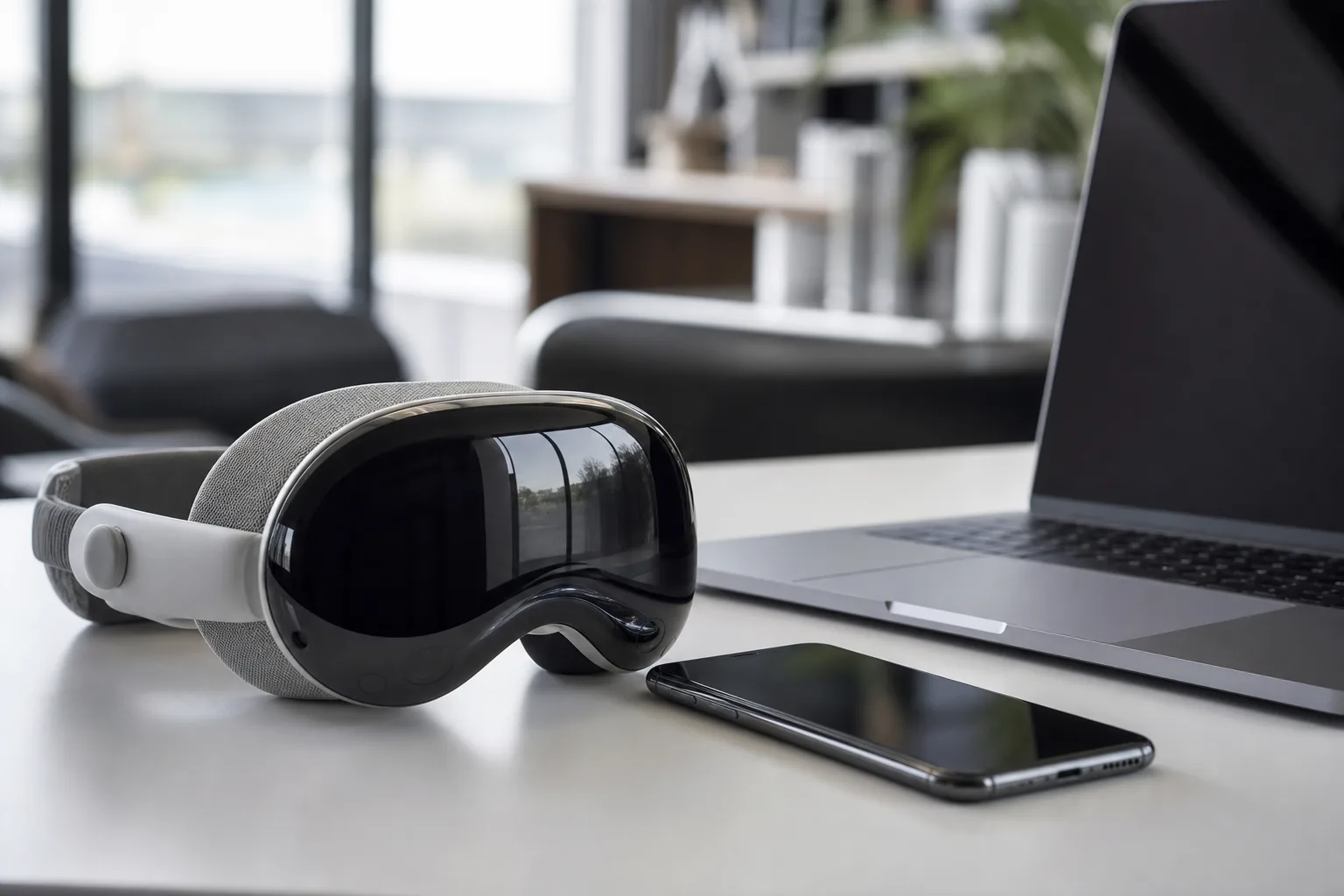
- Apple Vision Pro layoffs reportedly cut roughly 100 headset roles, largely affecting teams responsible for games and immersive video.
- The Apple Vision Pro layoffs arrive as the company shifts investment from an expensive headset experiment toward lighter smart glasses.
- Another reported 100 cuts affect legacy Siri and software teams as Apple rebuilds its assistant around large language models.
- Apple says affected employees can seek other company roles, while Vision Pro and visionOS development are expected to continue.
Table of Contents
Apple Vision Pro layoffs reveal where Apple is placing its bets
The reported Apple Vision Pro layoffs are not huge by Big Tech standards. Roughly 200 jobs at a company Apple’s size barely register as a mass reduction. But the placement of those cuts tells a much bigger story: Apple appears to be trimming two expensive bets from the recent past — premium mixed reality entertainment and the old Siri — while redirecting its people toward AI and smart glasses.
According to Bloomberg’s Mark Gurman, about 100 workers were cut from Vision Pro-related teams, with gaming and immersive video among the areas hit hardest. Another roughly 100 roles were eliminated across Siri and software groups, reportedly concentrated in work tied to the older version of Apple’s voice assistant.
Apple confirmed a reorganization, though it did not publicly verify the reported number. “While we will create new roles as part of this change, it will also impact a limited number of existing roles,” the company said. It added that affected staff would receive transition support and opportunities to apply for other roles internally.
That’s standard corporate language, of course. Yet the message underneath it is fairly plain: Apple is changing the product mix, and some work that looked strategic a year ago no longer fits the plan.
Why immersive video and gaming were vulnerable
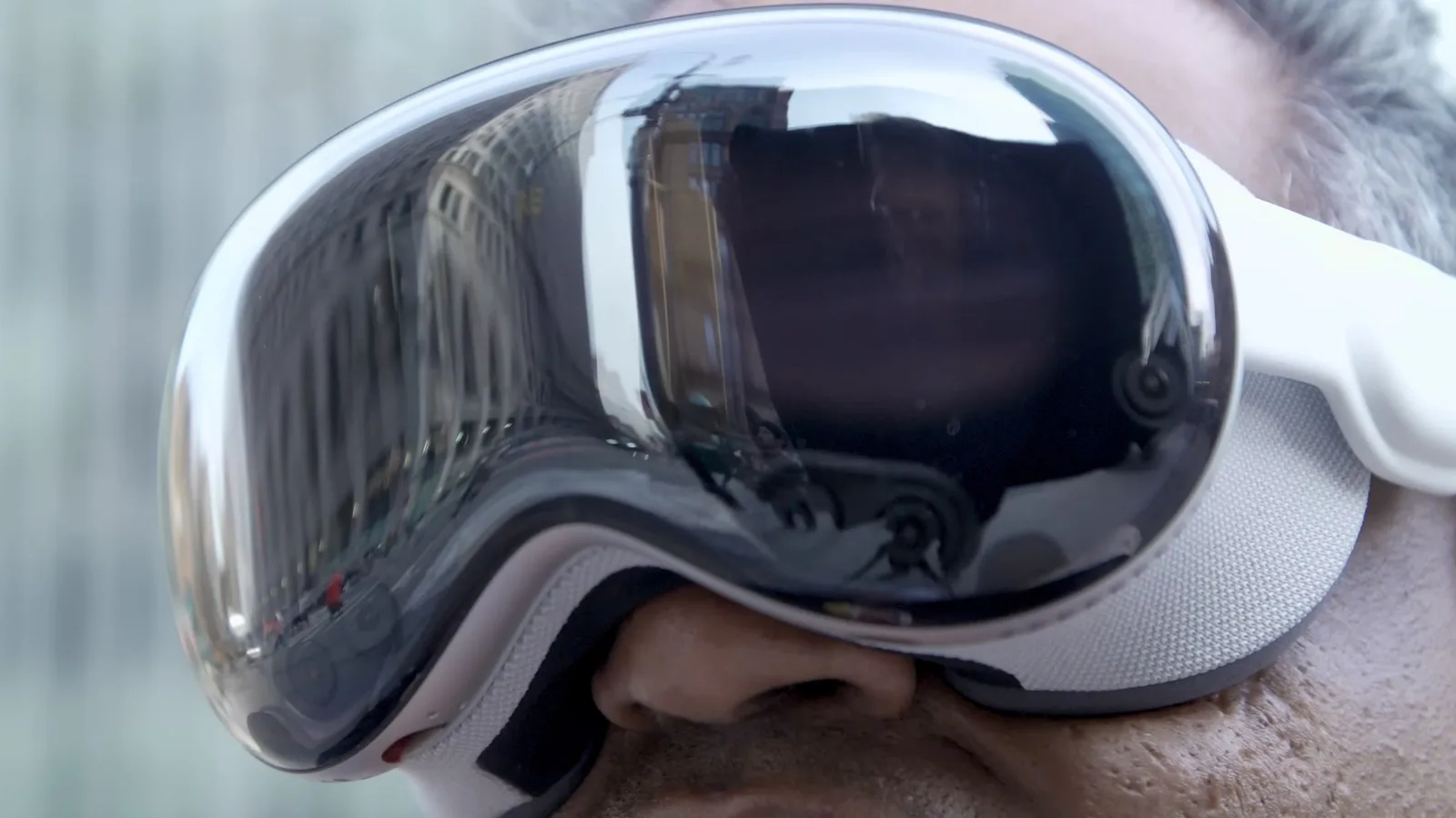
The Apple Vision Pro layoffs land on the teams working on features Apple used to sell the headset’s magic. At launch, immersive video was the showpiece: sports clips, cinematic short films and 180-degree footage designed to make a viewer feel physically inside a scene. Gaming, meanwhile, represented the obvious argument that a spatial computer could be more than a very pricey personal cinema.
Both ideas run into the same stubborn problem: the Vision Pro audience is tiny. At $3,699 in the US, Apple’s headset was never built for mass adoption in its first generation, despite the company’s insistence that it marked the start of a new computing era. The hardware is technically remarkable. It is also heavy, isolating and difficult to justify for most people who already own a TV, laptop, iPhone and perhaps a much cheaper Quest headset.
Immersive video is particularly expensive to produce because it requires specialized cameras, deliberate editing and distribution for a limited installed base. Uploading another episode to a streaming service is one thing; producing this kind of content is closer to building a bespoke attraction for a theme park with a small daily attendance. My read is that Apple has concluded the economics don’t work yet.
That does not mean the Vision Pro is dead. Gurman reports that Apple has told employees its visionOS platform and headset work will continue, and a new model could arrive as early as 2028. But the Apple Vision Pro layoffs suggest the device is moving from a heavily promoted growth project to a longer-term research and developer platform. Apple can keep the lights on without paying to commission a steady pipeline of lavish immersive programming.
Anyone who remembers the years after the Apple Watch launch will recognize the pattern. Apple has patience when it believes a product category matters, but it will ruthlessly narrow the work until the market catches up. The difference is that the Watch quickly found a practical purpose in health and fitness. Vision Pro is still searching for its everyday reason to exist.
Siri’s old architecture is becoming a liability
The Siri side of this restructuring may matter more than the headset cuts. The reported Apple Vision Pro layoffs coincide with Apple’s push to replace its older assistant framework with a system built around generative AI and large language models. That transition needs different skills: model training, AI infrastructure, evaluation, safety work and the engineering required to make an assistant act across apps without causing chaos.
Siri has been an awkward symbol of Apple’s AI problem for years. It was early to voice assistants, then watched Amazon Alexa and Google Assistant race ahead in flexibility. More recently, ChatGPT made the gap feel almost embarrassing. Asking Siri for a simple timer works fine. Asking it to interpret a complicated request, maintain context or perform a multi-step task has too often felt like arguing with an automated phone tree.
Apple’s current answer is Apple Intelligence, its umbrella for AI features across iPhone, iPad, Mac and other products. The company’s official Apple Intelligence page promises a more capable Siri with richer personal context and actions across apps. Delivering that safely is a very different job from maintaining the rule-based assistant many users know today.
So while the Apple Vision Pro layoffs may look like a hardware story, they are also an AI talent story. Apple is apparently making room for the engineers it needs next, even if that means letting go of teams whose work supported existing products. Frankly, this is the cost of arriving late to a platform transition: the company has to rebuild while millions of customers are still using the old thing.
Smart glasses look like the more realistic prize
Reports have pointed to Apple putting more energy into smart glasses, a category where Meta has found early consumer traction with its Ray-Ban Meta glasses. Those products have none of Vision Pro’s visual immersion, but that is partly the point. They are glasses people can wear outside without looking as if they are headed to operate a forklift on a spaceship.
If Apple eventually delivers glasses with useful AI, cameras, audio and a comfortable design, it could reach a market dramatically larger than the Vision Pro’s. The trade-off is stark. Smart glasses do not need teams building immersive movies or elaborate spatial games; they need software that can listen, understand context and provide help without becoming creepy or distracting.
That makes the Apple Vision Pro layoffs feel less like a retreat from spatial computing than a decision about sequencing. Apple may still believe computing will become more ambient and visual. It simply seems to believe that a lighter, AI-first device has a better shot at getting there than a $3,499 face computer.
The real test is whether Apple can make that AI genuinely useful before rivals turn smart glasses into the default interface for everyday assistance. The company has money, hardware expertise and an unmatched installed base. What it needs now is speed — a trait Apple has not exactly been famous for when Siri is involved.