

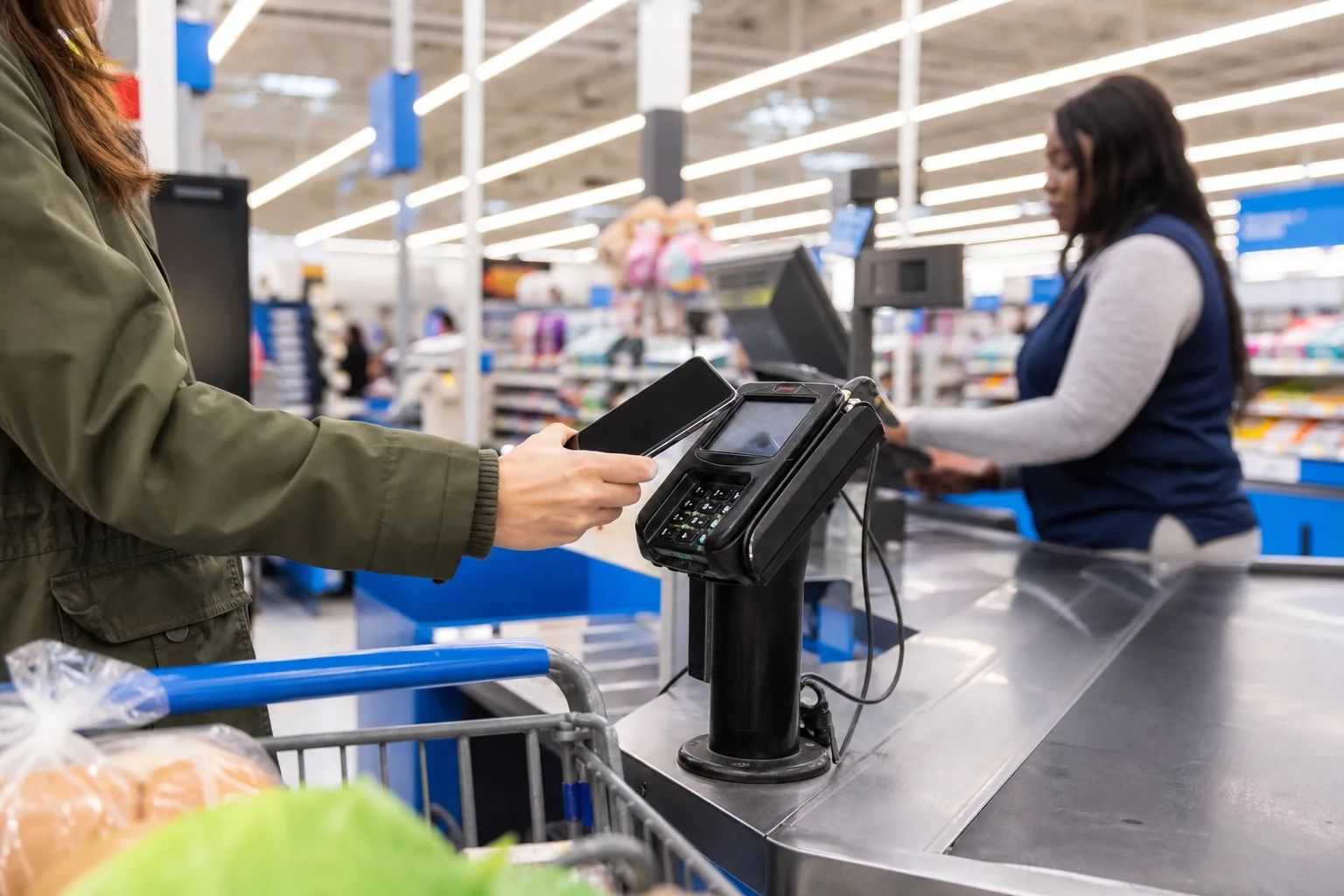
- Walmart Google Pay support starts next week, ending the retailer’s long refusal to accept standard contactless wallet payments.
- The Walmart Google Pay rollout is expected to reach US stores and Sam’s Club locations by the end of 2026.
- Walmart says its gas stations should gain tap-to-pay capability sometime in 2027, extending the change beyond checkout lanes.
- The decision weakens Walmart’s long-running attempt to steer shoppers toward its own app-based payment experience.
Table of Contents
Walmart Google Pay arrives after a very long wait
For years, walking into Walmart with a phone ready to tap felt a little like arriving at a modern airport only to be handed a paper boarding pass. Walmart Google Pay support is finally on the way, and it represents a remarkably overdue concession from America’s biggest retailer.
Walmart says it will begin accepting tap-to-pay transactions next week, starting with a limited set of stores before expanding across the US. The company expects the capability to reach its Walmart stores and Sam’s Club locations by the end of 2026. That means shoppers will be able to pay using compatible phones, smartwatches, and contactless cards rather than opening Walmart’s own app or fishing around for a physical card.
At checkout, the difference is straightforward: the process will work like it already does at countless grocery stores, pharmacies, coffee shops, and fast-food counters. For regular customers, Walmart Google Pay acceptance removes one small but persistent irritation from an otherwise aggressively convenient retail operation.
Walmart framed the move as part of a wider effort to make using and managing money easier. Fair enough. But frankly, it’s hard to ignore the years in which the company made a basic payment choice harder than it needed to be.
Why Walmart resisted contactless payments
Walmart has been one of the most prominent US holdouts against the NFC payment standards behind Google Pay, Apple Pay, and contactless bank cards. The retailer instead pushed shoppers toward Walmart Pay, an app feature that used QR codes at checkout. It worked, in the narrow sense that it completed a transaction. It was also slower and less natural than tapping a phone or watch against a terminal.
The strategy made commercial sense on paper. By keeping payments inside its own app, Walmart could encourage customers to sign in, connect a payment method, browse offers, use digital receipts, and remain in Walmart’s broader loyalty and shopping ecosystem. Retailers love that kind of direct relationship. Every app install is a potential source of customer data and repeat engagement.
But consumers generally don’t choose a payment method because it gives a retailer cleaner analytics. They choose the one that’s already on the device in their hand. Asking someone to download an app to pay at a store is a bit like requiring a restaurant’s custom fork before you can eat dinner.
Walmart was hardly alone in trying to build a closed payments loop. Target has promoted Circle tools, Starbucks has made its app central to ordering and rewards, and grocery chains routinely tie discounts to their own digital accounts. The difference is that most retailers still accept the payment methods people bring with them. Walmart’s refusal stood out because of its sheer scale.
Walmart Google Pay changes the checkout calculation
The Walmart Google Pay rollout matters less as a new feature than as an admission that proprietary payment rails have limits. Walmart remains enormously powerful, but even it couldn’t fully reset consumer expectations around contactless checkout. Once people get used to tapping a card, phone, or watch elsewhere, a QR-code detour feels dated fast.
Contactless payments are no longer a niche feature for early adopters. NFC cards are standard issue from major banks, and mobile wallets are baked into modern Android phones and iPhones. Google’s own Google Wallet service supports payment cards alongside transit passes, tickets, IDs in select places, and loyalty credentials. A phone has become a wallet for a meaningful share of shoppers, especially younger customers who may not carry much cash at all.
Walmart’s announcement refers to tap-to-pay generally, so this is broader than Android users. Google Pay is the headline-grabbing name here because Walmart’s policy has long excluded it, but the new terminals should also make the retailer friendlier to contactless cards and competing mobile wallets. That’s the real win. Payment acceptance should be boring, universal infrastructure, not an app-install negotiation at the register.
My read is that Walmart is making a sensible defensive move, not staging a grand reinvention of retail. The retailer doesn’t need to abandon its app, and it won’t. Walmart can still offer receipts, deals, pickup management, memberships, and store navigation through its software. It simply no longer needs to hold basic payment convenience hostage to those ambitions.
What shoppers should expect during the rollout
Don’t assume every register will instantly work on day one. Walmart says availability will begin next week and broaden over the coming months, with nationwide US coverage targeted by the end of the year. That staggered approach is normal for a chain with thousands of locations, aging store hardware, self-checkout lanes, and a mixture of front-end configurations.
For now, customers should look for the familiar contactless symbol on payment terminals. If it’s present and enabled, Walmart Google Pay should be as straightforward as unlocking a phone, authenticating with a fingerprint or face scan where required, and holding it near the reader. Smartwatch users should get the same convenience without taking out a phone, which is especially handy when you’ve got a cart, a child, and an increasingly impatient line behind you.
Sam’s Club is included in the 2026 rollout, while Walmart says tap-to-pay at its gas operations is planned for 2027. That delay is understandable: fuel pumps are their own hardware and compliance maze. Still, it leaves an odd temporary gap. A shopper may be able to tap to pay inside a Walmart this year but not at the pump outside for a while longer.
The Walmart Google Pay change won’t decide where most people buy groceries or paper towels. Prices, proximity, inventory, and delivery options will do that. Yet checkout friction adds up. A retailer that saves customers thirty seconds and one minor annoyance every visit is making a better retail product.
A late move, but the right one
Companies tempted to build proprietary alternatives to standards consumers already understand should take note. Owning more of the experience can be valuable. Forcing an unnecessary detour usually isn’t. Apple’s long resistance to USB-C is the classic example, until regulation and market pressure finally made the old approach untenable. Walmart’s payment wall was less dramatic, but it had the same stubborn energy.
Walmart Google Pay support is not a radical technological leap. It’s a retailer catching up with the checkout expectations it spent years resisting. Still, Walmart’s scale means this late decision could be one of the more consequential contactless-payment expansions in the US retail market.
Now the interesting question is whether Walmart treats tap-to-pay as a basic customer accommodation or tries to turn it into another funnel for its own services. If the company has learned the right lesson, shoppers will be allowed to tap, pay, and get on with their day.

