- The Galaxy S8 update is now appearing on international models, long after Samsung ended ordinary software support for the phone.
- Samsung’s Galaxy S8 update carries a generic stability label, while its April 2021 Android security patch level remains unchanged.
- Galaxy Note 8 owners are receiving a parallel firmware release, though Samsung has offered no technical explanation for either package.
- A reported 420MB download suggests meaningful code changes, but size alone cannot prove that Samsung has patched a critical vulnerability.
Table of Contents
Galaxy S8 update arrives years after its expected expiration date
Old phones rarely get a second act. That is why the Galaxy S8 update now reaching owners outside the US deserves a closer look, even if Samsung’s official explanation is maddeningly thin. The Galaxy S8 and Galaxy Note 8 left Samsung’s regular update schedule years ago; both still run Android versions and security patch levels that belong to another era of mobile computing.
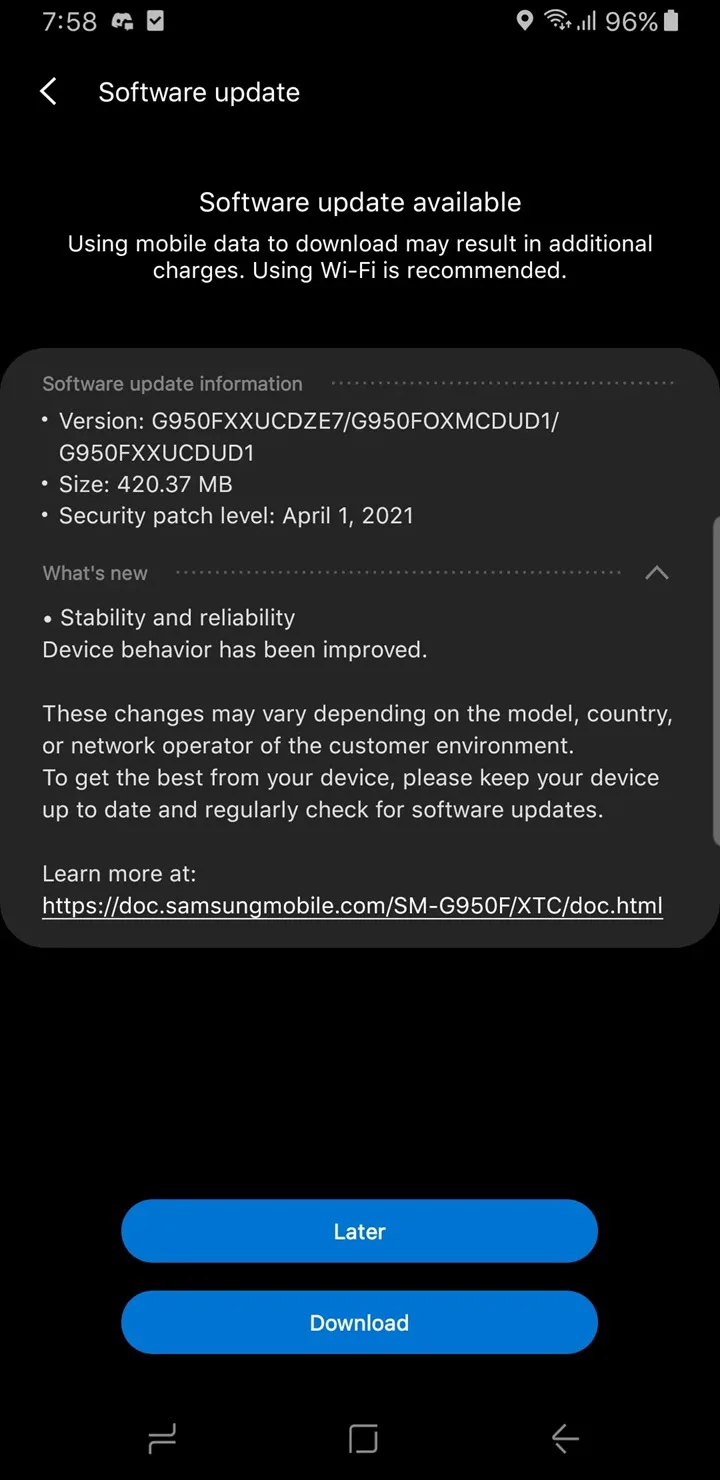
International Galaxy S8 units have begun receiving firmware G950FXXUCDZE7, while the equivalent Galaxy Note 8 release is N950FXXUGDZEA. Samsung describes the downloads as improvements to device stability and reliability. That language is so broad it can mean almost anything: a repair for an annoying boot issue, a carrier compatibility tweak, a certificate renewal, or a security-related correction the company doesn’t want to detail.
The update does not move the Galaxy S8 beyond its April 2021 security patch level. The Note 8 remains on August 2021. Nor is there a new Android release waiting beneath the surface. Anyone expecting modern Android protections, new privacy controls, or a refreshed One UI build should temper expectations. This is maintenance, not resurrection.
Maintenance for a device Samsung had effectively retired is unusual. The Galaxy S8 update reportedly showed up first on US variants roughly two months before broader international availability. That staggered release makes the situation harder to read. A truly urgent, remotely exploitable flaw would normally call for a much tighter global rollout, assuming the vendor has a patch ready for all affected hardware.
My read is that this is probably a targeted fix with enough importance to justify reopening an old software branch, but not necessarily a panic-button response to a catastrophic Android vulnerability. Samsung hasn’t said, so that remains an informed guess rather than a confirmed diagnosis.
What Samsung has, and has not, disclosed
Samsung’s public software-update language says changes may differ by device model, country, and carrier. That caveat matters here. A Galaxy S8 sold unlocked in Europe is not identical, at the firmware level, to a US carrier model. Radio configuration, regional services, and carrier certifications can all create little software forks that take time to test and distribute.
But the company has not published a dedicated bulletin explaining the Galaxy S8 update, and the unchanged patch date offers no obvious clue. Samsung’s official security update portal is useful for tracking its current monthly security releases, yet these legacy packages sit outside the familiar cadence. That leaves owners to infer significance from firmware numbers, download sizes, and scattered reports.
One Galaxy S8 owner reported an over-the-air package measuring about 420MB. That is not a tiny configuration file. On the other hand, Android update packages can be bulky for boring reasons: compressed system partitions, duplicated components, or the mechanics of shipping a full image delta to an old device. Download size is a clue, not a verdict.
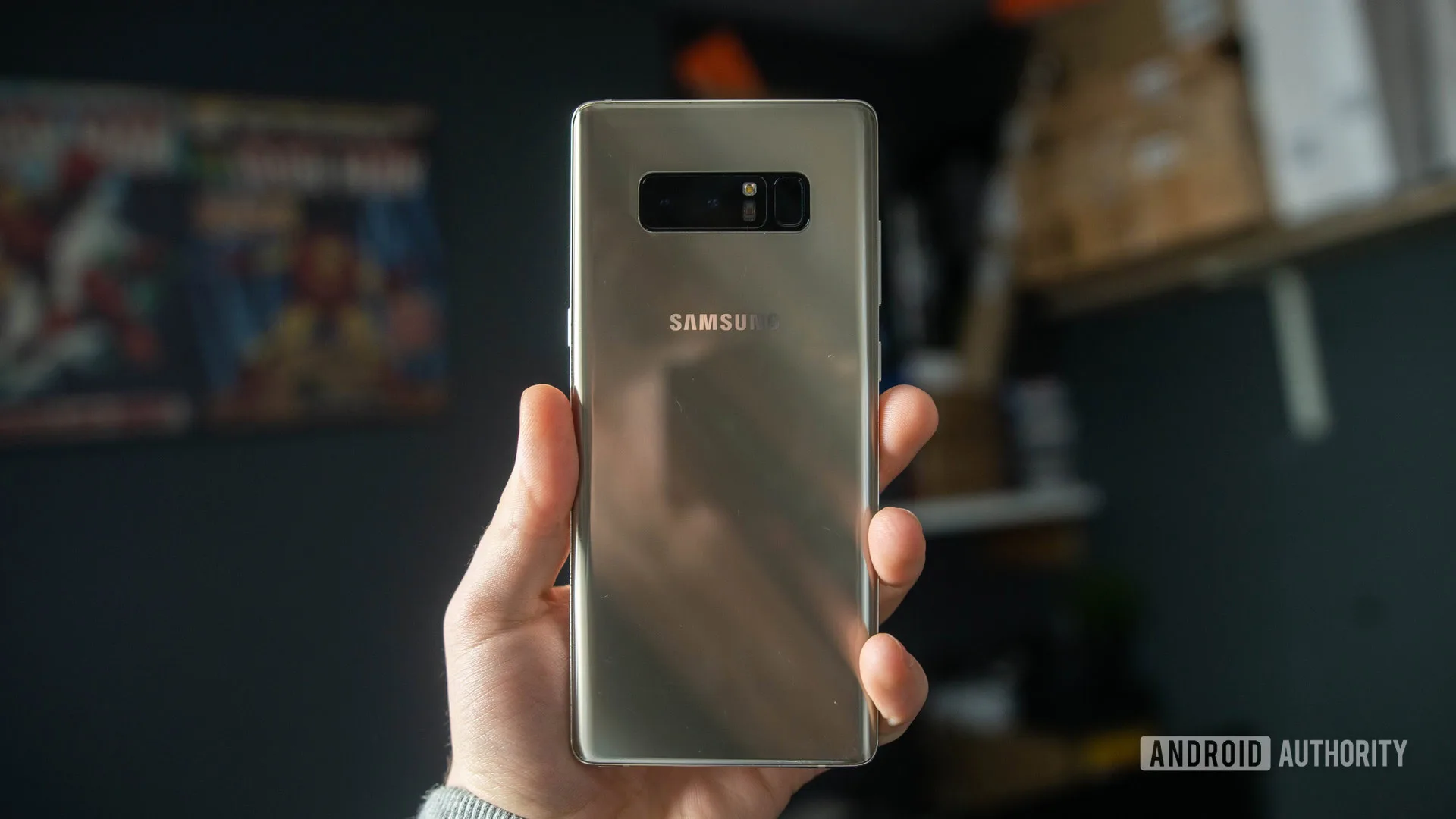
The associated Note 8 release makes the story more interesting. Samsung launched both handsets in the same era, and they share an era of Qualcomm and Exynos hardware, software architecture, and aging support obligations. If the same underlying issue affects both, a paired rollout would make sense. If it is merely a network or regional service matter, the overlap could be coincidental. We don’t have enough evidence to pick one confidently.
Why anyone still using these phones should install it
If your Galaxy S8 or Note 8 still serves as a backup handset, media player, work phone, or the device your parents refuse to replace, install the package when it appears. The Galaxy S8 update is coming from Samsung’s normal delivery channel, and there is little upside in declining a vendor-issued repair simply because its changelog lacks poetry.
Open Settings, go to Software update, and select Download and install. Back up any photos or files first, as you should before any major over-the-air download on a phone approaching a decade of service. Battery health is often the practical concern with these devices, frankly, so update while the phone is charged and connected to Wi-Fi.
Do not mistake this release for a reason to keep an S8 as your primary phone indefinitely. Its ancient security baseline is the bigger story. A single Galaxy S8 update cannot close the years-long gap between its 2021 patch level and the vulnerabilities disclosed since then. Banking apps, password managers, two-factor authentication tools, and private work data deserve hardware that still receives routine protection.
That distinction gets lost whenever an old phone receives an unexpected download. People understandably see a new notification and assume their device is supported again. It isn’t. This is closer to a landlord fixing a broken radiator in an apartment building scheduled for demolition: welcome and necessary, but not a promise of a long future.
A small reminder that software retirement is rarely absolute
Samsung has improved its support promises dramatically since the S8 generation. Its newer flagship devices can receive years of Android upgrades and security updates, a far more sensible arrangement for phones that now cost well into four figures. The Galaxy S8 update also illustrates why those commitments matter: after support ends, users are dependent on a manufacturer’s willingness to make exceptions.
Samsung’s willingness to revive old device branches when it believes there is a reason is better than the alternative: a discontinued phone simply abandoned no matter what breaks. But the company should explain these exceptions more clearly. A vague stability notice may be legally safe, yet it leaves customers unable to assess what risk has changed.
Owners should take the update, keep expectations modest, and avoid reading too much into its arrival. The more revealing question is whether Samsung follows this Galaxy S8 update with any disclosure—or whether one of Android’s most memorable phones quietly returns to retirement without ever telling us what went wrong.