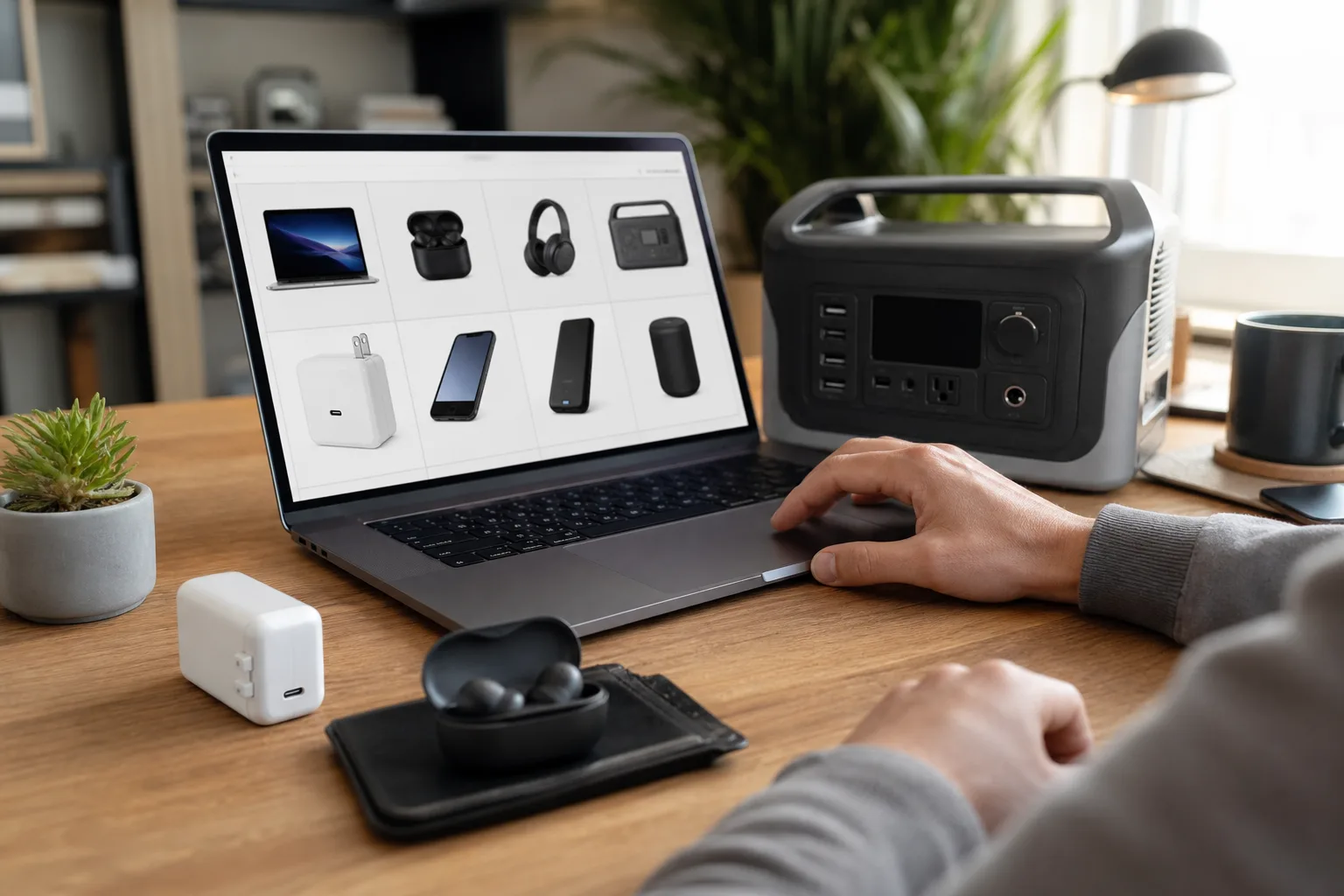
- Prime Big Deal Days runs October 6–7, but Amazon has already cut prices on accessories, TVs, monitors, and backup batteries.
- The strongest Prime Big Deal Days discounts so far are on Anker charging gear, Jackery power stations, and selected large-screen televisions.
- A Prime subscription costs $14.99 monthly or $139 annually, so smaller discounts may not justify joining solely for this sale.
- Buy hardware based on real specifications and price history, not Amazon’s crossed-out list price or a countdown timer.
Table of Contents
Prime Big Deal Days starts before the event does
Amazon’s Prime Big Deal Days event is officially scheduled for October 6 and 7, but the familiar ritual has already begun: a slow drip of early discounts designed to get shoppers filling carts before the main sale window opens. This is the retailer’s autumn answer to July Prime Day, positioned as an early holiday-shopping moment and, frankly, a useful way for Amazon to turn October into another deal season.
The prices are decent across accessories, televisions, audio gear, monitors, and portable batteries. But the smart way to approach Prime Big Deal Days is not as a two-day spending holiday. Treat it as a price-checking opportunity. Amazon is very good at creating urgency; consumers need to be better at asking whether the product itself is worth owning.
Most discounts require an active Prime membership, currently priced at $14.99 per month or $139 per year in the US. New members can use a 30-day trial, though that only makes sense if they remember to cancel or genuinely use the broader shipping and streaming bundle. A $10 saving on a cable or a low-end charger is not a compelling reason to add another subscription to your life.

Accessories are where Prime Big Deal Days makes the most sense
Charging accessories are the early standouts because they are practical, broadly compatible, and easier to compare than, say, a television advertised with a foggy collection of picture-quality buzzwords. Anker’s 14-in-1 Prime docking station is listed at $169.99, down from $269.99, while the company’s 140W four-port GaN charger has fallen to $79.99 from $89.99. The dock is the more meaningful cut, although prospective buyers should still confirm it has the display outputs and bandwidth their setup needs. A dock with 14 ports is not automatically useful if it cannot reliably drive your monitors.
For households living in Apple’s magnetic-charging universe, the deals are more incremental. Anker’s Qi2 MagGo 3-in-1 stand is priced at $71.99, a $18 reduction, and Belkin’s foldable 3-in-1 station is $74.99, down from $99.99. Qi2 support is included. It is less glamorous than MagSafe branding, perhaps, but it is the sane direction for a market long cluttered with proprietary accessory labels.
My read: buy the charger you will still use three years from now, not the one with the biggest percentage badge. A 100W UGREEN four-port GaN charger at $42.99 is a better everyday purchase for many people than a pricey desktop station built for an elaborate multi-device desk that may never materialize. Amazon’s Prime Big Deal Days listings reward restraint more than impulse.
Portable power is becoming a mainstream purchase
Portable power stations used to be camping equipment, or something you bought after a storm knocked out electricity for three days. Now they are increasingly pitched as household infrastructure. That shift is visible in the sale mix: Anker and Jackery are promoting battery systems ranging from roughly $130 compact units to whole-home backup packages costing several thousand dollars.
Jackery’s Explorer 1000 v2 is listed at $499, against a stated $799 regular price, while Anker’s SOLIX C1000 Gen 2 lands around $500. At the upper end, Anker’s SOLIX C2000 Gen 2 is $899.99, down from $1,499. Those reductions are substantial on paper, and a 1kWh-class battery can genuinely keep phones, routers, lights, laptops, and small appliances running during an outage. But do not confuse it with a whole-home generator. The appliance wattage, inverter capacity, battery chemistry, recharge speed, and solar-panel compatibility all matter more than the size of the discount.
Anyone considering a larger backup system should start with the manufacturer documentation, including Anker’s SOLIX product information, then calculate what they actually need to power. A battery is a bit like a water tank: capacity is important, but the pipe size and how fast you drain it determine whether it solves the problem. Prime Big Deal Days can lower the entry cost, but it cannot choose the right system for your home.

TV deals demand a closer look than their discounts suggest
Televisions dominate the eye-catching end of Amazon’s deal page. A 55-inch Amazon Fire TV is listed at $279.99, a 65-inch Hisense E7 Mini-LED Fire TV at $597.99, and a 100-inch Hisense E6 QLED Fire TV at $1,399.99. The latter category is particularly tempting because a 100-inch screen changes a living room in a way that another $30 off earbuds simply does not.
Yet TV shopping is where shoppers should slow down. Brand names and panel labels tell only part of the story. A budget QLED model may offer plenty of color but weak local dimming and mediocre black levels; a Mini-LED set can look excellent, but implementation varies sharply by model. The operating system also matters. Fire TV is convenient if you are already inside Amazon’s ecosystem, but it comes with prominent advertising and recommendations that can make a premium television feel like a storefront.
The 65-inch Hisense model is potentially the most interesting early television deal, assuming independent reviews support its picture performance at that price. The 75-inch Insignia F50, meanwhile, is only $40 below its quoted $399.99 list price. That is not really a Prime Big Deal Days moment; it is a routine retail fluctuation wearing a sale-event badge.

Headphones and monitors: good prices, not automatic buys
Audio is a mixed bag. Sony’s WH-1000XM5 noise-canceling headphones are $298, down from $399, which is a solid price for one of the better-known travel headphone options. JBL Tune Buds at $49.95 are half off their listed price, though the true question is whether their fit and microphone performance work for you. Earbuds are intensely personal hardware. No deal can fix an uncomfortable seal.
Samsung’s monitor lineup offers more tangible bargains for remote workers and students. A 27-inch Essential Monitor at $99.99 may be enough for basic office work, while the 34-inch ViewFinity is listed at $209.99. Still, buyers should inspect resolution, refresh rate, USB-C power delivery, ergonomics, and panel type before reacting to a percentage-off label. A cheap 27-inch 1080p monitor can be perfectly fine as a secondary display and deeply disappointing as the screen you stare at all day.
Here’s the useful takeaway from Prime Big Deal Days: Amazon has assembled a worthwhile batch of early hardware discounts, particularly on chargers and backup power, but the event only pays off if you do some homework. Make a shortlist, check price history, and know the specification that matters before the timer begins flashing red. If Amazon wants October to become another Black Friday rehearsal, shoppers should make it work on their terms.