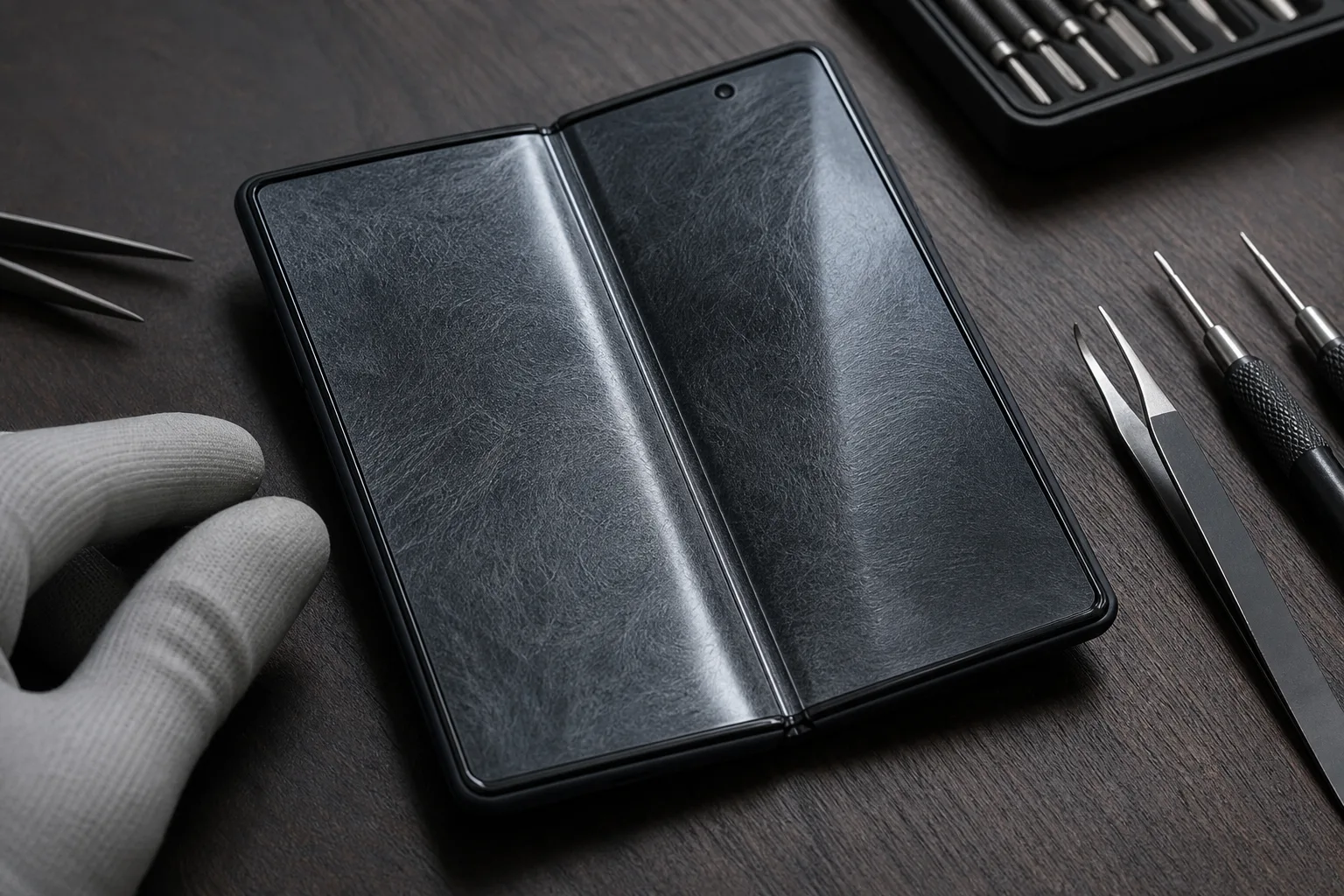
- Apple says the iPhone Duo cover layer is replaceable, giving owners an official answer to inevitable foldable-display wear.
- AppleCare+ customers can replace the iPhone Duo cover layer for $19 in the United States, according to Apple’s support information.
- The removable layer helps conceal the inner display crease, but Apple has not disclosed out-of-warranty replacement pricing.
- The policy could separate Apple’s first foldable from rivals whose flexible-screen repairs often remain costly and intimidating.
Table of Contents
Apple is treating a wear item like a wear item
The iPhone Duo cover layer may be the most revealing detail yet about Apple’s approach to its first foldable phone. Apple hardware engineering vice president Kate Bergeron says the nano-textured surface sitting above the Duo’s inner display can be removed and replaced. That sounds modest. For a foldable device, it’s a very big deal.
Flexible screens have always asked buyers to accept a slightly uneasy bargain: enjoy the tablet-sized display, then try not to think too hard about the plastic-like surface bending through the middle hundreds of times a week. Scratches, dents and a crease that becomes more noticeable with age are not exotic edge cases. They’re the central durability anxiety of the category.
In an interview with creator Angelica Siciliani Fendi, Bergeron described the part in unusually plain language: “It’s actually replaceable, which is a really nice thing for the customer that you can peel off that layer and get a new one.” The wording matters because it suggests Apple sees this surface as a serviceable component, not an inseparable part of a very expensive display assembly.
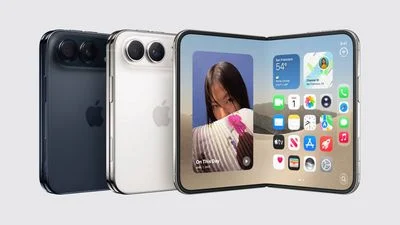
Apple’s own materials say U.S. customers with AppleCare+ can get the iPhone Duo cover layer replaced for $19. That is cheap by modern smartphone repair standards, and dramatically cheaper than replacing a folding OLED panel. Apple has not yet published the out-of-warranty price, which is the figure prospective buyers should watch most closely. A $19 covered repair is reassuring; a three-figure uninsured procedure would make the reassurance considerably less warm.
Preorders for the iPhone Duo begin October 16 at 5 a.m. Pacific, with retail availability scheduled for October 23. Apple is answering the durability question before the first wave of buyers has spent months opening and closing the thing at coffee shops, airports and kitchen counters.
Why the iPhone Duo cover layer matters so much
On a conventional iPhone, screen protection is mostly a cosmetic conversation. Break the glass, and you know what happened. A foldable is different. Its innermost surface has to bend, resist fingerprints, diffuse reflections and make the center crease less obvious, all while remaining pleasant to touch. That’s like asking a raincoat to feel like a silk shirt and survive being folded in half all day.
Bergeron said Apple did a “significant amount of engineering work” to keep the layer in good condition for as long as possible. We’ll need real-world use to judge that claim, naturally. But replaceability changes the ownership calculation even if Apple’s materials prove durable. It acknowledges that the surface may age separately from the phone’s underlying display electronics.
The iPhone Duo cover layer also appears to be part of Apple’s strategy for masking the visual crease. Every foldable manufacturer has wrestled with this. Samsung has reduced the crease on its Galaxy Z Fold line over successive generations, while Google’s Pixel Fold family has pursued its own hinge and panel designs. None has entirely escaped the physics of folding a display. Apple apparently isn’t claiming magic; it’s offering a maintenance path.
That’s the sensible move. Frankly, the foldable industry has too often framed long-term surface wear as something buyers should simply tolerate after handing over flagship money. Samsung’s screen-protector guidance has also taught users a hard lesson over the years: do not casually peel layers from a flexible display. Apple’s language could confuse people if the part looks like a removable protector, so the company needs to be exceptionally clear about who should remove it and how.
Service access is the unanswered part
Apple has not said that owners can swap the iPhone Duo cover layer at home. Bergeron’s use of “you can peel off that layer” describes the part’s nature, not necessarily a DIY repair program. My read is that Apple Stores and Apple Authorized Service Providers will handle most replacements, at least initially.
That would be consistent with Apple’s broader repair posture. The company has expanded its Self Service Repair program, but it still draws a line between components that are practical for trained consumers and components that need controlled tools, calibration or clean-room-like handling. A flexible display surface is exactly where a stray speck of dust, bad alignment or excessive pressure can turn a small issue into an expensive one.
The consumer-rights question is straightforward. If the iPhone Duo cover layer can be replaced quickly at a nearby Apple Store for $19 under coverage, most people won’t care that it isn’t a kitchen-table repair. If appointments are scarce, turnaround drags on or Apple treats normal aging as customer damage, the story changes fast. The practical repair experience will matter more than the elegant engineering explanation.
A small policy with outsized implications
Apple is entering a foldable market that has already had years to teach consumers what can go wrong. Hinges collect debris. Inner surfaces can mark more easily than glass. Repairs can be painful. And buyers remember the early Galaxy Fold saga, when reviewers were able to damage units by removing what appeared to be an ordinary screen protector. That episode became the category’s original sin.
The iPhone Duo cover layer gives Apple a chance to make foldables feel less fragile without pretending they are identical to slab phones. It’s a pragmatic design decision, and I’d argue it’s more persuasive than any durability video of a robot repeatedly opening a hinge. Consumers don’t live like test robots. They put phones in bags with keys, hand them to children and keep them for three or four years.
Apple still has to answer the harder questions: what does a replacement cost without AppleCare+, how often will stores stock the part, and does replacing it affect water resistance or resale value? Those details will determine whether this is a thoughtful ownership advantage or merely a nice line on a spec sheet. But if Apple can make routine foldable wear cheap, available and boring, it may finally push the category toward behaving like a normal phone purchase.