

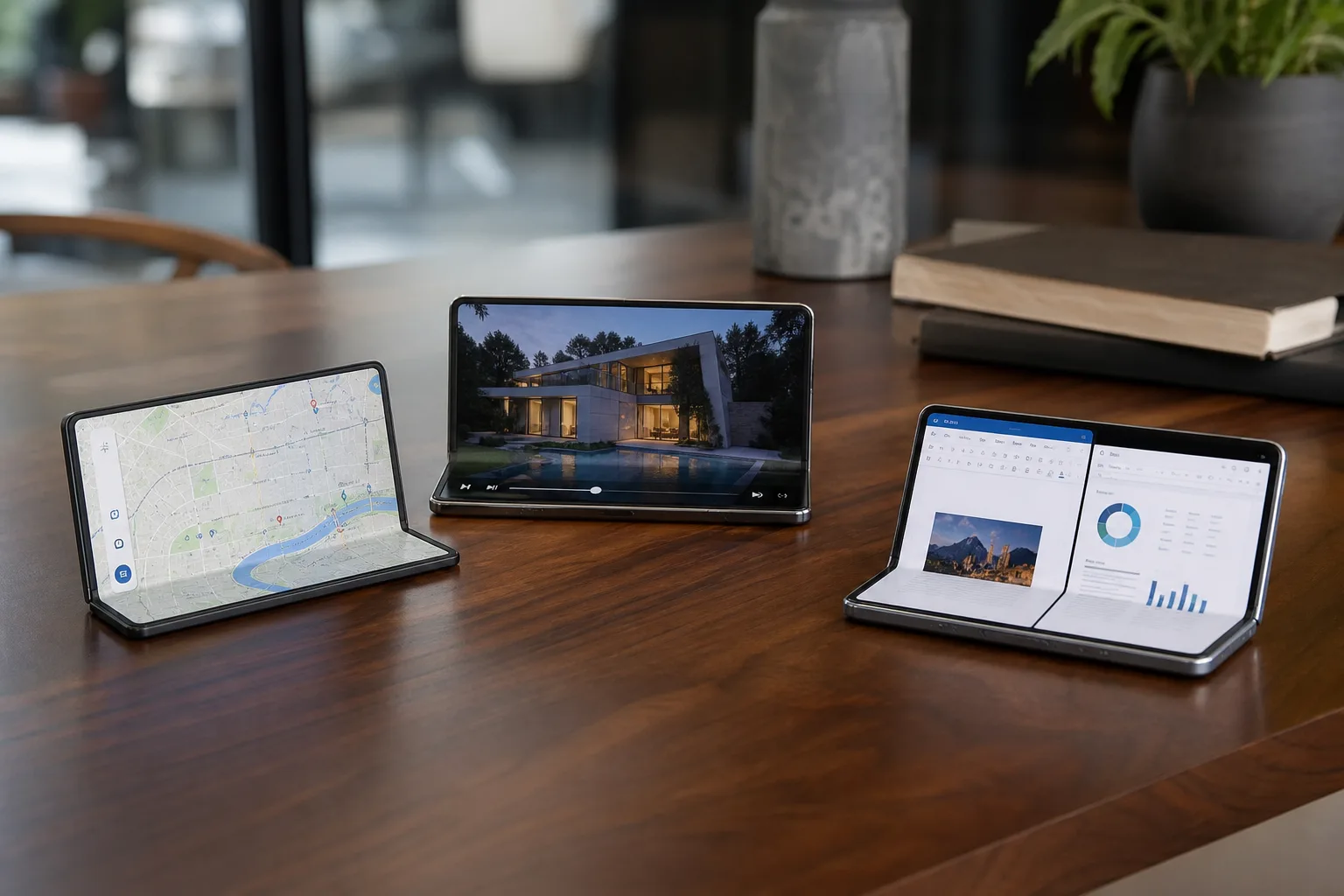
- The strongest Pixel 11 Pro Fold alternatives expose Google’s battery and performance compromises at the $1,899 flagship price.
- Motorola’s Razr Fold leads Pixel 11 Pro Fold alternatives for charging speed, battery capacity, storage, and mature multitasking software.
- Samsung’s two Fold 8 models split the market between a wide media-first design and an exceptionally thin premium flagship.
- Google’s magnetic Qi2.2 support and familiar cover screen remain legitimate advantages, but they cannot erase the smaller 4,750mAh battery.
Table of Contents
Pixel 11 Pro Fold alternatives reveal Google’s awkward trade-offs
The problem with the newest Google foldable is not that it looks bad on a spec sheet. The problem is that the Pixel 11 Pro Fold alternatives make its compromises unusually easy to spot. At $1,899, this is a category where buyers should not have to shrug off a smaller battery, middling secondary cameras, or a chip that may lag the Qualcomm competition.
Google has plainly done the work on the industrial design. The Pixel 11 Pro Fold is listed at 10.1mm closed and 239 grams, a meaningful refinement after the Pixel 10 Pro Fold was left looking chunky beside Samsung’s aggressively slim hardware. Its 6.5-inch cover display also remains a sensible idea: closed, it behaves like a normal phone rather than a narrow remote control pretending to be a phone.
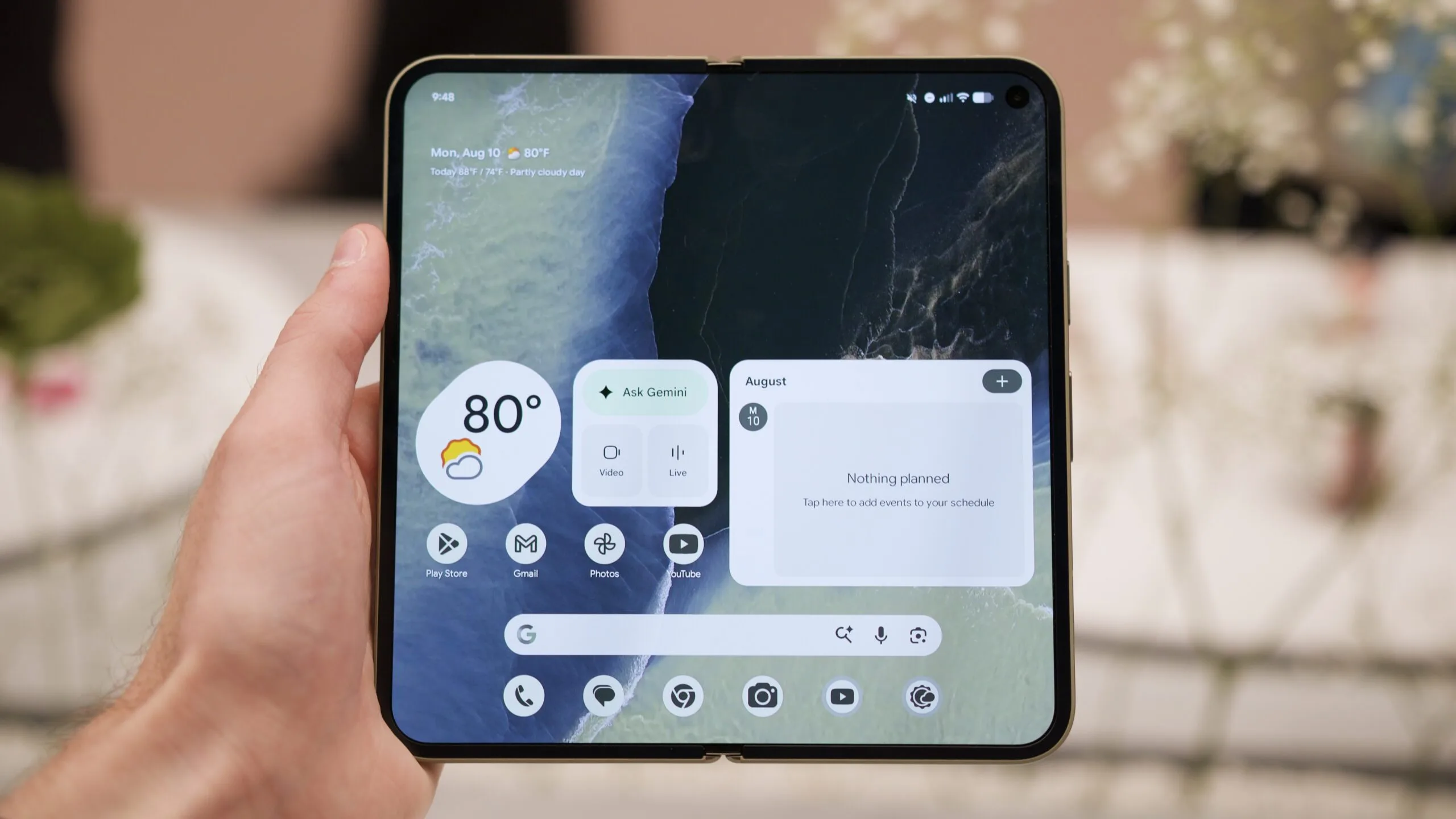
But shaving millimeters came at a price. Google’s battery is down to 4,750mAh, compared with 5,015mAh in its prior foldable. That is not a minor footnote when the inner display measures roughly eight inches and the phone is intended to replace a handset and a small tablet. Magnetic Qi2.2 charging at up to 25W is welcome — Google’s Pixelsnap effort is one of the company’s better accessory decisions — but wireless convenience does not add capacity back into the cell.
My read is that Google has reached the point where the Pixel brand’s software strengths are no longer enough to excuse hardware restraint. Tensor has improved, and Pixel’s camera processing remains a genuine draw, but $1,899 is a brutal price bracket. Against the best Pixel 11 Pro Fold alternatives, this is not a purchase made out of charity toward Google’s product roadmap.
Motorola Razr Fold is the practical heavyweight
Among the Pixel 11 Pro Fold alternatives, Motorola’s Razr Fold is the one that most directly challenges Google on the basics people notice every day. It is barely thinner at 10.04mm and a touch heavier at 243 grams, yet Motorola found room for an 8.1-inch inner screen and a 6,000mAh silicon-carbon battery. That capacity gap is enormous in a foldable.
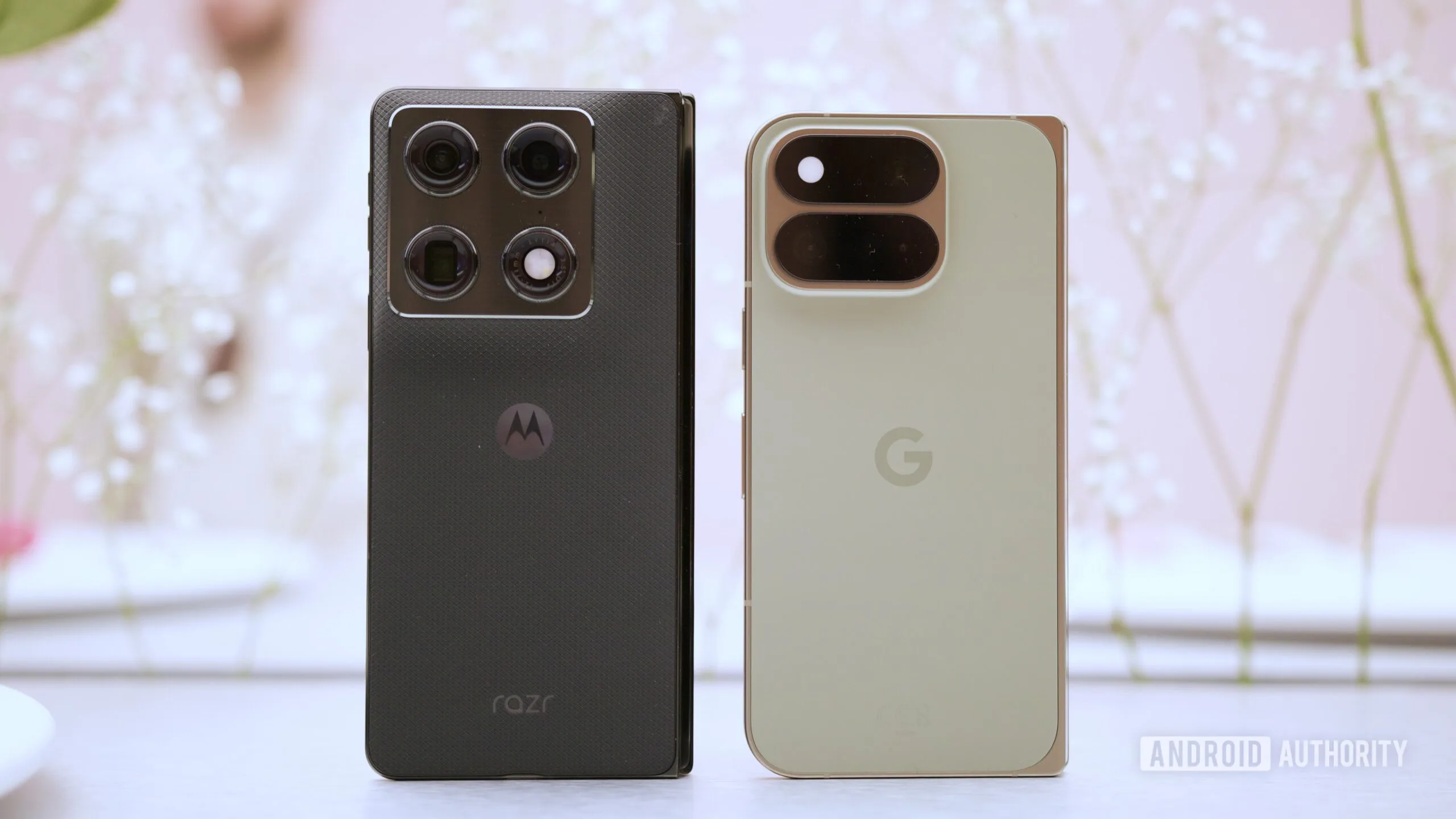
Motorola also pairs that battery with 80W wired and 50W wireless charging. That combination suits people who actually use their expensive folding phone hard: navigation on the commute, a few hours of video, Slack and documents during the day, then a dwindling battery at dinner. Google’s magnetic charger may snap on more elegantly; Motorola’s phone is more likely to be ready again before you have finished eating.
The Snapdragon 8 Gen 5 should also have the edge over Google’s Tensor G6 in sustained performance, especially for games, emulation, and demanding on-device tasks. Motorola matches the Pixel’s memory allocation and offers double the storage at the same starting price. Its three 50MP rear cameras look more serious than Google’s 10.5MP ultrawide and 10.8MP telephoto sensors, at least before the usual caveat: megapixels are not image quality, and Google has repeatedly gotten more from less capable-looking hardware.
There is a large asterisk. Motorola only commits to three major Android version updates. Frankly, that is stingy for a near-$2,000 device. Still, Motorola’s desktop-style multitasking is arguably the most coherent on any foldable right now. If your dream is running several apps without fighting the interface, the Razr Fold is the strongest of the Pixel 11 Pro Fold alternatives.
Samsung offers two very different answers
Samsung’s Galaxy Z Fold 8 takes a more interesting risk than Google does. Rather than chasing the familiar tall, book-like form, it uses a broader 4:3 inner panel with a 5.5-inch cover screen and a 7.6-inch main display. It will not suit everyone. The outer screen sounds cramped, and the phone reportedly skips a telephoto camera. Yet that wide inner panel could be far better for YouTube, films, older television formats, and some games.
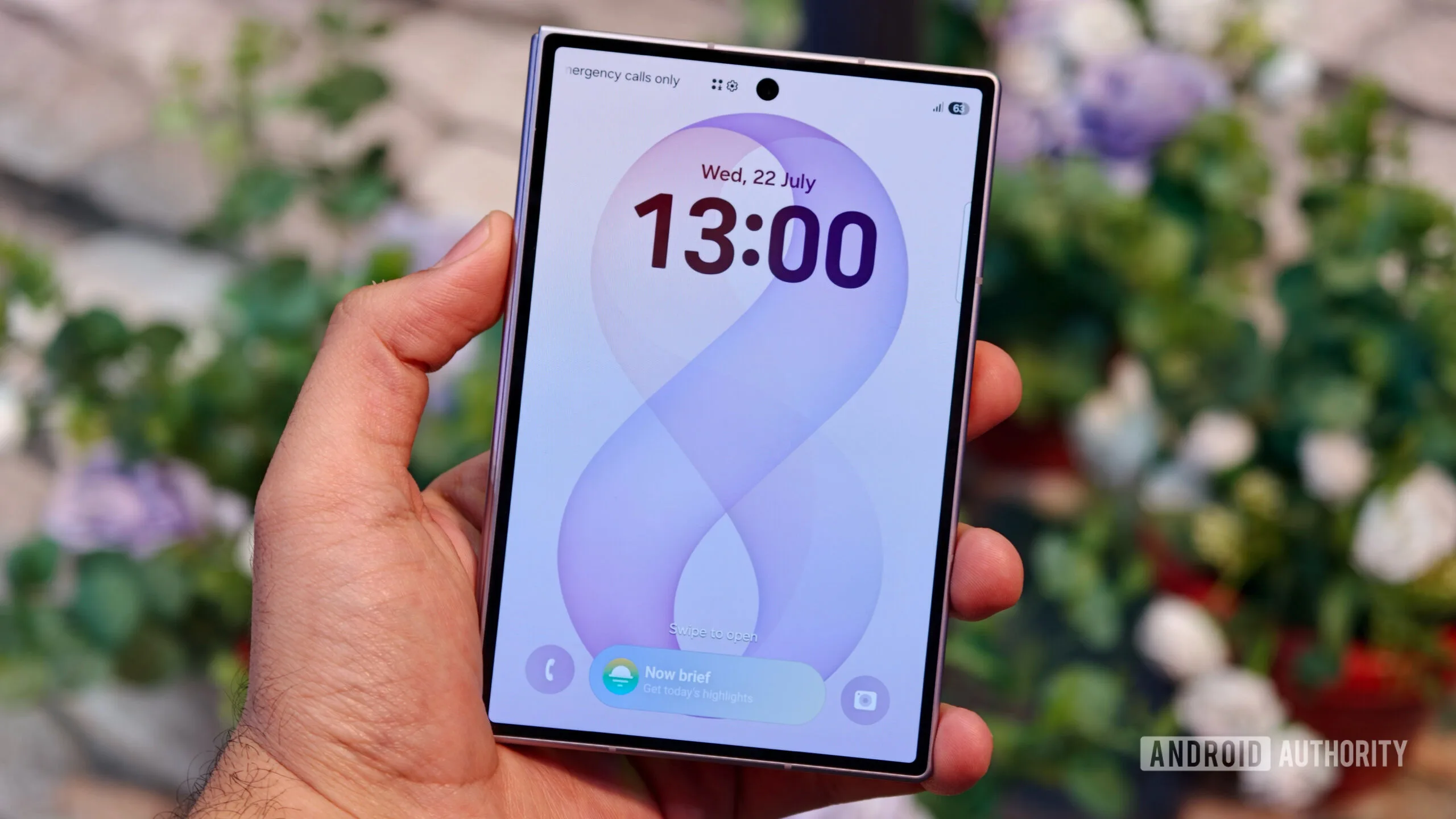
Near-square folding screens are superb for reading and side-by-side apps, but they waste a startling amount of space during widescreen playback. You get a premium little black-frame machine. Samsung’s approach is a more honest admission that many people buy large screens to watch things on them. The Galaxy Z Fold 8 also carries a 4,800mAh battery, a Snapdragon 8 Elite Gen 5 for Galaxy chip, and a thinner, lighter chassis than Google’s foldable for the same $1,899 list price.
That makes the standard Z Fold 8 one of the most compelling Pixel 11 Pro Fold alternatives for media-first users. Google’s larger 6.5-inch outer screen is still the safer option for typing, maps, and vertical social apps, so this is a form-factor decision rather than a clean Samsung victory.
Then there is the Galaxy Z Fold 8 Ultra, Samsung’s answer for anyone who thinks $1,899 is merely the opening bid. At $2,099, it is expensive enough to make even foldable enthusiasts pause. In return, Samsung claims an 8.9mm closed profile and 215-gram weight, with a 5,000mAh silicon-carbon battery, 6.5-inch cover display, and eight-inch inner panel. Those dimensions put it in a different physical class from Google’s 239-gram device.
The Ultra reportedly omits integrated Qi2 magnets, which is the sort of compromise thinness-chasing eventually produces. But it keeps the larger battery and uses Samsung’s customized Snapdragon 8 Elite Gen 5. For buyers considering the premium tier of Pixel 11 Pro Fold alternatives, the question is simple: does saving 24 grams matter more than saving $200? For plenty of people, probably not. For anyone who carries a foldable in a shirt pocket or uses it one-handed, it might.
Google still has a case, but it needs one more hardware win
The Pixel still has a credible case. Its conventional cover-screen proportions are easier to live with than Samsung’s wide Fold 8. Qi2.2 magnets reduce the annoyance of wireless charging accessories. And Google’s software, camera processing, and long-running Android vision have a consistency that Motorola still lacks. Readers can compare Google’s current foldable lineup and support details on the company’s official Pixel phone store.
The Pixel 11 Pro Fold alternatives tell a useful story about where this market is headed. Motorola is betting that a foldable must last all day and recharge in a hurry. Samsung is betting that shape, weight, and raw silicon matter more than strict adherence to the old book-style template. Google is betting that refinement will carry it through.
I would argue that refinement is necessary but no longer sufficient. Foldables have finally stopped feeling like fragile science projects, and buyers are beginning to judge them like normal flagship phones. For Google, the growing field of Pixel 11 Pro Fold alternatives makes the next move clear: it needs to be more than a thinner Pixel. It needs to answer the very reasonable question its rivals are now asking: why should a $1,899 phone settle for less battery and less performance?
Frequently Asked Questions
What are the best Pixel 11 Pro Fold alternatives?
The Motorola Razr Fold is the clearest pick for battery capacity, charging, cameras, and multitasking. Samsung’s Galaxy Z Fold 8 suits buyers who prioritize a wider screen for video, while the Galaxy Z Fold 8 Ultra targets shoppers willing to pay more for an extremely thin and light foldable.
Why does the Pixel 11 Pro Fold have a smaller battery?
Google trimmed the Pixel 11 Pro Fold to 10.1mm when closed, but the design trade-off is a 4,750mAh lithium-ion battery. That is smaller than the 5,015mAh pack in the previous Pixel 10 Pro Fold and than the batteries in some rivals.
Is the Galaxy Z Fold 8 better for watching video?
For landscape video, potentially. The Galaxy Z Fold 8 uses a 4:3 inner display, which reduces the black bars common on near-square foldable panels when watching 16:9 content. Its 5.5-inch outer display is smaller and more unusual, though, so it involves a real usability trade-off.
How long will Motorola support the Razr Fold?
Motorola promises three full Android OS upgrades for the Razr Fold.

