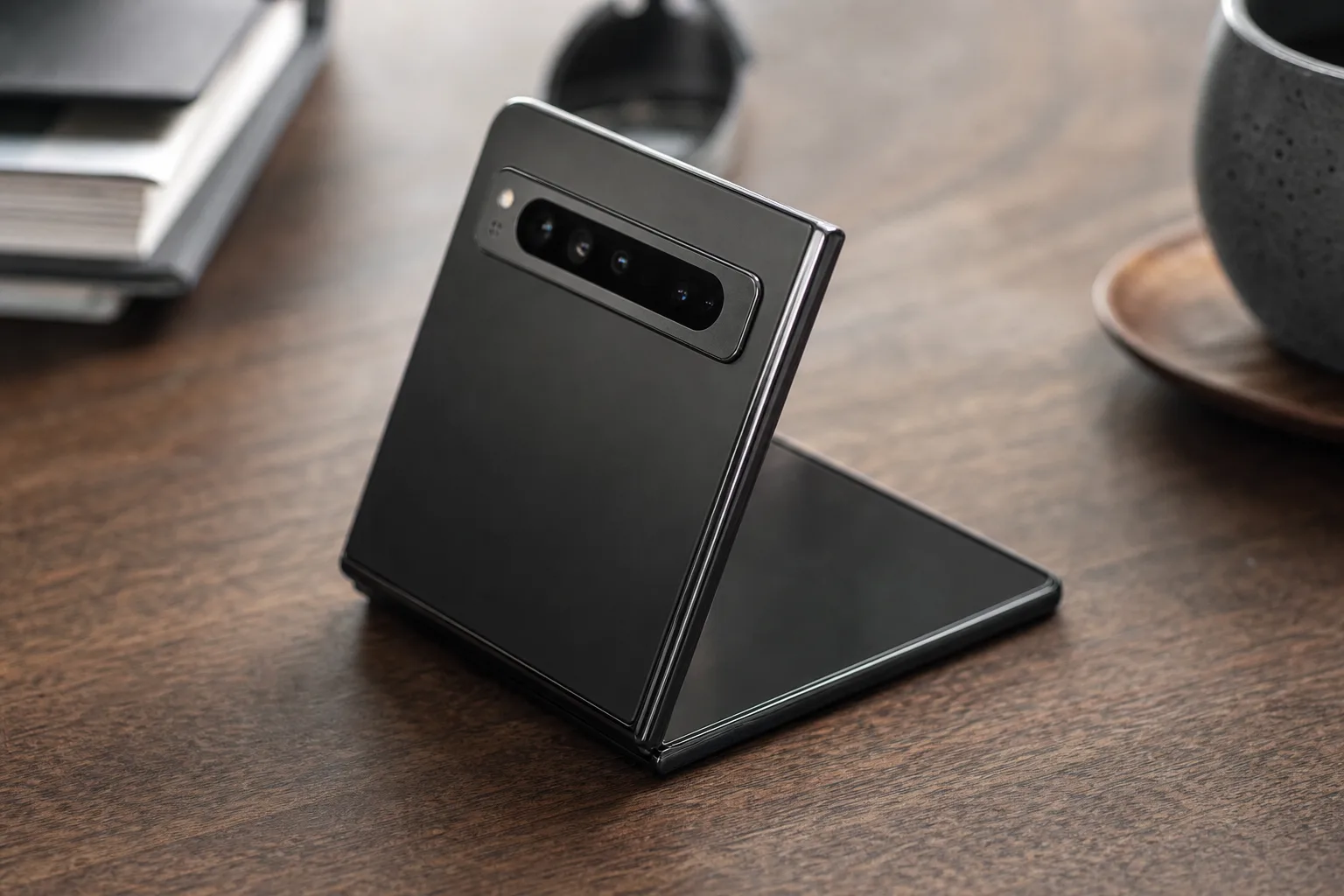
- The Pixel 11 Pro Fold improves durability and charging, yet its $1,900 price makes the value case increasingly difficult.
- The Pixel 11 Pro Fold has full IP68 dust protection, a meaningful advantage over Samsung’s IP48-rated Galaxy Z Fold8 lineup.
- Google’s AI-led Pixel software remains persuasive, though the less expensive Pixel 11 may satisfy many buyers.
- Samsung’s thinner Fold8 hardware and an anticipated folding iPhone are tightening the premium foldable market.
Table of Contents
A better foldable, facing a harsher market
The Pixel 11 Pro Fold appears to be the sort of update Google has become very comfortable making: tidy up the hardware, add a couple of genuinely useful features, and let the software do much of the selling. That formula has worked for conventional Pixels. At $1,900, though, a foldable needs more than a polished annual refresh. It needs to make a case for itself every time you pick it up.
Google’s latest book-style phone reportedly costs $100 more than last year’s model, despite looking broadly familiar. It is fractionally slimmer and 19 grams lighter than the Pixel 10 Pro Fold, but it still lands at 239 grams and 10.1 mm thick. Those aren’t abstract numbers when the device is closed in a pocket or held one-handed on a commuter train. This is a hefty piece of equipment.
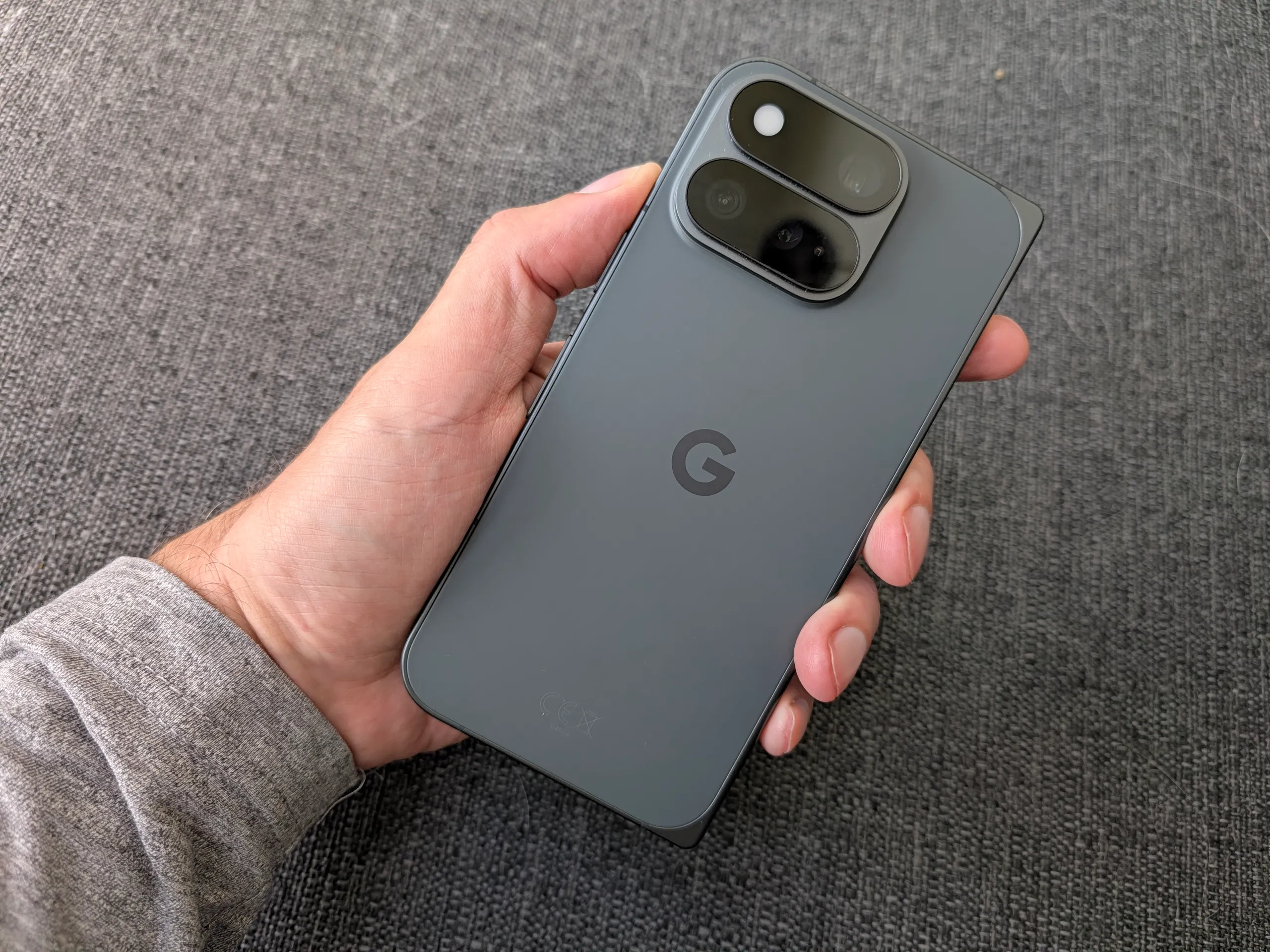
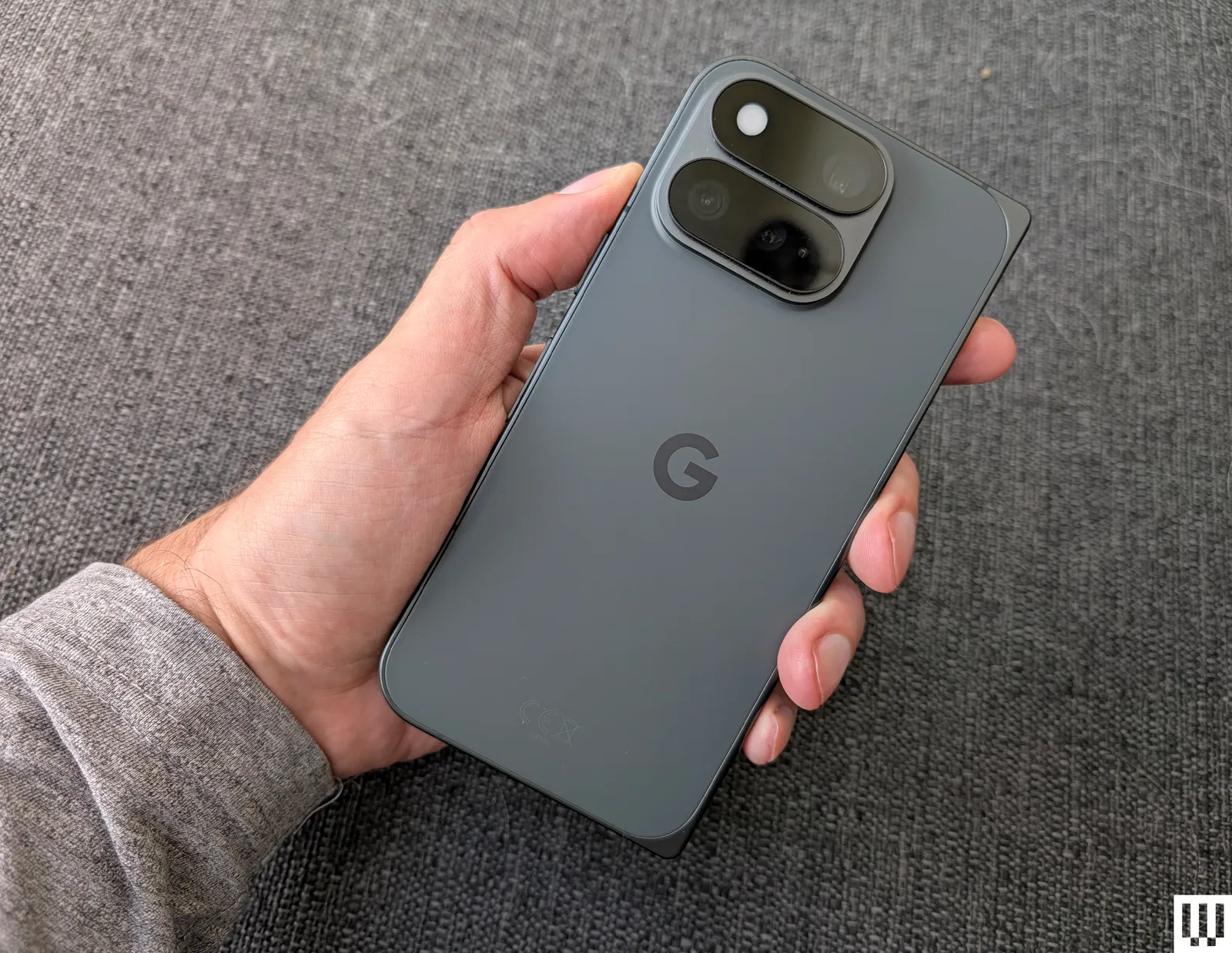
There are welcome refinements. The rear camera arrangement has been cleaned up, the matte glass back should feel better than a glossy slab, and Google’s horizontal camera bar has one small practical virtue: it rocks less on a desk than phones with an off-center camera island. Anyone who has tried to tap out a message on a wobbling handset knows that detail is not trivial.
Still, the broader problem is obvious. Samsung’s Galaxy Z Fold8 is listed at 201 grams and 9.7 mm, while the Fold8 Ultra comes in at 215 grams and 8.9 mm. Honor’s Magic V6, which is not sold in the US, is also thinner at 8.75 mm and weighs 219 grams. The Pixel 11 Pro Fold is not wildly out of step, but Google is no longer operating in a category where bulk can be waved away as the price of doing business.
Pixel 11 Pro Fold durability is the real hardware win
If there is one specification that deserves attention, it is the IP68 rating. The Pixel 11 Pro Fold is built to keep out dust and handle water exposure covered by that standard. Samsung’s Fold8 family has an IP48 rating: it can also tolerate shallow water, but its protection against fine dust is materially weaker. Sand, pocket lint, and grit remain uniquely unsettling enemies of a phone with a moving hinge.
Frankly, this is a bigger deal than shaving another fraction of a millimeter from the chassis. Foldables have spent years asking owners to accept a little extra fragility in exchange for a pocketable screen that opens into a small tablet. Full dust resistance does not make a foldable invincible, and buyers should still treat the inner display with care. But it narrows one of the category’s most irritating compromises.
Google also supports Qi2 wireless charging at up to 25W. That is a useful quality-of-life upgrade, not marketing confetti. Magnetic alignment means a charger is more likely to sit correctly when you drop the phone down at night, while 25W makes wireless charging less of an all-day affair. Google has an official Google Store for its Pixel ecosystem, but purchasers should check the final product listing and accessory compatibility before assuming every magnetic charger will deliver the top speed.
Google still sells the software story better than the hardware story
The strongest argument for the Pixel 11 Pro Fold is likely to remain Pixel software. Google has spent years using photography processing, call assistance, transcription, language tools, and increasingly AI-assisted features to make a device feel more helpful than its raw component list suggests. For the right buyer, those everyday conveniences count more than a millimeter here or a benchmark result there.
That has always been Google’s particular skill: finding the annoying little chores around a phone and attempting to remove them. It is also why Pixel fans tend to be unusually forgiving of hardware that trails the category leaders. A folding canvas gives those tools more room to breathe, whether you are reading a transcript beside a document or using a large display for multitasking.
But the same strength creates an awkward internal comparison. The regular Pixel 11 delivers much of Google’s software identity for less than half the price. It does not unfold into a larger workspace, obviously, and that difference can be decisive for someone who reads, edits, or multitasks heavily on a phone. Yet buyers have to ask how often that interior screen will change their day, rather than simply look impressive during the first week.
The Pro label needs a stronger reason to exist
My read is that the Pixel 11 Pro Fold is a competent premium foldable with two features that matter: IP68 protection and faster Qi2 charging. The issue is not that Google failed to improve it. The issue is that its improvements arrive as rivals are making foldables feel less like delicate prototypes and more like normal flagship phones that happen to open.
Samsung’s recent hardware push has reset expectations around weight and thickness. Meanwhile, reports and persistent industry chatter around a folding iPhone have changed the psychology of the market, even before Apple has formally shown anything. Buyers who are already being asked to spend $1,900 may decide to wait. Remember when Google could count on its camera processing to compensate for a less glamorous spec sheet? That cushion is thinner in foldables.
The Pixel 11 Pro Fold will make sense for people who actively want Google’s software and value a dust-tight design over the thinnest possible body. For everyone else, the calculation is less kind. At this price, Google cannot rely on being pleasantly improved. Its next foldable needs to feel like the device competitors are chasing, not the sensible alternative buyers consider while they wait for the next big thing.
Frequently Asked Questions
How much does the Pixel 11 Pro Fold cost?
The Pixel 11 Pro Fold starts at $1,900, which is $100 more than its predecessor. That puts it firmly in luxury-device territory, where buyers will reasonably compare its hardware against Samsung’s latest Fold models and wait to see what Apple does next.
Does the Pixel 11 Pro Fold have dust resistance?
Yes. Google’s foldable carries an IP68 rating, making it dust-tight and resistant to water.
What is Qi2 25W charging on Google’s foldable?
The phone supports Qi2 25W for faster magnetic charging.