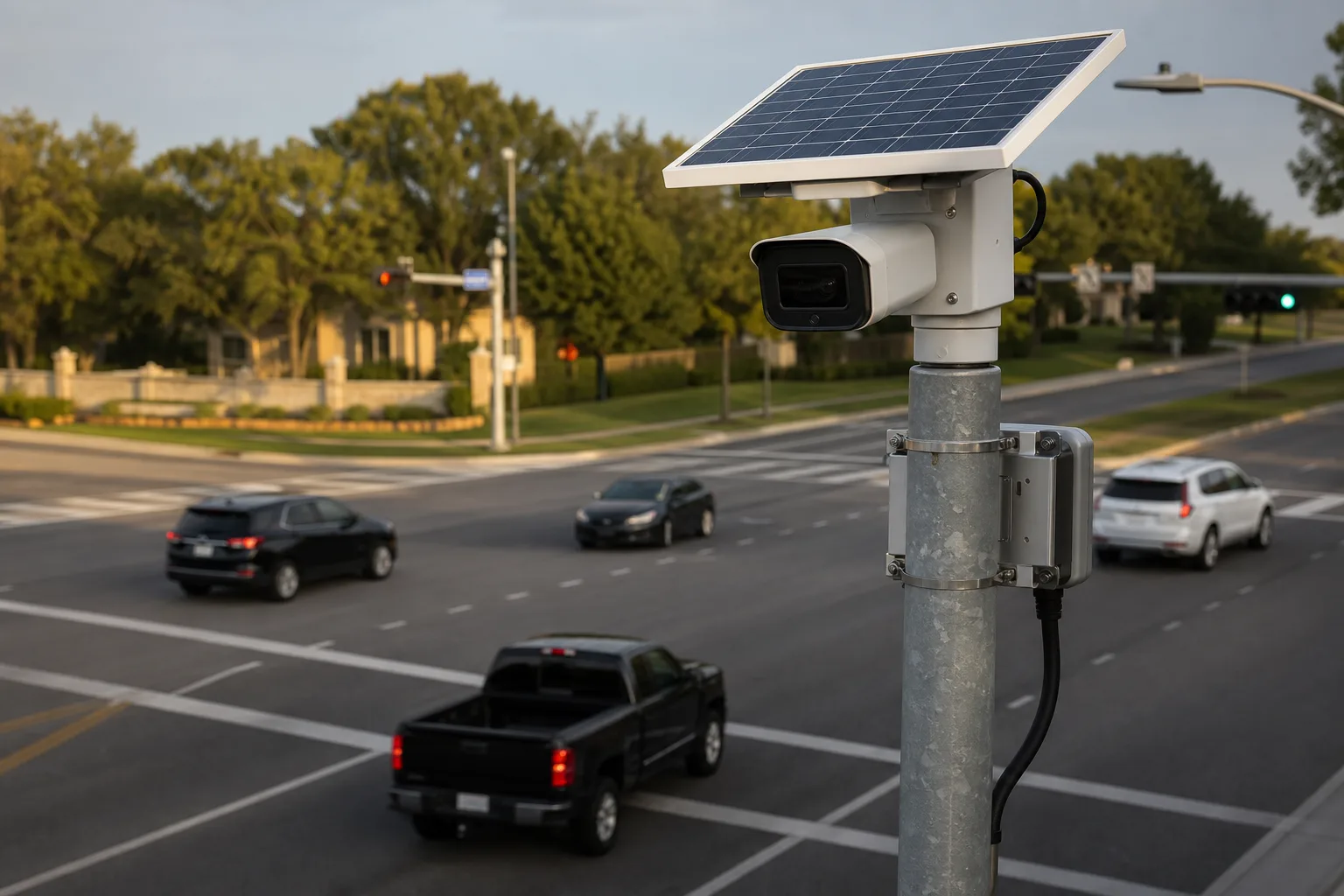
- Texas Flock cameras have lost access to new state funding after Governor Greg Abbott reportedly froze additional spending on the surveillance system.
- Texas spent more than $30 million on Texas Flock cameras, largely using an insurance-policy fee intended to address catalytic converter theft.
- Privacy fears and alleged police misuse have pushed cities, civil-liberties advocates, and politicians from both parties to challenge Flock’s expansion.
- The funding halt signals that automated license-plate surveillance is becoming a mainstream political liability rather than a quiet policing technology.
Table of Contents
Texas Flock cameras hit a political wall
Texas Flock cameras were sold as a practical response to crime: place automated cameras around communities, identify vehicles connected to thefts or missing-person cases, and give police a useful lead before the trail goes cold. But after Texas poured more than $30 million into the system, Governor Greg Abbott has reportedly frozen further state spending. The timing is awkward, to put it mildly.
The spending pause arrived just before a Texas Tribune investigation detailed the scale of the state’s purchases. Much of the money came from a $1 charge added to insurance policies, a funding source intended to help fight catalytic converter theft. That was a particularly Texas solution to a very real crime wave. The trouble is that catalytic converter theft has become the rationale for a much broader and more permanent vehicle-surveillance network.
Flock Safety’s cameras automatically capture license plates, vehicle characteristics, and other identifying details, then make those records searchable by participating law-enforcement agencies. A detective looking for a stolen pickup may find that useful. A government building a searchable record of ordinary drivers’ movements, however, is where the public’s patience starts to run out.

Why Texas Flock cameras became so contentious
The core argument around Texas Flock cameras is not whether police should investigate crime. Of course they should. It is whether a tool designed for targeted investigations inevitably turns every passing driver into data. License plate readers have existed for years, but Flock made the model easier to deploy at neighborhood scale: compact solar-powered cameras, cloud software, rapid searches, and inter-agency sharing. The product feels less like a traditional police camera and more like a software subscription with street poles attached.
That distinction matters because networked systems can push surveillance far beyond the places people expect it. Conventional surveillance usually has visible boundaries: a building entrance, a patrol car, a specific investigation. Networked camera systems can quietly extend those boundaries across roads, subdivisions, shopping areas, and public spaces. People may never know their vehicle was recorded, how long the record remains available, or which agency eventually searched for it.
Critics also have plenty of concrete incidents to point to. The backlash has followed reports of officers allegedly abusing Flock systems, including at least six Texas cases in which officers were placed on leave or faced criminal charges over misuse. Flock has separately drawn scrutiny over employee access to footage, data-sharing practices, insecure video feeds, and cameras positioned near places such as playgrounds. Any one of those issues might be manageable. Put them together and the sales pitch begins to look thin.
Flock publishes materials on its transparency and privacy practices. But safeguards only work when agencies configure them well, train employees properly, and impose consequences when the system is abused. That is a lot of faith to place in institutions that are already struggling to explain where many cameras are, who can search them, and why.
A rare bipartisan fight over surveillance
What makes this episode more interesting than a standard procurement dispute is the coalition forming against Texas Flock cameras. Civil-liberties groups have long objected to pervasive tracking. Now conservative politicians are framing the same concern through Fourth Amendment rights and distrust of a growing surveillance state.
Republican Representative Keith Self captured that mood in an Instagram post: “From Flock cameras to kill switches, we will NOT surrender our Fourth Amendment rights to the growing surveillance state.” Abbott’s Democratic challenger, Gina Hinojosa, has also criticized the governor for the state’s earlier expansion of the cameras. They are not allies on much. On automated surveillance, they have found a shared pressure point.
That is bad news for Flock and for every company chasing the public-safety software market. Tech vendors often assume privacy objections will stay confined to predictable political corners. This fight suggests the opposite. Americans who disagree on immigration, policing, guns, or social media can still agree they do not want a searchable map of their daily driving habits sitting in somebody else’s cloud account.
Cities are acting on that discomfort. Municipalities around the country, including several in Texas, have canceled Flock contracts in recent months. Some objections center on cost or procurement rules; others focus on data access and the possibility that information could be used beyond the local purpose residents were promised. Once a city council starts asking those questions in public, the easy expansion phase is over.
The real test is what Texas does next
Abbott’s funding freeze does not mean Texas Flock cameras will vanish. Existing systems may remain active, and local agencies can still pursue their own contracts under their own rules. Nor does it settle the harder question of whether automated plate-reader networks can operate with meaningful limits. A pause is not a privacy law.
Politically, the freeze matters because Texas has been an unusually fertile market for this kind of technology: sprawling roads, decentralized policing, property-crime concerns, and a state government generally friendly to law-and-order spending. If the model is facing resistance there, executives in the surveillance-tech business should pay attention.
My read is that the industry’s next battle will not be over whether cameras solve some cases. They plainly can. It will be over retention periods, cross-agency access, audit logs, public disclosure, and whether residents can actually say no before their neighborhood becomes part of a privately operated surveillance grid. Texas Flock cameras have become the test case, forcing a question that is no longer easy to avoid: how much tracking should a government be allowed to buy with money collected from everyone else?