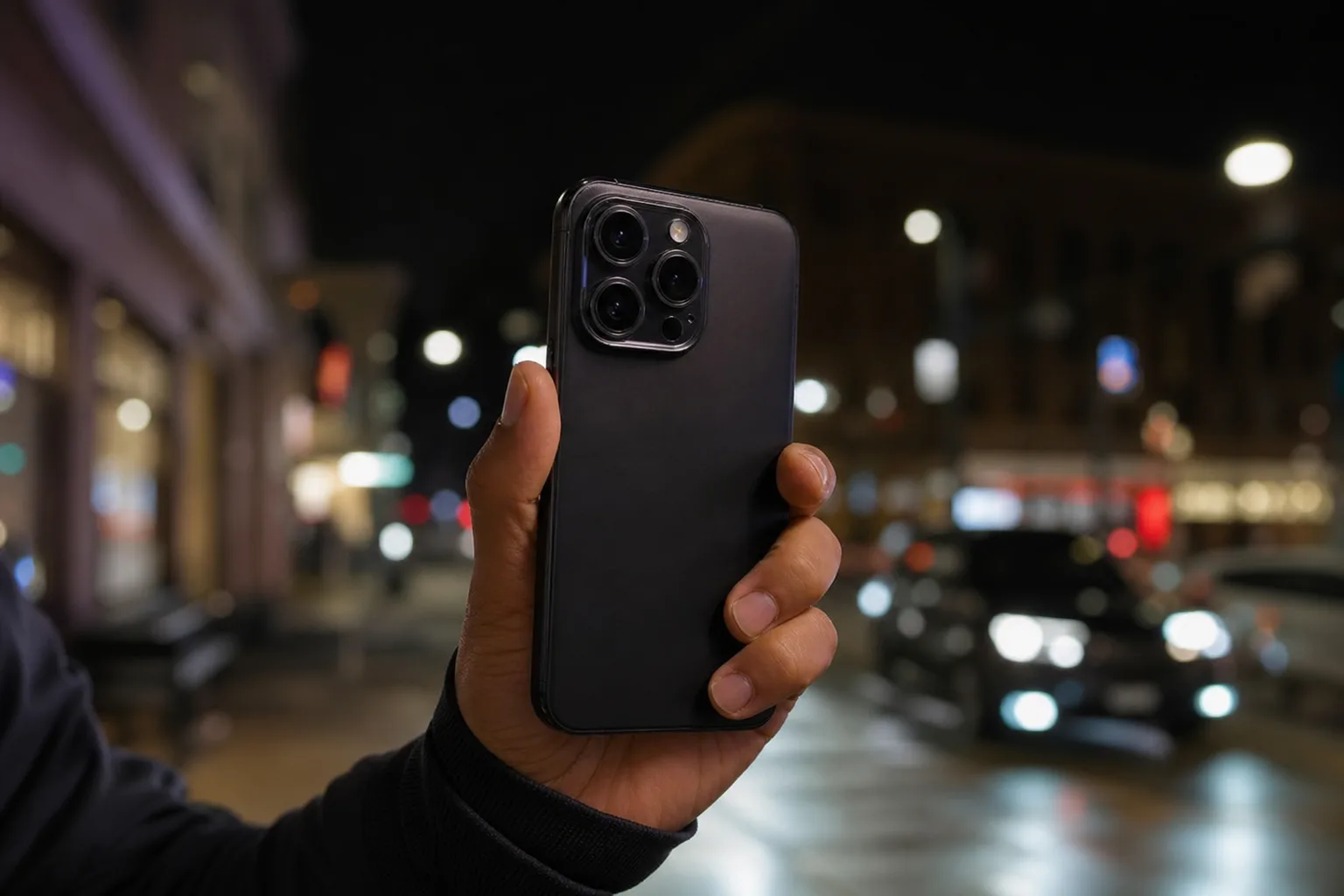
- The Galaxy S27 Ultra camera remains unannounced, while a reported new 200MP sensor may improve difficult low-light scenes and dynamic range.
- Main-sensor image quality can matter more than a major leap in long-range optical zoom.
- Smaller pixels can capture more detail, but processing and pixel-binning will determine whether night images actually improve.
- Samsung’s future camera strategy may depend on whether computational photography can offset physical limits in thin phone hardware.
Table of Contents
Galaxy S27 Ultra camera plans may favor the shots people actually take
The next flagship phone is still a long way off, but Samsung faces a familiar calculation: put the biggest gains into the main camera, where most photos happen, even if that means accepting less dramatic progress at the far end of the zoom range. For the Galaxy S27 Ultra camera, that could be the sensible choice.
The claim centers on a possible new 200-megapixel image sensor. If that component lands in the phone, the appeal isn’t the headline resolution alone. It is the prospect of cleaner night shots, better control of bright skies and dark faces in the same frame, and more reliable color when indoor lighting turns everything faintly yellow or aggressively magenta.
That’s a more meaningful pitch than another megapixel arms race. Nobody needs a 200MP file of their lunch. People do need a phone that can photograph a child blowing out birthday candles without turning the background into watercolor mush.
Still, this is an early leak about a product Samsung has not announced. Component roadmaps, camera hardware, and branding all have plenty of time to change. Treat the report as a useful indication of direction, not a specification sheet carved in stone.
Why a new 200MP sensor could matter
In the Galaxy S27 Ultra camera, the new 200MP sensor is said to bring improvements beyond raw resolution, including better handling for shadows, highlights, and white balance. Those are three areas where smartphone cameras routinely fall apart because a phone is trying to solve a messy physics problem with a tiny lens, a thin body, and a processor working at absurd speed.
A large sensor collects more light. That much is simple. But sensor design also matters: pixel architecture, readout behavior, autofocus capability, and the way the image signal processor combines several frames all affect the final photo. Samsung’s 200MP sensors generally use pixel-binning, grouping neighboring pixels together to produce lower-resolution images with stronger light-gathering performance. The final photo may be lower resolution, rather than a gigantic 200MP capture.
That approach has become standard flagship-phone practice. The number itself is no longer a differentiator. Execution is.
For the Galaxy S27 Ultra camera, the potential advantage would come from a newer sensor giving Samsung more usable information before its processing pipeline starts making choices. Better highlight retention could keep a bright window from becoming a blank white rectangle. Cleaner shadow data could preserve detail in a black coat or a dim restaurant corner. More dependable color balance could prevent the phone from guessing wrong about the scene.
Samsung has plenty of room to improve there. Its flagship cameras can produce punchy, immediately shareable images, but they have also had a tendency to over-brighten night scenes or apply processing that makes fine textures look less natural than they should. Pixel phones have long been strong at computational consistency, while Apple’s iPhone Pro models tend to take a more restrained approach to color and exposure. Samsung needs the hardware and the software to agree with each other.
The company’s own ISOCELL sensor portfolio makes clear how much its imaging business is focused on dense pixel arrays and mobile imaging technology. But a sensor division can provide the ingredients; the phone team still has to cook the meal.
The Galaxy S27 Ultra camera zoom question is less encouraging
For the Galaxy S27 Ultra camera, the question is what zoom might look like. A stronger primary camera does not automatically mean a stronger telephoto system.
That would be disappointing, frankly. The Ultra line has built much of its identity around reaching farther than ordinary phones. More recent hardware decisions have made the story muddier, particularly as the company has leaned on cropping and processing to fill gaps between optical focal lengths.
Digital zoom is not worthless. A high-resolution main sensor can crop in surprisingly well under good light, and modern multi-frame processing can clean up a lot of rough edges. But it can’t manufacture the perspective compression or subject separation of a real long telephoto lens. Photographing wildlife, a kid on a football pitch, or a concert from the cheap seats remains a hardware problem first.
There are practical reasons for Samsung’s caution. Periscope-style lenses consume internal space, require precise alignment, and compete with battery capacity, cooling systems, and the never-ending demand for thinner hardware. Bigger zoom sensors introduce their own packaging headaches. Phone makers are essentially trying to pack a small camera bag into something thinner than a wallet.
My read is that main-camera improvements may influence more purchase decisions than a fresh zoom specification. It is probably right in a spreadsheet sense. Most users photograph people, pets, food, documents, and travel scenes at standard focal lengths. Yet Ultra buyers are not average buyers. They’re paying for excess, and zoom is one of the few areas where that excess can feel genuinely useful.
Software will decide whether the hardware earns its place
A future Galaxy S27 Ultra camera sensor could be technically excellent and still deliver merely decent images if Samsung repeats familiar processing mistakes. The company has spent years improving its computational photography, but this is a category where rivals have made expectations brutally high. Google set the bar for difficult lighting; Apple built trust through predictable captures; Chinese brands have pushed large sensors and ambitious telephoto hardware hard.
Samsung’s challenge is to avoid treating every image as a social-media-ready poster. Sometimes the correct result is a darker image because the room was dark. Sometimes skin texture should look like skin texture. Sometimes a neon sign should clip a little rather than produce a strange halo around every letter.
That is why the reported improvements to dynamic range and color balance are more interesting than the 200MP label. If the Galaxy S27 Ultra camera can make fewer bad decisions automatically, users will notice. They will not care which sensor revision made it possible.
There is also a strategic angle. Samsung’s Galaxy Ultra phones compete against increasingly capable camera-centric models outside the US, especially from Xiaomi, Oppo, and Vivo. Those companies have treated big camera modules as a feature rather than an embarrassment to hide. A Galaxy S27 Ultra camera that closes the gap would give Samsung a stronger answer. Samsung has historically aimed for a more mainstream industrial design, but it cannot coast on brand familiarity forever.
A sensible trade-off, but not a thrilling one
For now, the Galaxy S27 Ultra camera remains a rumor. A new 200MP sensor could result in a better everyday camera, especially after sunset.
But Samsung should be wary of confusing broad usefulness with ambition. The company has the scale, component business, and engineering budget to improve both its main sensor and its telephoto system. If the final phone arrives with superb night photos but another cautious zoom story, it may feel like a polished iteration rather than the kind of Ultra device that gives enthusiasts a reason to trade in.
We’ll see whether Samsung turns that rumored 200MP sensor into a real photographic advantage—or simply another large number on a launch-stage slide.