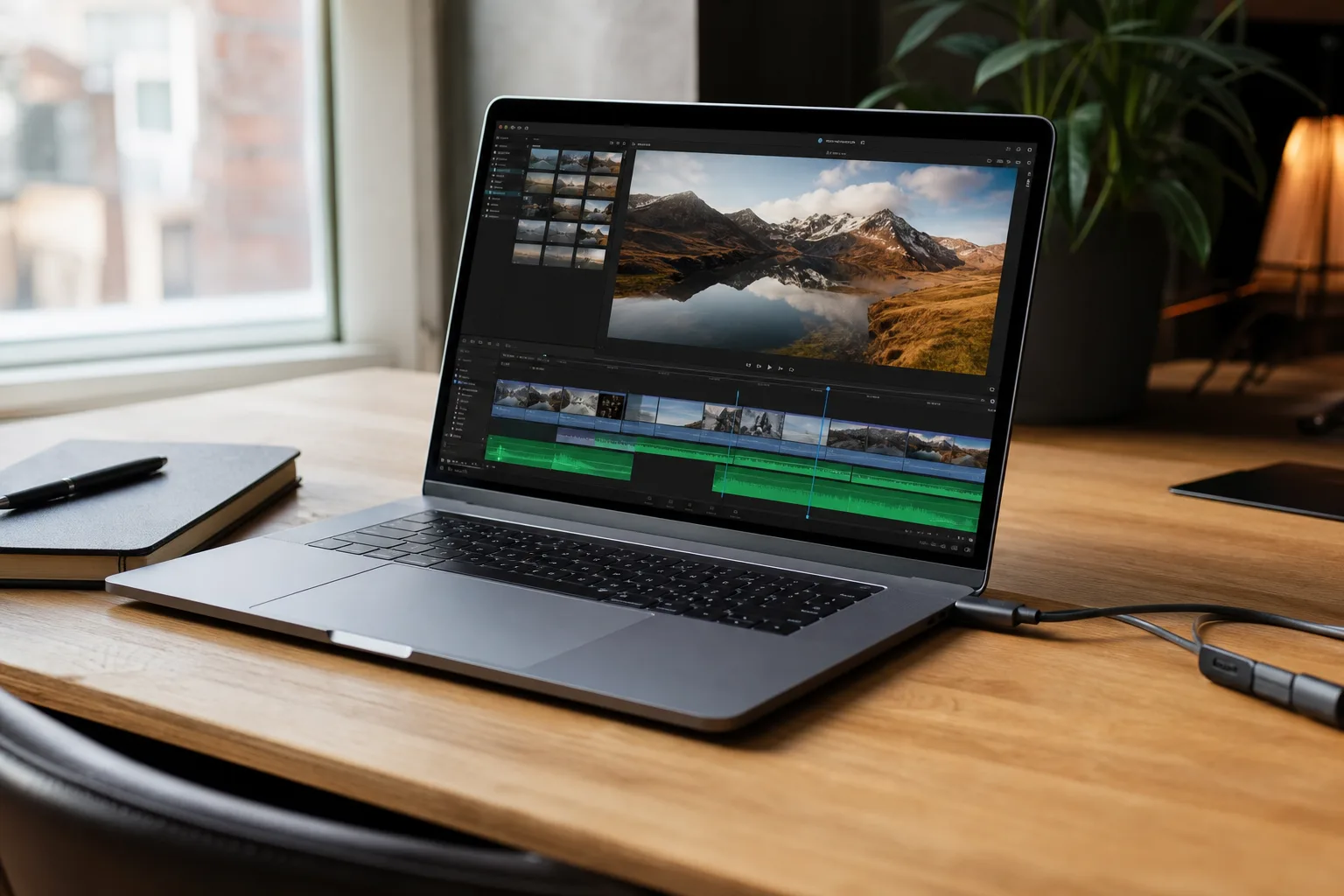
- MacBook Pro prices for the entry 16-inch model have risen from $2,499 in 2021 to $2,999 in 2026.
- Inflation-adjusted MacBook Pro prices remain near historical levels, but the latest $300 increases have changed the value equation.
- AI data centers are competing for memory, storage, and GPU supply, raising costs across the wider PC industry.
- Apple’s base 14-inch model now uses the standard M5 chip, reflecting a more segmented approach to its professional laptop range.
Table of Contents
Five years changed the MacBook Pro price equation
MacBook Pro prices used to feel unusually stable. Apple would improve the chip, tune the display, add another port or two, and somehow keep the starting number within shouting distance of the previous machine. That old rhythm has broken down. The latest MacBook Pro lineup brings a $300 bump to its entry models, and the culprit is bigger than Apple’s familiar premium-tax instincts.
The pressure point is the global component market. AI data centers are consuming vast quantities of high-performance memory, storage, and graphics hardware, while laptop makers compete for the same industrial supply chain. That may sound distant from a person pricing a new machine for Final Cut, Xcode, or a university course. It isn’t. It’s showing up directly in the checkout total.
Apple’s current 14-inch MacBook Pro with M5 starts at $1,999, up from $1,699 before the increase. The 16-inch MacBook Pro with M5 Pro now starts at $2,999, up from $2,699. Those are not rounding errors. They are the kind of increases that turn a planned purchase into a spreadsheet discussion.
The latest model remains a handsome piece of hardware, but a premium enclosure is easier to admire when the memory market is not quietly emptying your wallet.
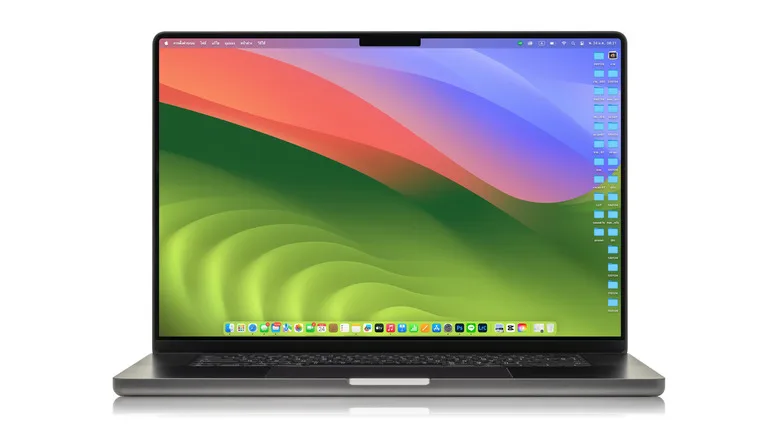
MacBook Pro prices: 2021 versus 2026
To see why this stings, go back to 2021. Apple had just moved its serious laptops into a new era with the M1 Pro and M1 Max, replacing Intel processors and discrete AMD graphics in the MacBook Pro models that mattered most to creative professionals. Apple debuted MacBook Pros with M1 Pro and M1 Max, marking a shift to its own silicon for high-end laptops.
That year’s entry 14-inch M1 Pro MacBook Pro cost $1,999. The entry 16-inch M1 Pro version was $2,499. In 2026 money, based on US inflation over the intervening period, those figures work out to roughly $2,467 and $3,084 respectively.
That context complicates the easy claim that today’s MacBook Pro prices are simply out of control. The $1,999 M5 14-inch machine is actually below the inflation-adjusted cost of the entry 14-inch M1 Pro model. The $2,999 16-inch M5 Pro is also slightly below the inflation-adjusted equivalent of its 2021 predecessor, even if it now looks brutally expensive on its own terms.
Still, consumers do not pay with inflation-adjusted dollars. They pay $2,999 today. And Apple has made that number much harder to swallow by adding $300 during a period when the broader consumer electronics market had trained people to expect better specifications at familiar prices.
The hardware tells the same story: the machines are more refined now, but the original 2021 redesign already set a high bar for screens, ports, and sustained performance.
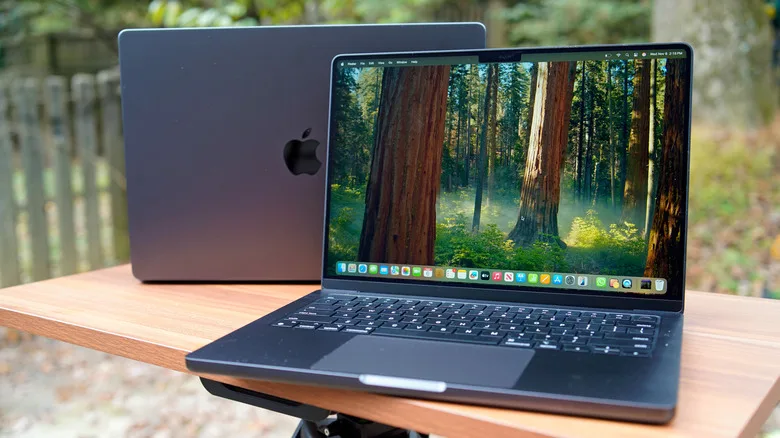
The base model is doing different work now
There is another wrinkle in this comparison that deserves more attention than it gets. The 2021 entry 14-inch MacBook Pro had an M1 Pro chip. The current entry model uses the standard M5. Apple silicon has advanced enormously in five years, so this is not a simple performance downgrade; an M5 will outrun the old M1 Pro in plenty of ordinary workloads and brings newer media, graphics, and AI-oriented capabilities.
But the label matters because it shows how Apple has reshaped the bottom of the professional range. The entry MacBook Pro now serves as a bridge product: more capable and better cooled than a MacBook Air, but not necessarily the chip configuration that a buyer with sustained rendering, large code builds, or demanding 3D work should assume is enough.
My read is that Apple has become more comfortable with this ladder. The 14-inch model gets people in the door, while the M5 Pro and M5 Max configurations hold the real professional margin. That was always broadly true, of course, but the distinction feels sharper when MacBook Pro prices begin at $1,999 rather than $1,699.
AI demand has made an old problem newly visible
The phrase ‘RAM shortage’ can sound like a temporary PC-industry headache, the sort of thing that clears after a few quarters. This one may be stickier. Hyperscalers building AI infrastructure are not buying memory in normal desktop or laptop quantities. They are commissioning fleets of servers packed with expensive high-bandwidth memory, SSD capacity, and accelerators, and suppliers understandably follow the biggest orders.
Apple is better positioned than most PC vendors to manage component shocks. It has enormous purchasing power, long-term supplier relationships, and a product lineup with unusually healthy margins. Yet the change in MacBook Pro prices suggests that even Apple sees a limit to how much cost it can absorb without trimming profitability.
That is the uncomfortable part for buyers. A more expensive laptop is not necessarily evidence that the laptop itself improved by an equivalent amount. Sometimes it is simply the receipt for an industry redirecting physical resources toward AI infrastructure. Remember when everyone wondered whether crypto mining would distort graphics-card pricing forever? This feels like the enterprise version of that episode, except the customers competing for supply have deeper pockets and far longer procurement plans.
What buyers should do with a $3,000 MacBook Pro
The sensible response is not panic-buying. Apple’s current machines are excellent and likely to receive years of software support, but the 16-inch M5 Pro at $2,999 is now a purchase that demands a real use case. Extra display space is lovely. It is not automatically worth several hundred dollars if your work mostly happens in a browser, Slack, and a few documents.
For many shoppers, MacBook Pro prices now make the 14-inch the more rational starting point for portability and professional apps, though its $300 increase makes configuration choices more consequential. Buyers with lighter needs should also resist the gravitational pull of the Pro badge; a MacBook Air can be a better deal when fanless operation and all-day portability matter more than sustained peak output.
If memory and storage prices remain under AI-driven pressure, future MacBook Pro prices may test Apple’s carefully maintained pricing discipline again. The next question is whether the company responds with genuinely useful baseline upgrades, or asks customers to pay more merely to stand still.
Frequently Asked Questions
Why have MacBook Pro prices increased in 2026?
Apple’s latest increases come amid pressure on component supply, particularly memory, storage, and graphics hardware. The source attributes these pressures to AI data centers consuming supply chains for key PC components.
Are MacBook Pro prices higher than inflation since 2021?
The answer depends on the model. A $1,999 14-inch MacBook Pro from 2021 would cost roughly $2,467 in 2026 dollars, while the current 14-inch starts at $1,999. The 16-inch model, at $2,999, sits closer to its inflation-adjusted 2021 price.
Is the 16-inch MacBook Pro worth $2,999?
It may make sense for buyers who need the extra screen space and power of the M5 Pro. However, the source notes that its $3,000 price tag may make some people reconsider whether they need those extras.