

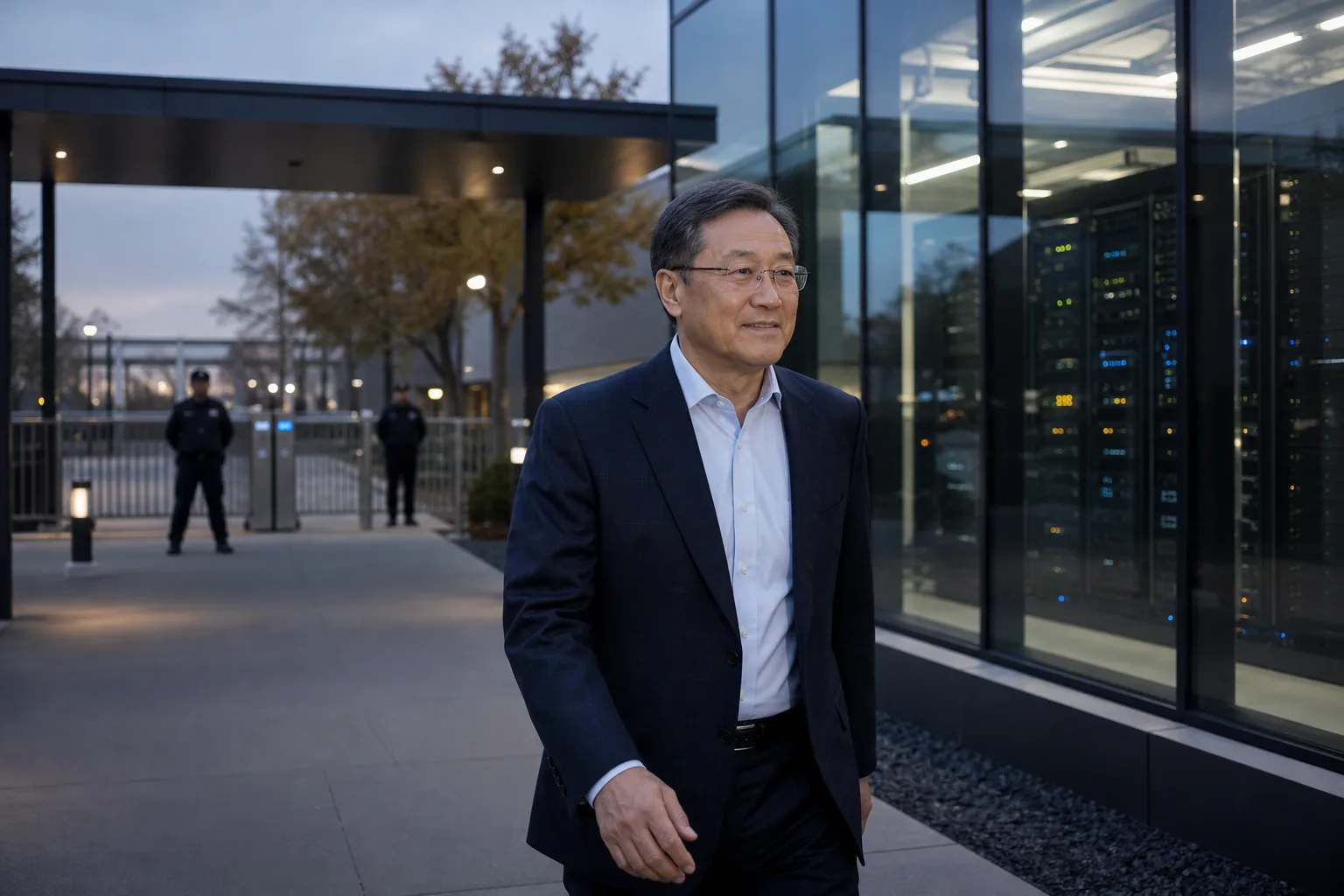
Nvidia’s board is putting its chief executive under an independent review just as the company’s technology has become central to America’s contest with China. The Nvidia investigation into Jensen Huang’s reported relationship with Megaspeed executive Alice Huang is a personal matter with unusually large corporate and geopolitical stakes.
On its face, the board’s statement is measured. It says there is no reason at present to think Nvidia secrets or US national-security interests were compromised. But companies do not convene independent directors and outside counsel over an awkward romance. They do it because the potential downside is enormous.
- The Nvidia investigation will examine whether CEO Jensen Huang’s reported relationship exposed company or national-security information to foreign intelligence.
- Nvidia investigation scrutiny lands as Megaspeed faces a Commerce Department inquiry over alleged AI chip smuggling to China.
- Nvidia’s board says it has no current reason to believe that company secrets or national security were compromised.
- The episode highlights how personal access can become a corporate risk in the geopolitically charged AI chip business.
Table of Contents
What Nvidia’s board has said
Nvidia said an independent committee of directors, assisted by external counsel, will oversee the review after reporting that Huang had been targeted by a foreign intelligence effort. The board said it places US national and economic security above all else, while adding that Huang supports the inquiry and will cooperate fully.
“While the Board has no reason to believe that either national security or NVIDIA secrets were compromised, the Board’s inquiry will examine all available information,” Nvidia said.
That wording matters in the Nvidia investigation. It is neither an exoneration nor an allegation of wrongdoing. It is the language of a board trying to establish control of a situation before someone else — Congress, the Commerce Department, or a federal investigative agency — defines it for them.
According to reporting by The New York Times, Huang described the relationship as romantic in a company memo after the paper reported that he had developed a close relationship with Alice Huang. US officials reportedly believe she supplied information to Beijing after recruitment by China’s Ministry of State Security. Those allegations have not been established in Nvidia’s public statement, and the company’s inquiry should be judged by what evidence it turns up, not by the fever pitch surrounding the accusation.
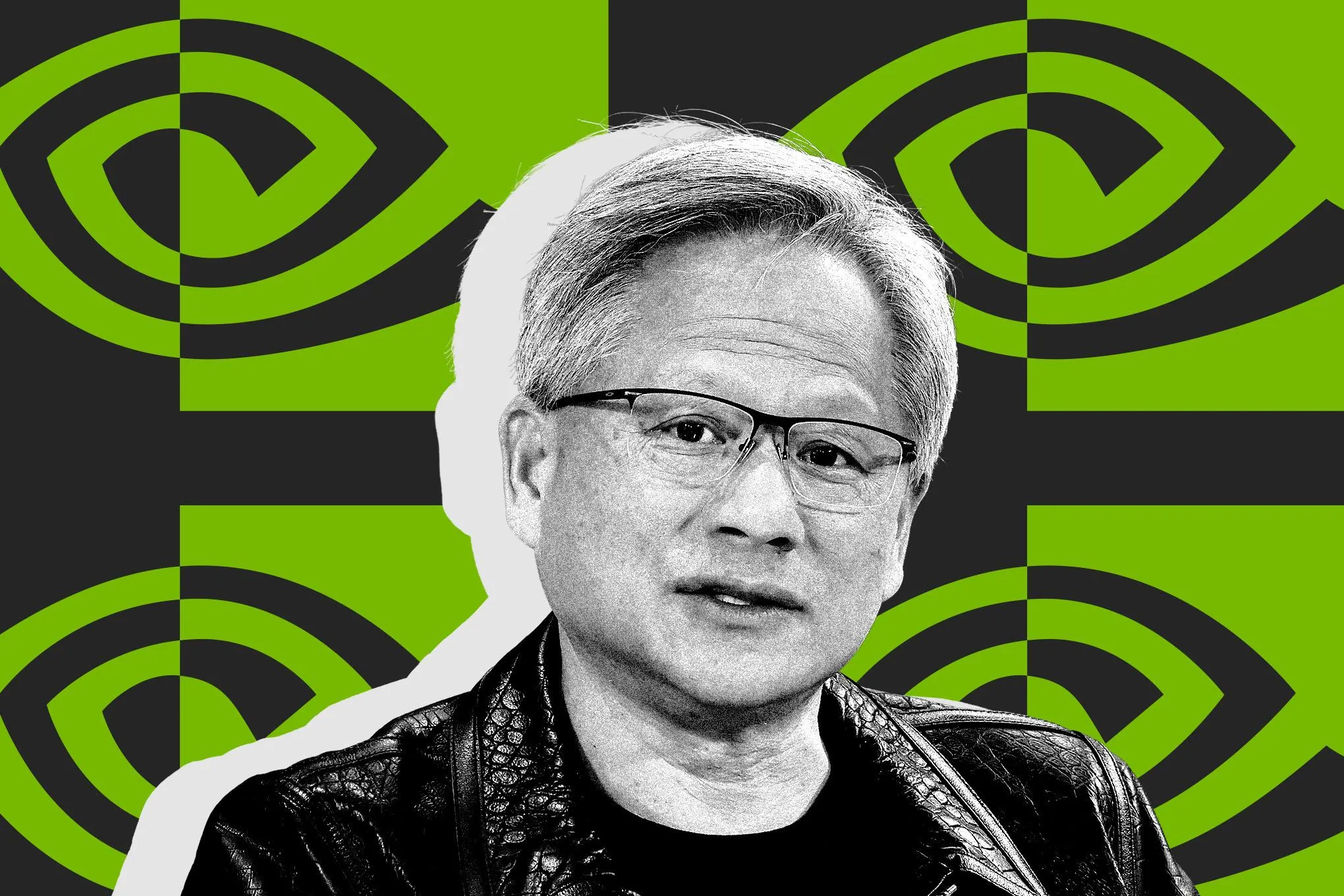
The Nvidia investigation is bigger than one executive
The Nvidia investigation has landed because Alice Huang works at Megaspeed, an Nvidia customer already facing scrutiny. The Commerce Department is reportedly examining whether Megaspeed smuggled AI chips to China, which turns a relationship between two executives into a possible channel for commercial intelligence, export-control knowledge, and political access.
Nvidia’s most advanced GPUs are not ordinary components. They are the digital equivalent of industrial machinery that everyone wants but few can build. A modern AI cluster can train frontier models, accelerate military research, improve surveillance systems, and provide an edge in scientific computing. That is why Washington treats high-end chip access as a strategic resource rather than a routine sales matter.
For Nvidia, this is an especially uncomfortable collision of interests. The company has spent years adapting products and sales plans around shifting US export rules, while Huang has argued publicly for continued engagement with China. That position is commercially understandable: China was once a massive market for Nvidia, and losing it does real damage. Yet a CEO’s access to policymakers becomes more sensitive when a customer is suspected of routing restricted hardware where it cannot legally go.
Export controls turned GPUs into national-security assets
The US has tightened restrictions on sales of advanced AI chips and chipmaking tools to China across multiple administrations. The rules have changed in detail, but the basic goal has held: limit China’s ability to acquire the compute required for the most capable AI systems. The Commerce Department’s Bureau of Industry and Security administers much of that export-control regime, including licensing decisions for sensitive technologies.
That bureaucracy can sound abstract until you see the incentives it creates. When a chip worth tens of thousands of dollars is restricted, gray-market brokers, shell companies, and questionable end users suddenly have a reason to exist. The allegations involving Megaspeed sit in that world. If the company acted as an unauthorized conduit, Nvidia needs to know what it knew, when it knew it, and whether its own controls caught anything.
The Nvidia investigation therefore has a practical compliance dimension alongside the espionage allegations. A board inquiry will likely look at customer vetting, sales records, internal communications, personal meetings, device security, and whether Huang had access to nonpublic information about export licenses or White House deliberations. It may also examine whether anyone internally raised concerns and how those concerns were handled.
A governance test for Nvidia’s board
Huang is not a disposable manager parachuted in for a few quarters. He co-founded Nvidia and has been its defining product strategist, salesman, and public face for decades. Investors associate him with the company almost as tightly as they once associated Steve Jobs with Apple. That makes independent oversight harder, not easier.
Frankly, this is where boards prove whether independence is a meaningful concept or just a line in an annual report. The Nvidia investigation cannot merely assess whether classified documents changed hands. It needs to establish whether Nvidia’s policies were appropriate for a CEO operating near the center of US AI policy and dealing with customers tied to a highly restricted market.
There is also a communications problem. Nvidia has said it will provide updates “as appropriate,” which is understandable while an inquiry is active. Still, the Nvidia investigation will eventually need to show shareholders what guardrails changed, who is accountable for them, and how the company will handle any customer whose conduct created exposure.
What comes next
The Nvidia investigation does not show that a breach occurred. Nvidia explicitly says it has no present evidence of one. But dismissing it as tabloid-adjacent executive drama would be just as foolish. In the AI chip era, intimate access to a chief executive can carry implications far beyond a company’s private life.
My read is that Nvidia’s real challenge is not simply to clear or implicate Huang. It is to show that its systems can withstand the awkward human vulnerabilities that come with being the world’s most strategically important chip company. Washington has made Nvidia’s GPUs part of national power. The company now has to operate like it understands the burden that brings.