


- Nvidia espionage scrutiny intensified after House committee chairs sought a closed briefing on CEO Jensen Huang’s reported customer ties.
- The Nvidia espionage scrutiny case concerns unverified intelligence claims involving Megaspeed executive Alice Huang and possible access to sensitive information.
- Nvidia says customer executives receive ordinary business information and that it neither possesses nor shares classified material.
- Congress is increasingly treating AI computing supply chains as national-security infrastructure rather than ordinary commercial technology markets.
Table of Contents
Nvidia espionage scrutiny arrives at a perilous moment
Nvidia espionage scrutiny has reached Washington at a moment when the chipmaker can least afford confusion about its relationships with overseas customers. Three House committee chairs have asked CEO Jensen Huang for a closed-door briefing over reports involving Alice Huang, an executive at Singapore-based Nvidia customer Megaspeed, and an intelligence assessment that has not been made public.
The allegations are explosive, but so far they remain unproven. Reporting cited by the Financial Times says US intelligence officials prepared a memo alleging that Alice Huang had been recruited by China’s Ministry of State Security and that she had a romantic relationship with Jensen Huang. Nvidia has characterized Huang’s interactions with customer executives as routine business, while the company declined to address the alleged memo and relationship directly.
That is a very long way from establishing espionage. An intelligence assessment is not a court finding, and neither the memo nor its underlying evidence has been released. But Congress doesn’t need a criminal conviction to ask whether the world’s most consequential AI-chip company has sensible guardrails around foreign contacts. Frankly, it would be negligent not to ask. The Nvidia espionage scrutiny is therefore as much about corporate safeguards as it is about the reported allegations.
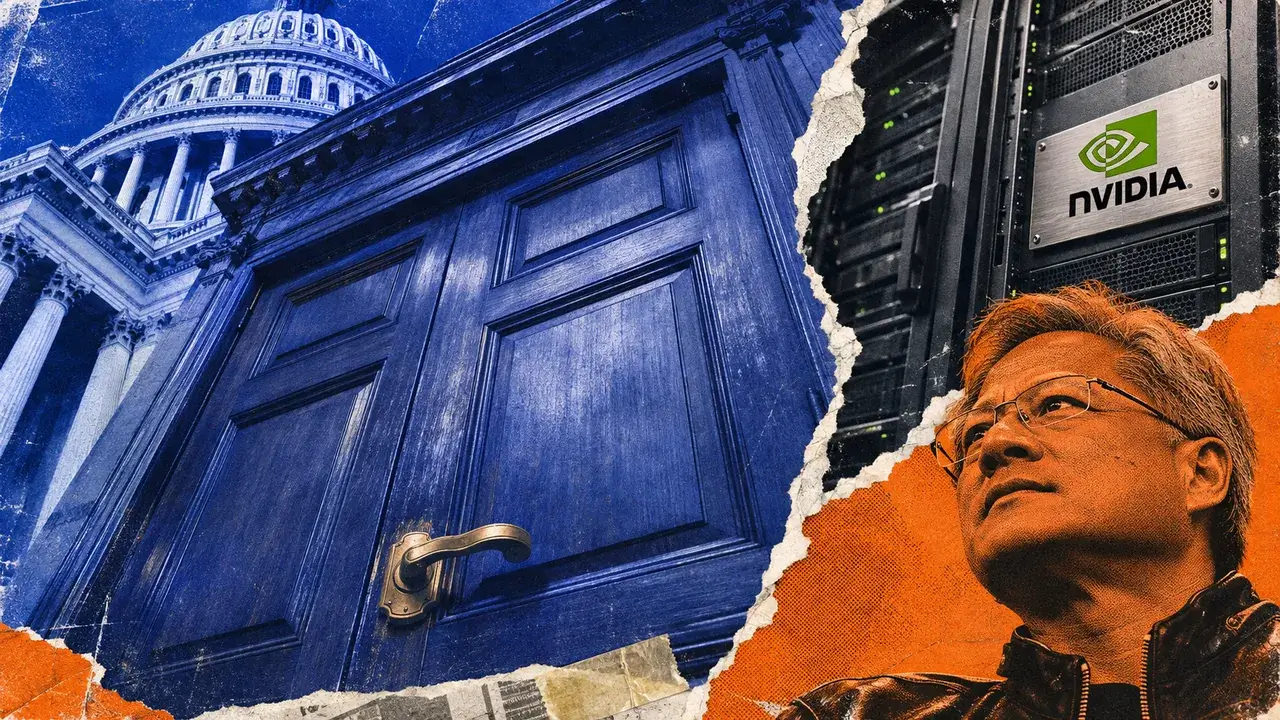
House Foreign Affairs Committee chair Brian Mast, House Select Committee on the Chinese Communist Party chair John Moolenaar, and House Intelligence Committee chair Rick Crawford signed the November 4 request. They asked Huang to accept a proposed November 18 briefing, or suggest another date, by November 11. Whether Huang will appear personally was not publicly confirmed in the reporting.
The names on that letter are the story. This is not one lawmaker taking a swing at a famous executive. It is a coordinated request spanning foreign policy, intelligence, and the House panel built specifically to examine strategic competition with China.
What Congress wants from Nvidia espionage scrutiny
At the heart of the Nvidia espionage scrutiny is a deceptively simple question: what can a customer contact actually learn or influence? Nvidia says regional cloud customers receive regular commercial information, not trade secrets or national-security material. It has also said plainly, “We neither have nor share classified information with customers.”
That response addresses one concern, but not all of them. Corporate espionage does not require someone to walk out with a folder stamped classified. Useful intelligence can include delivery schedules, product roadmaps, supply constraints, prospective customers, export-license conversations, lobbying strategy, or simply a sharper view of how a company interprets Washington’s rules. In the semiconductor business, timing can be nearly as valuable as technical documentation.
Nvidia’s relationship with Megaspeed makes the inquiry more complicated, though not necessarily more incriminating. Megaspeed is part of Nvidia’s cloud partner ecosystem, buying Nvidia equipment and renting computing capacity to AI developers. That puts it in a normal commercial lane for Nvidia: the company sells the picks and shovels, and regional cloud operators rent out access to the gold rush.
Still, the partner model is where export controls become messy. A GPU may be sold to a legitimate cloud provider in Singapore, then used by clients whose identities and workloads are much harder for the original chip designer to observe. US officials have spent years worrying about those indirect paths to Chinese users, particularly after Washington restricted sales of high-end AI accelerators to China. That concern is central to the Nvidia espionage scrutiny now facing the company.

The AI supply chain is now a security problem
Nvidia espionage scrutiny reflects Nvidia’s extraordinary position. The company is no longer viewed only as a successful Silicon Valley hardware vendor. Its most capable GPUs sit beneath major AI systems, government research, defense-adjacent projects, and cloud platforms around the world. That makes the company a strategic asset whether it likes the label or not.
Washington has already shown its willingness to intervene directly in Nvidia’s China business. The Commerce Department has tightened controls on advanced chips and their performance thresholds, forcing Nvidia to develop China-specific products designed to fit within US rules. Those rules have been revised repeatedly, often after companies figured out how to work around the previous version. It is less a tidy fence than a fence being rebuilt while everyone is climbing it.
The US Bureau of Industry and Security administers export controls that govern much of this trade. Nvidia can comply with every formal licensing obligation and still face questions about whether its customer-screening practices keep pace with a global web of cloud resellers, subsidiaries, brokers, and end users.
The reported personal dimension has attracted so much attention for a reason. If the allegations are false, Nvidia and Huang deserve the chance to say so clearly in the appropriate forum. If there was an undisclosed relationship, lawmakers will want to know whether it created conflicts, bypassed internal reporting, or gave a customer unusual access. Those are separate questions, and treating them as one is how public debate gets sloppy fast.
Nvidia’s defense is plausible, but the stakes are larger
Nvidia’s public position is not inherently implausible. CEOs meet customers constantly, particularly when the CEO is Jensen Huang and the product is in painfully short supply. Huang has built part of Nvidia’s mystique by being unusually present with partners, developers, and buyers. That hands-on style has helped turn GPUs into the industry’s hottest commodity; it also creates more points of contact for critics to inspect.
There is also no public evidence that Nvidia shared classified information, altered US policy at a customer’s request, or violated export controls in connection with Megaspeed. Bloomberg reported that Nvidia said its cloud partners do not ask it to advocate for changes in US law or seek chip sales to China. Those denials should be taken seriously, even as Congress tests them.
Singapore’s Ministry of Home Affairs previously said it had not conducted an Alice Huang-specific investigation of the kind described in earlier reporting, while separately confirming an ongoing investigation involving Megaspeed. China’s foreign ministry dismissed earlier reporting as unsubstantiated. Neither response resolves the newer claims about the reported intelligence memo, but both illustrate how little of the underlying record is currently available to the public.
My read is that Nvidia espionage scrutiny will outlast this specific allegation. The central problem is structural: AI infrastructure has become too strategically valuable for lawmakers to accept vague assurances about who gets access, who knows what, and who is accountable when equipment crosses borders through cloud intermediaries. Nvidia espionage scrutiny is likely to remain a recurring issue as those cross-border arrangements expand.
Huang’s eventual briefing, if it happens, may reveal little because intelligence and corporate-security sessions are often closed for good reason. Yet Nvidia will still face a broader test in public. Can it show that the commercial relationships powering its global growth are governed with the discipline expected of a company sitting at the center of America’s AI strategy? That is the question Congress is really asking, and it won’t disappear when this news cycle does.