


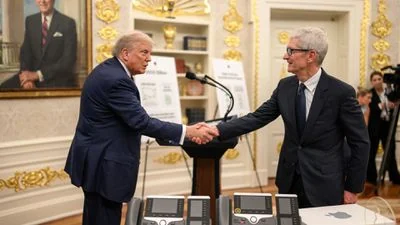
- Speculation about Tim Cook Nvidia CEO began after President Trump publicly endorsed Cook, following Jensen Huang’s resignation from the chipmaker.
- A Tim Cook Nvidia CEO move looks unlikely, given Cook’s new executive chairman role and Nvidia’s very different operational demands.
- Nvidia named CFO Colette Kress interim CEO while its board searches among internal and external candidates.
- Apple hardware chief Johny Srouji has reportedly emerged as a possible Nvidia candidate, though no interest has been confirmed.
Table of Contents
Tim Cook Nvidia CEO speculation lands at an awkward moment
Donald Trump has a preferred candidate for Nvidia’s suddenly vacant top job: Apple executive chairman Tim Cook. The Tim Cook Nvidia CEO idea arrived on Truth Social just as Nvidia confirmed that Jensen Huang had resigned, effective immediately, after reports of two extramarital affairs, including an allegation involving a person the U.S. government believes was working for Chinese intelligence.
That is an extraordinary chain of events, but the pieces should not be confused. Huang’s departure is first and foremost a corporate governance crisis at the world’s most strategically important chip company. Trump’s endorsement of Cook is political commentary, not a nomination process. Nvidia’s board, not the White House, will choose its next leader.
Nvidia has installed CFO Colette Kress as interim CEO and says it will assess both internal and outside candidates. Kress is a serious stabilizing choice. She has helped steer Nvidia through the gaming-GPU years, the failed Arm acquisition, the data-center boom, and the current period when every major cloud company seems determined to buy as many AI accelerators as it can physically plug in.
Still, the Tim Cook Nvidia CEO conversation is revealing because it captures what Nvidia is now. This is no longer merely a successful Silicon Valley semiconductor company. It sits at the intersection of AI spending, U.S.-China export controls, national security, energy constraints, and the financial plans of Microsoft, Amazon, Meta, Google, and OpenAI. Its CEO job may be the most consequential role in technology.
Why Cook would be a fascinating, improbable pick
On a résumé-only basis, the case is easy to sketch. Cook took Apple from a company whose identity was bound tightly to Steve Jobs into one of the most valuable businesses on earth. He is relentlessly operational, deeply experienced with Asian manufacturing, and comfortable dealing with presidents, regulators, suppliers, and shareholders who expect near-perfect execution.
But the Tim Cook Nvidia CEO scenario starts to look less convincing once you move beyond the headline. Cook stepped down as Apple CEO on September 1 in a planned handoff to John Ternus and now serves as executive chairman. That is usually a position for strategic continuity, board-level influence, and a slower cadence than running a company in a hypercompetitive infrastructure arms race. Walking away after Apple’s carefully managed transition to take Nvidia’s job would be a remarkably abrupt second act.
There is also the matter of fit. Apple is a consumer products business that wins through an unusually controlled combination of silicon, software, retail, design, and services. Nvidia sells the picks and shovels of modern computing, but it must keep an enormous ecosystem of cloud operators, server makers, networking partners, software developers, and governments broadly aligned. Both require supply-chain discipline. The day-to-day leadership muscles are not identical.
Frankly, the biggest argument against a Tim Cook Nvidia CEO appointment is that Nvidia does not need a symbolic adult in the room. It needs someone who can extend Huang’s technical and commercial machine without freezing it in place. Huang was not simply the public face of Nvidia; he was its product storyteller, ecosystem builder, capital allocator, and near-constant salesman to the AI industry. Replacing that blend is hard.
Nvidia’s board has said it will consider internal and external candidates, while Colette Kress serves as interim CEO.
Nvidia’s real succession test
The board’s first task is continuity. Customers ordering AI systems years in advance will want assurances that product road maps, supply commitments, and software support remain intact. Investors will want to know whether the company can preserve the remarkable margins and market confidence built under Huang. Employees will be watching for a leader who understands why CUDA, Nvidia’s software platform, is more than a feature list; it is the moat around the whole business.
The Tim Cook Nvidia CEO suggestion also risks distracting from the strongest internal option already in plain sight. Kress knows the company’s finances, investor relationships, and strategic constraints as well as anyone. An interim title does not rule out a permanent appointment. Boards often use an interim period as a pressure test, particularly when a sudden exit leaves little time for a polished succession announcement.
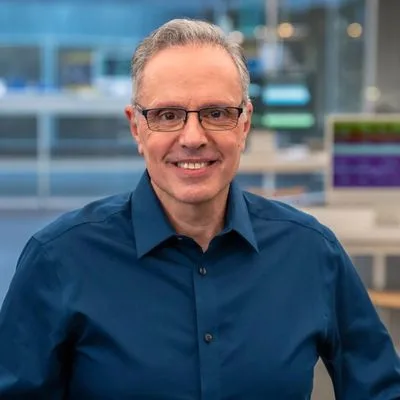
Then there is Johny Srouji, Apple’s longtime silicon leader and now chief hardware officer. Semafor has reported that Srouji is among people Nvidia may consider. Unlike Cook, Srouji’s background maps directly onto the central technological question: how to design high-performance chips and move them from ambitious architecture to dependable volume production. Apple’s custom silicon effort became one of the industry’s clearest examples of vertical integration paying off.
Yet there is no public sign that Srouji wants the job, and recruiting him would be difficult. Apple has just placed him in a larger hardware role during its own leadership transition. The Tim Cook Nvidia CEO chatter may make for better political theater, but Srouji is the more logically relevant Apple name if Nvidia wants a chip architect with executive credibility.
Nvidia’s leadership team has long been built around Huang’s unusually long tenure and clear authority. That worked spectacularly well until it did not. A board that had a deep bench ready to name immediately would not normally need to announce a broad search after an emergency resignation.
The China question will shape the choice
Huang’s reported circumstances introduce a security dimension that reaches well beyond standard executive misconduct. Nvidia is already operating under intense scrutiny because its chips are central to AI development and U.S. restrictions limit which advanced products can be sold into China. Any allegation involving Chinese intelligence, whether or not it leads to further public findings, will raise the board’s sensitivity to security procedures and government relationships.
That makes Trump’s intervention understandable as a political signal, even if it does not make Cook available. The next chief executive will need credibility in Washington, but also enough industry authority to prevent customers and partners from reading the transition as a loss of momentum. The Tim Cook Nvidia CEO idea is less a likely outcome than a measure of the standard Nvidia now faces: find somebody who can manage a company that has become too important to stumble.
My read is that Kress has the inside track for the immediate future, while Nvidia quietly tests whether a technical leader such as Srouji would actually leave a secure post. The company can survive Huang’s exit. What it cannot afford is months of indecision while rivals smell an opening in the AI infrastructure market.