Table of Contents
Samsung Gears Up for Galaxy S25 Unpacked Event
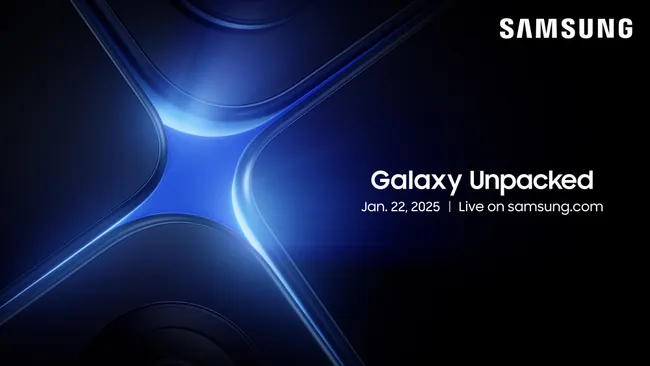
Samsung’s Galaxy Unpacked event is set for January 22 at 1 PM ET in San Jose, CA. The event is expected to put the Galaxy S25 series front and centre, while leaving room for Samsung to discuss products that sit outside the familiar phone-tablet-watch cycle, including possible AR glasses and the Galaxy Ring 2.
That makes this Unpacked event more interesting than a routine annual flagship refresh. Samsung’s Galaxy S phones remain its most visible Android devices, but the company is also under pressure to show what its AI strategy means in day-to-day use rather than in a slide deck. Hardware upgrades still matter, particularly at the premium end of the market, yet software intelligence, camera processing and the way devices work with services are becoming just as important to a buyer’s experience.
The broad picture suggested by the current reports is one of measured hardware evolution rather than a wholesale redesign. That is not automatically a disappointment. Flagship phones have reached a point where major gains often arrive through refinement: better performance consistency, more useful processing and design changes that improve how a device feels in the hand. The question for Samsung will be whether those improvements are clear enough to make the S25 family feel distinct from the generation before it.
Check out our article on Samsung Galaxy S25 Slim Leaks: A Super-Thin Revolution?, published on January 17, 2025, by SquaredTech.
Galaxy S25 Series Details
Samsung is expected to announce three models in the Samsung Galaxy S25 series: the standard S25, S25+, and the premium S25 Ultra. That three-tier structure has become Samsung’s established way of serving different priorities without splintering its flagship identity. The standard model is likely to be the most compact option, the S25+ the larger mainstream alternative, and the Ultra the device aimed at buyers who want Samsung’s fullest set of features.
Leaks suggest slight design updates across the range, including rounded corners, thinner bezels and flatter edges. None of those changes alone would transform the phones, but together they could change their visual character and handling. Flatter edges can make a handset look cleaner and more deliberate, while rounded corners may soften the silhouette. Thinner bezels are now expected on high-end phones, yet they still matter because they can make a familiar display size feel less imposing.
The displays on the S25 and S25+ are expected to remain at 6.2 and 6.7 inches, while the Ultra may increase to 6.9 inches. Retaining the 6.2-inch and 6.7-inch sizes would signal continuity for people who have settled on Samsung’s current format choices. The possible move to 6.9 inches for the Ultra is small on paper, but it reinforces the model’s role as the uncompromising large-screen option. For some buyers, that extra space matters less for spectacle than for practical tasks: reading, editing images, navigation and juggling several apps.
Reports confirm that the phones will use Qualcomm’s Snapdragon 8 Elite processor, with advanced AI capabilities forming a major part of the pitch. The processor is not merely a spec-sheet item in this context. AI functions increasingly depend on fast, efficient on-device processing, whether they involve image work, language tools or assistance features that people expect to respond without feeling like a separate service. Samsung will need to show where those capabilities are genuinely helpful, because “AI” has become an easy label to apply and a harder promise to prove.
The prospect of Snapdragon 8 Elite across the range also has a wider implication. Unlike past models, the S25 series may exclusively feature Snapdragon processors globally, addressing performance concerns seen in earlier Exynos versions. A more consistent processor strategy could make the S25 experience easier to explain internationally. It would reduce the sense that customers in different regions are buying materially different versions of the same flagship, a long-running source of debate whenever Samsung’s processor choices have varied by market.
There are signs Samsung may be selective about where it spends on hardware. The flagship phones will likely stick to last-generation OLED displays instead of adopting newer M14 panels, possibly to control costs. That does not necessarily mean the screens will be weak; Samsung’s flagship displays have long been a central strength of the line. But it suggests the company is balancing component choices rather than attempting an across-the-board specification leap. In a mature smartphone market, that can be sensible, provided the trade-offs are not obvious in everyday use.
The Ultra model will reportedly upgrade its ultra-wide camera sensor to 50MP, while other sensors remain unchanged. This is another indication that Samsung may focus on targeted improvements instead of rebuilding the entire camera system. Ultra-wide cameras are useful precisely because they cover situations the main camera cannot: architecture, landscapes, cramped interiors and group shots. Improving that sensor could be more meaningful than chasing a headline-grabbing change that has little effect on real photos. Still, with other sensors reportedly unchanged, Samsung’s software processing and AI features may carry a substantial part of the camera story.
Other Possible Reveals
Apart from the Samsung Galaxy S25 series, Samsung might introduce the Galaxy Ring 2 and AR glasses. These remain possible reveals rather than guaranteed launches, and that distinction matters. A teaser can be strategically useful: it signals where a company intends to go without forcing it to explain every technical detail or commit to immediate availability.
The Galaxy Ring 2 is rumored to offer additional sizes, enhanced AI features and improved health tracking sensors. Additional sizes would be a practical improvement for a device designed to be worn continuously; fit is not a cosmetic issue when comfort and sensor contact are part of the product experience. Enhanced AI features and improved health tracking sensors would also suggest that Samsung sees the ring as more than an accessory. The challenge is to make the data it collects understandable and useful, rather than simply generating another stream of numbers for users to interpret.
The AR glasses may resemble prescription glasses, weigh around 50 grams, and could showcase AI integration through Samsung’s partnership with Google and Qualcomm. Resembling prescription glasses would be an important design ambition, because wearable computing tends to succeed or fail on whether people are comfortable wearing it in ordinary settings. Weight matters for the same reason. Around 50 grams may sound like a small detail, but anything worn on the face is judged differently from a phone carried in a pocket.
Samsung’s partnership with Google and Qualcomm gives the possible AR glasses a clear strategic context. Google brings a major software presence, Qualcomm is central to mobile processing, and Samsung has the consumer hardware reach to put a concept in front of a wide audience. Yet a partnership is not, by itself, a finished product. The value of any glasses platform will depend on whether its AI integration solves useful problems without becoming distracting, awkward or overly dependent on novelty.
These products might only be teased during the event, with full details released later. That would fit an Unpacked presentation designed to do two things at once: sell the immediate Galaxy S25 lineup and sketch a broader view of Samsung’s ambitions for 2025. The phones are likely to provide the concrete news. The ring and glasses, if they appear, could be the clues about what Samsung wants its device ecosystem to become.