Table of Contents
Galaxy S25 Ultra to Lose Bluetooth Support for S Pen
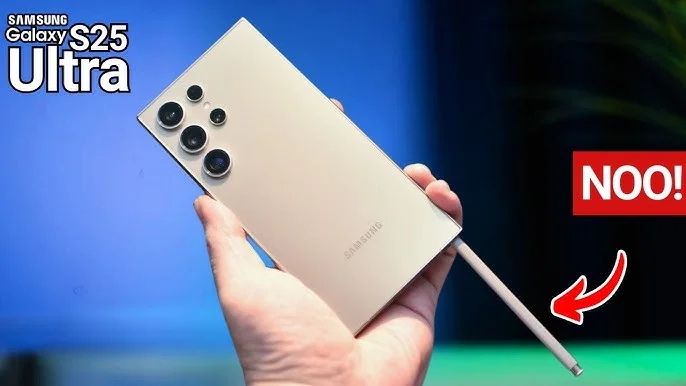
The Galaxy S25 Ultra is set to launch on January 22, alongside the Galaxy S25 and S25+. Yet one rumor has drawn more attention than the usual pre-launch discussion around cameras, displays, or performance: the S Pen may no longer support Bluetooth connectivity.
That would not mean the Galaxy S25 Ultra loses the S Pen itself. The Ultra supports the S Pen, while the Galaxy S25 and S25+ do not. The issue is narrower, but still meaningful for people who use the stylus beyond handwriting and sketching. Bluetooth is what has enabled the pen’s remote-control features, including Air Actions, remote camera controls, and presentation navigation.
For many owners, those features have always been a bonus rather than the reason to buy an Ultra phone. A stylus is first a writing and drawing tool. It makes quick notes more natural, gives users a finer point for editing and selection, and remains useful in apps where a fingertip is simply too blunt. But Samsung spent years turning the S Pen into something broader: a tiny remote that could interact with the phone from a distance.
Removing Bluetooth would be a clear retreat from that particular idea of what the S Pen should be.
What Bluetooth changed for the S Pen
Since the Galaxy Note 9, Samsung’s Bluetooth-enabled S Pen has provided users with gesture controls. Air Actions allow tasks like snapping photos, switching camera modes, and navigating presentation slides. The premise was straightforward: take the pen out of the phone and use it without having to touch the display.
That can sound like a minor convenience until it is used in the right setting. Remote photo snapping is handy when a phone is placed at a distance. Slide navigation can be useful when the phone is serving as part of a presentation setup. Gesture controls can also save a few taps when moving through camera modes or other supported functions. None of this turns a phone into a different category of product, but it gives the Ultra a degree of flexibility that ordinary slab phones lack.
The catch is that the value of Air Actions depends heavily on habits. Some S Pen users will use the pen for notes, document markup, screenshots, or drawing and never miss remote controls. Others see those controls as part of the reason Samsung’s flagship stylus experience feels more complete than a basic bundled pen. The feature set may not be essential, but it has helped distinguish the S Pen from an accessory limited to contact with the screen.
If the rumor is accurate, users would lose remote slide navigation and photo snapping, along with the broader gesture-based interaction enabled by Bluetooth. That does not make the Galaxy S25 Ultra less capable at core pen tasks. It does mean Samsung would be asking buyers to accept a simpler S Pen experience in a phone positioned at the top of its lineup.
The important question is not whether every user needs Air Actions. It is whether a flagship accessory should lose capabilities that some of its most committed users have come to expect.
A smaller feature can still have a larger meaning
Flagship phones are often judged as much by what they retain as by what they add. When a feature disappears, even one with a limited audience, it invites a reasonable question: was it removed because it was rarely used, because Samsung wants to simplify the design, or because the company sees a better use for the S Pen?
The current information does not settle that question. It only suggests a shift in Samsung’s approach to the S Pen’s design and capabilities. That distinction matters. Rumors of a Bluetooth-free S Pen should not be treated as confirmation that Samsung is abandoning the stylus, or that every existing S Pen function is going away. The S Pen remains a defining part of the Galaxy Ultra proposition. Still, Bluetooth removal would change the balance between a pen built for direct input and one designed to act as a wireless controller.
There is also a practical expectation issue. Features such as remote camera controls are easy to overlook until they are no longer available. Buyers who have used them across previous Galaxy devices may see their absence as a step back, even if Samsung improves other parts of the phone. A new feature and a removed feature are not always interchangeable, particularly when they serve different use cases.
What’s next for Samsung’s S Pen?
If Samsung decides to remove Bluetooth from the S Pen, it might be planning a different direction for the accessory. One possibility is integrating Ultra Wideband (UWB) technology to compete with Apple’s advanced stylus features, such as barrel roll gestures. Another path would be to focus less on remote operation and more on the fundamentals: precision, latency, handwriting, and software support.
Samsung could refine the S Pen for more precise drawing, writing, and handwriting-to-text conversion, appealing to creative professionals and casual users alike. That would be a sensible emphasis. The enduring appeal of a phone stylus is not usually waving it in the air; it is the ability to write a note when a keyboard feels slow, annotate an image accurately, or make a rough sketch without switching devices.
The company may also focus on better app integration, offering new features that enhance productivity and creativity without relying on Bluetooth. That could matter more in daily use than a long list of gestures. A pen becomes genuinely useful when its capabilities show up naturally in note-taking, editing, planning, communication, and creative apps rather than sitting behind a feature menu.
But software refinement will not automatically offset the loss of Air Actions for people who rely on them. Better handwriting-to-text conversion and remote photo snapping solve different problems. Samsung would need to make a persuasive case that the new direction is not just cheaper or simpler, but more useful to the people who choose an Ultra specifically because it includes the S Pen.
January 22 will clarify the trade-off
The Galaxy S25 Ultra, along with the Galaxy S25 and S25+, will debut on January 22. Until then, the Bluetooth question remains a rumor, and fans are eagerly waiting to see how Samsung addresses the possible backlash over this rumored change.
That response will matter. Samsung’s strategy will need to win over loyal S Pen users, especially if the company wants to maintain its reputation for innovation in flagship devices. The company does not need to convince everyone that Air Actions were indispensable. It does need to explain what replaces their value, if anything does.
For prospective Galaxy S25 Ultra buyers, the sensible approach is to separate the S Pen’s essential role from its extra features. If the pen is mainly a tool for writing, drawing, and precise screen input, Bluetooth removal may have little effect. If remote controls, gestures, camera triggering, and slide navigation are part of the appeal, this is a change worth watching closely. The S Pen’s future may not be in doubt, but its character could be.