

- Europe’s AI strategy is built around industrial sectors like manufacturing, healthcare, and logistics — not consumer platforms.
- Europe’s AI strategy prioritises regulatory governance and technological sovereignty over raw speed and scale.
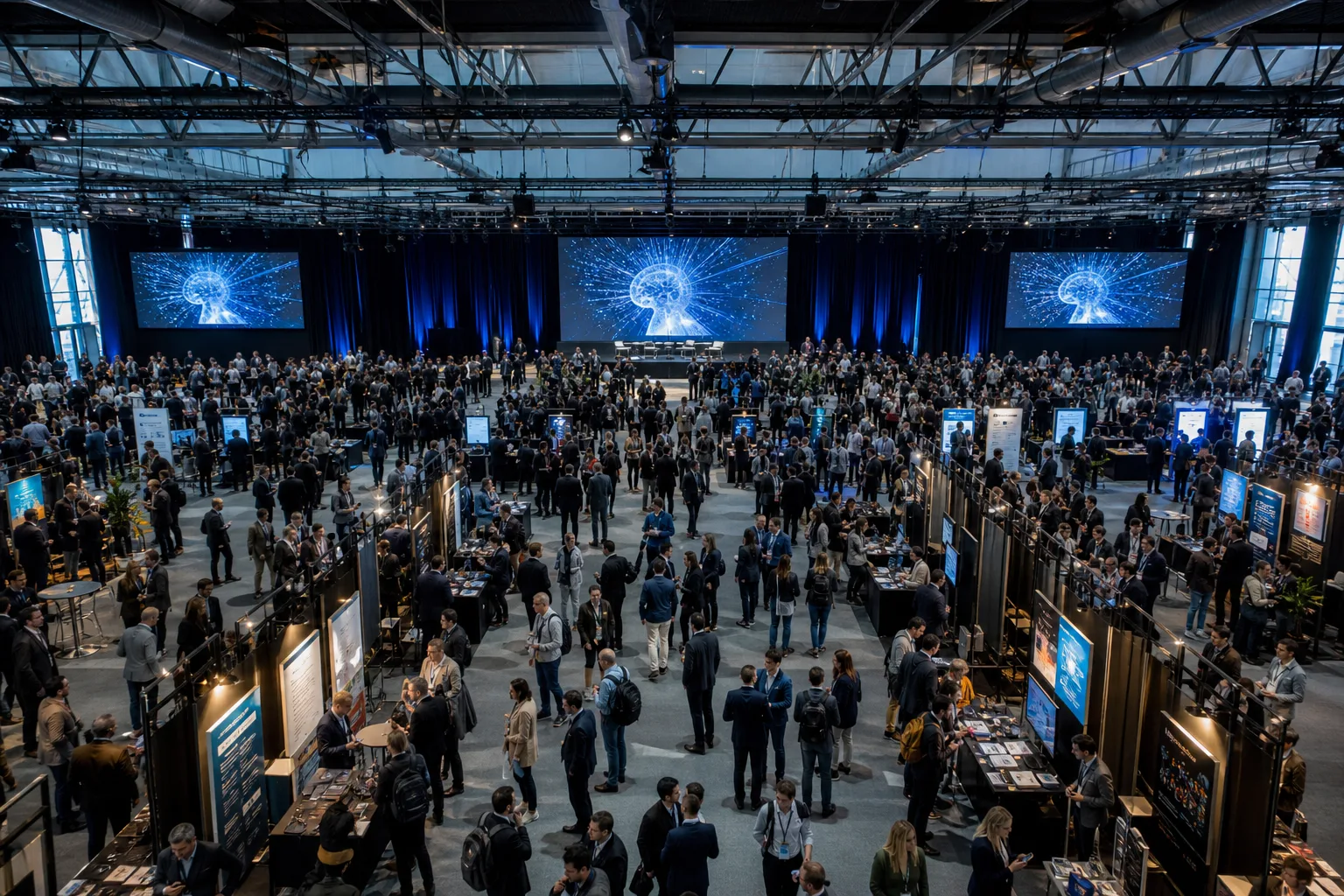
- VivaTech 2026 is expected to become a major showcase for European AI ambitions on the global stage.
- Critics say Europe’s cautious approach slows innovation, but supporters argue it builds longer-term institutional trust.
Table of Contents
Europe’s AI Strategy Is Playing a Completely Different Game
The global AI conversation has a habit of collapsing into a simple binary: the United States versus China. Two superpowers, two sets of ambitions, one race. But Europe’s AI strategy doesn’t fit neatly into that frame — and at VivaTech 2026 in Paris, European leaders and founders are expected to argue that this is precisely the point. Europe isn’t trying to out-GPT OpenAI or out-scale Baidu. It’s building something different. The question is whether that something different can actually compete.
Silicon Valley’s approach to AI has been defined by a few core instincts: move fast, scale hard, capture the market, then figure out the governance later — maybe. The past three years have seen that model produce genuinely extraordinary results. OpenAI’s GPT-4 and GPT-4o, Google’s Gemini, Anthropic’s Claude, Meta’s Llama series — the cadence of model releases has been relentless, and the capabilities have grown at a pace that still catches researchers off guard. American AI companies have attracted hundreds of billions in investment and dominate the foundation model landscape almost entirely.
Europe, meanwhile, has been doing something that looks, from a Silicon Valley perspective, like losing. It’s been writing laws. But those laws are central to what Europe’s AI strategy is actually trying to achieve.

Regulation as Strategy, Not Just Bureaucracy
That characterisation is a little unfair, but it captures a real tension. The EU AI Act — the world’s first comprehensive legal framework for artificial intelligence — came into force in August 2024. It classifies AI systems by risk level, imposes strict requirements on high-stakes applications, and sets transparency obligations that American companies have loudly complained about. Critics, particularly from the US tech lobby, have framed European regulation as a brake on innovation. Slower, more cautious, less willing to take risks.
But there’s another way to read it. Europe’s AI strategy has always been shaped by a different starting point: a deep suspicion of allowing critical digital infrastructure to be owned and controlled by foreign corporations. That’s not paranoia — it’s a lesson drawn from the cloud computing era, where European governments found themselves dependent on AWS, Microsoft Azure, and Google Cloud for sensitive public sector workloads. The GDPR was partly a response to that same concern. The AI Act continues the logic.
Technological sovereignty — the idea that Europe should control the infrastructure its economies and governments run on — has become one of the central pillars of Brussels’ digital agenda. It’s why the EU has poured funding into initiatives like the European AI strategy and why projects like GAIA-X, the European cloud initiative, exist at all, however bumpily they’ve proceeded. The goal isn’t to wall Europe off from American AI. It’s to ensure that European institutions aren’t entirely at the mercy of it.
Where Europe Actually Thinks It Can Win
Europe’s AI strategy makes most sense when you look at the industries Europe has historically been strong in. Manufacturing. Automotive. Aerospace. Logistics. Healthcare. Energy infrastructure. These aren’t sectors where you win by shipping a chatbot faster than your competitor. They’re sectors where trust, compliance, long operational cycles, and deep institutional relationships matter enormously.
That’s a very different competitive environment from the one OpenAI operates in. Deploying AI inside a car factory in Stuttgart, a hospital network in the Netherlands, or a power grid operator in France requires navigating regulatory frameworks, managing liability, integrating with legacy systems that are decades old, and maintaining the confidence of regulators who have every reason to be cautious about critical infrastructure failures. It also requires the kind of patient, relationship-driven enterprise sales process that doesn’t fit well with Silicon Valley’s growth-at-all-costs mentality.
European companies, and particularly the industrial conglomerates — Siemens, Bosch, Schneider Electric, Airbus — have spent years embedding themselves into exactly these kinds of environments. They understand the compliance requirements. They have the institutional relationships. They speak the language. When AI moves from being a product you sell to being a capability you deploy inside complex regulated systems, that expertise starts to look like a genuine competitive advantage rather than a legacy handicap. Europe’s AI strategy is built on precisely this industrial depth.

VivaTech 2026 and the Case Europe Is Building
VivaTech has grown steadily into one of the more consequential tech events on the European calendar. It doesn’t have the raw star power of CES or the founder cachet of Y Combinator Demo Day, but it’s become the place where European tech ambitions get their most visible airing. The 2026 edition is expected to put industrial AI front and centre — not as a niche application track, but as the main event. It is also shaping up to be one of the most important public tests of whether Europe’s AI strategy can translate from policy documents into commercial momentum.
The collaboration between TechCrunch and VivaTech this year adds an interesting dimension. The VivaTech Innovation of the Year competition will offer winning founders a chance to pitch live in Paris and secure a spot in Startup Battlefield 200 ahead of TechCrunch Disrupt 2026 in San Francisco. It’s a small but symbolically meaningful bridge between the European startup ecosystem and the American one — an acknowledgement that the talent and ideas coming out of Europe deserve a seat at the table where the big funding conversations happen.
That matters because one of Europe’s persistent structural weaknesses has been its inability to scale startups to global size. Europe produces excellent early-stage companies. It produces far fewer companies that grow to the scale of a Google or a Meta. Capital constraints, fragmented markets across 27 member states, and a cultural aversion to the kind of swinging-for-the-fences risk appetite that defines the best Silicon Valley ventures have all played a role. Europe’s AI strategy at the policy level is sophisticated. Whether the startup ecosystem can execute at the same level is a harder question.
The Honest Assessment: Strengths, Gaps, and What Comes Next
There are real risks to the path Europe has chosen. Regulatory environments, however well-intentioned, can calcify. The AI Act’s compliance requirements are already generating significant overhead for smaller AI companies operating in Europe, and there’s a legitimate concern that the friction will push the most ambitious founders toward the US or the UK — which, post-Brexit, has explicitly positioned itself as a more permissive environment for AI development. This is one of the sharpest internal tensions within Europe’s AI strategy: how to regulate responsibly without suppressing the very innovation the strategy depends on.
There’s also the foundation model gap to reckon with honestly. Europe does not have an OpenAI. It has Mistral AI, the Paris-based startup that has produced genuinely impressive open-weight models and attracted serious investment, including from Andreessen Horowitz and Microsoft. Mistral is one of the more encouraging stories in European AI, but it’s competing in a market where its better-funded American rivals are releasing new model generations every few months. Keeping pace is expensive and exhausting.
And yet the industrial AI thesis isn’t obviously wrong. The AI industry is maturing. The era of pure experimentation — throwing foundation models at everything and seeing what sticks — is giving way to something harder and more specific: getting AI to work reliably inside large, complex organisations that can’t afford failures. That transition plays to operational expertise, domain knowledge, and institutional trust. Those happen to be things Europe has in abundance in sectors that matter.
Europe’s AI strategy won’t look like Silicon Valley’s. It was never going to. The smarter question is whether the model Europe is building — slower, more regulated, more focused on industrial deployment and sovereignty — can carve out a durable position in a world where AI is increasingly infrastructure rather than product. VivaTech 2026 won’t answer that question definitively. But it will be a useful read on how seriously Europe is taking its own ambitions — and whether the rest of the world is starting to take them seriously too.

