

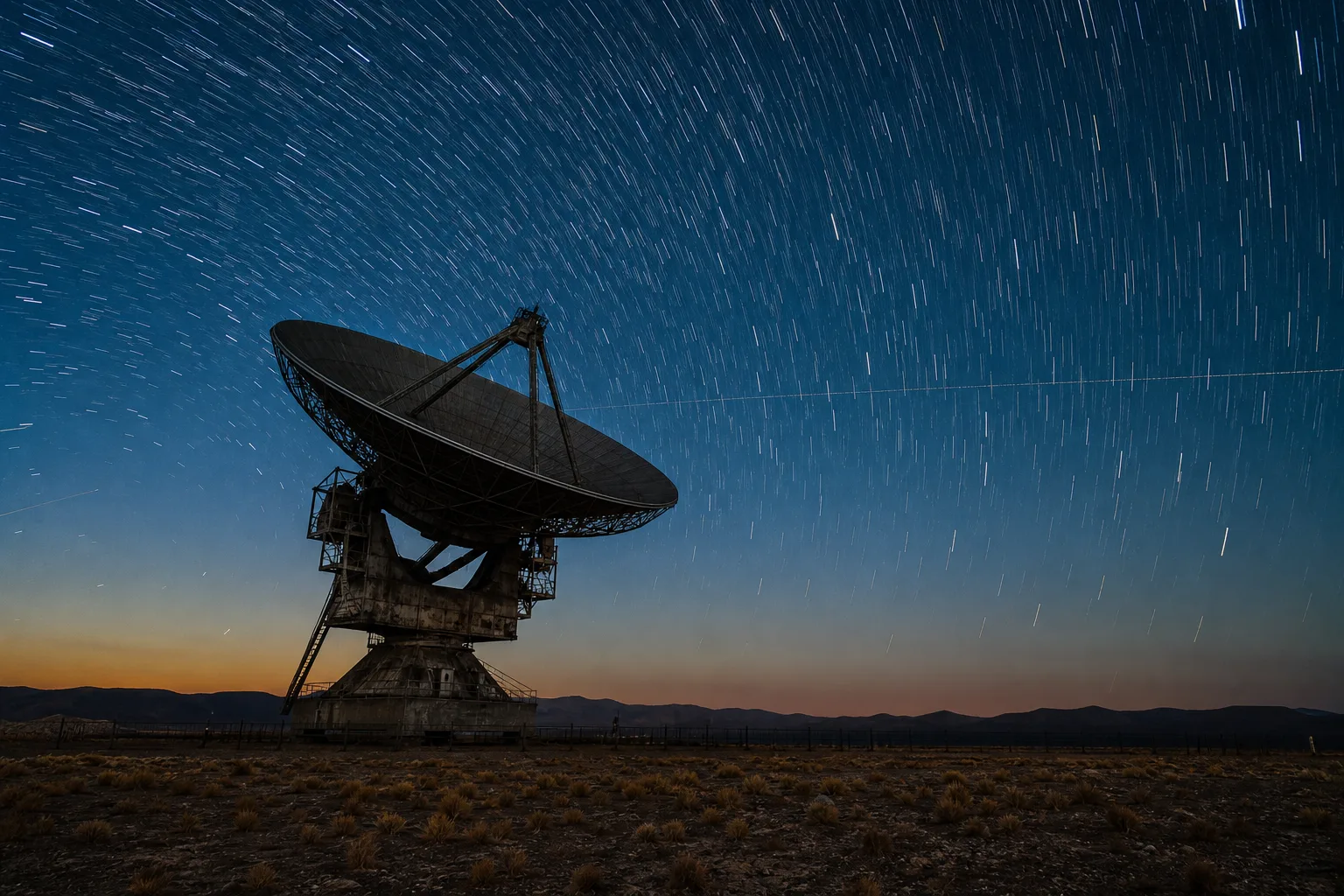
- The space situational awareness market is forecast to hit $61 billion in cumulative global spending over the next ten years.
- Commercial space situational awareness data and services will reach $3.6 billion between 2025 and 2034, driven by public-sector demand.
- Space Surveillance and Tracking satellites will account for 49% of all dedicated SSA spacecraft launched through 2034.
- Rising geopolitical tensions and orbital congestion are pushing governments to build sovereign SSA capabilities at speed.
Table of Contents
Space Situational Awareness Is Now a Strategic Priority
The global space situational awareness market is heading toward $61 billion in cumulative spending over the next decade, according to the second edition of Novaspace’s SSA market report released in May 2026. That’s not a number plucked from thin air — it reflects a fundamental shift in how governments, militaries, and commercial operators think about the space environment. Knowing where everything is in orbit has gone from a technical nicety to a hard national security requirement, and the spending projections show it.
Orbital space is getting crowded fast. The combination of large commercial constellations — think SpaceX’s Starlink, Amazon’s Project Kuiper, and a growing roster of sovereign broadband programs — alongside legacy debris fields and an increasing number of state-sponsored military satellites has made the orbital environment genuinely dangerous to navigate without real-time awareness. The European Space Agency estimates there are over 36,000 trackable objects in orbit, with millions of smaller fragments too tiny to track reliably but large enough to destroy a spacecraft on impact. Space situational awareness is the only credible answer to that problem.

Why Governments Can’t Ignore SSA Any Longer
What’s driving the urgency isn’t just congestion — it’s the convergence of congestion with geopolitics. Space has become a contested domain in a way that wasn’t true even five years ago. Russia’s 2021 ASAT test, which deliberately destroyed one of its own satellites and generated thousands of new debris fragments, was a stark reminder that space is no longer a cooperative environment. China has been expanding its own space surveillance network for years. The United States, through Space Command and the Space Force, has been investing heavily in what it calls Space Domain Awareness — the military-focused cousin of the broader SSA concept.
Against that backdrop, it’s easy to see why every major spacefaring nation is now treating space situational awareness as infrastructure, not an optional extra. Hugo Kalifa, analyst at Novaspace, put it bluntly:
“SSA is no longer just about tracking objects, it has become a strategic capability underpinning national security, operational decision-making, and the safe use of increasingly congested orbital environments.”
That framing matters. When space awareness becomes a strategic capability rather than a technical function, procurement decisions follow a different logic. Budgets get protected. Programs get prioritised. And commercial providers get called in to fill gaps that government systems alone can’t cover.
The Commercial Space Situational Awareness Market Takes Shape
Government programs will dominate the headline $61 billion figure — that’s largely driven by defence and civil space agency budgets in the US, Europe, and increasingly Asia. But the more interesting story for the commercial sector is the $3.6 billion commercial SSA data and services market projected to emerge between 2025 and 2034. That’s not a massive number relative to the broader space economy, but its growth trajectory is significant, and the demand source is telling: the bulk of it comes from public-sector clients who want commercial capabilities to complement their own.
Governments are essentially outsourcing parts of the sensing and analytics stack. Commercial operators like LeoLabs, ExoAnalytic Solutions, and Slingshot Aerospace have built tracking networks that offer persistent monitoring, faster update rates, and different sensor geometries than traditional government radar chains can provide. Rather than build everything themselves, space agencies and defence departments are buying in commercial data feeds and layering them on top of classified sources. It’s a model that mirrors what happened with satellite imagery — governments used to own the entire stack, now they buy commercial imagery from Maxar and Planet Labs as a matter of routine.
Satellites Tracking Satellites — The SST Boom
One of the report’s more striking data points is the projected dominance of Space Surveillance and Tracking spacecraft in the SSA satellite launch manifest. SST satellites — that is, satellites whose primary mission is watching other objects in orbit — are expected to account for 49% of all dedicated space situational awareness satellites launched through 2034. That’s a meaningful commitment from the industry toward space-based sensing architectures, as opposed to relying solely on ground-based radar and optical telescopes.
The logic is straightforward: ground-based sensors have coverage gaps, are affected by weather, and can’t see certain orbital regimes easily. A network of SST satellites can provide persistent, global coverage from vantage points that ground stations simply can’t replicate. The US Space Force has been developing exactly this capability, and other nations — France, Japan, and Australia among them — are following with their own programs. France’s CERES constellation and Japan’s partnership with commercial providers are early examples of what’s becoming a broader national trend.
Marco Tomassetti of Novaspace framed the stakes clearly:
“As orbital congestion intensifies, SSA is becoming the operational backbone connecting civil space traffic coordination, commercial mission assurance, and national security requirements. These capabilities will increasingly determine which actors can operate safely, reliably, and strategically in space.”
That last sentence deserves emphasis. The ability to operate safely in orbit is becoming a competitive differentiator — not just between nations, but between commercial operators. A satellite company that can’t demonstrate proper conjunction analysis and collision avoidance will increasingly face regulatory hurdles and insurance headaches.
Space Traffic Management — The Missing Piece
Novaspace’s report also flags the growing convergence between Air Traffic Management and Space Traffic Management, an area that has been debated in policy circles for years but is only now attracting serious regulatory attention. The analogy to aviation is imperfect — space objects move faster, don’t have pilots on board, and can’t exactly pull over — but the underlying logic is the same. You need an authoritative, real-time picture of who’s where, you need standardised communication protocols, and you need someone with the authority to issue avoidance manoeuvres.
Right now, that authority is fragmented. The US Space Force’s 18th Space Control Squadron provides conjunction data to operators worldwide, but it’s a voluntary system with no enforcement mechanism. The UN’s Committee on the Peaceful Uses of Outer Space (COPUOS) is working on long-term norms, but progress is slow. The European Union has been developing its Space Surveillance and Tracking support framework under EU SST, and the UK established its own Space Operations Centre after Brexit. The landscape is a patchwork.
That patchwork is part of why the $61 billion projection exists. If there were a single, globally accepted Space Traffic Management authority with standardised data sharing, spending might be lower and more efficient. Instead, every major actor is investing in its own sovereign space situational awareness capability as a hedge against not being able to trust everyone else’s data — or against being excluded from data-sharing arrangements in a crisis.
What the $61B Forecast Really Signals
Numbers like $61 billion over ten years can obscure as much as they reveal. The more important signal is what that spending represents: a fundamental reclassification of space awareness from an operational tool to a geopolitical asset. Nations that can independently characterise the orbital environment — know what’s up there, who launched it, what it’s doing, and whether it poses a threat — hold a form of strategic intelligence that’s increasingly valuable.
The commercial market growing to $3.6 billion in the same period also tells you something about the maturation of the broader space economy. As more commercial constellations go up and more critical infrastructure moves to orbit — communications, Earth observation, navigation — the operators of that infrastructure have a direct financial interest in space situational awareness. A collision involving a major constellation isn’t just a technical problem; it’s a liability event, a service outage, and potentially a regulatory crisis rolled into one.
The decade ahead will likely see the first serious attempts to codify Space Traffic Management into binding international frameworks, the emergence of a genuinely competitive commercial SSA data market, and continued growth in space-based sensing architectures. Whether the governance side keeps pace with the technical investment is the real open question — and it’s one the $61 billion alone can’t answer.

