
- Halide variable aperture control lets iPhone 18 Pro owners select any available f-stop between f/1.48 and f/4.0.
- Unlike Apple’s four presets, Halide variable aperture adjustments are continuous, giving photographers unusually granular control over the main camera.
- The update also adds Dawn and Quicksilver, two film-inspired looks built into Halide Mark III’s imaging engine.
- The practical gains are strongest for intentional photographers, while tiny fractional f-stop changes may be more freedom than most users need.
Table of Contents
Halide variable aperture control finally treats the iPhone like a camera
Apple has spent years telling us the iPhone is a serious camera, then kept some of its most interesting hardware choices behind a pleasingly simple interface. Lux Optics is pushing in the opposite direction. Its latest Halide Mark III update adds Halide variable aperture control for the iPhone 18 Pro’s main camera, allowing photographers to select any setting from f/1.48 through f/4.0.
That range matters because aperture is one of photography’s old-fashioned, stubbornly useful controls. Open it wider and you can gather more light and reduce depth of field; stop it down and a scene can hold more of its planes in focus. On a phone, computational processing still has a massive say in the final image, but a physical aperture changes the starting material. That is not nothing.
Apple’s own Camera app offers four aperture choices. Blackmagic Camera and Moment Pro Camera II reportedly expand the options to 10 steps, broadly following the one-third-stop increments familiar to anyone who has used a dedicated camera. Halide goes further: users can move through the available range without being confined to those preset jumps.
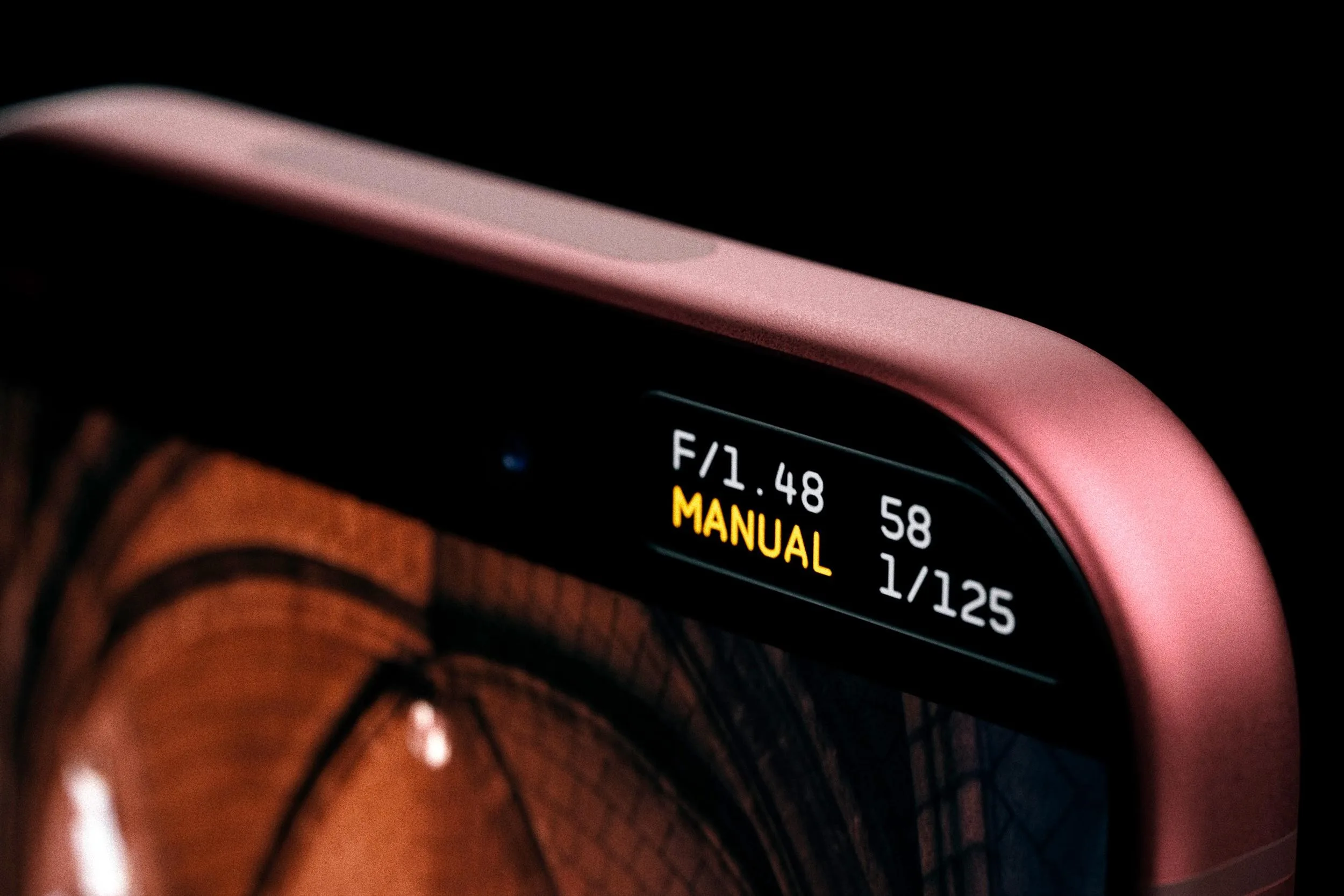
Frankly, the difference between f/3.99 and f/4.0 will not rescue a bad photo. Nobody should pretend otherwise. But the point of Halide variable aperture control is not that every fractional adjustment produces a visibly different frame. It is that a photographer, rather than Apple’s UI designer, decides where to put the aperture.
Why this is more than an enthusiast checkbox
Variable aperture on a phone has often been treated as a spec-sheet party trick. Samsung has tried it before; Huawei made a serious case for it in several premium devices; Apple’s implementation on the iPhone 18 Pro gives the feature a much wider audience. The hardware can alter optics in a way Portrait mode’s synthetic blur cannot fully replicate, especially around hair, glass, foliage, and other objects that routinely make computational bokeh look like a hasty cutout.
Halide variable aperture settings are most useful in the unglamorous moments. Imagine photographing a meal near a window: a wider aperture may help preserve a natural separation between the plate and a busy café behind it. Shooting a building, landscape, or a group at closer range? A narrower setting can make the frame feel less like a miniature diorama and more like what your eye saw.
Smartphone camera sensors remain small compared with those in interchangeable-lens cameras, and Apple’s image pipeline can still apply noise reduction, tone mapping, sharpening, and other processing after capture. Aperture does not magically turn an iPhone into a Fujifilm X-T5 or a Sony A7C II. It gives photographers another real input before the software takes over, which is a more honest improvement than a new AI button with vague promises.
Halide has built its identity around precisely this tension. Its appeal is not that it rejects computational photography outright; modern phone images would be far worse without it. The app instead gives users a clearer view of, and more influence over, what the device is doing. For people who shoot RAW, manually expose frames, or simply hate being second-guessed by an automatic camera, Halide variable aperture support fits that philosophy neatly.

The extra precision may be overkill, and that is fine
There is a reasonable argument that continuous-looking aperture selection is a little performative. Physical aperture mechanisms have finite positions, and even on traditional cameras the practical value of ultra-fine settings can be marginal. Halide’s developers have said they are considering adding f-stop presets based on feedback, which seems sensible. A clean set of favorites would be faster when a fleeting shot appears, while retaining the full range for people who want it.
Still, I would rather have the precision available than see it hidden because most people will not use it. Photography apps often make the same mistake as car dashboards: they bury controls that matter in the name of simplicity, then call the result intuitive. Apple’s four settings are likely enough for casual snapshots. But Halide variable aperture control is for the user who notices where the plane of focus falls and wants a deliberate answer, not a menu of approved approximations.
There is also a useful psychological effect here. When an app exposes aperture, shutter speed, focus, and exposure compensation as decisions, it teaches users what those choices do. You learn by moving a control, taking two pictures, and seeing why one works. That beats reading a dozen camera tips while never leaving Auto.
Dawn and Quicksilver bring a different kind of control
The update also adds two looks to Halide Mark III’s film simulation system. Dawn is designed around warmer midtones and highlights, with softer, fuller shadows. Quicksilver heads in the other direction, combining muted color with higher contrast and drawing inspiration from silver-retention film processing. The latter can produce the sort of stern, metallic mood that digital cameras frequently sand away in pursuit of universally pleasant pictures.
These treatments are not substitutes for good light, and no preset can manufacture the composition you missed. But they are a more thoughtful option than cycling through generic filters after the fact. Paired with Halide variable aperture choices, the looks let a photographer make decisions about both optical rendering and color character before sharing an image.
That is Halide’s advantage. Apple will continue to make its Camera app frictionless, and it should; most iPhone owners need a dependable point-and-shoot, not a tiny control room. But the iPhone 18 Pro now has hardware that invites a more serious approach. If Lux Optics can keep making those controls approachable rather than merely exhaustive, Halide may become the clearest answer to a growing question: when your phone gets a real camera feature, who actually lets you use it?