

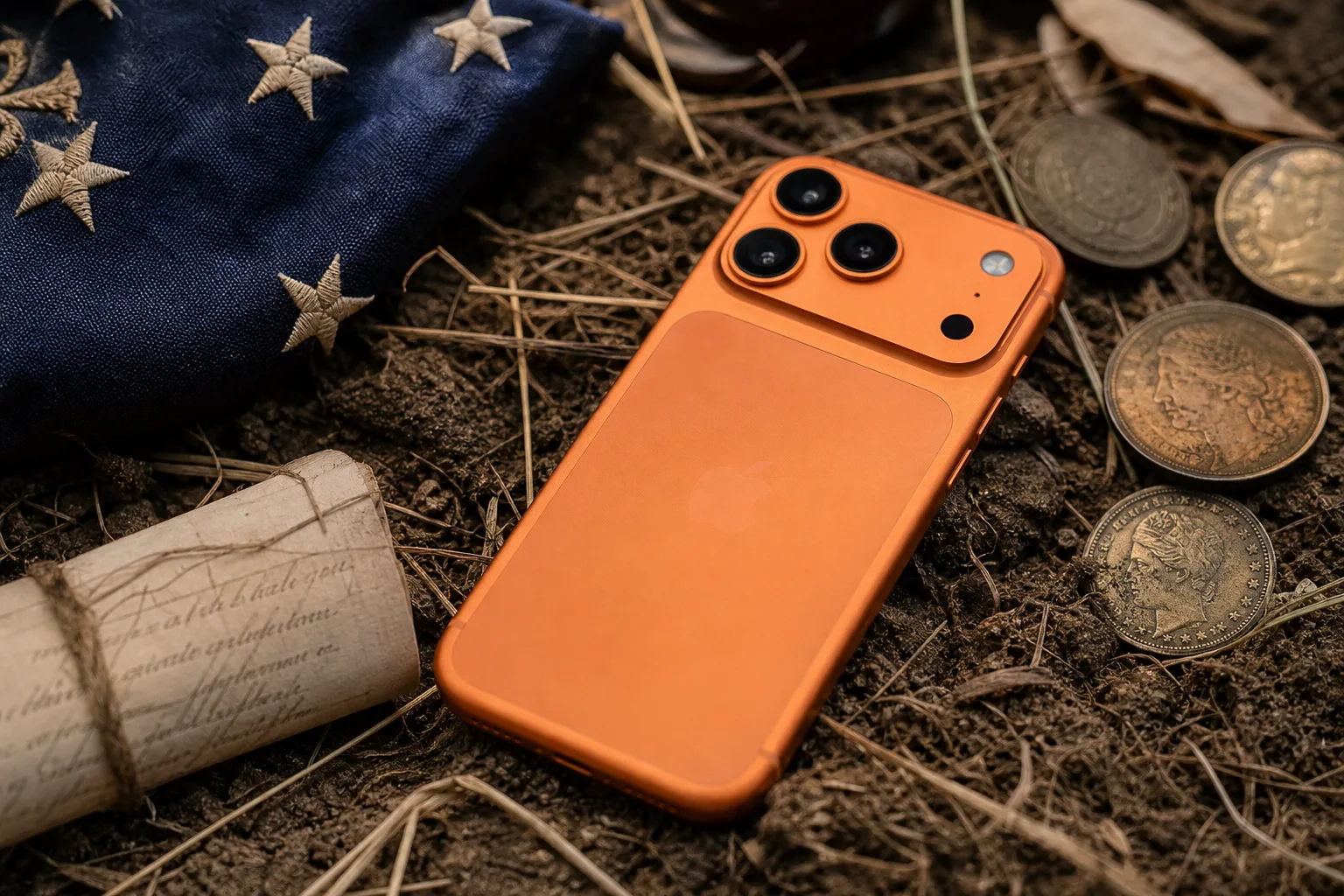
Somewhere beneath American soil, sealed away from the world until the year 2276, sits an iPhone 17 Pro Max in Cosmic Orange. It was placed there as part of the country’s 250th anniversary celebrations — and it won’t see daylight again until the United States turns 500. Whether it’ll actually turn on by then is, to put it gently, optimistic thinking.
- An iPhone 17 Pro Max in Cosmic Orange was sealed in America’s 250th anniversary time capsule.
- The iPhone 17 Pro Max time capsule won’t be opened until 2276, when the United States turns 500 years old.
- Battery degradation means the device is almost certain to be non-functional long before the capsule is unsealed.
- Digital artifacts stored in the Notes app are intended to give future generations a window into life in 2026.
Table of Contents
What’s Inside the Capsule
America’s semiquincentennial time capsule is a genuinely ambitious project. Contributions were gathered from every state in the union, creating a cross-section of American life as it exists right now — in the middle of the 2020s, when smartphones are still the dominant personal computing device and Apple’s iPhone remains the world’s best-selling premium handset. The selection of the iPhone 17 Pro Max as a representative artefact makes a kind of obvious sense. It’s the most capable consumer device Apple has ever made, and it sits at the intersection of communication, creativity, and culture in a way that almost nothing else does.
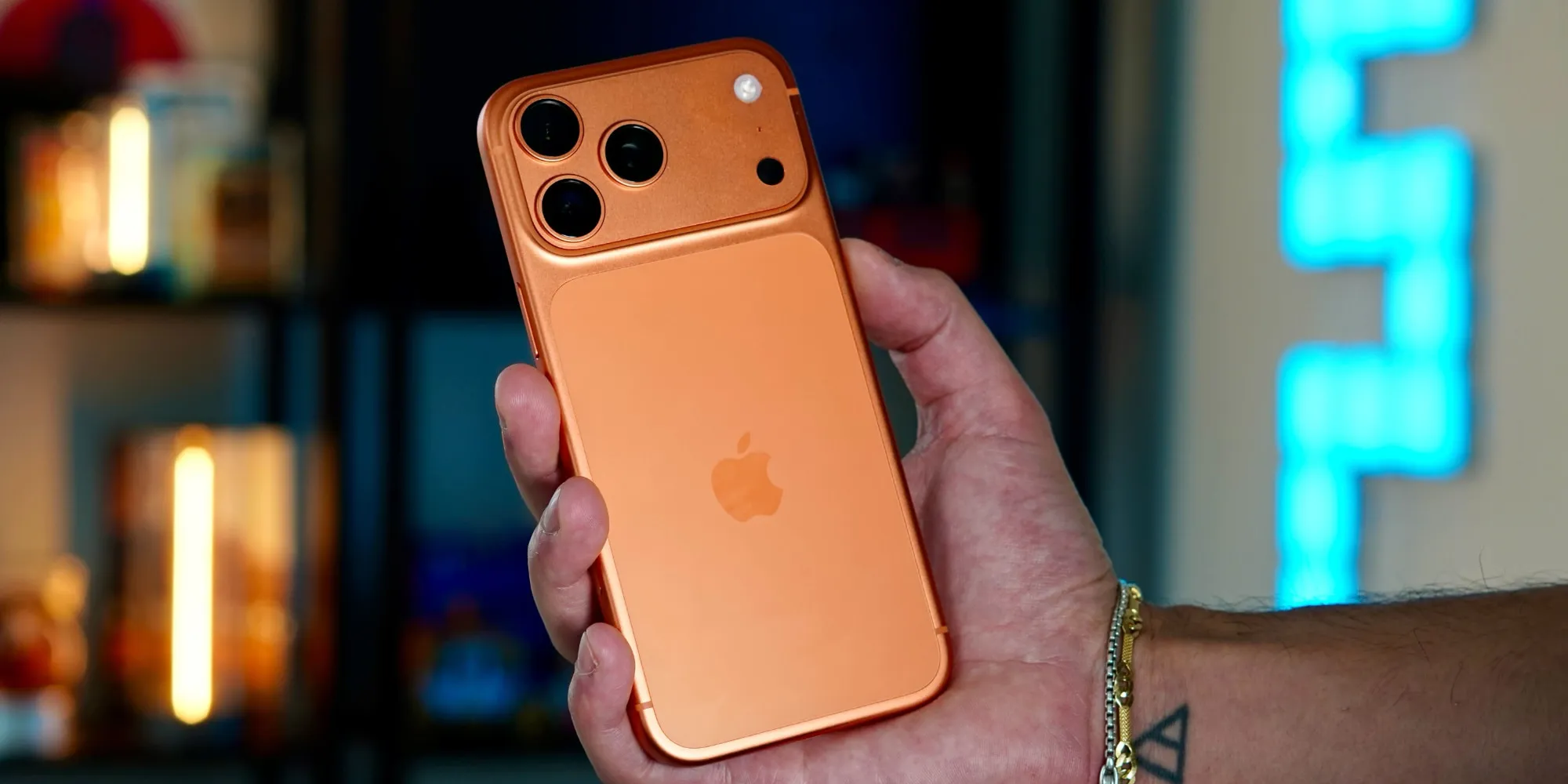
The specific unit chosen is the Cosmic Orange colourway — one of the more distinctive finishes Apple introduced with the iPhone 17 line. It’s a choice that feels deliberate. Future archaeologists cracking open this capsule in 2276 won’t find a boring black or silver slab. They’ll find something that communicates a little about the aesthetic sensibility of the mid-2020s too.
The device isn’t just an empty prop, either. It’s been loaded with what organisers describe as ‘digital artifacts’ — content saved directly in the Notes app, designed to give whoever opens the capsule in 250 years a window into what daily life looked and felt like in 2026. It’s a thoughtful touch, even if the odds of anyone actually being able to read those notes are slim.
The Battery Problem Nobody Can Solve
Here’s the uncomfortable truth about sealing an iPhone 17 Pro Max in a time capsule: lithium-ion batteries don’t age gracefully. Under normal use, a modern iPhone battery degrades to around 80% capacity within two to three years. Leave it sitting in storage — even cool, dry storage — and the chemistry continues to break down regardless. Most experts put the practical ceiling for a lithium-ion cell holding any usable charge at somewhere between 10 and 20 years under optimal conditions. After 250 years, the battery won’t be a battery anymore in any meaningful sense. It’ll be a chemical curiosity.
This isn’t a knock on Apple specifically. Every smartphone made today, from Samsung’s Galaxy S25 Ultra to Google’s Pixel 9 Pro, faces the same fundamental limitation. We’ve never developed a consumer-grade portable power source that can survive on century-scale timelines. The chemistry just doesn’t allow it. Lead-acid batteries, which are far more durable, still wouldn’t make it to 2276. Even the most robust solid-state battery prototypes being developed today wouldn’t come close.
So whoever opens this capsule in 2276 will almost certainly be greeted by a beautifully preserved piece of glass and titanium that absolutely refuses to boot. The screen will stay dark. The digital artifacts in the Notes app will be inaccessible — unless someone brings a specialised power source, or finds a way to extract the storage directly. That’s not impossible, but it requires a level of forensic effort most people wouldn’t associate with ‘opening a time capsule.’
iPhone 17 Pro Max as a Cultural Artefact
Set aside the battery problem for a moment and think about what this choice of artefact actually communicates. The iPhone 17 Pro Max is, by any measure, a remarkable object. Apple introduced the original iPhone less than 20 years ago. In under two decades, the smartphone went from a luxury novelty to the central organising device of modern human life. We bank on them, navigate with them, communicate with them, document our lives with them. They hold our memories, our work, our relationships.
Choosing one as a time capsule entry isn’t just a tech decision. It’s a statement about what defined this era. Future historians will look at the iPhone 17 Pro Max the way we look at artefacts from earlier centuries — not just as a functional object, but as a lens into the values, priorities, and capabilities of the civilisation that produced it. The titanium frame, the ceramic shield glass, the multi-lens camera array capable of shooting spatial video: these design choices will say something to people in 2276 that words alone can’t convey.
It’s also worth considering what the iPhone represents in terms of manufacturing complexity. The A19 Pro chip inside the device is built on a process node measured in angstroms — smaller than some protein molecules. The fabrication technology required to produce it represents the collective output of decades of semiconductor research involving thousands of companies and research institutions across dozens of countries. That’s not nothing. Dropping one into a time capsule is, in its own way, a statement about just how far material science and engineering have come since 1776.
What 2276 Might Actually Look Like
Two hundred and fifty years is an almost incomprehensible span of time when measured against the pace of technology. In 1776, the most sophisticated communication technology available was the printing press. By 2026, we’re carrying supercomputers in our pockets and having real-time conversations with AI systems that can write code, generate images, and reason through complex problems. The rate of change hasn’t slowed — if anything, it’s accelerating.
So what replaces the iPhone 17 Pro Max by 2276? Honest answer: nobody knows. The most credible near-term candidates are augmented reality glasses — devices like the early-stage Apple Vision Pro or Meta’s Ray-Ban smart glasses suggest a future where computing moves off the handheld screen and into our field of vision. Beyond that, neural interfaces represent a more radical shift. Companies like Neuralink are already conducting human trials of brain-computer interfaces. Whether those technologies mature into mainstream consumer products within 50 years, let alone 250, is genuinely unknowable.
There’s also the possibility that the very concept of a ‘device’ becomes obsolete — that computing becomes so ambient, so embedded in the environment and perhaps in our biology, that a discrete handheld object seems as quaint to people in 2276 as a town crier seems to us. The people who open this time capsule may have no lived memory of what it meant to pull a rectangle from your pocket and tap on glass to interact with the digital world. The iPhone 17 Pro Max may need an explanatory plaque just to make sense.
The Long Game of Technological Memory
Time capsules have always been a bet on the future’s curiosity about the past. What makes this one different is the nature of the object chosen. Previous time capsules have included newspapers, photographs, coins, and handwritten letters — analogue artefacts that require nothing more than light and a literate human being to decode. An iPhone 17 Pro Max requires a working battery, a compatible charger connector standard, functioning software, and ideally an Apple ID that still has valid credentials. That’s a significantly higher bar for accessibility.
There’s an argument that this actually makes it more historically interesting, not less. Future researchers may end up learning as much from the process of trying to access the device — the forensic archaeology of 21st-century consumer electronics — as they do from whatever Notes content is stored on it. The supply chain required to build it, the software ecosystem it was embedded in, the subscription services it was tied to: all of that context becomes part of the historical record.
The selection of their flagship device in a nationally significant time capsule is the kind of cultural validation that money genuinely can’t buy. Whether the phone works in 2276 almost doesn’t matter. The statement has already been made: in 2026, this is what human ingenuity looks like held in one hand.
Frequently Asked Questions
Will the iPhone 17 Pro Max still work when the time capsule is opened in 2276?
It remains to be seen whether the iPhone will actually function by 2276. As many have pointed out, the battery is incredibly likely to go bad long before then, making it very unlikely the device will be operational.
What is stored on the iPhone 17 Pro Max inside the time capsule?
The device contains what are described as ‘digital artifacts’ that people will be able to look through in the Notes app when the time capsule is opened in 2276.
Where is America’s 250th anniversary time capsule being kept?
The time capsule was buried as part of America’s 250th anniversary celebrations. It contains items from every U.S. state and is scheduled to be unsealed on the country’s 500th anniversary in 2276.
Why was an iPhone chosen to represent 2026 in the time capsule?
The iPhone has become one of the defining consumer technology objects of the early 21st century. The iPhone is just under 20 years old, making the latest flagship model a logical cultural artefact to capture this era for future generations.

