

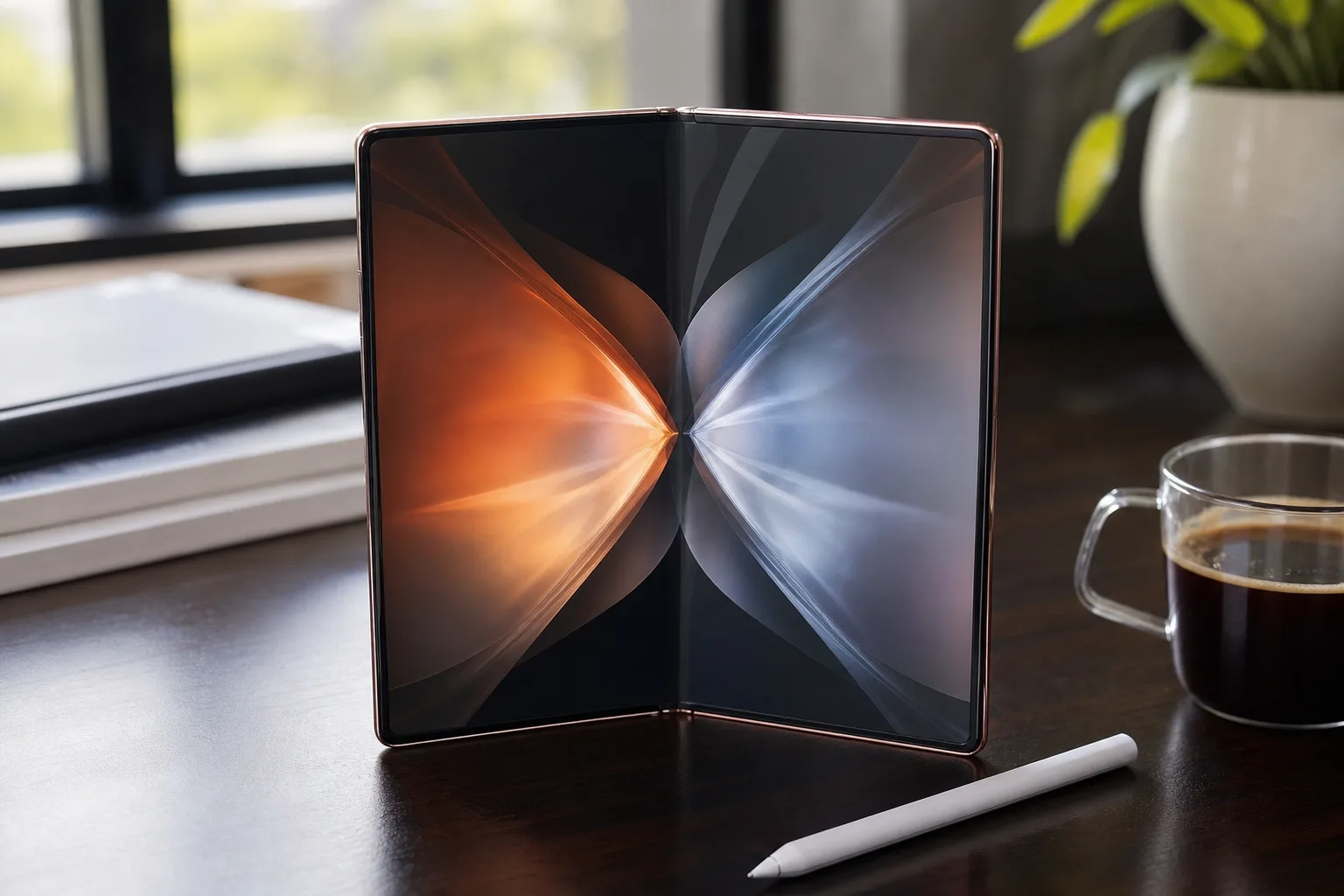
- The iPhone Duo is reportedly Apple’s first foldable handset, with a $1,999 starting price and an October customer launch window.
- iPhone Duo rumors suggest Apple Pencil support, two rear 48-megapixel cameras, an A20 Pro chip, and no telephoto lens.
- Apple may raise iPhone 18 Pro prices by $100 while promising improved cooling, battery life, and more advanced camera control.
- New Apple Watches and AirPods could broaden Apple’s health and audio lineup, with a Readiness app reportedly joining watchOS.
Table of Contents
iPhone Duo could be Apple’s most revealing launch in years
Apple’s next phone event may finally answer the question hanging over Cupertino for the better part of a decade: what does an Apple foldable look like when it is no longer a concept? The reported answer is the iPhone Duo, a book-style foldable said to start around $1,999 in the US and ship as early as October.
Those details come from Bloomberg’s Mark Gurman, whose pre-event report paints a remarkably complete picture of Apple’s expected lineup: the iPhone Duo, iPhone 18 Pro models, Apple Watch Series 12, Apple Watch Ultra 4, and AirPods 5. Launch-day reports always come with some uncertainty, so every specification remains provisional until Apple’s executives put it on a slide. Still, Gurman’s Apple reporting carries weight, and the broad outline makes strategic sense.
The iPhone Duo is reportedly arriving in white and dark blue, with 256GB as its entry storage tier. Inside, Apple is expected to use its A20 Pro processor and C2 cellular modem. The bigger differentiator may be Apple Pencil support. Samsung has spent years making the stylus part of the pitch for large foldables, and Apple has the software ecosystem to make that idea feel less like a niche accessory and more like a practical tool for notes, illustration, and document markup.
Still, $1,999 is a blunt number. Foldables have always had an awkward sales problem: they promise a tablet in your pocket, then ask buyers to pay for both a premium phone and a tablet upfront. Apple’s brand can move expensive hardware, obviously, but the iPhone Duo will need a reason to exist beyond being the iPhone that bends. Better multitasking, genuinely useful Pencil features, and a display crease that fades into the background will matter far more than a glamorous hinge demo.
Apple is reportedly fitting the device with two 48-megapixel rear cameras but skipping a telephoto lens. That is a meaningful compromise at this price. A foldable’s slim chassis makes camera engineering difficult, yet buyers spending two grand may reasonably expect the photographic flexibility of an iPhone Pro. My read is that Apple is betting form factor will outweigh lens count in year one. We’ll see how well that argument lands after reviewers take it on a trip.
The iPhone Duo needs software, not novelty, to justify its price
Apple is arriving late to the foldable-phone game. Samsung’s Galaxy Z Fold line has had years to establish the basic playbook, while Google has pushed its Pixel Fold and Pixel 9 Pro Fold as camera-forward alternatives. Apple has watched both companies work through durability worries, uneven app layouts, and the simple truth that most people do not naturally multitask on a phone.
That patience could be an advantage. Apple’s iOS platform already serves a massive developer base, and its iPad software gives the company an existing catalogue of large-screen interface ideas. Yet Apple also has a habit of protecting product categories from one another. If the iPhone Duo merely runs enlarged iPhone apps, it will feel like a very expensive answer in search of a question.
There is also the issue of Apple’s own product ladder. A folding iPhone could eat into iPad mini demand, but perhaps that is the point. Tablets have increasingly become household devices rather than personal essentials, while the phone remains the one computer nearly everyone replaces on schedule. Put a credible small tablet inside the phone people already carry, and the iPad’s role gets much harder to explain.
iPhone 18 Pro rumors point to a less flashy, more useful upgrade
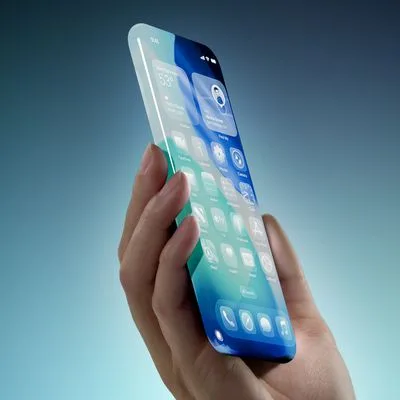
For buyers uninterested in folding hardware, the iPhone 18 Pro and iPhone 18 Pro Max may deliver a familiar Apple formula: a few changes that sound technical on paper but may improve daily use. Gurman reports longer battery life, particularly for the larger Pro Max, and an improved vapor-chamber cooling system intended to reduce overheating under demanding workloads.
Frankly, cooling is overdue as a headline feature. Phones now shoot high-resolution video, run console-class games, process photos locally, and increasingly handle AI tasks. Performance only helps when a device can sustain it without turning into a hand warmer. If Apple’s new thermal design works, it could matter more than another small benchmark gain.
One Pro camera may also gain a variable aperture, which would give photographers more direct control over depth of field and exposure behavior. Smartphone portrait blur is usually software theater; it can be convincing, but it still makes odd mistakes around hair, glasses, and pets that refuse to sit still. Physical aperture control could produce more natural results, assuming Apple gives people enough control to use it.
The reported $100 US price rise is less welcome. That would put the iPhone 18 Pro at $1,199 and the Pro Max at $1,299 before storage upgrades, cases, AppleCare, or taxes. Apple may also shrink the Dynamic Island and let at least one model display three Live Activities rather than two. Useful? Potentially. Worth $100 on its own? No chance.
Apple Watch and AirPods updates may be the quieter story
Apple’s wearables could be more consequential than their restrained rumor list suggests. The Apple Watch Series 12 is said to gain new finishes and a ceramic case option, while the Apple Watch Ultra 4 may extend battery life beyond the Ultra 3. Apple is also expected to announce a Readiness app and a daily summary feature, pushing the Watch further toward the recovery and wellness tracking territory occupied by Garmin, Oura, and Whoop.
That is a sensible direction, provided Apple avoids turning health data into another stack of rings to close. A useful readiness score should tell someone when to push hard, when to recover, and why. Anything less is just a prettier notification.
AirPods 5 reportedly arrive in two versions, one with active noise cancellation and one without. Splitting the line that way could make Apple’s entry-level earbuds easier to understand while keeping a meaningful upsell for commuters and frequent flyers. It also suggests Apple sees its audio business as a volume play, not merely an accessory attached to iPhone sales.
The oddest report may be what is missing: no regular iPhone 18 today, with that model reportedly held for the first quarter of 2027. If accurate, that would be a real shift from Apple’s predictable annual phone cadence. The iPhone Duo may be the star of this event, but Apple’s willingness to rearrange the entire iPhone calendar could prove to be the more lasting story.

