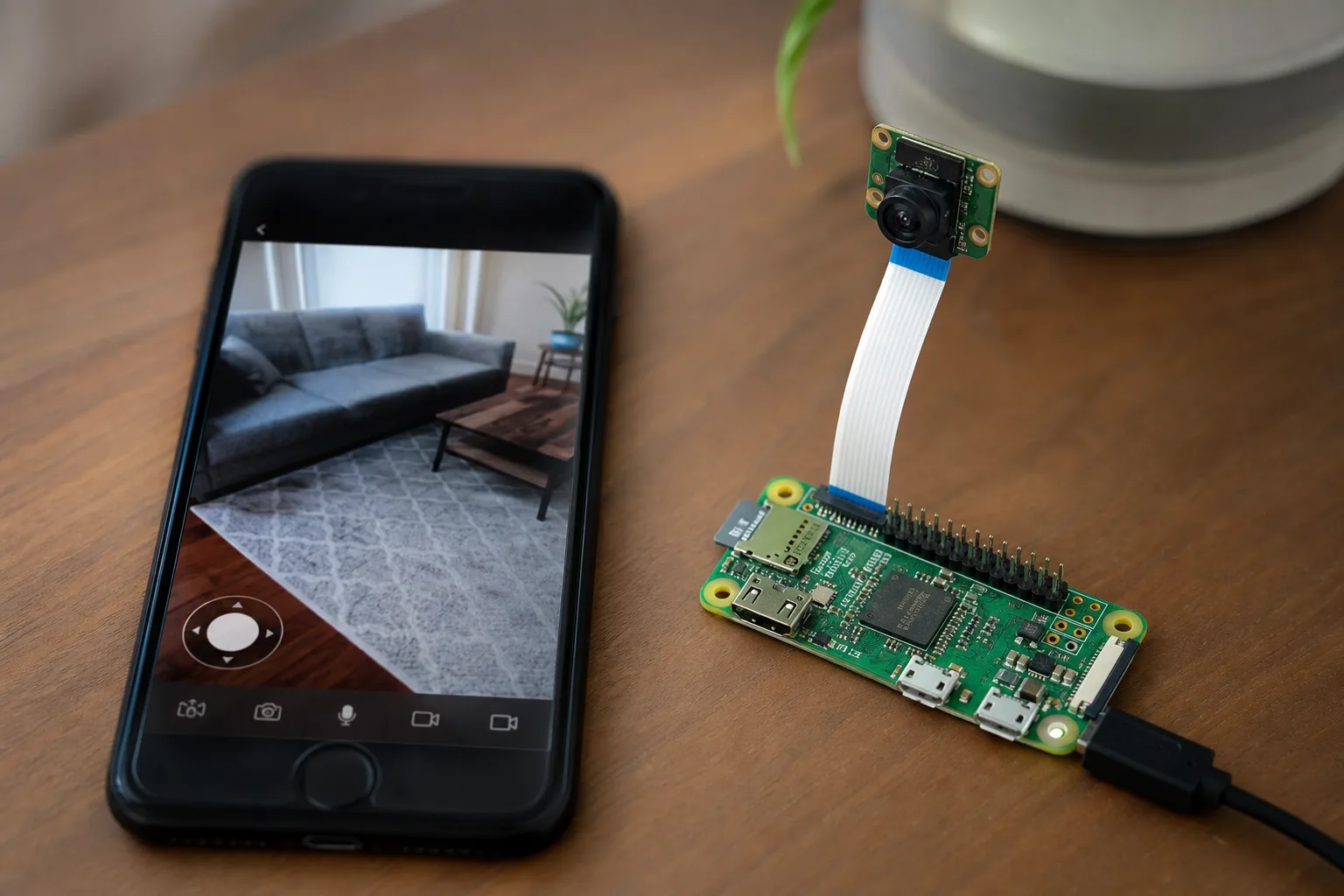
Most home security cameras make an implicit bargain with you: we’ll keep your home safe, and in exchange, your footage lives on our servers forever. Secluso, a new open-source home security camera system built around the Raspberry Pi, is betting that a growing slice of the market is done with that deal.

- Secluso is an open-source home security camera system built for Raspberry Pi with full end-to-end encryption and no cloud dependency.
- The open-source home security camera promises a five-minute setup process, handling image building, pairing, and relay configuration automatically.
- All binaries, the Android app, and the custom OS image are fully reproducible — users can verify what they’re actually running.
- Co-founded by a UC Irvine computer security professor, Secluso’s design treats even its own relay servers as untrusted infrastructure.
Table of Contents
What Is Secluso and Why Does It Matter
Secluso is an open-source home security camera platform developed by Secluso, Inc., co-founded by Ardalan Amiri Sani — a computer security and privacy professor at UC Irvine — and John Kaczman, a developer with a background in automation, systems, and AI. The project surfaced on Hacker News this week, and the combination of academic credibility, a well-documented security model, and genuinely accessible hardware has generated real interest.
The pitch is straightforward: run your own open-source home security camera on a Raspberry Pi Zero 2W, watch live video, receive motion alerts, and review recorded clips from your phone — all without a single frame of footage touching a third-party cloud. Encryption is end-to-end, and the relay infrastructure that makes remote access possible is deliberately designed to be untrusted. Even Secluso’s own servers can’t see your video.
That last part is the bit that sets it apart from most of the competition. Ring, Nest, Wyze, Arlo — every major consumer camera brand routes footage through cloud infrastructure. That creates real risks: data breaches, government subpoenas, corporate acquisition, or simply a company deciding to change its privacy policy. The Electronic Frontier Foundation has documented years of concerns about how these platforms handle user data. Secluso is a direct response to exactly those concerns.
The Hardware Side: Cheap, Familiar, Deliberately Simple
Secluso runs on a Raspberry Pi Zero 2W, which currently retails for around $15. Pair that with a Raspberry Pi Camera Module V2 (roughly $25) and you’re looking at a complete open-source home security camera node for under $50 — before any case or mounting hardware. The system also supports cameras using Sony’s OV5647 or IMX219 sensors, which covers a wide range of compatible modules beyond the official Pi cameras.
The choice of hardware is smart. The Raspberry Pi ecosystem is enormous, well-documented, and widely available. It’s not exotic. Anyone who’s ever run Pi-hole or RetroPie already knows the basic workflow. That accessibility matters a lot if the goal is mainstream adoption beyond the hardcore self-hosting crowd.
For remote access, you’ll need a relay — either your own Linux VPS or Secluso’s free beta relay hosting while you’re getting started. A basic VPS from providers like Linode or Hetzner costs $5–6 a month, which is still substantially less than most camera subscription plans. The free beta option lowers the barrier even further for people who just want to try it out.
Open-Source Home Security Camera Setup: Actually Five Minutes?
The claimed five-minute setup is ambitious, but the mechanism behind it is credible. Secluso Deploy — the companion tool — handles image building, credential generation, and relay provisioning over SSH in a single workflow. You download it, run it locally, and it spits out a personalized Secluso OS image and a camera secret QR code. Boot the Pi, scan the code in the mobile app, and you’re done.
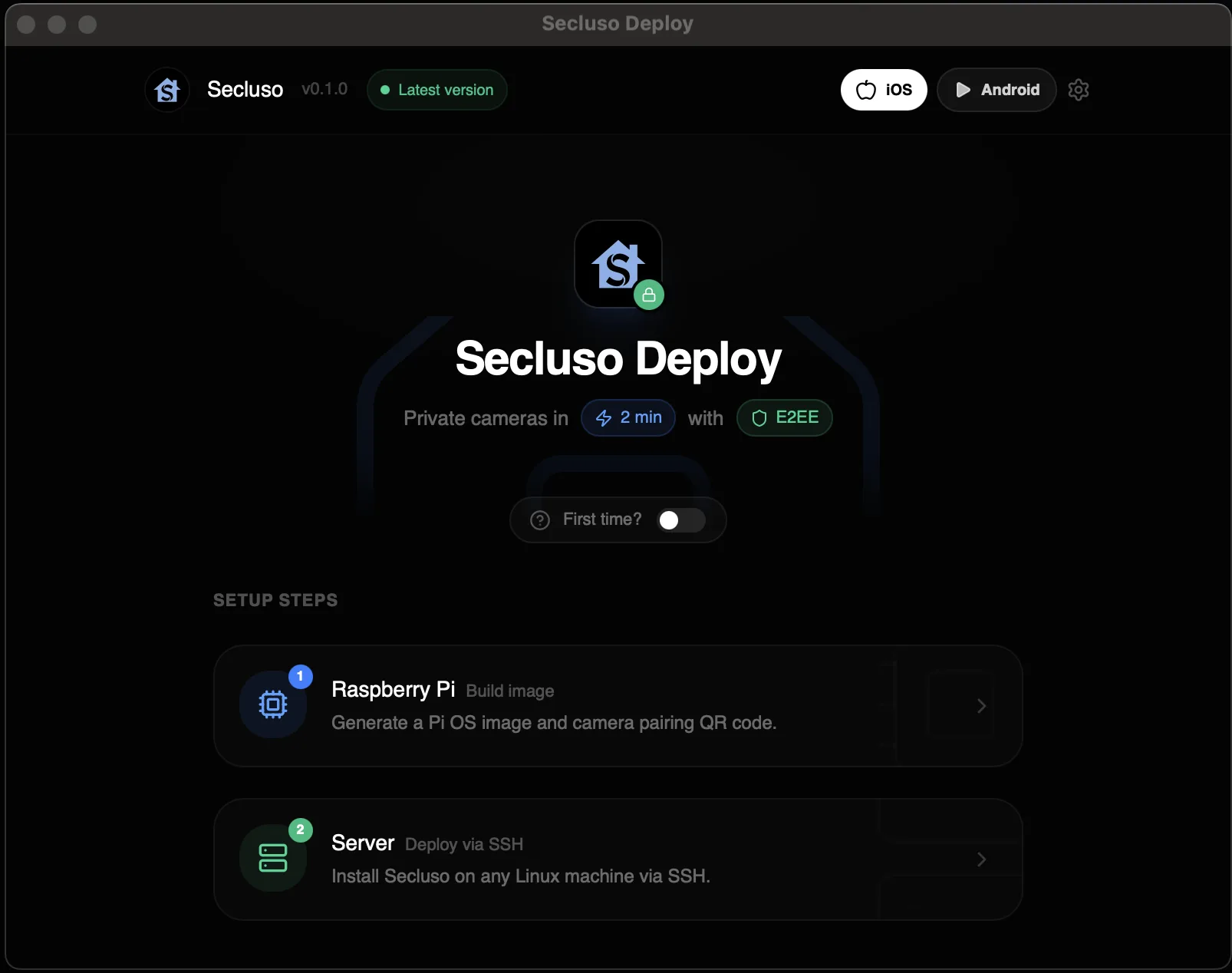
The mobile apps — available for both Android and iOS — handle pairing, live viewing, alerts, and encrypted clip playback. For Android users, there’s an additional layer of trust available: the app is fully reproducible, meaning you can independently verify that the binary you’re running matches the public source code. That’s a level of transparency most commercial security apps don’t come close to offering.
Reproducible builds are genuinely rare in consumer software. The fact that Secluso OS, the deploy tool, the runtime binaries, and the Android app are all reproducible is a meaningful technical commitment. It’s not just a marketing claim — the project ships reproducibility checkers for each component so users can verify it themselves.
The Security Model: Untrusted Relays and Forward Secrecy
The most technically interesting aspect of Secluso is what the project’s whitepaper calls its “untrusted-relay design.” The relay server — whether you’re running your own VPS or using Secluso’s hosted beta — is explicitly not trusted with your video data. It routes encrypted traffic without being able to decrypt it. If the relay is compromised, your footage stays private.
The security model also includes forward secrecy and post-compromise security. Forward secrecy means that even if an attacker captures encrypted traffic today and somehow obtains a key later, they can’t retroactively decrypt past recordings. Post-compromise security means the system can recover its security guarantees even after a partial compromise — a property associated with the Signal Protocol and similar modern cryptographic designs.
Amiri Sani’s academic background in computer security is evident here. This isn’t a hobbyist project that slapped TLS on a video stream and called it encrypted. The architecture reflects real threat modeling. The project is also transparent about its limitations — the README explicitly notes that the authors provide no guarantees of privacy or home security, and flags that the use of cryptography may have legal implications depending on jurisdiction.
How It Compares to the Alternatives
The self-hosted security camera space isn’t empty. Frigate is probably the most well-known open-source alternative, offering local NVR functionality with AI object detection and Home Assistant integration. Shinobi is another option. Both are capable, but they’re also substantially more complex to configure and don’t offer the same end-to-end encrypted remote access architecture out of the box.
On the commercial end, you’ve got Eufy, which markets itself on local storage but has faced serious scrutiny after researchers discovered footage was being uploaded to its cloud without users’ knowledge. That incident — reported by The Verge in late 2022 — is a useful reminder that “private” marketing claims from closed-source vendors are difficult to verify. With an open-source home security camera like Secluso, you don’t have to take anyone’s word for it.
Tailscale and similar VPN-based approaches offer another DIY path to private remote camera access, but they require more networking knowledge and don’t come with a purpose-built camera OS and app ecosystem. Secluso is trying to be the thing that’s both technically sound and accessible enough for someone who isn’t a sysadmin. For anyone evaluating an open-source home security camera solution, that combination of ease and auditability is a meaningful differentiator.
The Bigger Picture: Privacy as Infrastructure
What Secluso represents isn’t just a clever hardware project — it’s part of a broader shift in how privacy-conscious users are thinking about smart home devices. The same instinct that drove people toward Pi-hole for ad blocking, toward self-hosted Bitwarden for passwords, and toward LineageOS for mobile is now showing up in physical security. People want to own their infrastructure, not just rent access to it.
Choosing an open-source home security camera means you can inspect the code, verify the binaries, and swap out components — none of which is possible with a sealed commercial system. The open-source home security camera space is still nascent compared to the commercial market, where Ring alone has tens of millions of devices deployed. But the appetite is real, and projects like Secluso — backed by academic expertise and built with reproducible, auditable code — make the argument that privacy and convenience don’t have to be trade-offs. As more high-profile data breaches hit consumer camera companies, that argument is only going to get easier to make.