


- Orca ramming behavior was recorded twice in the Gulf of California, with whales deliberately smashing dead sharp-tailed sunfish.
- Researchers say orca ramming behavior may create manageable food pieces for young whales, though social play remains a plausible explanation.
- The observations expose how much scientists still do not know about dietary traditions among Mexico’s distinct killer whale populations.
- Better photo identification could show whether the same pod developed the technique and how far it has spread.
Table of Contents
Orca ramming behavior looks deliberate, not accidental
A dead sunfish is not supposed to be a demolition target. Yet that is exactly what researchers saw in the Gulf of California: orca ramming behavior in which one killer whale steadied a giant fish carcass and another hit it at speed, rupturing the body into edible fragments. It sounds like the marine-mammal equivalent of a stunt show, but the footage may capture something much more practical.
The observations were reported in Frontiers in Ethology by a team that had been monitoring killer whales in Mexican waters. During a July 2024 encounter, the group had already killed a sharp-tailed sunfish, a heavy-bodied species that can grow to imposing dimensions. A female held the fish by its tail while a male approached. Just before he made contact, she released it. The collision tore the fish open.
That timing is the part that matters. Animals collide with prey all the time, especially in a chaotic hunt. But the apparent handoff — or, more accurately, fin-off — suggests coordination. A separate video captured in September 2025 showed a remarkably similar sequence: one orca positioned a sunfish and another rammed it. Two episodes do not make a settled scientific case, but they are enough to turn a strange clip into a behavioral question worth taking seriously.
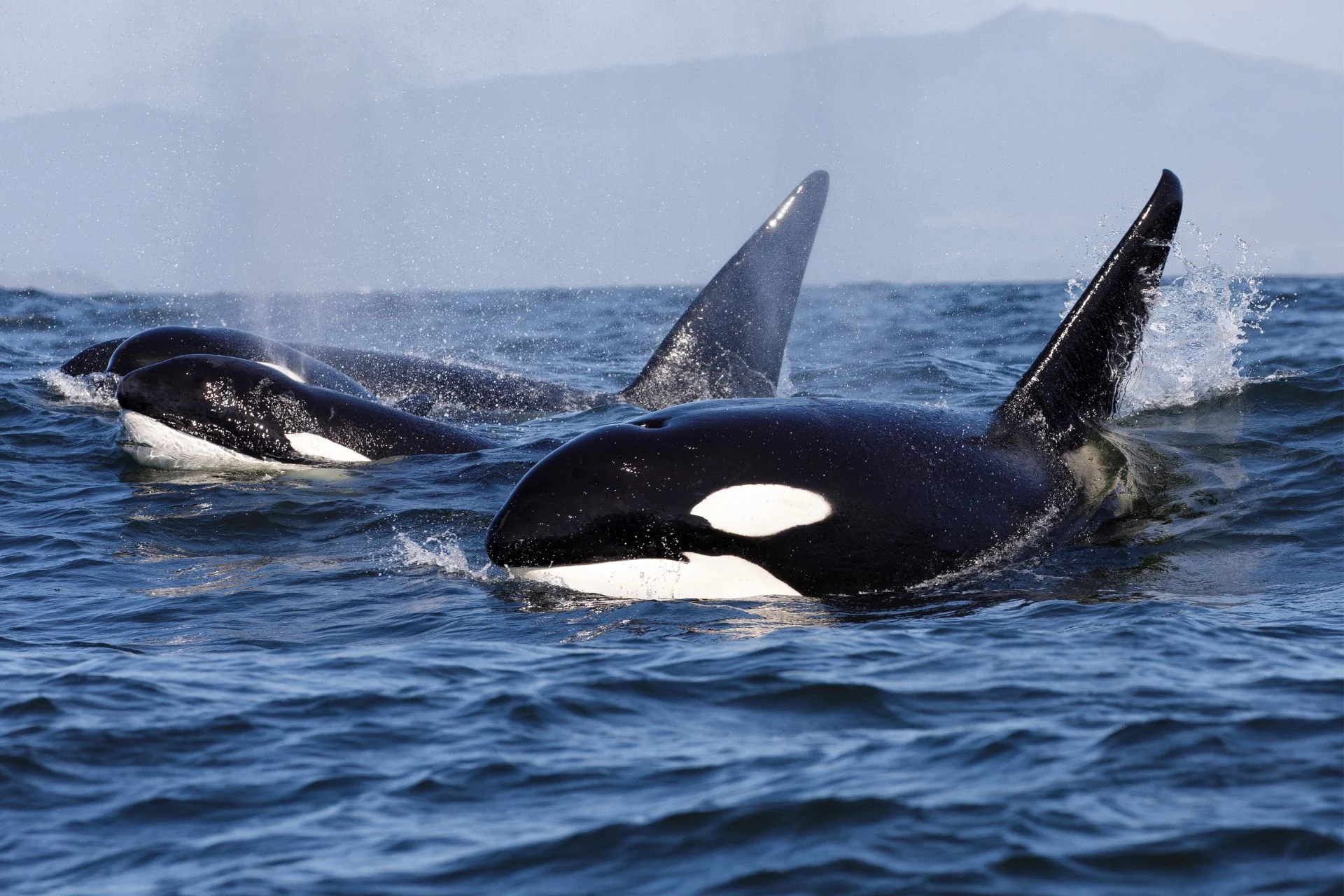
For anyone tempted to call this random violence, remember what these animals are. Orcas are dolphins, not whales in the strict family sense, and dolphins have famously large brains, elaborate social lives, and local traditions. The old label “killer whale” is dramatic, but it can obscure the fact that different populations behave less like one standardized species and more like distinct communities with their own food preferences and learned rules.
Why a sunfish becomes a difficult meal
The leading explanation for orca ramming behavior is refreshingly ordinary: dinner needs to be cut into smaller pieces. Orcas do not chew the way people do. When they tackle big prey, they typically tear off sections and swallow them. A massive sunfish presents a logistical problem, particularly for a juvenile that cannot easily manage a large, dense slab of flesh.
In the 2024 event, juveniles reportedly ate some of the smaller pieces thrown free by the impact, while adults fed from the larger remaining section. That distribution is not proof of parental care, but it fits the theory. Think of it as an adult preparing a difficult meal for a child — only the kitchen tool is a several-ton predator traveling through open water.
The study’s authors write that the action may have “multiple functions,” including making food available to younger animals or reflecting play. That cautious wording is exactly right. Field biology is often built from incomplete glimpses. Researchers do not get the luxury of replaying a controlled experiment with a pod of wild orcas, a sunfish, and a camera crew on demand.
There is also a more functional possibility: smashing a carcass may simply be efficient. A sharp-tailed sunfish has a broad, awkward body shape. Breaking its structure apart could reduce the effort needed to strip it, while spreading food across a group. Social predators routinely turn feeding into a collective process; wolves share access around a carcass, and orcas have their own highly specialized version of cooperative hunting.
Orca ramming behavior could also be a form of play
Still, I would not rush to drain all the fun from this. Orcas have a long record of treating prey in ways that look, to human eyes at least, like play. Some populations toss sea lions through the air. Others bat stingrays around. In some cases the handling helps avoid a bite, sting, or other injury. In others, the animal is not immediately eaten, which makes a purely nutritional explanation harder to defend.
That does not mean the whales are doing comedy for its own sake. Play in intelligent animals can be serious business. Juveniles may practice movements they will later use in hunting. Adults may reinforce relationships through shared activity. A young orca watching experienced animals execute orca ramming behavior could be learning prey handling in the same way a young human learns to use a tool: by observing, trying, and occasionally making a mess.
Researchers have increasingly documented cultural variation in cetaceans, from hunting styles to vocal traditions. Southern Resident killer whales in the Pacific Northwest, for example, are heavily associated with salmon, while Bigg’s killer whales specialize in marine mammals. Those ecological differences are not just menu choices; they shape social behavior, movement, and learned knowledge across generations.
So the most intriguing question is not whether this was an isolated stunt. It is whether orca ramming behavior belongs to a particular Gulf of California tradition. Does one pod use it while a neighboring pod ignores sunfish entirely? Does it emerge only when juveniles are present? Is it tied to sharp-tailed sunfish, or would these orcas use the same tactic on another oversized prey species?
The data problem is as interesting as the footage
There is a technology story here, even if nobody is fitting an orca with a smartwatch. Modern wildlife science increasingly depends on the quality of its visual record: stabilized drone footage, high-resolution long lenses, acoustic sensors, citizen-shot video, and machine-assisted cataloging. The research team stressed the need for clear dorsal-fin and eye-patch images, which can help identify individual animals and establish whether the two events involved the same pod.
That may sound like a small administrative detail. It is not. Without identity data, scientists cannot tell whether orca ramming behavior is a repeatable cultural practice, a trick learned by a few related animals, or an unusual response to a particular moment. The difference changes the whole story.
My read is that the footage is most persuasive as evidence of intentional coordination, not yet evidence of a new universal orca habit. Two recordings are a promising start, not a final answer. But that is what makes this compelling: our picture of killer whale intelligence is still being assembled from rare, often accidental windows into their lives. Better cameras and more patient photo-identification may reveal that this sunfish-smashing technique is common. Or they may show it was one pod’s wonderfully odd local custom.
Either result would be a reminder that the ocean is full of cultures we have barely begun to recognize.
Frequently Asked Questions
What is orca ramming behavior?
Orca ramming behavior describes a coordinated action in which one killer whale holds a dead sharp-tailed sunfish while another charges into it. The impact breaks the large fish apart, leaving smaller pieces that can be eaten by other members of the group.
Why do orcas ram dead fish?
Researchers propose that the behavior could help young orcas feed because killer whales swallow chunks rather than chew prey. It may also be play, social learning, or a prey-handling tradition specific to certain Gulf of California pods.
Do killer whales play with their food?
Yes, observations of different killer whale populations have shown animals tossing sea lions, manipulating rays, and repeatedly handling prey. Such activity can reduce injury risk, teach hunting skills to juveniles, build social bonds, or sometimes appear unrelated to immediate feeding.

