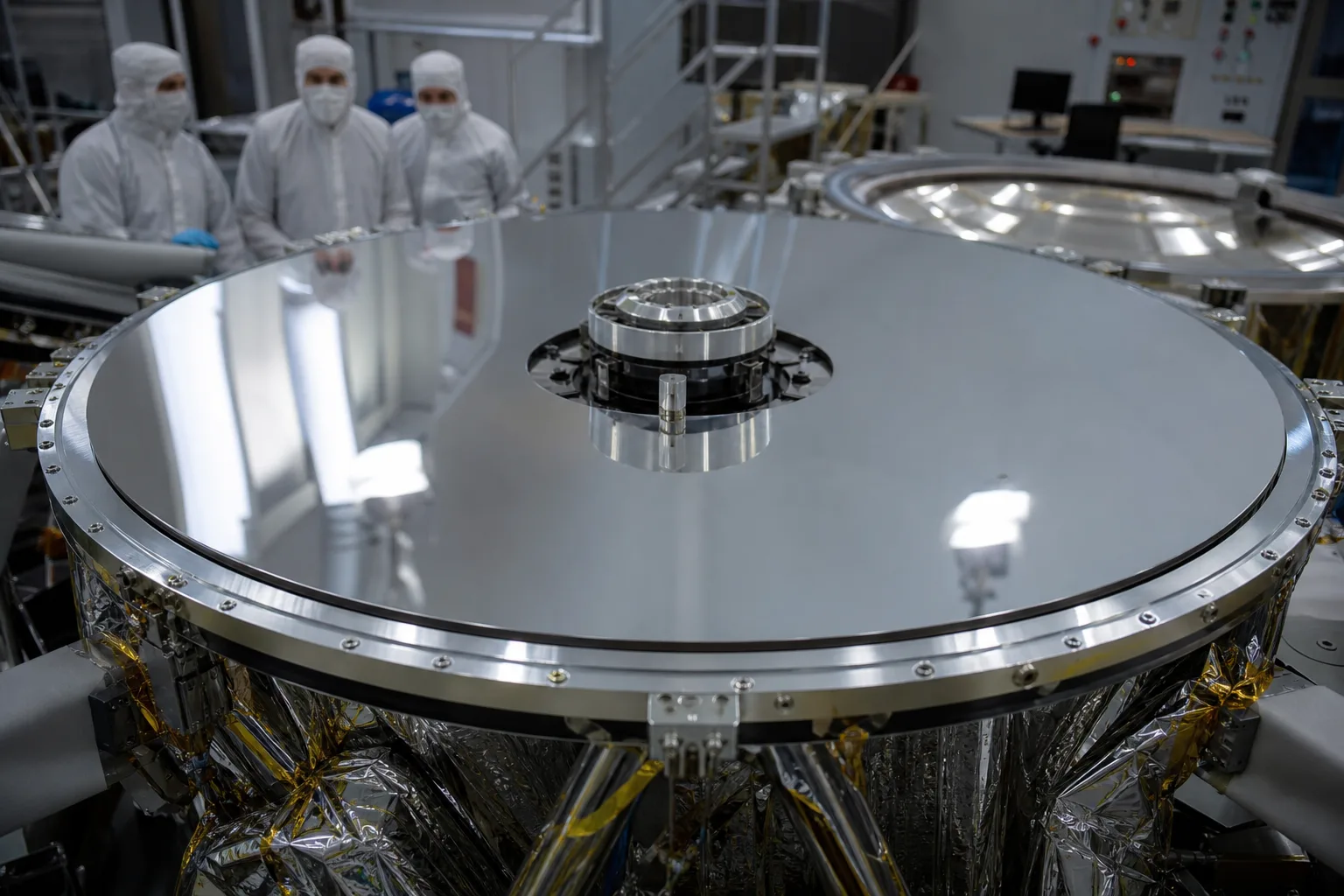
- The Roman Space Telescope has cleared its final primary mirror inspection, a critical step toward its planned launch.
- The Roman Space Telescope’s 2.4-meter mirror carries a silver coating just 400 nanometers thick — far thinner than a human hair.
- Once operational, the telescope will survey the infrared sky at a scale that no previous instrument has attempted.
- NASA’s milestone signals the program is on track, with hardware integration now moving into its final phase.
Table of Contents
Roman Space Telescope Clears a Major Milestone
NASA has completed its final inspection of the primary mirror at the heart of the Roman Space Telescope, and the verdict is exactly what engineers were hoping for: it’s ready to fly. The 2.4-meter (7.9-foot) mirror — the same diameter as the Hubble Space Telescope‘s primary — has passed all quality checks and is cleared for the next phase of hardware integration. It’s a quiet but significant moment for a program that has been years in the making and carries enormous scientific ambitions.
What makes this mirror genuinely impressive isn’t its size, though that’s nothing to dismiss. It’s the silver coating applied to its surface — a layer just 400 nanometers thick. To put that in perspective, a human hair is roughly 70,000 nanometers wide. The coating is hundreds of times thinner, yet it’s precisely this ultra-thin film of silver that gives the mirror its power. Silver reflects infrared light far more efficiently than the gold or aluminum coatings used on some other telescopes, making it the right choice for Roman’s core scientific mission.
Why Silver — and Why Infrared?
The choice of silver over other reflective materials is a deliberate engineering decision rooted in physics. Silver has one of the highest reflectivity ratings across the near-infrared spectrum — the wavelength range the Roman Space Telescope is specifically designed to observe. Infrared light penetrates dust clouds that block visible light, meaning Roman will be able to peer into regions of the universe that optical telescopes like Hubble simply can’t see clearly.
This matters enormously for Roman’s scientific targets. The telescope is built to probe dark energy and dark matter, map the large-scale structure of the cosmos, and conduct one of the most ambitious exoplanet surveys ever attempted. Dark energy — the mysterious force accelerating the universe’s expansion — leaves its fingerprints in the spatial distribution of galaxies across billions of light-years. Detecting those patterns requires a telescope that can survey huge swaths of sky quickly and in precise infrared detail. That’s exactly what Roman is designed to do.
For context, Hubble’s field of view covers roughly 11 square arcminutes. Roman’s Wide Field Instrument covers approximately 0.28 square degrees — about 100 times larger per observation. That’s not an incremental improvement. It changes what kinds of science are even tractable from orbit.
Standing on Hubble’s Shoulders — and Then Some
There’s an irony worth appreciating here. The Roman Space Telescope uses a primary mirror identical in diameter to Hubble’s, but the two instruments couldn’t be more different in purpose. Hubble was designed primarily for high-resolution optical and ultraviolet imaging of specific targets. Roman is built for wide-field infrared surveys — think of Hubble as a telephoto lens and Roman as a panoramic camera with a sensitivity to light our eyes can’t detect.
The comparison to the Hubble Space Telescope is useful precisely because it illustrates how far detector and optical technology have come. Hubble launched in 1990 with a mirror that famously turned out to be polished to the wrong prescription — a $1.5 billion embarrassment that required a servicing mission to fix. Decades later, NASA’s mirror fabrication and inspection processes have matured considerably. The Roman mirror passing its final inspection on the ground is a sign of that institutional learning.
What Happens Next
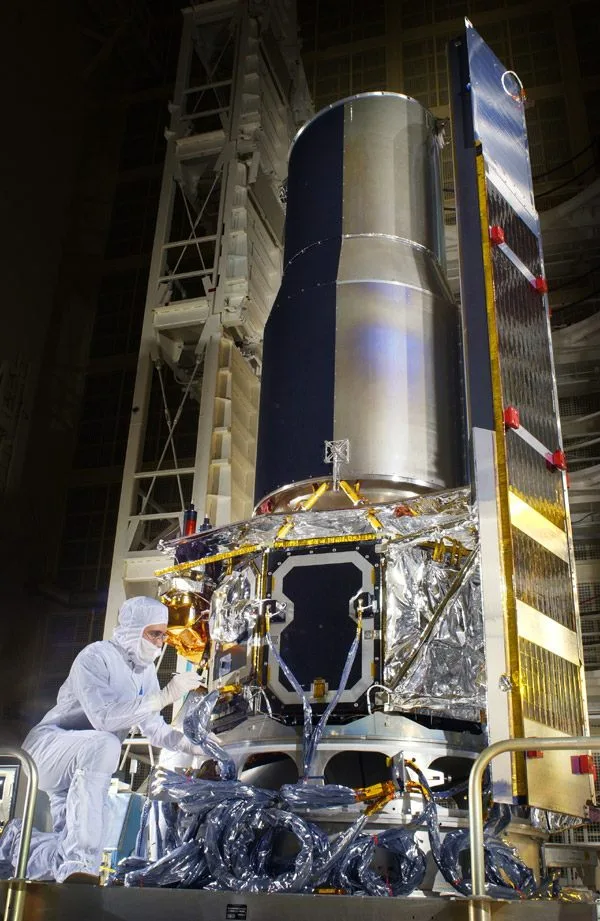
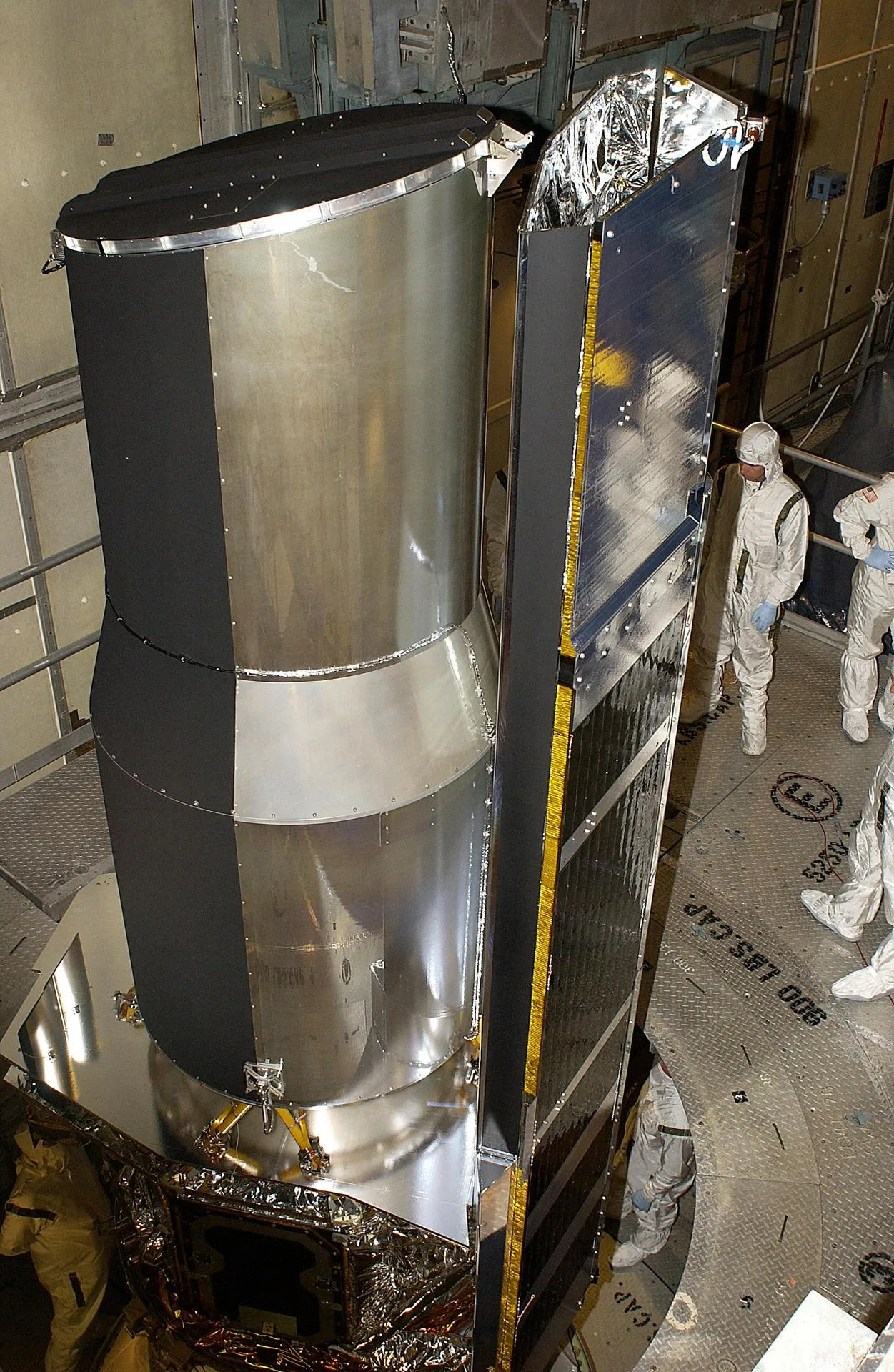
With the mirror cleared, the Roman Space Telescope program moves deeper into integration and testing. The primary mirror will be mated with the rest of the optical assembly, followed by end-to-end system testing to verify that every component — mirrors, detectors, support structure — performs as a coherent whole in the thermal and vacuum conditions of space. This phase is typically where hidden issues surface, so the clean bill of health on the mirror is genuinely good news: it means the team isn’t walking into integration carrying known optical problems.
NASA is targeting a launch no earlier than 2027, pending continued progress. The telescope will operate from the Sun-Earth L2 Lagrange point — the same gravitational sweet spot currently occupied by the James Webb Space Telescope. At L2, a spacecraft sits roughly 1.5 million kilometers from Earth in a thermally stable environment, shielded from the Sun, and far enough from Earth’s infrared glow to conduct sensitive observations.
Roman’s Place in the Next Era of Space Astronomy
The Roman Space Telescope arrives at an interesting moment. Webb has already demonstrated what a large, cold infrared observatory can reveal — from atmospheric chemistry on exoplanets to galaxies at the universe’s edge. Roman doesn’t compete with Webb so much as it complements it. Where Webb goes deep and narrow, Roman goes wide. Scientists expect the two telescopes to work in tandem: Roman identifying intriguing targets across vast areas of sky, Webb then zooming in for detailed follow-up.
There’s also the sheer volume of data to consider. Roman is expected to generate roughly 20 terabytes of data per day during its primary survey operations. That’s a pipeline challenge as much as an astronomy challenge, and it’s already driving investment in machine learning tools designed to sift through Roman’s output automatically — flagging transient events like supernovae, identifying gravitational lenses, and cataloguing millions of galaxies without any human ever looking at most of the raw frames.
A telescope that can survey the entire observable sky every few months, in infrared, at Hubble-class resolution — that’s not a modest tool. The mirror passing inspection is a small headline. What that mirror is eventually going to show us is anything but small.