
- Programming books sales fell 16.9% in the first nine months of 2023, and publishers have quietly stopped reporting the category.
- Programming books are being replaced by AI tools like ChatGPT and GitHub Copilot, which now has 4.7 million paying subscribers.
- Stack Overflow traffic has collapsed to 2008 levels — around 3,800 questions a month — as chatbots absorb demand.
- The shift raises real questions about how developers learn and retain knowledge in an AI-assisted world.
Table of Contents
The Wall Is Gone — Programming Books Are Disappearing From Shelves
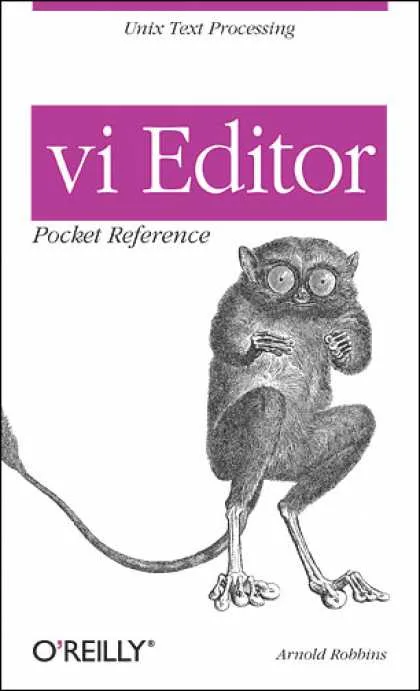
There used to be a section in every decent bookstore where programming books lined an entire wall. You knew it by the spines — thick, $50 volumes with O’Reilly’s now-iconic animal illustrations staring back at you. A rhino for JavaScript. A camel for Perl. That wall is gone, or close to it. Where it still exists at all, you’re lucky to find a small rack with a handful of titles, at least two of which are probably about ChatGPT. The era of the programming book as a primary learning tool is ending, and it’s ending faster than almost anyone in the publishing industry seems willing to say out loud.
According to Circana BookScan — the standard industry sales tracker — programming books sales in the computer book category dropped 16.9% year-over-year through the first nine months of 2023. That’s not a cyclical dip. That’s a structural collapse. Publishers Weekly had been dutifully logging these figures in its quarterly reports for years, but after that 16.9% figure landed, the publication quietly stopped naming the category at all in its 2024 and 2025 coverage. When an industry stops reporting a number, that’s usually because the number got embarrassing.
The American Association of Publishers’ professional books segment — the closest proxy the industry has for technical and workplace reference titles — fell 22.3% in August 2025 alone. These aren’t rounding errors. The technical end of book publishing is in serious trouble, and it’s happening with almost no public acknowledgment from the industry itself.
Why Programming Books Are Losing to AI Tools
The forces driving this aren’t mysterious. ChatGPT has crossed 900 million monthly active users. GitHub Copilot hit 4.7 million paying subscribers as of January 2026 — up roughly 75% in a single year. Anthropic’s Claude Code has become, for many professional developers, as essential as a text editor. These tools don’t replace programming books the way a newer edition replaces an older one. They replace the entire reason you’d reach for a book in the first place.
Think about what programming books actually did. You had a problem — you wanted to understand React, or HTTP, or regular expressions — and you needed someone to walk you through it carefully, from first principles, without skipping the context. Books did that. They were slow, deliberate, and complete in a way that a Stack Overflow answer or a blog post usually wasn’t. Now you open a chat window, describe what you’re trying to do, and get a tailored explanation in seconds. The book’s core function has been automated away.
Stack Overflow’s numbers make this viscerally clear. The site is now receiving around 3,800 questions a month — roughly what it was getting in 2008, when it had barely finished launching and the developer community was still figuring out what it even was. Stack Overflow built itself into the backbone of how programmers learned and solved problems for over a decade. That it’s now operating at launch-era traffic levels isn’t a footnote. It’s a seismic signal about where developers are going for answers instead.
What Was Actually Good About Programming Books
There’s a case to be made — and it’s worth making honestly — that the programming book was always a slightly awkward format. Printed text describing software behavior, which the reader then had to retype, by hand, into their own machine. The feedback loop was slow. The format was static. If the API changed between the book’s writing and your purchase, you were on your own.
But the awkwardness masked something real. Programming books forced both writer and reader into a kind of discipline that’s genuinely hard to replicate. A good technical author can’t bluff their way through 400 pages. The reader who gets to the end has done something — absorbed a mental model, built a working intuition — that a quick Q&A session rarely produces. There’s substantial research in cognitive science suggesting that the act of typing out code examples, working through errors, and struggling with explanations that don’t quite click is itself how knowledge gets encoded. The friction wasn’t a bug. It was close to the whole point.
AI assistants don’t work that way. They’ll explain idempotency, or closure scope, or TCP handshakes, in exactly as many words as you ask for, calibrated to whatever level of detail you want. It’s genuinely impressive. But you close the tab, and if you didn’t type anything, didn’t hit an error, didn’t sit with the confusion for five minutes — there’s a reasonable chance the explanation passed through you without sticking. The chatbot has read every programming book ever written and has, in some sense, forgotten what any of them were actually trying to do.
A Different Kind of Programmer Is Emerging
Here’s where it gets genuinely complicated, though: that might be fine. Not fine in a hand-wavy, everything-works-out sense, but fine in the sense that programming has always evolved what it asks of practitioners, and what it asks now is changing again.
Someone learning to code today by chatting with an AI agent isn’t necessarily learning less than someone who spent a weekend in 1998 retyping Perl examples from a book, missing semicolons, and watching the whole thing fail to run. They’re learning differently. They’re operating at a higher level of abstraction earlier in their development. They’re getting to the interesting parts — building things that work, solving actual problems — without the mandatory grind through low-level mechanics that older developers treat as character-forming but that was, honestly, often just annoying.
The tools got easier. That’s happened before. Nobody seriously argues that developers should still be managing their own memory allocation by hand, or that the move to higher-level languages made programmers worse. The transition to AI-assisted development is more dramatic than any previous tooling shift, but it’s arguably the same kind of shift.
What’s less clear is the retention and depth question. When something goes wrong — and things always go wrong — does the developer who learned primarily through AI conversation have the mental model to diagnose it? Or do they loop back to the chatbot, get a patch, and move on without ever building the intuition that would have caught the same class of bug three steps earlier? That’s not a rhetorical worry. It’s a real open question that the industry will probably spend the next decade finding out the answer to.
The Publishing Industry’s Quiet Retreat
What’s striking about all of this is how little noise the publishing industry made on the way down. There was no public reckoning from O’Reilly or Packt or Manning. No high-profile pivots announced at industry conferences. Publishers Weekly stopped mentioning the computer book category by name and presumably hoped nobody would notice. The category didn’t die with a bang. It just quietly stopped being reported.
O’Reilly Media, the company most associated with those animal-cover technical books, has been moving aggressively toward its online learning platform for years — a subscription service that offers video courses, interactive sandboxes, and live training sessions. That’s a reasonable bet. The skills-training market for developers isn’t going away; the delivery mechanism is just changing. But it’s a very different business from selling someone a $50 book they’ll annotate in pencil and spill coffee on.
Somewhere in a used bookstore, there’s a 1997 copy of Learning Perl with an underlined sentence in chapter 7 and coffee stains on page 112 that are, apparently, still valid Perl. It costs three dollars. The next generation of developers isn’t going to find it, and even if they did, they’d probably just ask Claude what it says instead. The programming book had a good run. What replaces it — in terms of depth, retention, and the kind of slow, painful understanding that actually sticks — is still very much an open question.