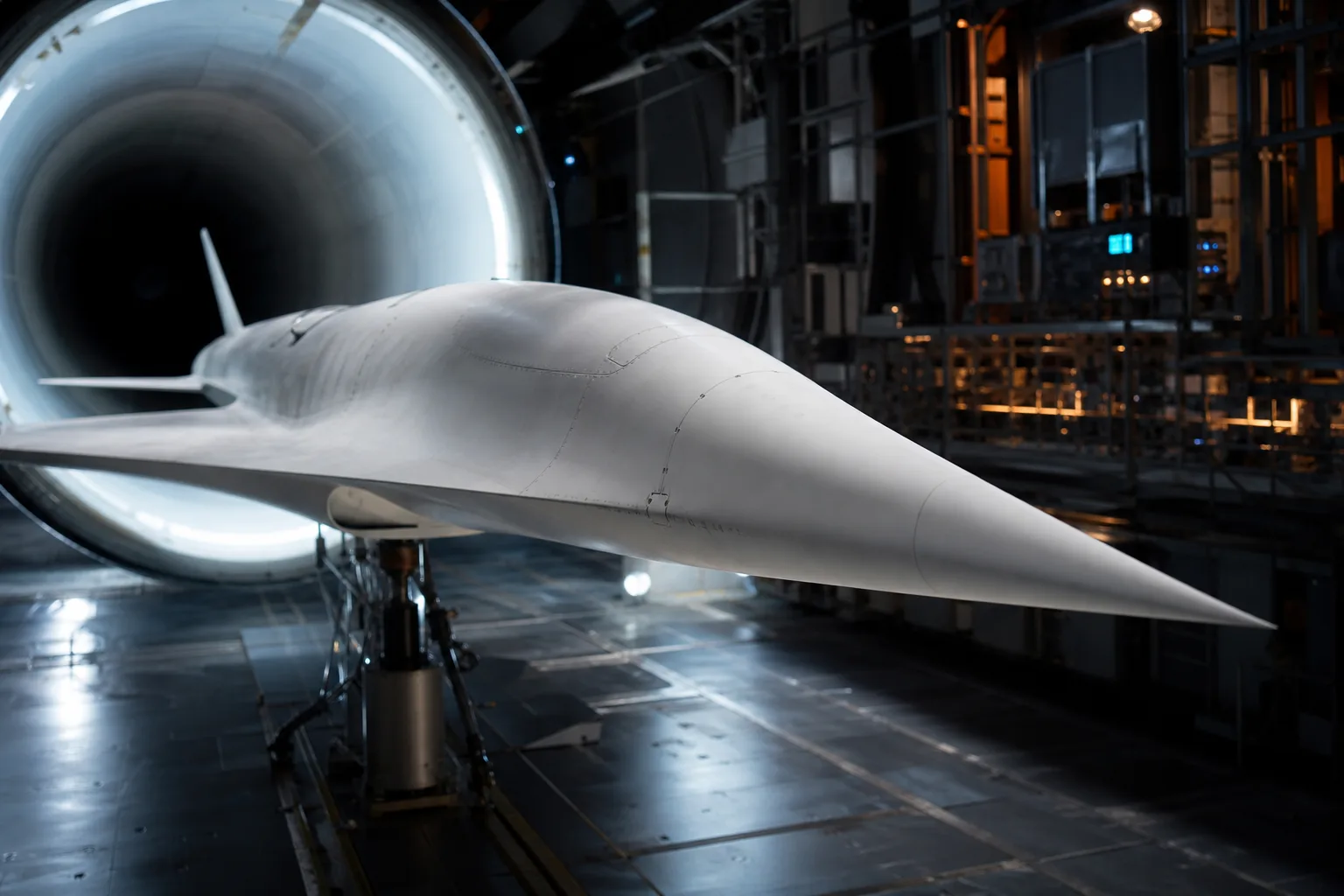
- JAXA’s hypersonic ramjet engine test at Kakuda Space Center marks a critical step toward Mach-5 passenger aircraft.
- A successful hypersonic ramjet engine trial could eventually slash the Tokyo-to-Los Angeles route from 10 hours to just two.
- Engineers solved extreme heat challenges at 25km altitude, where temperatures around the airframe can exceed 1,000°C.
- Commercial hypersonic passenger service remains a 2040s target, with a sounding rocket flight test planned as the next milestone.
Table of Contents
Japan Just Proved Its Hypersonic Ramjet Engine Can Take the Heat
Japan’s space agency has successfully tested a hypersonic ramjet engine capable of powering an aircraft to Mach 5 — five times the speed of sound — and the implications for long-haul passenger travel are staggering. Researchers from JAXA, Waseda University, the University of Tokyo, and Keio University completed a ground combustion trial at JAXA’s Kakuda Space Center, validating the engine’s performance under simulated conditions that mimic flight at roughly 25 kilometers altitude. It’s not a flying prototype yet. But it’s a very serious proof of concept.
The test focused on three things that have historically stopped hypersonic aircraft programs cold: heat shielding, control surface behavior, and engine combustion stability under extreme conditions. All three held up. That’s a bigger deal than it might sound — hypersonic flight is littered with expensive programs that fell apart when theory met the brutal physics of sustained high-speed flight.
What a Hypersonic Ramjet Engine Actually Does
A ramjet is elegantly simple in concept and ferociously difficult in practice. Unlike a conventional turbofan engine — the kind powering every commercial airliner today — a hypersonic ramjet engine has no moving parts. No spinning compressor blades, no turbine stages. Instead, the aircraft’s own forward velocity does the compression work, literally ramming incoming air into the combustion chamber where it mixes with fuel and ignites.
The upside is enormous. Eliminating rotating machinery removes massive weight penalties and mechanical complexity. It also allows the hypersonic ramjet engine to operate at speeds a turbofan simply can’t survive. The downside? A ramjet is completely useless from a standing start. It needs to be accelerated to supersonic speeds by another propulsion system before it can generate any thrust of its own. For a passenger aircraft, that likely means a rocket-assisted takeoff or a turbofan-ramjet hybrid configuration during the initial climb — an engineering challenge that hasn’t been fully solved at commercial scale.
At Mach 5 and 25 kilometers altitude, the atmosphere is about one-hundredth as dense as it is at sea level. That near-vacuum environment is actually useful — it reduces aerodynamic drag dramatically — but it also means the thin air that does hit the airframe does so with tremendous kinetic energy. Around the nose cone and leading edges, surface temperatures can spike past 1,000 degrees Celsius. That’s not just hot; it’s hot enough to structurally compromise most aerospace-grade aluminum alloys and push titanium to its limits.
The Heat Problem — and How JAXA Solved It
Thermal management at hypersonic speeds is arguably the single hardest engineering problem in the field. The U.S. Air Force has been grappling with it for years across multiple classified and semi-public hypersonic weapons programs, with mixed results. JAXA’s team tackled it by designing an advanced thermal-protection system that kept the aircraft’s interior — including its avionics and flight control electronics — operating within normal temperature ranges while the outer skin endured temperatures that would melt consumer-grade metals. Keeping a hypersonic ramjet engine and its surrounding airframe thermally stable under those conditions is precisely what makes this test result significant.
Crucially, the team also deployed sensors across the test vehicle’s surface to map heat distribution in real time. That data isn’t just useful for this prototype; it feeds directly into the thermal-structural models engineers will need to scale this up to a full-size passenger aircraft. Getting those calculations right on a small model is the only sensible way to avoid catastrophic surprises when the stakes — and the vehicle — get much larger.
This approach mirrors what NASA has been doing with its X-59 QueSST aircraft, which focuses on taming the sonic boom problem for supersonic flight over land. The X-59 operates at a much lower speed regime — around Mach 1.4 — but the underlying philosophy of using carefully instrumented test vehicles to validate computational models before committing to full-scale hardware is the same. Both programs reflect a broader shift in aerospace R&D: simulate aggressively, instrument everything, and don’t guess.
The Road from Wind Tunnel to Boarding Gate
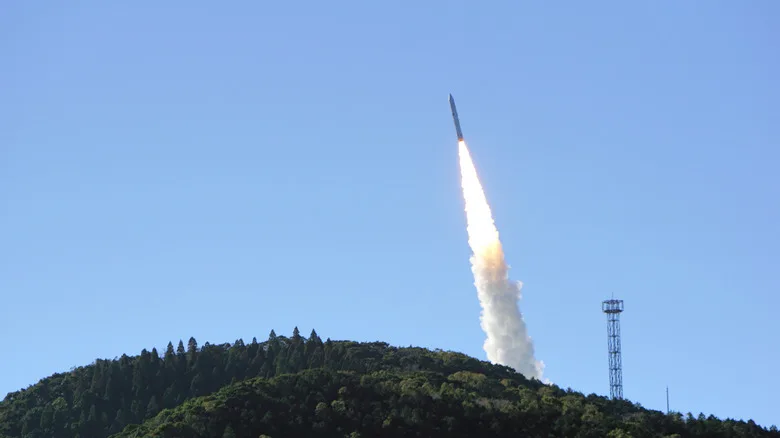
To be direct about where this stands: what JAXA completed is a ground-based, wind-tunnel test of a scaled-down model. An impressive one, but still a long way from a ticket counter. The next planned step is mounting the experimental vehicle on a sounding rocket — a suborbital rocket used to carry instruments and experiments to the edge of space and back — and attempting an actual Mach-5 flight. That test would be the first time the validated hypersonic ramjet engine and all of these supporting systems face real flight conditions simultaneously.
Assuming that goes well, and assuming the considerable regulatory and certification infrastructure for hypersonic passenger aircraft gets built in parallel, JAXA and its university partners are targeting commercial service by the 2040s. That’s roughly 15 to 20 years away — a timeline that feels both ambitious and realistic depending on your level of optimism about aerospace development cycles.
The route that keeps coming up in discussions of hypersonic passenger travel is Tokyo to Los Angeles. Currently, that’s a roughly 10-hour flight in a modern widebody like a Boeing 787 or Airbus A350. At Mach 5, cruising at 25 kilometers — nearly double the altitude of a commercial jet — that trip shrinks to around two hours. The Pacific, one of the great psychological barriers in international travel, effectively becomes a commute.
Japan Isn’t Alone — and That’s the Point
It’d be a mistake to read this as an isolated Japanese research curiosity. The hypersonic passenger flight space has been heating up globally. In the U.S., companies like Hermeus are developing Mach-5 aircraft with backing from the Air Force, while Boom Supersonic — targeting the more modest Mach 1.7 with its Overture jet — has secured aircraft orders from American Airlines and United Airlines. In the UK, Rolls-Royce has been involved in hypersonic propulsion research. China has been conducting its own hypersonic test programs, though mostly in the military domain.
The key distinction in the JAXA test is its explicitly civilian framing. This isn’t a weapons program or a military fast-mover. It’s a research collaboration between a national space agency and three leading universities, with the stated end goal of passenger transport. Developing a reliable hypersonic ramjet engine for civilian use shapes the engineering priorities differently — passenger aircraft need to be reusable, economically viable, certified to rigorous safety standards, and quiet enough not to get banned from airspace. These are harder constraints in some ways than building a one-shot hypersonic missile.
What Needs to Go Right Before 2040
Even the most optimistic reading of the JAXA timeline requires a long list of things to break in the right direction. The sounding rocket flight test has to succeed. The thermal protection system has to prove scalable. Propulsion engineers have to solve the low-speed startup problem — every hypersonic ramjet engine design faces this challenge — for a commercially operable aircraft. Regulatory bodies — ICAO, the FAA, Japan’s MLIT — have to develop entirely new certification frameworks for a class of aircraft that doesn’t exist yet. And the economics have to work well enough that tickets don’t cost more than a business-class seat on a private jet.
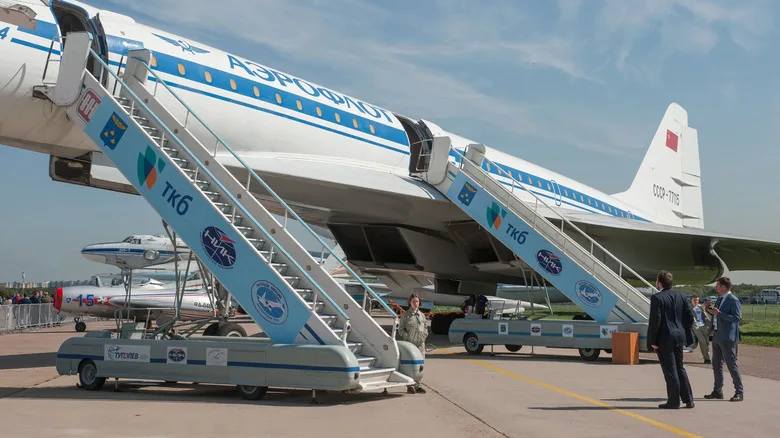
None of that is impossible. But each item on that list represents years of work. The 2040s target isn’t fantasy — the Concorde went from concept to commercial service in roughly 20 years, and it was doing it without modern computational fluid dynamics, advanced composites, or the simulation tools JAXA is using today. The technology is genuinely further along than most people realize. What the JAXA test suggests is that the hardest physics problems — heat, combustion stability, structural integrity — are starting to yield to serious engineering effort. The hypersonic ramjet engine that passed its ground trial at Kakuda may be a small model today. It’s pointing at something much larger.