Table of Contents
A Rocket Company Is Now One of the Biggest AI Compute Landlords on Earth
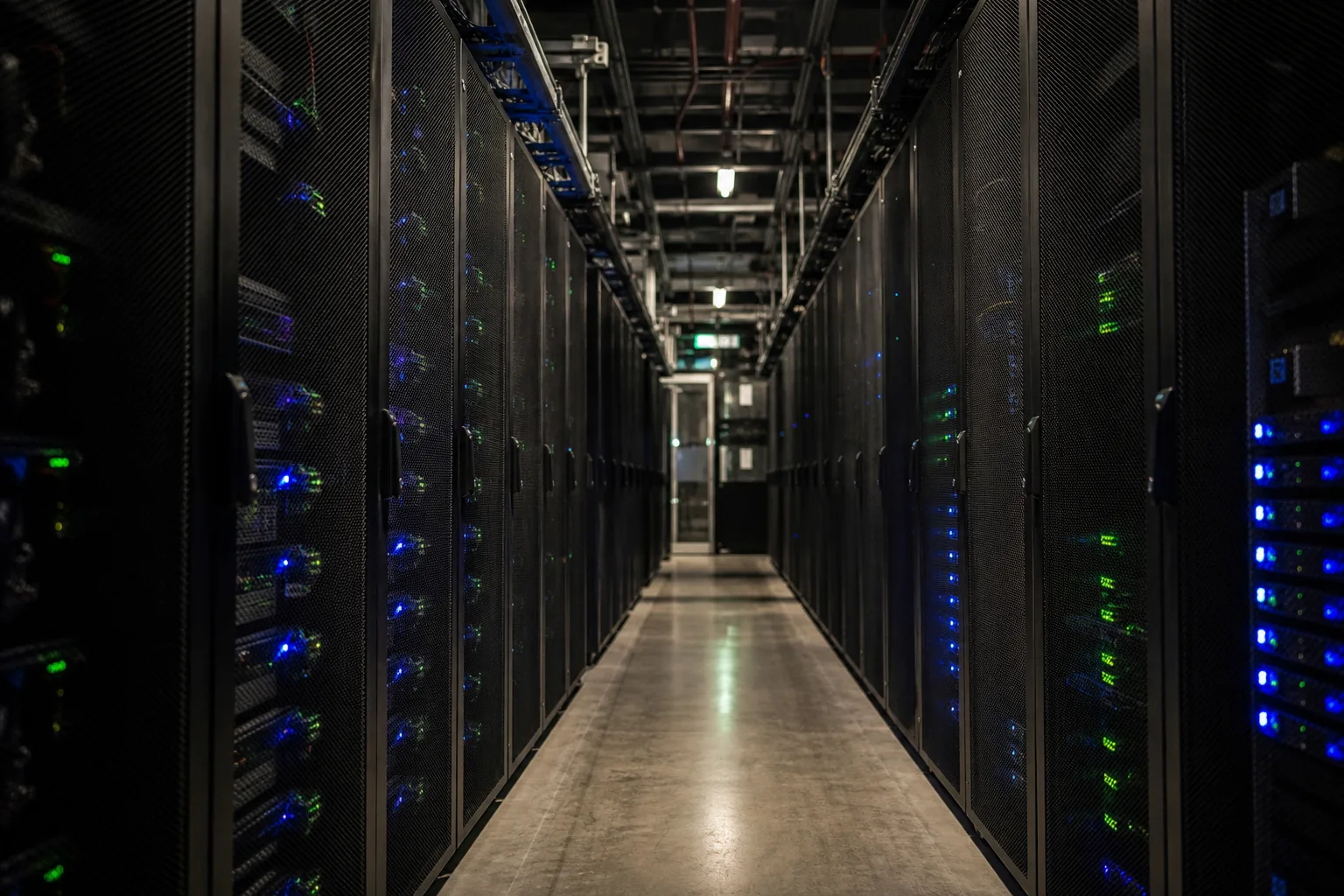
SpaceX Nvidia AI chips — 110,000 of them — sit at the centre of one of the more unusual infrastructure arrangements in technology. According to an SEC filing, SpaceX has signed a contract with Google worth $920 million per month, running from October 2026 through June 2029. That works out to roughly $30 billion in revenue from a single customer.
For a company publicly associated with rocket launches, reusable boosters and satellite connectivity, the scale of that commitment changes the way SpaceX has to be viewed. This is not a side business or a speculative experiment in renting spare capacity. A deal of this size would make AI infrastructure a meaningful part of SpaceX’s commercial identity, alongside the ventures that built its name.
Google gets access to a massive block of Nvidia compute capacity: the GPU horsepower that AI labs, cloud providers and companies building large-scale models are all trying to secure. The bottleneck in AI has not simply been ideas or software talent. It has increasingly been physical access to the chips, power, networking and data-centre capacity needed to train and operate demanding systems. Owning or controlling a large supply of Nvidia chips can therefore be as strategically important as building the models that run on them.
A Google Cloud spokesperson confirmed to the New York Times that the agreement exists. That matters because a commitment measured in hundreds of millions of dollars each month is not the sort of arrangement that can be dismissed as a loose partnership announcement. The reported terms point to a long-duration capacity reservation, giving Google a clearer path to compute at a time when demand for AI services is putting pressure on available infrastructure.
Why Google would make such a large commitment
Google has long had its own AI ambitions and computing infrastructure, but the AI market is forcing even the largest technology companies to think in layers. Internal hardware, proprietary systems and cloud platforms remain important. So does access to Nvidia equipment, which has become a central resource for companies that need to build and serve AI at scale.
The attraction of a deal like this is not difficult to understand. It can provide a known pool of capacity over a defined period rather than leaving a customer exposed to an uncertain market for chips and data-centre access. The period from October 2026 through June 2029 is particularly meaningful in that respect: Google is not merely buying capacity for a short-term launch cycle. It is securing room to plan around continued AI demand.
There is also a competitive dimension. AI products may be judged by model quality, reliability and price, but those outcomes are closely tied to the infrastructure underneath. If a company cannot obtain enough compute, it may have to limit access, slow development or make harder choices about where its most valuable capacity goes. The companies with dependable supply are better placed to keep experimenting and to serve more users without treating compute as a constantly shrinking resource.
SpaceX’s infrastructure business is becoming harder to ignore
The Google arrangement is not presented as an isolated transaction. SpaceX has a separate $1.25 billion monthly deal with Anthropic, signalling a broader cloud infrastructure play. Taken together, the Google and Anthropic agreements suggest a company positioning itself to profit from AI’s hunger for underlying capacity, rather than only from the applications built on top of it.
That is a striking strategic overlap. SpaceX is commonly understood through the lens of aerospace: launch services, spacecraft and the technical challenge of operating beyond Earth. AI infrastructure belongs to a different industrial category, one built around servers, accelerators and the economics of running vast amounts of computation. Yet both fields reward enormous capital investment, engineering discipline and long planning horizons. SpaceX appears to be finding a way to turn those capabilities toward a market whose demand is immediate and intense.
Calling SpaceX a serious AI infrastructure business is not just a rhetorical flourish when the Google deal alone could total roughly $30 billion. The more important question is whether these agreements represent the beginning of a durable business line or a moment shaped by an unusually constrained market for Nvidia compute. The available facts do not settle that question. They do show that major AI buyers are willing to make commitments large enough to give SpaceX a significant role in the supply chain.
The IPO angle adds another layer
Google holds approximately five percent of SpaceX, giving it a financial interest in a strong IPO debut next week. That ownership position makes the relationship more complicated than a standard customer-and-supplier contract. Google is both a major buyer of SpaceX capacity and an investor with an interest in the company’s market reception.
The arrangement does not automatically mean the commercial deal and the ownership stake should be treated as the same thing. But investors looking at SpaceX’s IPO debut will have reason to pay attention to how much of the company’s future narrative rests on AI infrastructure. A customer contract of this size can make revenue prospects look considerably different from the traditional picture of an aerospace company. It can also raise questions about customer concentration, the durability of AI spending and the operational demands of supplying so much compute to a small number of very large clients.
Those are not minor caveats. Infrastructure revenue can be attractive because contracts are large and demand can be persistent, but the business is capital-intensive and shaped by fast-moving technology. Nvidia chips are highly valuable today because AI demand is strong and supply is strategically important. Any company making infrastructure central to its story must show it can keep meeting customers’ needs as the market changes.
For now, the clearest takeaway is the scale of SpaceX’s shift. The company’s relationship with Google is no longer only about investment or adjacent technology interests. With 110,000 Nvidia AI chips leased to Google for $920 million per month through mid-2029, SpaceX is becoming part of the machinery that determines who can compete in AI at the largest scale. That is a far bigger role than a rocket-company detour.