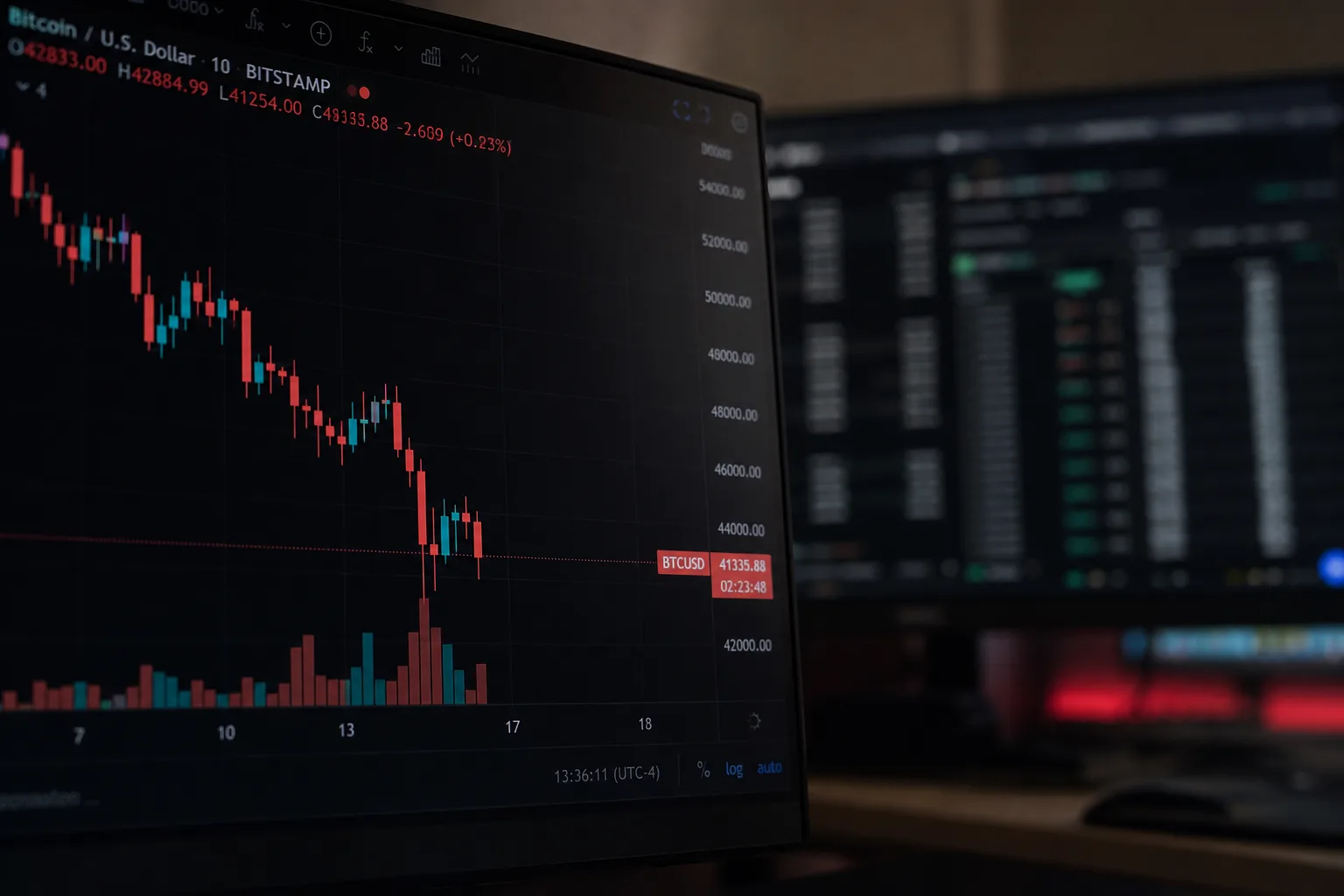
The crypto market got a brutal reminder this weekend that bitcoin doesn’t exist in a vacuum. Bitcoin liquidations surged past $1.6 billion in a 24-hour stretch after Friday’s US jobs data forced a sharp rethink of Federal Reserve policy, dragging BTC below $60,000 for the first time in weeks before a partial recovery steadied nerves heading into the weekend.
- Bitcoin liquidations exceeded $1.6 billion in 24 hours as BTC briefly dipped below $60,000 before recovering to around $61,000.
- The bitcoin liquidations wave was sparked by a strong US jobs report that forced markets to price in a Fed rate hike by end of 2026.
- Ether fell 21.6% on the week and solana dropped 23.7%, with roughly 308,000 traders caught in the leverage washout.
- Zcash collapsed 44% separately after a disclosed bug in its Orchard privacy pool, adding $115 million to overall liquidations.
Table of Contents
What the Jobs Report Actually Did to Crypto
The trigger wasn’t a crypto-native event. Friday’s nonfarm payrolls print came in solid — strong enough that interest rate swap markets now fully price in a Fed rate hike by the end of 2026. That’s a striking reversal. When newly confirmed Federal Reserve chair Kevin Warsh took the job, the dominant expectation was for rate cuts. That narrative is now dead, at least for the moment.
Two-year Treasury yields jumped 12 basis points to 4.16% in a single session. The dollar strengthened. And risk assets — which had been riding a surprisingly resilient run — fell hard. The Nasdaq 100 sank roughly 5%, its worst single-day drop since April 2025, while a chipmaker index tumbled 10%. The S&P 500 dropped 2.6% and failed to log its tenth consecutive weekly gain. For context, AI-adjacent names took the worst of it, which tells you something about where the most crowded, most speculative bets were sitting.
Crypto, as it tends to do during macro stress events, amplified the broader move rather than decorating from it. Bitcoin liquidations were the most visible consequence, but the damage spread across every major token within hours.
Bitcoin Liquidations: What $1.6 Billion in 24 Hours Actually Looks Like
According to CoinGlass, roughly 308,000 traders had positions liquidated in the 24-hour window spanning the Friday selloff and Saturday recovery. Total bitcoin liquidations hit approximately $1.60 billion, with long positions — bets that prices would rise — accounting for $1.21 billion of that. That’s the dominant story here: a market that had been leaning heavily bullish got caught offside when macro conditions shifted without warning.
Bitcoin itself saw $534 million in bitcoin liquidations. Ether added another $423 million. These aren’t abstract numbers — they represent traders who had borrowed to amplify their exposure and couldn’t meet margin calls as prices fell faster than they could react. This is the leverage washout that crypto veterans talk about as a necessary, if painful, reset. Whether it’s actually cleared the system is another question.
The mechanics of the BTC drop itself were telling. Bitcoin had already been sliding toward $60,000 all week, pressured by what CoinDesk reported as a record run of ETF outflows and — notably — Strategy’s first bitcoin sale since 2022. Strategy, the Michael Saylor-founded company that turned itself into a de facto bitcoin holding vehicle, has been one of the more consistent demand-side forces in the market over the past two years. Seeing it sell, even a small amount, removed a psychological support that many traders had taken for granted. The timing made bitcoin liquidations worse than they might otherwise have been, as sentiment was already fragile heading into the jobs report.
The overnight dip to $59,227 was sharp but brief. Bitcoin reclaimed $61,000 during Saturday Asian trading hours, recovering more than $1,500 from the low. Whether that bounce holds is the key question heading into next week.
Altcoins Got Hit Harder — Much Harder
If Bitcoin’s weekly performance looks rough, the altcoin picture is considerably worse. Ether fell 21.6% over seven days to trade around $1,575 — a level that puts it back in territory last seen during prior bear phases. Solana dropped 23.7% to around $63. XRP, Dogecoin, and BNB all posted losses between 13% and 20% for the week.
Even Hyperliquid’s HYPE token, which had been outperforming through most of the recent bleed, fell 9.9% over the same stretch. When the more resilient names start cracking, it’s usually a sign that the selloff has broadened beyond just the obvious over-leveraged plays. Altcoin bitcoin liquidations data from CoinGlass confirmed that the washout was widespread, not concentrated in a handful of tokens.
The altcoin weakness matters for a structural reason: in bull markets, capital tends to rotate from Bitcoin into higher-risk tokens as confidence grows. The reverse rotation — alts selling off harder than BTC — is a classic sign of deleveraging and risk-off sentiment, not just normal volatility.
Zcash’s Separate Crisis Adds to the Damage
Separate from the macro-driven selloff, Zcash was having its own catastrophic weekend. The privacy-focused token collapsed roughly 44% after developers disclosed a bug in its Orchard privacy pool — the newer, more advanced privacy protocol that Zcash has been positioning as a core differentiator. The disclosure generated approximately $115 million in additional bitcoin liquidations and altcoin liquidations combined, piling onto the broader chaos.
The Zcash situation is a different kind of bad. A macro-driven crypto rout is painful but explainable — when the Fed reprices, risk assets fall, and crypto is a risk asset. A disclosed bug in core privacy infrastructure is a trust problem. Privacy coins live and die on their cryptographic guarantees. When those guarantees are questioned, even temporarily, the market tends to punish the token hard and fast. The 44% collapse reflects that dynamic.
Where Does Bitcoin Go From Here?
The $60,000 level is now firmly in focus as the battleground. Bitcoin pierced it overnight and reclaimed it quickly — which is technically the better outcome versus a sustained break. But the fact that it tested the level at all, after weeks of pressure from ETF outflows and the Strategy sale, means the market hasn’t truly resolved the question of whether $60,000 is a floor or a ceiling.
A clean sustained break below $60,000 would put BTC back into price territory last traded during the February 2026 drawdown, and that’s a meaningful psychological reset. On the other hand, the bounce did attract buyers, and on-chain signals are at least somewhat encouraging — Santiment data reportedly shows active addresses at a four-month high and social dominance near a 2026 peak, suggesting engagement rather than capitulation.
The bigger macro picture is harder to dismiss. If the Fed is genuinely back in rate-hike territory, the entire risk-asset playbook from the past 18 months needs revisiting. Bitcoin has made a credible case for itself as a macro hedge in certain environments, but higher-for-longer rates — combined with a stronger dollar — have historically been headwinds for BTC, not tailwinds. The next few weeks of inflation data and Fed commentary will matter more for crypto prices than most on-chain metrics.
The bitcoin liquidations this weekend were painful for the traders caught in them, but they may also have cleared out some of the excess leverage that had been building. Historically, large-scale bitcoin liquidations events tend to reset funding rates and reduce open interest, creating a cleaner base for the next directional move. The question now is whether the buyers who stepped in at $59,000 have enough conviction to hold the line — or whether the next macro shock finds the market just as exposed.
Frequently Asked Questions
What caused the bitcoin liquidations in this selloff?
The bitcoin liquidations were triggered by a strong US nonfarm payrolls report that pushed markets to price in a Federal Reserve rate increase by end of 2026. That repricing sent Treasury yields and the dollar higher, hammering risk assets from AI stocks to crypto and flushing over-leveraged long positions.
How low did Bitcoin fall during the weekend drop?
Bitcoin fell as low as $59,227 overnight before buyers stepped in. It recovered to around $61,000 during Saturday Asian trading hours, regaining more than $1,500 from the intraday low — though it remained down roughly 1.3% on the day.
What is the significance of the $60,000 level for Bitcoin?
The $60,000 level is closely watched by traders as psychological support. A sustained break below it would put Bitcoin back in territory last seen during the February drawdown. The quick overnight reclaim prevented that scenario, but another retest of the level remains possible.
What happened to Zcash during the crypto selloff?
Zcash collapsed around 44% separately from the broader market rout after developers disclosed a bug in its Orchard privacy pool. That crash generated roughly $115 million in additional liquidations, making it one of the worst-performing tokens during the selloff period.