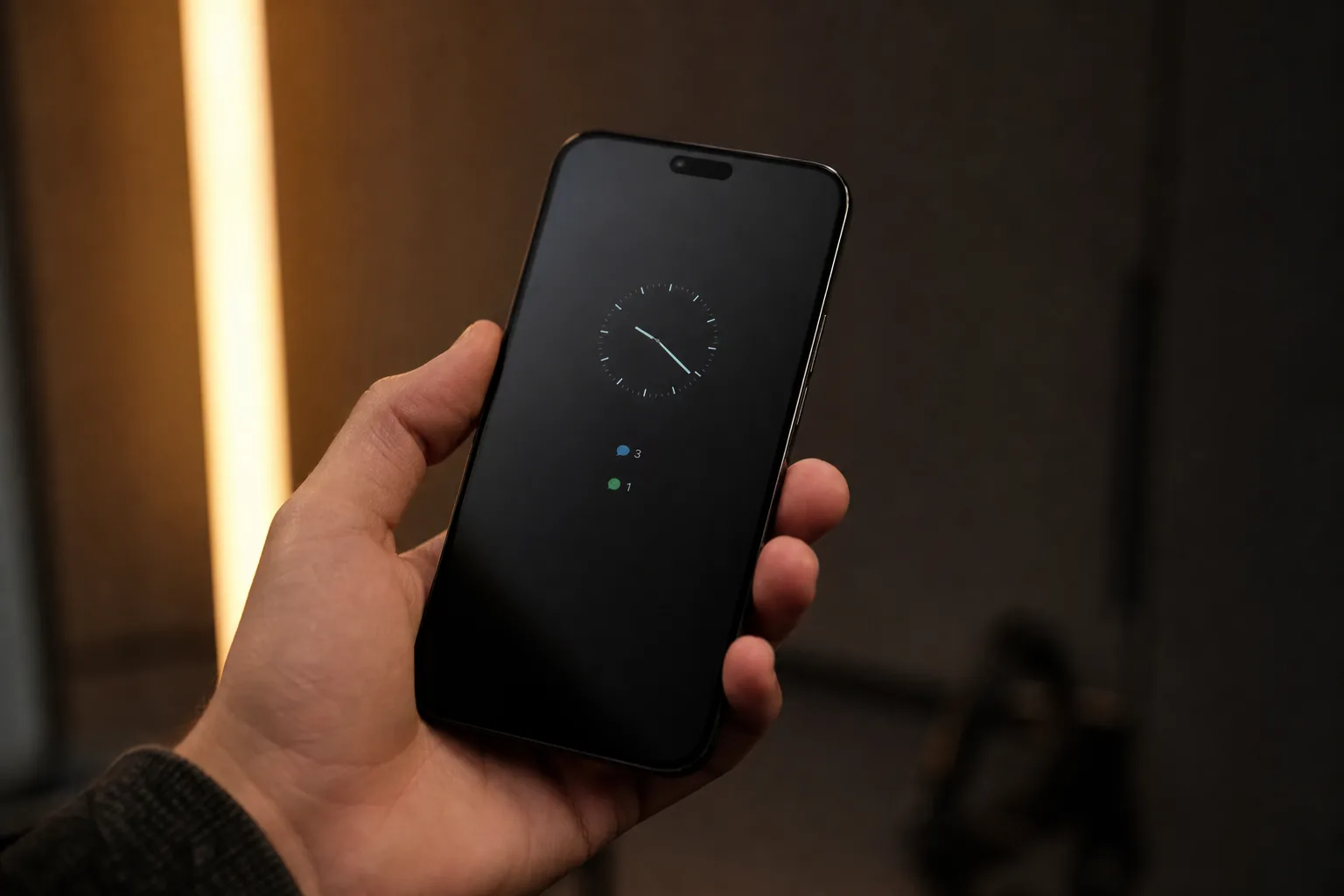
- The iPhone 18 Pro display may adopt LTPO+ technology to improve OLED efficiency and reduce distracting flicker in dim settings.
- A reportedly 35% smaller cutout could give the iPhone 18 Pro display its first meaningful physical Dynamic Island redesign since 2022.
- Apple will likely retain current Pro screen sizes and spend its engineering effort where users will feel it: efficiency, quality, and visual polish.
- These rumored upgrades matter because screen behavior follows users through every app, notification, video, and late-night glance at the phone.
Table of Contents
The iPhone 18 Pro display may get better where people actually notice
The iPhone 18 Pro display may look familiar at first glance. Current reporting suggests Apple will keep the same screen sizes expected on the iPhone 17 Pro generation. But size is only the easiest specification to put on a slide. The more interesting rumored changes are under the glass: a more advanced OLED backplane and a notably smaller Dynamic Island cutout.
That’s a sensible direction, frankly. Smartphone screens have reached the point where another tenth of an inch rarely changes how a phone feels in the hand. Better battery behavior, fewer visual annoyances in a dark room, and less hardware intruding on the display are the upgrades users will clock every day.
The two reported changes are LTPO+ panel technology and a Dynamic Island said to be around 35% smaller than the version on Apple’s current Pro phones. Neither claim is official, and Apple’s hardware plans can shift late in development. Still, the pairing fits Apple’s long-running approach: make an unglamorous component improvement, then let it quietly improve almost everything else.
Why LTPO+ could matter for the iPhone 18 Pro display
LTPO, short for low-temperature polycrystalline oxide, is already a familiar part of Apple’s Pro iPhone story. It helps the iPhone vary its refresh rate, enabling ProMotion’s adaptive motion and the always-on display mode introduced with the iPhone 14 Pro. Rather than forcing the panel to run at one fixed speed, LTPO lets it slow down when you’re reading a static page and speed up when you’re scrolling or gaming.
The rumored LTPO+ implementation goes a step further. Conventional LTPO uses oxide materials in switching thin-film transistors, while LTPO+ reportedly extends that approach to driving transistors as well. In plain English: the display could control the power sent to each OLED pixel with more precision. That gives the panel more room to balance brightness, refresh behavior, image stability, and power draw as lighting conditions change.
For an iPhone 18 Pro display, that may sound like semiconductor trivia. It isn’t. OLED displays can be most bothersome in the exact situations where people stare at a phone for too long: in bed, in a dark car, or while checking a message in a dim restaurant. Pulse-width modulation and related brightness-control behavior can produce flicker that some users perceive as eye strain or headaches. A panel that adjusts more responsively at low brightness could make the experience less harsh, even if it doesn’t eliminate every complaint.
Battery efficiency is the other practical upside. The screen is among the biggest consumers of power in any phone. Apple has steadily turned display control into a battery-life tool, from adaptive refresh rates to always-on mode. If LTPO+ reduces the energy needed to maintain a usable image, Apple may spend that saving on longer battery life, higher sustained brightness, or a bit of both. My read is that users should expect the first option, because battery endurance sells phones long after a launch-day brightness demo is forgotten.
Apple has not publicly detailed any LTPO+ plans. Its current iPhone Pro display specifications describe ProMotion technology with adaptive refresh rates, but they do not point to a next-generation panel stack. Until Apple says otherwise, this remains a supply-chain rumor, not a feature list.
A smaller Dynamic Island is overdue
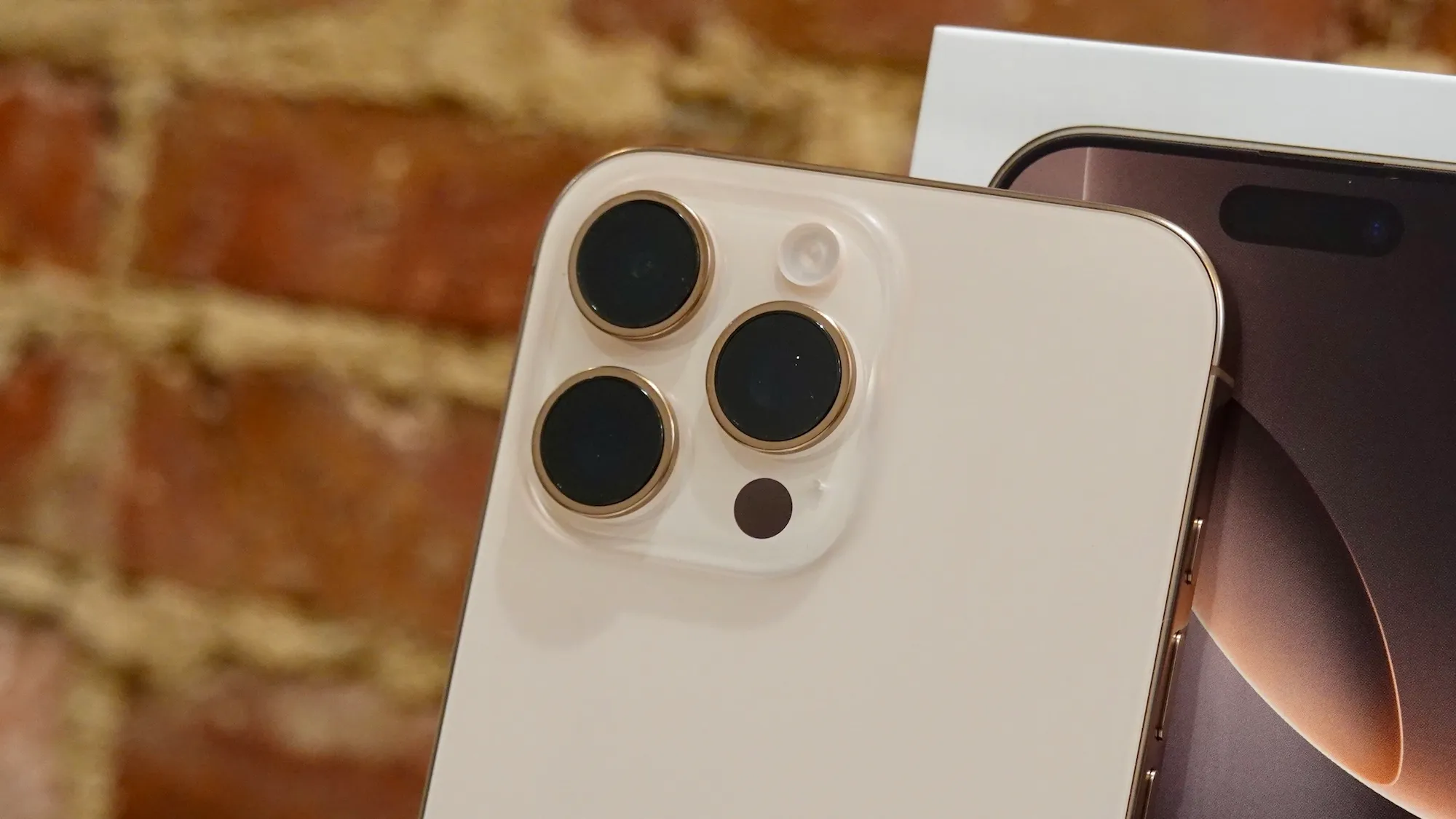
The second reported iPhone 18 Pro display change is easier to understand: less black cutout at the top of the screen. Apple introduced the Dynamic Island with the iPhone 14 Pro in 2022, transforming the pill-shaped front-camera and Face ID hardware area into an animated software element for calls, music, timers, navigation, and Live Activities.
It was clever. It was also a very Apple solution to an Apple problem. Rather than hide a conspicuous cutout, the company made the cutout useful. Four years later, though, the physical shape has barely changed, even as the software around it has become more capable. A 35% reduction would be the first visible acknowledgement that the best Dynamic Island is probably one you notice less often.
Don’t expect a suddenly edge-to-edge pane with no interruption at all. Face ID relies on a set of front-facing sensors, and moving them under the display without compromising speed, security, or image quality is hard. Android manufacturers have had years to experiment with under-display cameras, with mixed results. The photos tend to look as if they were shot through a slightly dusty window. Apple is unlikely to accept that trade-off for a flagship product that starts at a premium price.
Still, a smaller island would make the iPhone 18 Pro display feel cleaner during full-screen video, games, and photos. The gain in usable area may be small on a spec sheet, but visual interruptions carry outsized weight. Think of it like a tiny crack in a windshield: it occupies very little space, yet your eyes find it constantly.
Apple’s screen strategy is becoming more mature
The rumored iPhone 18 Pro changes also say something about where Apple is in the iPhone cycle. For years, headline hardware changes were easy to summarize: OLED arrived, 120Hz came to the Pro line, the notch became the Dynamic Island. Now Apple is chasing refinement, which can sound boring until you live with the result.
A more efficient iPhone 18 Pro display could improve always-on mode without punishing battery life. A smaller Dynamic Island could make iOS feel less hemmed in. And better low-light screen behavior would address an issue that is rarely visible in marketing but very real for a subset of customers. These are the kinds of changes Apple usually values because they affect the entire product experience rather than one isolated app.
There is a risk, of course. Apple could market these upgrades as precision engineering while leaving buyers wondering why the basic visual design still looks largely unchanged. Samsung and Google have been happy to make more obvious display moves, from ultra-high peak brightness claims to increasingly minimal camera holes. Apple needs the rumored efficiency gains to translate into something tangible: better endurance, more stable dimming, or both.
If these reports hold, the iPhone 18 Pro display won’t be a dramatic redesign. It may be more consequential than one. The most successful phone upgrades are often the ones you stop thinking about because the hardware stops getting in your way. Apple has spent years teaching us to interact with the island. The next step is making it fade into the background.