The OpenAI government stake has moved from a speculative idea floated in private meetings to what appears to be a live and active negotiation between one of the world’s most valuable AI companies and the White House. If it closes, it would represent something genuinely unprecedented: the United States government as a direct equity holder in a private AI startup worth north of $850 billion — and, critically, a startup on the verge of going public.
- An OpenAI government stake is being actively negotiated, with Trump saying talks should move forward in the very near future.
- The proposed OpenAI government stake could funnel AI profits directly to American citizens through a Public Wealth Fund.
- Senator Bernie Sanders plans a separate bill that would impose a one-time 50% tax on the largest AI companies to fund the scheme.
- Critics warn the arrangement risks repeating the ‘too big to fail’ dynamic of the 2008 financial crisis, but with AI firms.
Table of Contents
How the OpenAI Government Stake Deal Came Together
According to reporting from CNBC, CEO Sam Altman was the one who first put the idea on the table — reportedly in 2025. The concept has been percolating for over a year, and it’s only now that the outlines of a real structure are emerging. The model on the table: OpenAI transfers shares to the federal government, which pools them into a so-called “Public Wealth Fund” — a vehicle that would, in theory, distribute returns directly to American citizens. The OpenAI government stake proposal, as structured, would make every American taxpayer a de facto beneficiary of the company’s future growth.
President Trump has publicly confirmed the talks, telling reporters that Americans could “essentially become a partner” in OpenAI, and that negotiations should advance “in the very short, very near future.” That’s unusually direct language for a deal with no confirmed terms, no agreed equity percentage, and no legislative framework behind it.
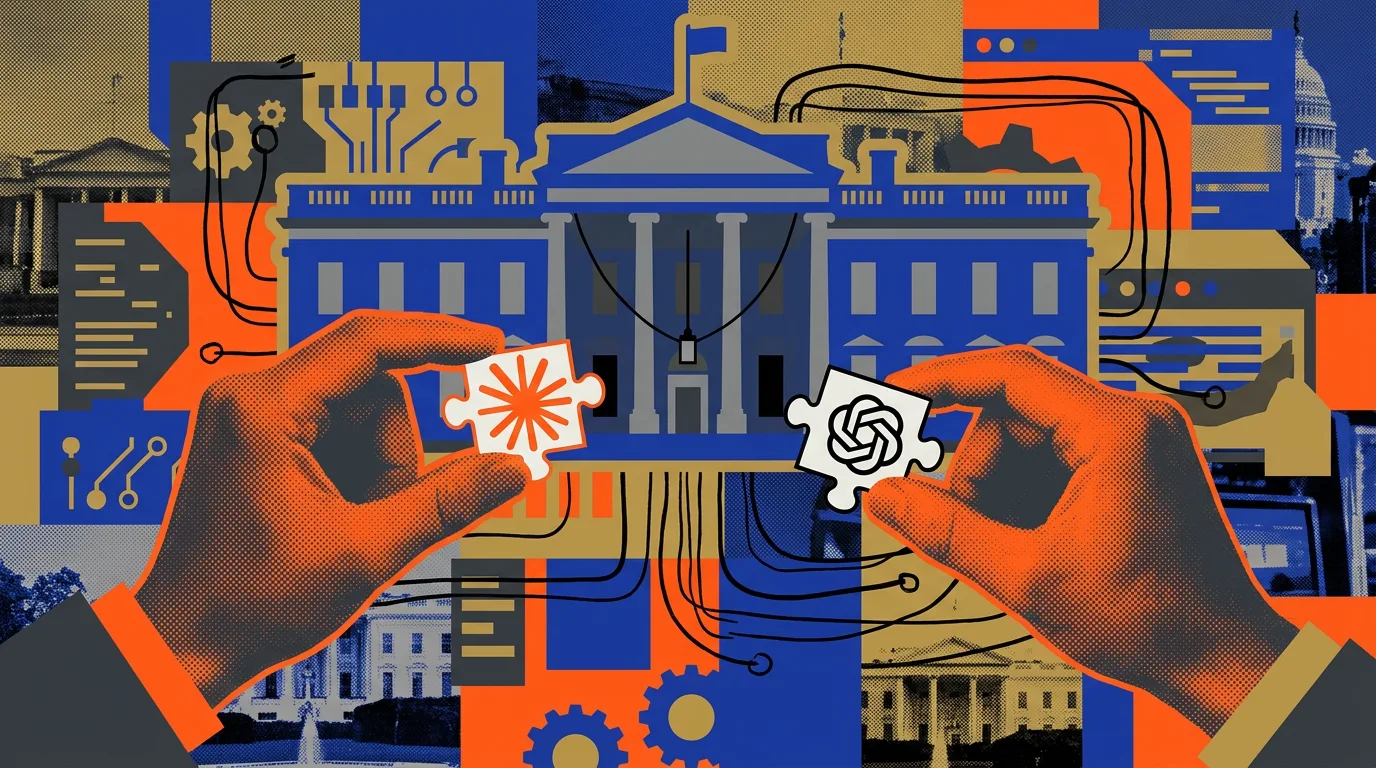
The Trump administration isn’t new to holding stakes in tech companies — it already has positions in Intel, IBM, and several others, largely through financial instruments tied to previous industrial policy moves. But a direct equity relationship with a private AI startup of OpenAI’s scale would be different in kind, not just degree. This would be the government sitting at the cap table of the defining technology company of the decade. Analysts tracking the OpenAI government stake negotiations say there is no clear precedent for an arrangement of this size and strategic weight.
Sanders vs. Silicon Valley: The Legislative Play
What makes this story more complex is that a parallel effort is taking shape on Capitol Hill — and it’s coming from an unlikely direction. Senator Bernie Sanders has confirmed he’s had direct conversations with Altman about a sovereign fund concept, and he’s planning to introduce the American A.I. Sovereign Wealth Fund Act in the near term, as he laid out in a New York Times op-ed.
Sanders’ version is considerably more aggressive than anything the White House is floating. His bill would impose a one-time 50 percent tax on shares of the largest AI companies — not just OpenAI, but presumably firms like Anthropic, Google DeepMind’s parent, and Microsoft’s AI-adjacent holdings. In exchange, the government would receive voting rights and board representation. Profits would flow back to citizens as direct payments. Where the White House’s version of an OpenAI government stake is negotiated voluntarily, Sanders’ legislative approach would mandate the transfer through taxation.
The argument underneath all of this is philosophically interesting, even if the mechanics are contested. Sanders’ position is that AI systems are trained on the accumulated writing, code, creative work, and knowledge of billions of people over decades. That underlying dataset was never paid for. The wealth being generated on top of it is enormous and growing fast. Why should it accrue almost exclusively to a small group of founders, investors, and executives?
It’s a fair question. And notably, it’s not just coming from the left. Both OpenAI and Anthropic have independently floated similar fund concepts themselves — which tells you something about the political temperature these companies are sensing.
OpenAI Government Stake as Pre-IPO Strategy
Here’s where it gets strategically interesting. OpenAI is currently preparing for an IPO at a private valuation of over $850 billion. That makes it one of the most valuable companies ever to go public. It also makes it a massive target — for regulators, for antitrust scrutiny, for congressional hearings, and for every politician who wants to make AI accountability a campaign issue.
A formal OpenAI government stake, locked in before the IPO, changes that calculus considerably. If the US government is a shareholder, it has a direct financial interest in OpenAI’s success. That doesn’t make regulation impossible, but it creates a significant political friction point for anyone pushing aggressive oversight. You’re no longer just going after a tech company — you’re going after an asset in which the government itself has equity.
From OpenAI’s perspective, this is as much about political insurance as it is about national AI strategy. The company has spent the past two years navigating an increasingly hostile regulatory environment in Europe, growing scrutiny in the US, and a competitive landscape that includes well-funded rivals like Anthropic, Google, and xAI. A formal OpenAI government stake arrangement doesn’t just legitimise the business — it embeds it into the national interest narrative in a way that’s very hard to unwind.
The “Too Big to Fail” Warning Sign
The most serious concern raised by analysts watching these negotiations isn’t about ideology — it’s about structure. If the government takes a meaningful equity stake in OpenAI, it becomes financially entangled with the company’s fortunes. That’s the same dynamic that made the 2008 financial crisis so damaging: once the government was effectively backstopping the banks, walking away from them wasn’t really an option. They were too big — and too politically connected — to be allowed to fail. Critics argue the OpenAI government stake risks creating exactly that kind of structural dependency, but in an industry whose long-term economics are even less certain than banking was in 2007.
OpenAI and Anthropic are not banks. But they share one important characteristic with pre-crisis financial institutions: they’re burning enormous amounts of cash while generating substantial revenue. Both companies operate at a scale that requires massive ongoing infrastructure investment. Neither has demonstrated a clear, sustainable path to profitability. Whether the underlying technology evolves fast enough to generate the returns these valuations imply is genuinely uncertain.
In late 2025, OpenAI CFO Sarah Friar briefly floated the idea of government rescue funds before quickly walking it back. Altman himself stated clearly at the time that the government shouldn’t provide guarantees or bail companies out — that “the market, not the government, will deal with it” if OpenAI’s bets go wrong. Those were the right words. The problem is that OpenAI simultaneously sent the White House a letter lobbying for “grants, cost-sharing agreements, loans, or loan guarantees” to expand industrial capacity. That’s not a company that’s fully comfortable leaving its fate to the market.
What This Means for the Broader AI Industry
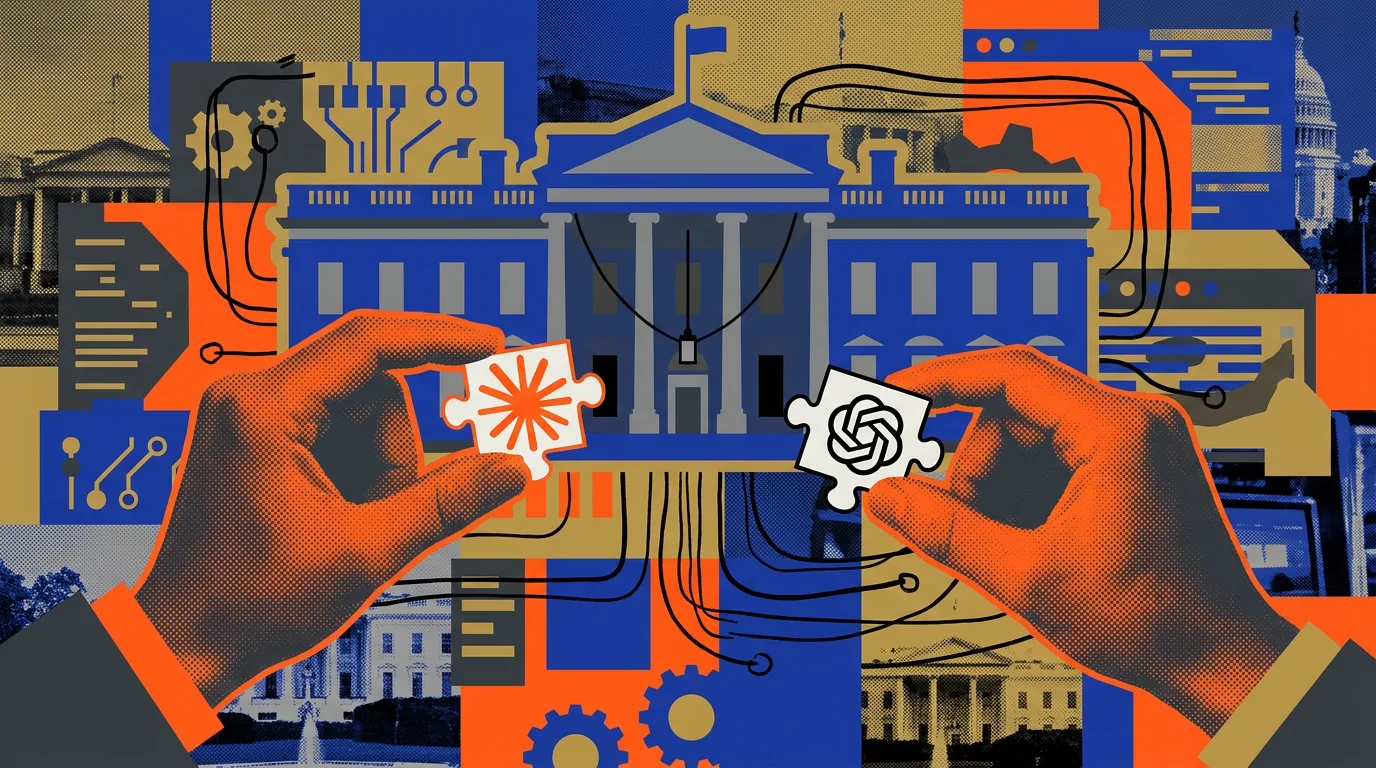
If the OpenAI government stake goes through in any meaningful form, the ripple effects across the AI sector would be significant. Every other major AI lab would face immediate pressure to either pursue similar arrangements or justify why they haven’t. Anthropic, which has already floated comparable fund ideas, would be the obvious next conversation. Microsoft, Google, and Amazon — all deeply invested in AI infrastructure — would face questions about their own relationships with federal agencies.
The Trump administration’s interest here isn’t purely financial. It has signalled repeatedly and clearly that it wants a hand in shaping how AI develops in the United States — particularly relative to China. A direct equity stake in the leading American AI company gives the administration something that regulatory frameworks don’t: a seat at the table, shareholder rights, and a structural reason to prioritise the company’s competitive position internationally.
That’s a form of industrial policy, even if nobody in Washington is calling it that. And it bypasses Congress almost entirely — which is either efficient or alarming, depending on your view of executive overreach.
The honest read on all of this is that multiple parties with very different motivations are converging on a similar mechanism for different reasons. Altman wants political cover before an enormous IPO. The Trump administration wants influence over a strategically vital industry without a legislative fight. Sanders wants to redistribute AI profits before the wealth gap widens further. And ordinary Americans — if any of this actually materialises — might get a direct payment cheque tied to the OpenAI government stake structure, with an AI company’s name effectively attached to it.
Whether the structure that emerges from all those competing interests is actually coherent — and whether it protects taxpayers rather than exposing them to the downside risk of an $850 billion bet — is the question that nobody in these negotiations seems to be asking loudly enough.
Frequently Asked Questions
What would an OpenAI government stake actually look like?
Under the proposed structure, OpenAI would hand over shares to the US government, which would hold them as part of a Public Wealth Fund. Returns from those shares could flow to American citizens as direct payments. No formal terms have been set yet, and no equity percentage has been publicly disclosed.
What is Bernie Sanders’ American AI Sovereign Wealth Fund Act?
Sanders’ bill would impose a one-time 50% tax on shares of the largest AI companies, using the proceeds to establish a government fund. The government would gain voting rights and board seats, with returns paid directly to citizens. Sanders argues AI is built on collective human knowledge and its profits shouldn’t concentrate among a few billionaires.
How does the OpenAI government stake relate to the company’s planned IPO?
OpenAI is actively preparing for an IPO and is currently valued by private investors at more than $850 billion. A formal government stake before that listing would give OpenAI political protection and could deter aggressive regulation — effectively turning the US government into a shareholder with a financial interest in the company’s success.
Could the US government end up bailing out OpenAI if things go wrong?
That’s the central concern raised by critics. If the government holds equity in OpenAI, it would have a direct financial incentive to rescue the company with taxpayer money during a crisis — echoing the bank bailouts of 2008. OpenAI and Anthropic both have fast-growing revenue and high usage but are still burning massive amounts of cash.