

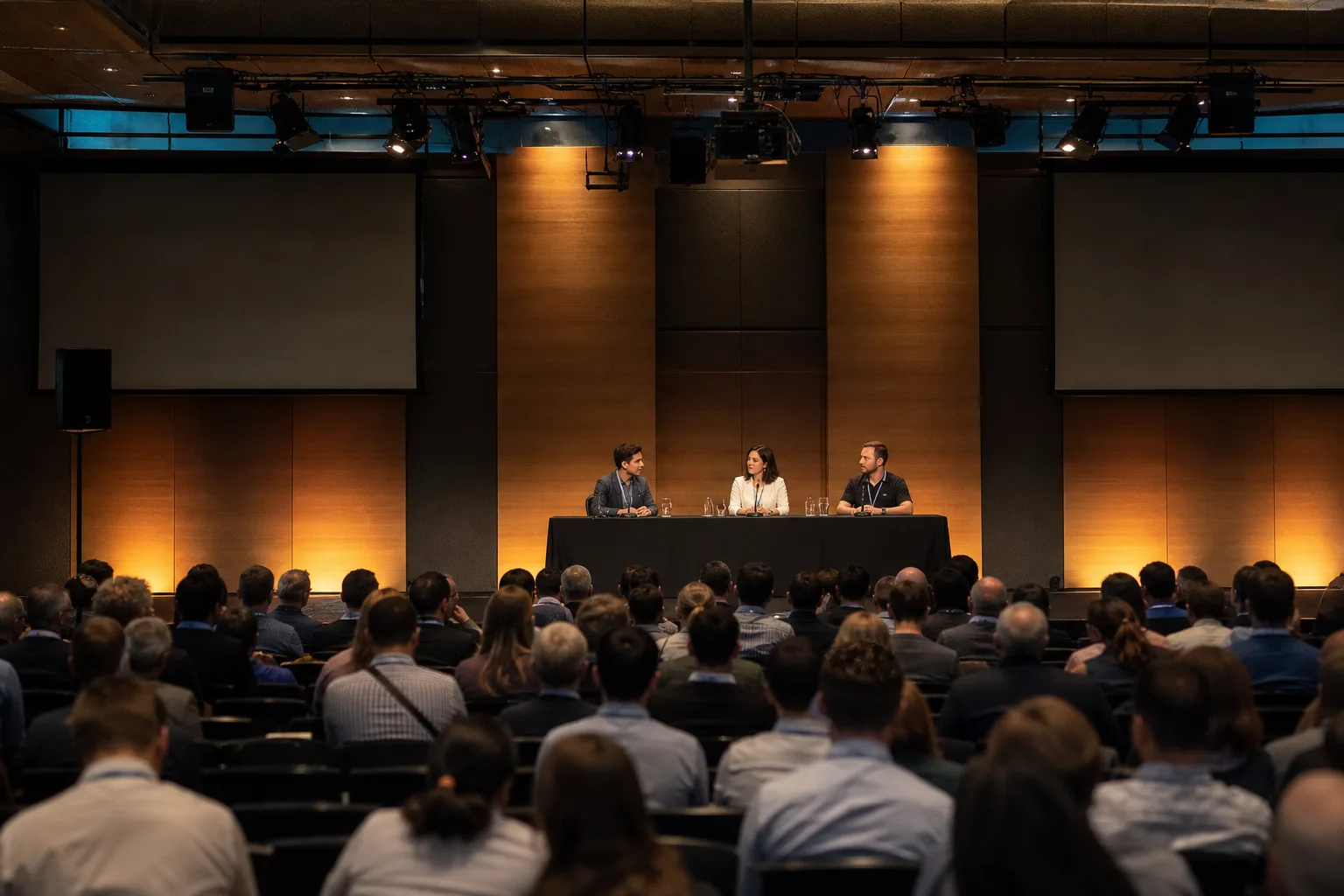
- AI in everyday life was the central theme at Colorado SunFest 2026, drawing top industry voices to the debate.
- Speakers explored how AI in everyday life is shifting from novelty to necessity across work, health, and education.
- Concerns around bias, transparency, and public trust were recurring threads throughout the SunFest discussions.
- Panellists argued that how society governs AI now will define who benefits from it over the next decade.
Table of Contents
AI in Everyday Life Takes Centre Stage in Colorado
AI in everyday life isn’t an abstract concept anymore — and at Colorado SunFest 2026, some of the sharpest minds working in the field made that point repeatedly, urgently, and with plenty of real-world examples. The annual festival, held in Colorado and known for blending culture with forward-thinking conversation, devoted significant floor time this year to the question most people are quietly asking: how much is artificial intelligence already running the show, and are we okay with that?
The answer, depending on which panellist you asked, ranged from cautiously optimistic to genuinely worried. What wasn’t in dispute was the scale of what’s happening. AI in everyday life is no longer confined to tech campuses or research labs. It’s in the apps suggesting what you watch tonight, the tools your doctor uses to flag abnormal test results, the systems your bank runs to detect fraud before you’ve even noticed the charge. The question being debated at SunFest wasn’t whether AI has arrived — it’s whether we were ready for it when it did.
From Hype to Habit: How AI Became Part of Daily Routines
One of the clearest threads running through the SunFest discussions was the speed of normalisation. Technologies that seemed futuristic three years ago — AI writing assistants, real-time language translation, personalised health monitoring — are now mundane for millions of users. Research tracked by Our World in Data shows AI adoption accelerating sharply across consumer-facing sectors since 2022, a trend that shows no sign of plateauing.
Speakers pointed to healthcare as one of the most tangible examples of AI in everyday life in action. AI diagnostic tools are being deployed in radiology departments, helping clinicians identify early-stage cancers and anomalies in imaging scans with a speed and consistency that human review alone can’t match. In education, adaptive learning platforms are adjusting curriculum difficulty in real time based on student performance data. These aren’t pilot programmes — they’re live, at scale, affecting real people.
But the panel was careful not to let the success stories paper over the friction. Several speakers acknowledged that the same speed driving adoption is also outpacing the frameworks meant to govern it. Regulatory bodies in the US and Europe are still catching up to systems that have already been embedded in critical infrastructure. That gap is where a lot of the real risk lives.
The Trust Problem Nobody Wants to Talk About
If there was one uncomfortable topic that kept resurfacing throughout the SunFest AI sessions, it was trust — specifically, the lack of it. Surveys consistently show that while consumers are using AI tools in large numbers, they don’t fully understand how those tools make decisions, and many don’t particularly trust them to get it right.
That’s a problem that goes beyond consumer sentiment. When AI in everyday life starts making consequential decisions — who gets a loan, which job applicant gets shortlisted, what medical treatment gets recommended — the opacity of those systems stops being a UX complaint and becomes a civil rights issue. Panellists were direct about this. Algorithmic bias isn’t a theoretical risk; it’s a documented reality in hiring platforms, facial recognition systems, and predictive policing tools that have already caused measurable harm to marginalised communities.
The solution most speakers converged on wasn’t to slow AI deployment but to make explainability a hard requirement rather than an optional feature. If a system is making decisions that affect your life, you should be able to find out why. That principle sounds obvious, but most current systems don’t actually support it in any meaningful way. The EU’s AI Act is attempting to enforce exactly this kind of transparency — but enforcement is slow, and the technology moves fast.
Work, Jobs, and the Reskilling Reality
No discussion of AI in everyday life would be complete without addressing employment — the topic that generates the most anxiety and, frankly, the most noise. At SunFest, the conversation was notably more measured than the doomsday predictions that tend to dominate headlines. The consensus among panellists wasn’t that AI is replacing humans wholesale, but that it’s reshaping what human work actually looks like.
Repetitive, process-driven tasks are being automated at pace. That’s real, and pretending otherwise doesn’t help the workers affected by it. But there’s also genuine demand emerging for people who can work alongside AI — prompting it effectively, auditing its outputs, and catching the errors that systems confidently make. These are skills that don’t require a computer science degree, but they do require intentional training.
Several speakers argued that the reskilling conversation needs to start now, not after the displacement happens. Waiting for a labour market crisis before investing in retraining programmes is a policy failure in slow motion. Colorado, like many US states, is already grappling with what that investment should look like — who funds it, who delivers it, and whether it reaches the workers who most need it rather than those already well-positioned in the knowledge economy.
Who Gets Left Behind — and Who Decides?
Perhaps the sharpest exchanges at SunFest came around the question of equity. AI in everyday life is not being experienced equally. Access to the most capable AI tools — the kind that genuinely save time, improve outcomes, and open opportunities — tends to correlate with income, education level, and geography. That’s not an accident. It reflects how these tools are built, priced, and distributed.
High-end AI assistants, personalised tutoring systems, and sophisticated health monitoring tools are predominantly used by people who already have advantages. The risk isn’t just that AI fails to help everyone — it’s that it actively widens the gap by giving already-privileged groups a further productivity and opportunity boost that others simply don’t have access to.
This isn’t a problem the tech industry can solve alone, and several panellists were clear-eyed about that. It requires public investment, policy coordination, and a willingness to define AI access as something closer to infrastructure than to luxury software. Whether that political will exists — particularly in a fragmented US regulatory environment — is a genuinely open question.
What Comes Next: Governance, Literacy, and the Long Game
The overall tone leaving SunFest 2026 wasn’t despair — it was impatience. The people speaking on those panels aren’t waiting for a perfect regulatory framework before building. But there was a shared frustration that the public conversation about AI in everyday life is still too often split between breathless enthusiasm and apocalyptic fear, with very little serious middle ground where practical governance decisions actually get made.
AI literacy — the ability for ordinary people to understand, question, and engage with AI in everyday life and the systems shaping their daily routines — came up repeatedly as something the industry needs to invest in, not as a PR exercise, but as a genuine prerequisite for healthy adoption. An informed public is better at holding developers and deployers accountable. That accountability, in the long run, is what keeps the technology pointed in useful directions.
The conversations at Colorado SunFest 2026 won’t set policy on their own. But events like this matter precisely because they put the people building these systems in the same room as journalists, educators, civil society voices, and curious members of the public who have a stake in the outcome. The decisions being made right now about how AI is deployed, governed, and explained will echo for a long time. Getting those decisions right — or at least less wrong — is worth every panel hour it takes.
Frequently Asked Questions
What did AI leaders say about AI in everyday life at Colorado SunFest 2026?
AI leaders gathered at Colorado SunFest 2026 to discuss the role of technology in everyday life. The source does not detail the specific topics or conclusions from those discussions.
What concerns were raised about AI adoption at SunFest 2026?
The source indicates that AI leaders discussed technology in everyday life at Colorado SunFest 2026, but does not detail the specific concerns raised about AI adoption at the event.
Why does public trust matter for AI technology?
The source references discussions by AI leaders about technology in everyday life at Colorado SunFest 2026, but does not provide specific arguments made about public trust or transparency in AI decision-making.
How is AI changing work and employment according to industry experts?
The source references AI leaders discussing technology in everyday life at Colorado SunFest 2026, but does not provide specific details about what experts said regarding AI’s impact on work or employment.

