
- Greg Brockman OpenAI co-founder reveals the chaotic 72 hours that followed Sam Altman’s sudden firing in November 2023.
- The Greg Brockman OpenAI origin story traces back to a Napa offsite that produced a decade-long technical roadmap still in use today.
- A backup company codenamed Phoenix was designed at Sam Altman’s house the morning after the board’s dramatic move.
- Brockman says so much of OpenAI’s code is now written by AI that it’s hard to know what percentage isn’t.
Table of Contents
Greg Brockman OpenAI: The Man Who Helped Build — and Nearly Lost — It All
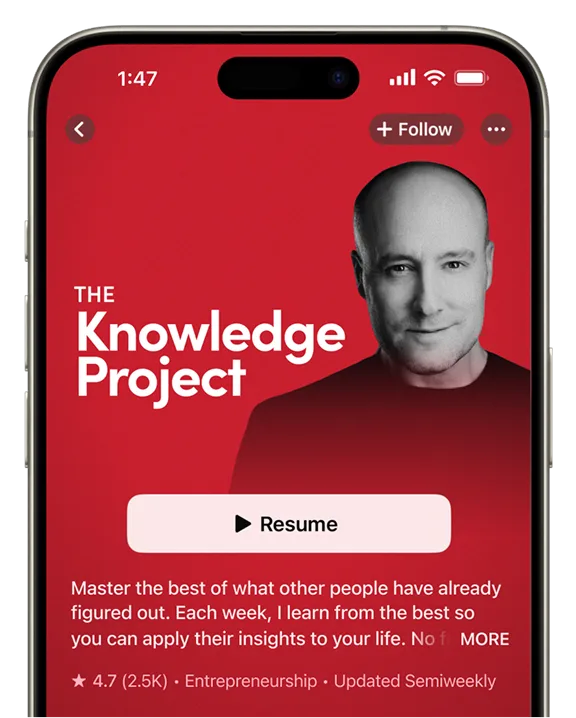
When Greg Brockman OpenAI’s co-founder and president sat down for a rare extended interview on Shane Parrish’s The Knowledge Project podcast, it wasn’t the kind of polished PR appearance you’d expect from someone running one of the most consequential companies in tech history. It was something more candid — and far more interesting. From the origins of OpenAI’s technical vision to the 72 hours that very nearly dismantled the whole thing, Brockman walked through a story that reads less like a Silicon Valley success narrative and more like a geopolitical thriller.
Brockman’s background alone is worth a moment. Before Greg Brockman OpenAI even existed, he was the first engineer at Stripe — which is now valued at over $65 billion — leaving in 2015 to co-found a nonprofit AI research lab with Sam Altman, Elon Musk, and others. At the time, the idea of a safety-focused nonprofit at the frontier of AI seemed almost quixotic. A decade later, OpenAI has become the most talked-about company in the world, responsible for ChatGPT, GPT-4o, and the recently released GPT-5.
The Napa Offsite That Defined a Decade
Long before the board dramas and billion-dollar funding rounds, the Greg Brockman OpenAI story started with a whiteboard session in Napa. At an early offsite, the founding team hammered out what Brockman describes as a three-step technical plan — a roadmap that, remarkably, the company has followed for nearly ten years. He doesn’t spell out every detail, but the implication is striking: a small group of researchers, in the early days of the modern deep learning era, mapped out a path toward artificial general intelligence with enough accuracy that it’s still guiding decisions today.
That offsite also surfaced the tension that would eventually force OpenAI to restructure. The pure nonprofit model made sense philosophically — keep advanced AI development out of the hands of pure profit motive — but it was financially unworkable at the scale required to compete. Training frontier models costs hundreds of millions of dollars per run. Grants and donations don’t cover that. So Greg Brockman OpenAI shifted to a capped-profit structure, a decision Brockman frames not as an abandonment of principles but as a pragmatic necessity. Whether you buy that framing probably depends on how charitable you’re feeling toward AI labs right now.
The 72 Hours That Almost Killed OpenAI
In November 2023, OpenAI’s board fired Sam Altman without warning. What followed was one of the most chaotic corporate episodes in recent tech memory — and Greg Brockman OpenAI was right in the middle of it. When the board call came in, Brockman didn’t wait to see how things played out. He quit the same day. His reasoning was straightforward: the board had acted in a way that made the company’s mission — and its leadership — untenable.
But walking away wasn’t the end of the story. It was the beginning of the most intense 72 hours of Brockman’s career. The morning after the firing, he was at Sam Altman’s house, and the two were already designing a contingency. They called it Phoenix — a backup company, built from scratch, intended to carry the mission forward if OpenAI couldn’t be saved. Think about that for a second. Within 24 hours of being ousted, the two most central figures in modern AI were drawing up plans to restart the whole thing.
Then Ilya Sutskever tweeted. OpenAI’s chief scientist and one of the board members who had initially voted to remove Altman publicly expressed regret about his role in the firing. That single tweet shifted the momentum. Employee revolt, investor pressure, and Sutskever’s reversal combined to force the board’s hand. Altman was reinstated. Brockman returned. Phoenix was shelved. The company that had just been on the verge of implosion emerged from the weekend arguably stronger — and certainly more dramatic — than before.
The episode revealed something important about how power actually works in AI. Greg Brockman OpenAI isn’t a normal company. It’s a strange hybrid of nonprofit mission, capped-profit structure, and some of the most valuable intellectual capital on earth. The board technically had the authority to fire Altman. But the real power — the loyalty of researchers, the trust of investors like Microsoft, the public narrative — sat elsewhere. The board found that out the hard way.
Is AI Going Parabolic?
Brockman’s conversation with Parrish doesn’t dwell on the past for long. A significant portion focuses on where things are heading — and the picture he paints is one of acceleration, not plateau. When asked whether we’re in a global AI race, he doesn’t shy away from the framing. The competition between the US and China, between OpenAI and Google DeepMind and Anthropic, is real and it’s intensifying.
One of the most striking data points he drops: when asked what percentage of OpenAI’s own codebase is written by AI, Brockman says it’s easier to ask what percentage isn’t. That’s a profound statement. The company building the world’s most powerful AI systems is already deeply dependent on those systems to build more. It’s the kind of recursive loop that makes AI progress feel qualitatively different from previous technology cycles — software that helps write better software, at speed and scale that humans alone can’t match.
Why OpenAI Stopped Showing Reasoning Traces
There’s a detail in the conversation that deserves more attention than it typically gets. Greg Brockman OpenAI used to surface the chain-of-thought reasoning in models like o1 — the visible “thinking” steps that showed how the model arrived at an answer. They stopped. Brockman explains the reasoning: the visible traces weren’t actually the real reasoning process, just an artifact of the training. Showing them created a false impression of transparency. This is a genuinely interesting admission. It suggests that interpretability — understanding why AI models do what they do — remains one of the field’s hardest unsolved problems, even for the people building the models.
This has implications well beyond product design. Regulators in the EU, the UK, and the US are increasingly focused on AI explainability. If even the model’s creators can’t reliably surface its true reasoning, that’s a significant challenge for any compliance framework built around transparency requirements.
Compute, Access, and Who Gets AGI
Brockman also tackles the compute question — one of the defining constraints in AI right now. Training and running frontier models requires enormous amounts of specialised hardware, primarily Nvidia GPUs. Demand is outstripping supply in ways that are reshaping geopolitics, with the US restricting chip exports to China and major cloud providers rationing access. In a compute-constrained world, who gets to use AGI — if and when it arrives — becomes a deeply political question.
His answer suggests that Greg Brockman OpenAI thinks about this seriously, though the specifics remain vague. The implication is that access to the most capable AI systems will, at least initially, be concentrated among those with the resources to afford the compute. That’s not a new dynamic in tech — early cloud infrastructure, early smartphones, early broadband all followed similar patterns. But the stakes feel different when the technology in question might genuinely transform the nature of economic productivity.
What Actually Happens to Your Job?
It’s the question everyone is dancing around, and Brockman addresses it directly. His view isn’t that mass unemployment is inevitable or that everything will be fine — it’s more honest than either of those clean narratives. AI is already doing meaningful portions of knowledge work. The speed at which that capability is expanding is faster than most people’s intuitions suggest. The transition won’t be uniform across industries or geographies, and it won’t arrive on a predictable schedule.
What Brockman seems to believe — and what the Greg Brockman OpenAI story reinforces throughout — is that the people and organisations who actively work with AI, who treat it as a tool to be understood rather than feared or ignored, will navigate the shift better than those who don’t. That’s not a radical position, but it’s worth hearing it from someone who spent the last decade building the thing doing the disrupting.
The broader picture that emerges from this conversation is of an industry moving faster than its own architects fully understand — and a company that has survived internal chaos, board coups, and existential restructuring debates precisely because the people at its centre are, whatever else you think of them, genuinely obsessed with the problem they’re trying to solve. Greg Brockman OpenAI’s journey from Napa whiteboard to near-collapse and back again is as good an illustration of that as any. Whether that’s reassuring or alarming probably says more about you than it does about OpenAI.