

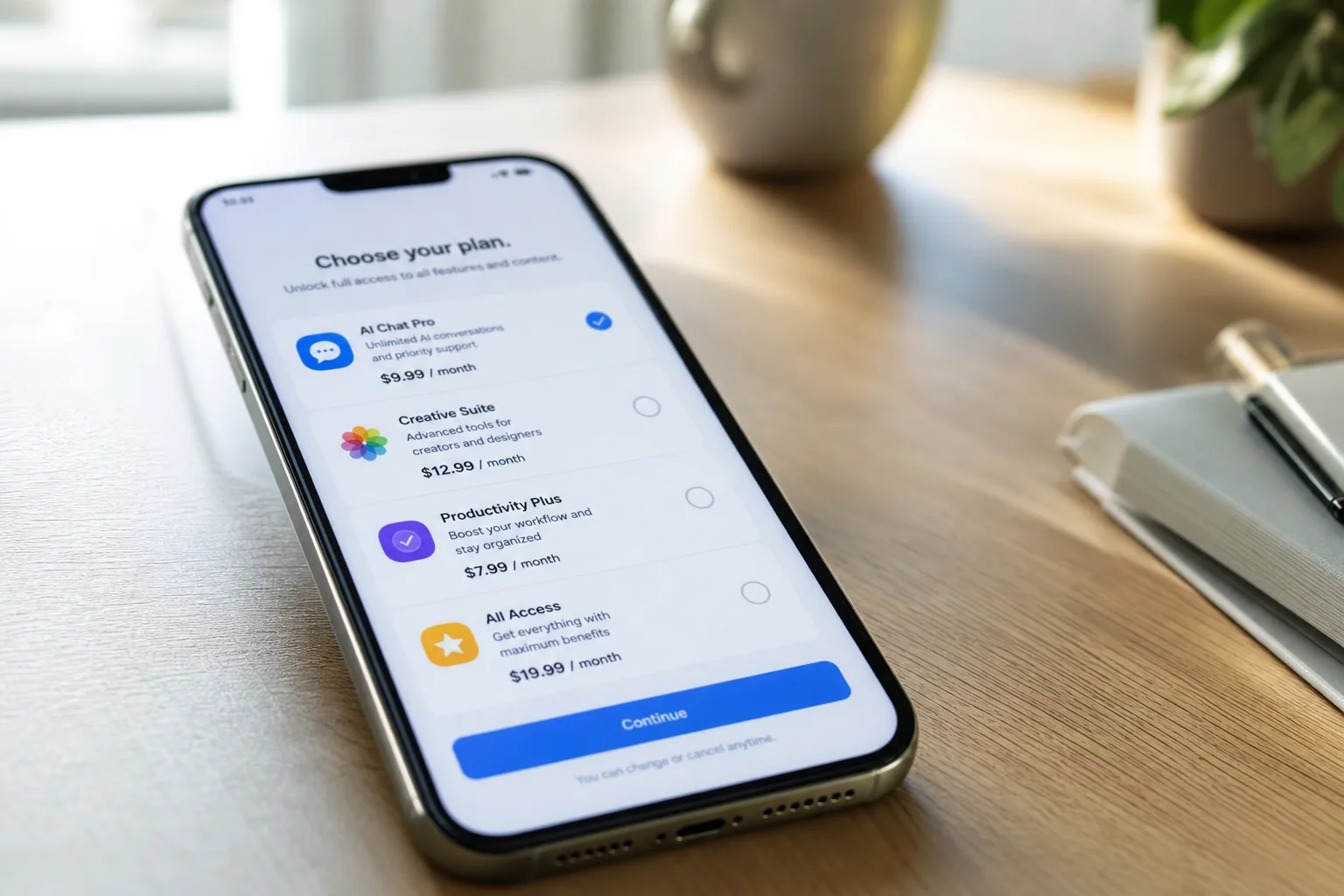
- App Store subscription bundles will let developers from different companies offer combined deals to iPhone users, launching later in 2025.
- Apple is also introducing ‘Suites’ — App Store subscription bundles that aren’t sold individually, only as a packaged set.
- New App Store guidelines will remove ‘opportunistic’ apps that go stale, tightening quality standards for developers.
- Mac App Store apps will no longer need to support Intel chips, signalling Apple’s full commitment to its own silicon.
Table of Contents
App Store Subscription Bundles Are Officially Happening
Apple has confirmed that App Store subscription bundles are coming later this year, giving developers the ability to package their subscriptions together across company lines — a move that could meaningfully change how iPhone users pay for apps. The announcement came as part of a broader set of App Store changes unveiled at WWDC 2025, alongside the debut of iOS 27.
The concept isn’t entirely new territory for Apple. The company has already been experimenting with cross-service video bundles — Apple TV+ paired with Peacock, for instance — so in some ways this is an extension of a model that’s already working. What’s different now is scale and scope. Instead of being limited to streaming partnerships that Apple orchestrates directly, the new system opens the door to combinations that would have seemed unlikely a year ago: a fitness app bundled with a meditation service, or a dating app packaged alongside a social platform. Think Instagram Plus and Tinder Platinum in the same checkout flow.
That’s a significant step. It means Apple is essentially becoming the infrastructure layer for cross-developer subscription deals — taking a cut at the bundle level, just as it does with individual subscriptions. Whether App Store subscription bundles are a net win for users depends entirely on how developers price these packages and whether the pairings ever feel genuinely useful rather than forced.
What ‘Suites’ Actually Means for Developers and Users
Alongside the App Store subscription bundles announcement, Apple quietly introduced another format called Suites. The distinction matters. A bundle, as described, combines subscriptions that you could also buy separately. A Suite is different: it’s defined as a set of subscriptions that aren’t available standalone. You either buy the whole thing or you don’t get any of it.
That’s a more aggressive packaging structure, and it’s one that will benefit developers more than users in cases where a person only wants one component. At the same time, it gives developers a way to create entirely new product offerings — subscription tiers that don’t exist in their current lineup — without restructuring their core pricing. For a mid-size app studio trying to drive up average revenue per user, Suites could be an attractive tool.
Apple says it will share more specifics on both App Store subscription bundles and Suites ‘later this summer,’ which almost certainly means the full details will drop alongside the iOS 27 release candidate or the September hardware event. Until then, developers are left with the broad strokes.

The App Store Is Getting Stricter on Quality — and Age Transparency
The subscription changes grab the headlines, but Apple also used WWDC to tighten its App Store guidelines in ways that matter to everyday users. The company announced it will start removing what it calls ‘opportunistic’ apps — essentially, apps that haven’t been updated in a meaningful period and aren’t attracting active users. This has been a long-standing frustration for anyone who’s downloaded a promising-looking app only to find it last received an update in 2019.
Apple has attempted versions of this cleanup before, but the language here feels firmer. Tying removal criteria to both update frequency and customer acquisition suggests the company is looking at engagement signals, not just timestamps. That’s a more sophisticated filter — and one that could finally clear out some of the junk that clutters search results and damages trust in the store overall.
There’s also a new disclosure requirement landing for developers: apps and games that include social media capabilities will need to flag that explicitly, feeding into both age rating calculations and Screen Time controls. It’s a straightforward transparency measure, but the timing is telling. Regulatory pressure on social platforms and their effects on younger users hasn’t gone away, and Apple appears to be getting ahead of that conversation by giving parents better tools at the point of download rather than after the fact.
Intel Is Officially in Apple’s Rearview Mirror
The final major App Store change is one that will matter more to developers than to most users, but it signals something important about where Apple sees itself. The company is dropping the requirement for Mac App Store apps to support Intel chips in older Macs. Put simply: if you’re building for the Mac App Store going forward, you no longer have to maintain compatibility with hardware that Apple stopped shipping in 2023.

Apple Silicon has been the default for nearly five years at this point, and the move makes sense from a developer efficiency standpoint. Maintaining Intel builds adds overhead — testing, compatibility shims, performance compromises — that increasingly serves a shrinking pool of users. Cutting that requirement lets developers build leaner, faster apps optimised purely for the M-series chip architecture. The users still running Intel Macs will gradually find their App Store options narrowing, which is Apple’s standard playbook for sunsetting older hardware without ever making a formal announcement about it.
What This Means for the Broader App Economy
Zoom out and the through-line across all these changes is Apple tightening its grip on the App Store as a commercial platform while simultaneously making it more useful to its best developers. App Store subscription bundles are the most visible part of that, because they create a new revenue stream — for Apple and for developers willing to experiment with cross-promotions. But the quality crackdown and the social disclosure requirements are equally important signals that Apple wants the App Store to feel trustworthy again, at a time when regulators in the EU and elsewhere are watching every move it makes.
The EU’s Digital Markets Act has already forced Apple to allow third-party app marketplaces in Europe. Every improvement Apple makes to its own App Store is, at least partly, an argument that the default store is good enough that users shouldn’t need to look elsewhere. App Store subscription bundles, Suites, better curation — these are features that strengthen that argument. Whether they’re enough to satisfy regulators is a different question entirely, but they’re clearly part of the same strategic calculation.
Developers who’ve been building subscription businesses on iOS should pay close attention when Apple releases more details later this summer. The mechanics of how App Store subscription bundles are priced, how revenue is split, and how discovery works for bundled apps could determine whether this becomes one of the most interesting new monetisation opportunities on the platform — or just another feature that sounds great in a keynote and rarely gets used in practice.
Frequently Asked Questions
When will App Store subscription bundles be available?
Apple hasn’t given a precise date, but the company says more details on App Store subscription bundles will arrive ‘later this summer,’ likely timed to the iOS 27 launch in the fall.
What’s the difference between bundles and Suites in the App Store?
Bundles combine existing standalone subscriptions from different developers into a single offer. Suites are different — they’re sets of subscriptions that are only available together, not purchasable individually. Apple announced both features at WWDC.
Can apps from completely different companies be bundled together?
Yes. Apple’s announcement suggests bundles could combine subscriptions from entirely unrelated services — the example floated was something like Instagram Plus and Tinder Platinum in the same package, not just Apple’s own apps.
What are the new App Store rules about social media capabilities?
Apple now requires developers to disclose whether their app includes social media capabilities. This information feeds into age rating and Screen Time controls, giving parents and users better visibility before downloading.

