

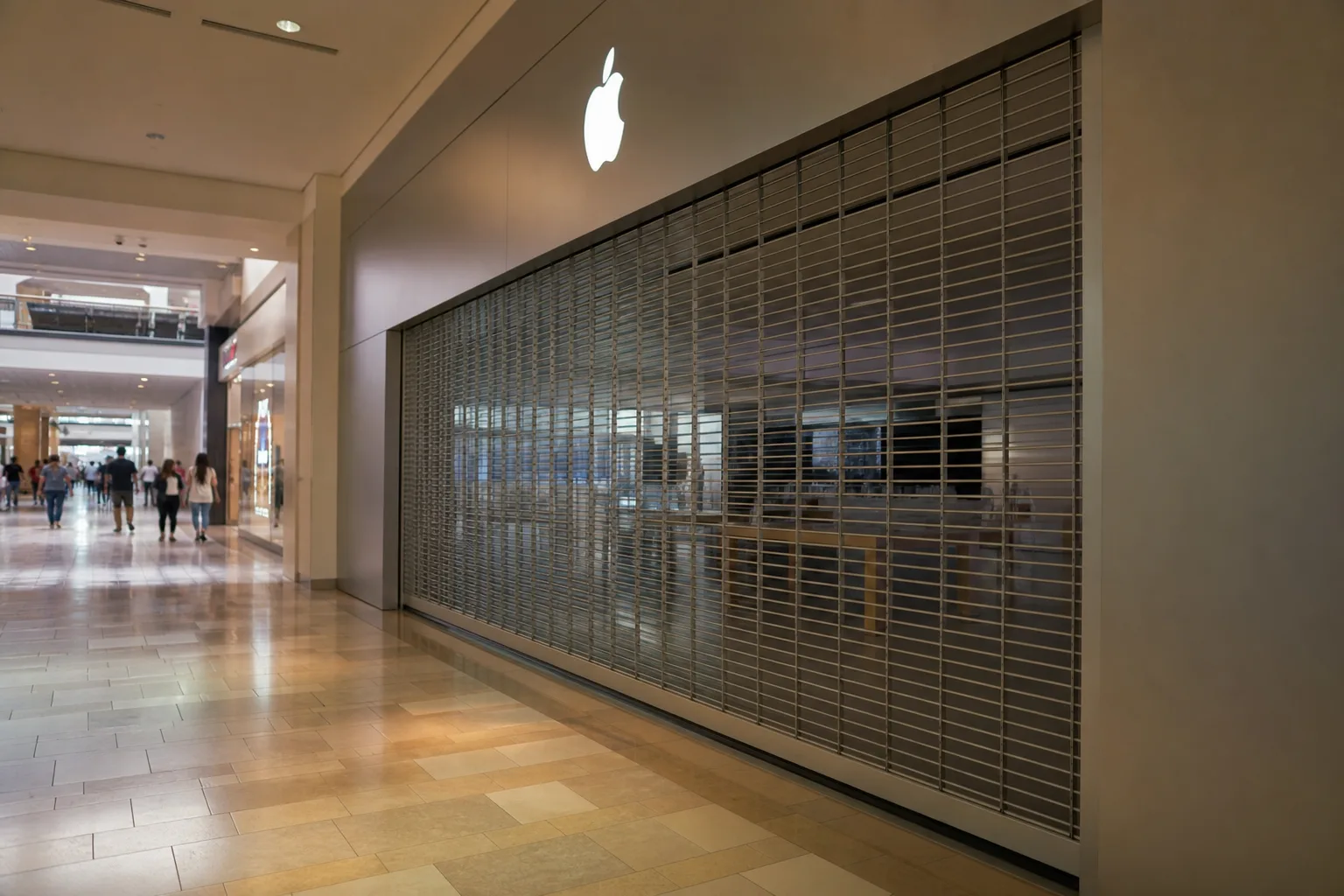
Three Apple retail locations in the United States permanently closed their doors on the evening of Saturday, June 20 — and while Apple Store closures are rare enough to turn heads on their own, the circumstances surrounding one of these shutdowns have ignited a much louder conversation about labor rights, union contracts, and whether Apple is playing fair.
- Apple Store closures on June 20 affected three U.S. locations in Connecticut, California, and Maryland permanently.
- The Apple Store closures included Towson Town Center — the first unionized Apple retail location in the United States.
- Apple is allowing non-union staff at the other two stores to transfer, but says the union contract governs Towson employees differently.
- The IAM union has accused Apple of potential union busting, a charge Apple denies, citing the collective bargaining agreement terms.
Table of Contents
The Three Stores That Closed
The Apple Store closures affected the following locations: Apple Trumbull in Trumbull, Connecticut; Apple North County in Escondido, California; and Apple Towson Town Center in Towson, Maryland. Apple announced the decisions back in April, framing them as a response to what it called ‘declining conditions’ at the shopping malls where the stores are situated. That’s a polite corporate way of acknowledging something the retail industry has been dealing with for over a decade — the slow death of the American mall.
To Apple’s credit, the reasoning isn’t without merit. Towson Town Center in particular has watched a string of anchor tenants and major retailers exit in recent years. When you’re a premium brand trying to deliver a premium in-store experience, a half-empty mall isn’t exactly the ideal backdrop. The same logic likely applies to the Connecticut and California locations. Apple Store closures of this kind — targeting underperforming or strategically awkward retail positions — aren’t entirely new territory for the company.
Apple Store Closures and the Union Question
Here’s where the story gets thornier. The Apple Towson Town Center wasn’t just any store — it was the first Apple retail location in the United States to unionize. In 2022, its employees voted to join IAM CORE, the Coalition of Organized Retail Employees under the International Association of Machinists and Aerospace Workers. Two years later, in 2024, those workers and Apple signed a collective bargaining agreement — a significant milestone in a company that has historically done everything short of outright prohibition to discourage union activity among its retail staff.
So when Apple announced it was closing Towson alongside two non-unionized stores, the optics were always going to be difficult. But what really ignited the controversy wasn’t the closure itself — it was what came after. Apple confirmed it would allow employees at Trumbull and North County to transfer to nearby locations. For Towson’s unionized workers, no such offer was extended. Apple Store closures had happened before, but none had carried this kind of labor flashpoint.
Apple’s explanation? It’s simply honoring the contract. According to the company, the collective bargaining agreement specifies that in the event of a store closure, transfers or rehiring would only be triggered if Apple opened a new store within 50 miles of Towson Town Center. Apple says it has no current plans to do that. In any other scenario, the negotiated outcome is severance — which Apple says it is providing. The company has also noted that if a new store were to open within 18 months of the agreement being ratified, affected Towson employees would have the right of first refusal.
IAM Fires Back: ‘Equal Treatment’
The International Association of Machinists and Aerospace Workers isn’t buying Apple’s framing. IAM President Brian Bryant put it bluntly: ‘Apple workers in Towson voted to join the IAM, fought for and won a contract, and are now being punished for it. Apple signed a collective bargaining agreement that requires equal treatment. It is time for Apple to honor that agreement and do right by these workers before June 20.’
The union’s position is that ‘equal treatment’ isn’t just a moral argument — it’s written into the agreement itself. IAM has raised the possibility of union busting, a serious charge that carries legal and reputational weight. Several Maryland politicians have also voiced support for the Towson workers, adding a political dimension to what Apple might have hoped would stay a quiet retail restructuring story. Critics argue that Apple Store closures should not be used as a mechanism — whether intentionally or not — to sidestep union obligations.
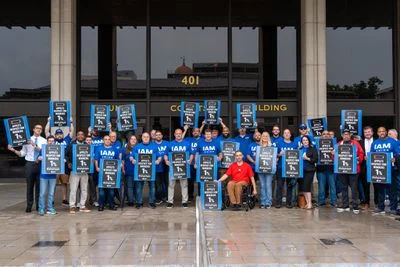
Protests have taken place outside the Towson store in the weeks leading up to the closure. The workers aren’t going quietly, and given the national attention the story has attracted, that’s probably not surprising. This is the first unionized Apple Store in the country — its fate was always going to be watched closely.
Reading Between the Lines
The legal and contractual details here are genuinely complicated. Apple may well be correct that it’s acting within the letter of the agreement. Collective bargaining agreements are negotiated documents — both sides make concessions, and the union presumably accepted the transfer-only-if-new-store clause when it signed. If the agreement truly doesn’t require Apple to offer transfers in this scenario, the company has a defensible position.
But ‘legally defensible’ and ‘fair’ aren’t always the same thing. The fact that non-union employees at the other two closing stores are getting transfers while Towson’s unionized workers are not creates an uncomfortable comparison — regardless of whether the contracts technically justify the difference. It’s the kind of outcome that, intentionally or not, sends a message. Apple Store closures that produce unequal outcomes for union versus non-union staff will always invite that scrutiny.
And that’s the broader issue worth watching. Apple has long operated in a space of managed tension with labor organizing. The company doesn’t ban unions — it can’t — but it has consistently communicated to retail employees that unionization carries uncertainty. Whether that’s through mandatory ‘listening sessions’ during organizing campaigns or, now, through the Towson situation, the message that reaching workers might receive is: organizing doesn’t always pay off the way you’d hope.
What This Means for Apple Retail Labor
The Apple Store closures at Towson, Trumbull, and North County are, on their surface, a retail real estate decision. Malls are struggling. Apple is rationalizing its footprint. That happens. But the Towson dimension transforms this from a property story into a labor story — and potentially a cautionary tale that echoes through Apple’s 500-plus retail locations across the U.S.
The union movement in Apple retail never really spread beyond Towson in any significant way. Other organizing campaigns at stores in New York and elsewhere stalled or failed. Whether these Apple Store closures — with their optics of unionized workers losing benefits that non-union workers received — further chill future organizing efforts remains to be seen. But it’s not hard to imagine a worker at another Apple Store looking at what happened and thinking twice before signing an authorization card.
For Apple, the reputational calculus here is real. The company sells itself on values — it wants to be seen as a good employer, a progressive company, a place people are proud to work. The Towson story doesn’t flatly contradict that image, but it complicates it. And as labor organizing continues to gain traction across the broader tech and retail sectors, Apple will face this kind of scrutiny again. How it handles the next chapter — including whether it opens that new Maryland store within 18 months — will say a lot about what the company’s commitments to its workforce actually mean in practice.
Frequently Asked Questions
Why are the Apple Store closures happening at these three locations?
Apple cited ‘declining conditions’ at the shopping malls housing all three stores. Towson Town Center in Maryland, for instance, has lost several major retailers in recent years. The company described the decisions as ‘difficult’ but tied to the deteriorating state of the retail environments.
Why aren’t Towson employees being offered transfers like the other two stores?
Apple says it is honoring the collective bargaining agreement signed with IAM CORE in 2024. That contract specifies transfers only if a new Apple Store opens within 50 miles of Towson. With no such opening planned, Apple says severance — as negotiated — applies instead.
Is Apple being accused of union busting over the Towson closure?
Yes. IAM President Brian Bryant stated that Apple workers in Towson ‘voted to join the IAM, fought for and won a contract, and are now being punished for it.’ Apple denies this, maintaining it is simply following the terms of the agreement the union itself negotiated.
When did Apple Towson Town Center workers unionize?
The Towson Town Center employees became Apple’s first unionized retail workers in the U.S. in 2022. They belong to IAM CORE — the International Association of Machinists and Aerospace Workers’ Coalition of Organized Retail Employees — and ratified a collective bargaining agreement with Apple in 2024.

