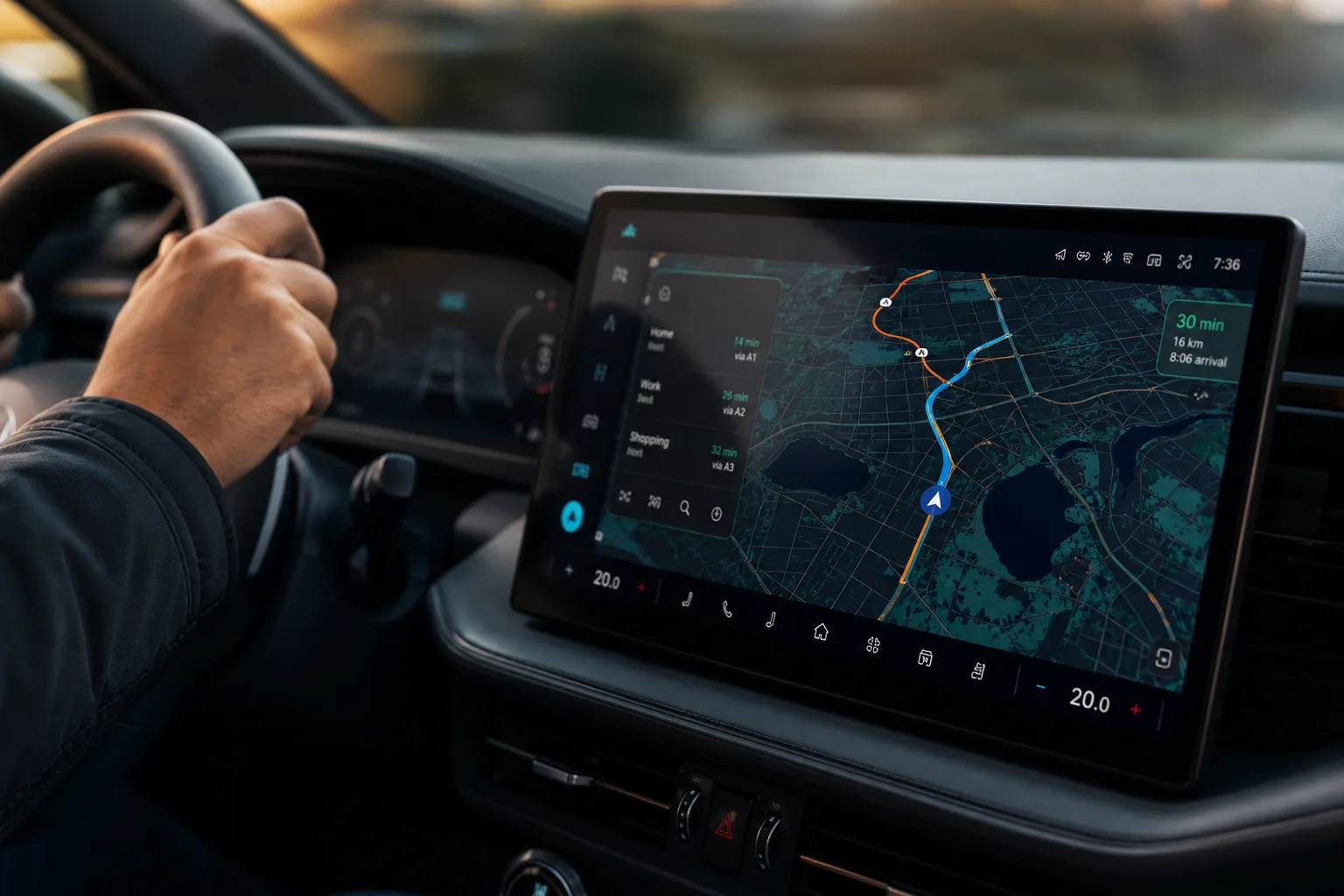
For a decade, the deal between drivers and automakers was straightforward: let us plug in our phones and mirror Android Auto or Apple CarPlay onto the dashboard screen, and we’ll overlook whatever clunky proprietary software you’ve baked into the car. It worked. Then General Motors blew it up.
- Android Auto is being dropped by General Motors across its entire vehicle lineup in favour of a Gemini AI-powered infotainment system.
- Carmakers want Android Auto gone so they can reclaim valuable driving data currently flowing to Google instead of back to them.
- Rivian and Tesla never supported Android Auto, arguing that deep AI integration makes phone mirroring obsolete.
- Replacing Android Auto with proprietary systems opens the door to new subscription revenue streams for automakers.
Table of Contents
The Unspoken Deal That Ran for Ten Years
Android Auto launched in 2015 as a simple USB-projection system — a driving-optimised interface for Google Maps, Spotify, and your contacts, beamed from your phone onto the car’s screen. Apple CarPlay arrived around the same time. Both solved a real problem: automakers were notoriously bad at software, and drivers weren’t about to swap a phone they knew and loved for an infotainment system that felt like it was designed in 2009.
Manufacturer adoption was bumpy at first. Toyota and Ford both tried rolling their own systems. BMW famously attempted to charge CarPlay users $80 a year as a subscription add-on — and didn’t support Android Auto at all until 2020. Drivers rejected all of it. They wanted the plug-and-play simplicity of their own apps, on their own accounts, with no extra fee. Google made adoption easy by not charging automakers a penny for integration, and gradually the industry fell in line.
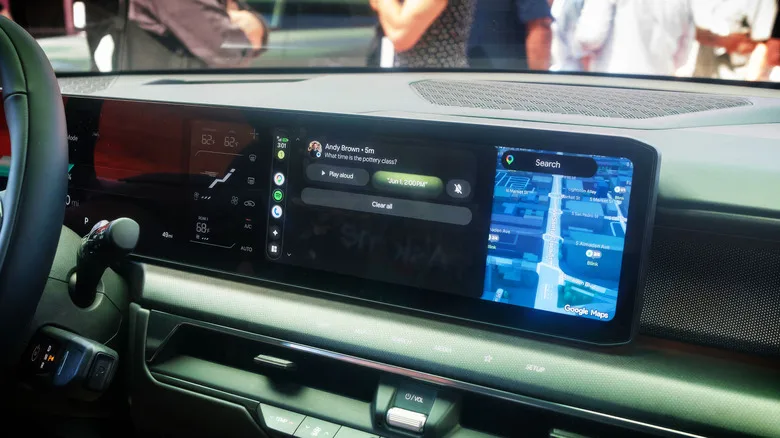
By the early 2020s, Android Auto was essentially a checkbox on the window sticker — something buyers expected the same way they expected air conditioning. That’s what makes General Motors’ recent announcement so striking. GM is pulling Android Auto from its EVs now, with plans to drop it from its entire lineup soon. In its place: a conversational AI system built on Google’s Gemini. Not phone mirroring. Not CarPlay. A proprietary experience, owned and operated by GM.
Android Automotive OS — The Trojan Horse Nobody Noticed
To understand how we got here, it helps to know about Android Automotive OS (AAOS) — a separate, easily confused sibling to Android Auto. Google introduced AAOS in 2017, and it debuted in a production vehicle with the Polestar 2 in 2020. Unlike Android Auto, which just mirrors your phone, AAOS is a full operating system that lives inside the car itself. No phone required.
At around the same time, legacy automakers were discovering that writing in-car software was nothing like building engines or gearboxes. Volkswagen’s much-publicised software struggles — which delayed models and cost the company billions — became the cautionary tale that sent competitors scrambling. Many gave up on purely proprietary systems and adopted AAOS instead, including Volvo, several Stellantis brands, and eventually GM itself. AAOS supports Android Auto as a compatibility layer, but it doesn’t have to. A manufacturer can run AAOS and choose not to offer phone mirroring at all. That’s exactly what GM is now doing.
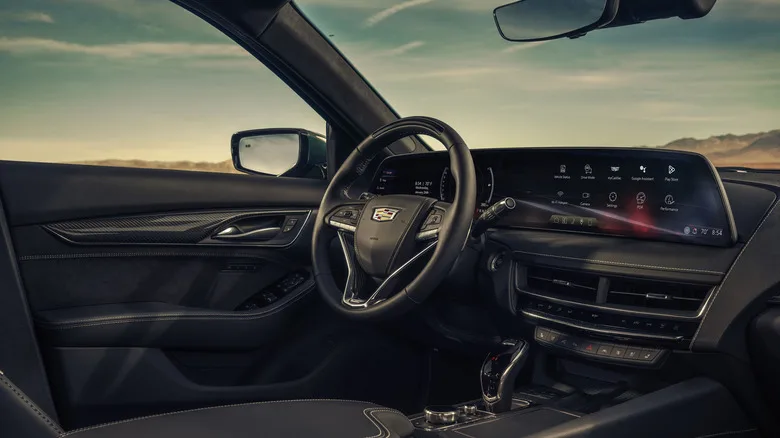
Who Actually Owns Your Driving Data?
Here’s where it gets interesting — and where the real motivation starts to surface. When you use Android Auto, Google collects a significant volume of data: GPS routes, mapping behaviour, the places you drive to, the times you drive. That data feeds Google’s ad-targeting ecosystem. Advertisers love location data, and data generated inside a car — tied to shopping trips, commutes, restaurant visits — is particularly valuable.
None of that data flows back to the car manufacturer. And some automakers are increasingly frustrated about it. GM has said explicitly that it needs navigation and road-segment data to improve the EV charging experience. In 2023, GM’s infotainment manager told GM Authority: “With Android Auto or Apple CarPlay environments, the vehicle energy model or road segment data is sending energy usage and everything else associated with it to the phone, and it’s pretty difficult to off-board it from the phone.”
That’s a legitimate engineering argument. If you’re trying to build intelligent EV routing that factors in real-time battery state, charge station availability, and actual road-segment energy consumption, you need that data to stay inside your platform. GM claims its new system will do exactly that — integrating with Super Cruise, its driver assistance technology, and delivering smarter charging recommendations as a result.
It’s also worth being clear-eyed about what’s not said in that argument. GM was fined $12.75 million by California regulators for violating state privacy laws related to driver data collection. The company is now legally barred from selling that data to advertisers. So for GM, building a proprietary infotainment platform isn’t about monetising data the way Google does — it’s about reclaiming control over a customer relationship that phone mirroring had effectively handed to a third party.
Rivian and Tesla Never Bought In — and They’re Feeling Vindicated
Rivian and Tesla are the most prominent examples of automakers that never offered Android Auto to begin with. Tesla’s system is entirely proprietary. Rivian’s is built on AAOS but without phone-mirroring support. Both companies have argued from the start that owning the full software stack gives them better control over the driving experience — and both are now pointing to AI as the reason phone mirroring is becoming irrelevant.
Rivian was blunt about it when speaking to The Verge recently: “The possibilities now for such deep AI integration in the car make the entire CarPlay debate completely obsolete.” That’s a strong statement, and it reflects a genuine shift in what’s technically possible. AI-driven voice interfaces, predictive routing, context-aware cabin controls — none of that integrates cleanly with a phone-mirroring layer that was designed for a fundamentally different era of computing.
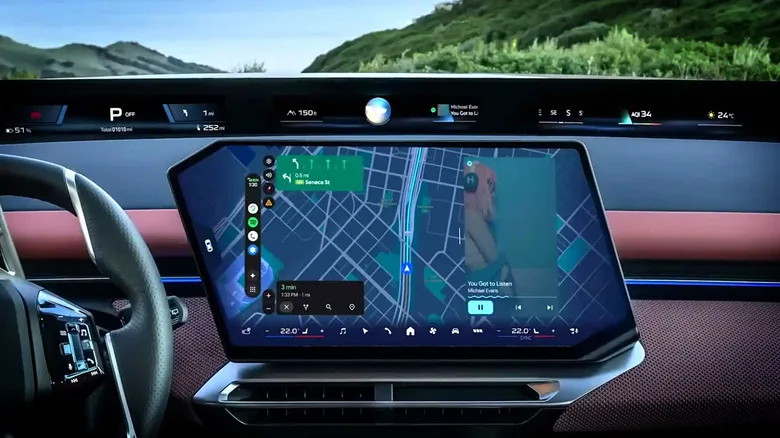
The Subscription Question Nobody Wants to Answer
GM has acknowledged, somewhat delicately, that its proprietary infotainment platform creates “subscription revenue opportunities.” That phrase should raise eyebrows. BMW’s attempt to charge $18 per month for heated seats — a feature already built into the hardware — became one of the most mocked decisions in recent automotive history. The company eventually reversed it, but the reputational damage stuck.
The structural pressure toward subscriptions is real, though. A built-in infotainment system that doesn’t rely on your phone needs its own cellular connection to access streaming services, navigation updates, and over-the-air features. That connection costs money. GM’s current EVs come with eight years of OnStar connected services bundled in — but what happens after year eight is an open question the company hasn’t answered publicly.
Rivian charges $150 per year for its Rivian Connect+ premium data service. Tesla charges the same amount for its equivalent plan. These aren’t outrageous figures, but they represent a new line item in the cost of car ownership that simply didn’t exist when Android Auto was doing the heavy lifting for free. And it’s not like manufacturers who do support Android Auto are immune — Kia, for example, puts features like remote locking behind trial subscriptions that eventually require payment.
What This Means for Car Buyers in 2026 and Beyond
The vast majority of 2026 model-year vehicles still offer Android Auto. This isn’t a cliff edge — it’s a slow tide going out. But the direction is clear. As AI-powered infotainment matures and automakers grow more confident in their own software capabilities (or their ability to outsource that capability to Google via AAOS while maintaining control), the case for letting Apple and Google own the dashboard experience weakens.
GM does argue that its system will go beyond what phone mirroring can offer. It cited Dolby Atmos on Amazon Music as one example, calling that kind of audio experience “impossible” with simple phone projection. Whether consumers will accept that trade-off — richer native features, possibly better AI, but no familiar Android Auto interface and a subscription fee lurking somewhere in the future — is genuinely unclear.
The automakers are betting that AI-driven, always-connected infotainment will eventually feel more natural than pulling up Google Maps on your phone. They might be right. But they’re also asking drivers to trust that their proprietary systems will be as reliable, as regularly updated, and as genuinely useful as the smartphone experience they’ve had for a decade. Given the industry’s software track record, that’s a significant ask — and the first brand that bungles it will send buyers straight back to demanding Android Auto support on the window sticker.
Frequently Asked Questions
Why are car manufacturers dropping Android Auto?
Carmakers are dropping Android Auto primarily to reclaim driving data that currently flows to Google, to enable deeper AI integration in their own infotainment systems, and to unlock subscription revenue opportunities that phone-mirroring systems make impossible.
Will I still be able to use Google or Siri in my GM vehicle without Android Auto?
Yes. GM says its new system will support built-in assistants like Siri and Google Assistant via Bluetooth pass-through, and calls and streaming from contacts and apps will still work — all running on the car’s own hardware rather than your phone.
Which car brands have never offered Android Auto?
Rivian and Tesla are the most prominent automakers that never adopted Android Auto. Both have built proprietary infotainment systems — Rivian’s on top of Android Automotive OS — arguing that full platform control delivers a better driver experience.
What happens to connected services after the free period ends in GM vehicles?
GM’s latest vehicles ship with eight years of OnStar connected services, but what happens after that period isn’t yet clear. It’s likely GM will offer paid tiers, similar to Rivian Connect+ and Tesla’s premium data plan, which each cost around $150 per year.
Does Android Automotive OS replace Android Auto?
They’re related but different. Android Automotive OS is a full vehicle operating system that doesn’t need your phone — it runs natively in the car. Android Auto is just a phone-mirroring interface. A car can run AAOS without supporting Android Auto at all.