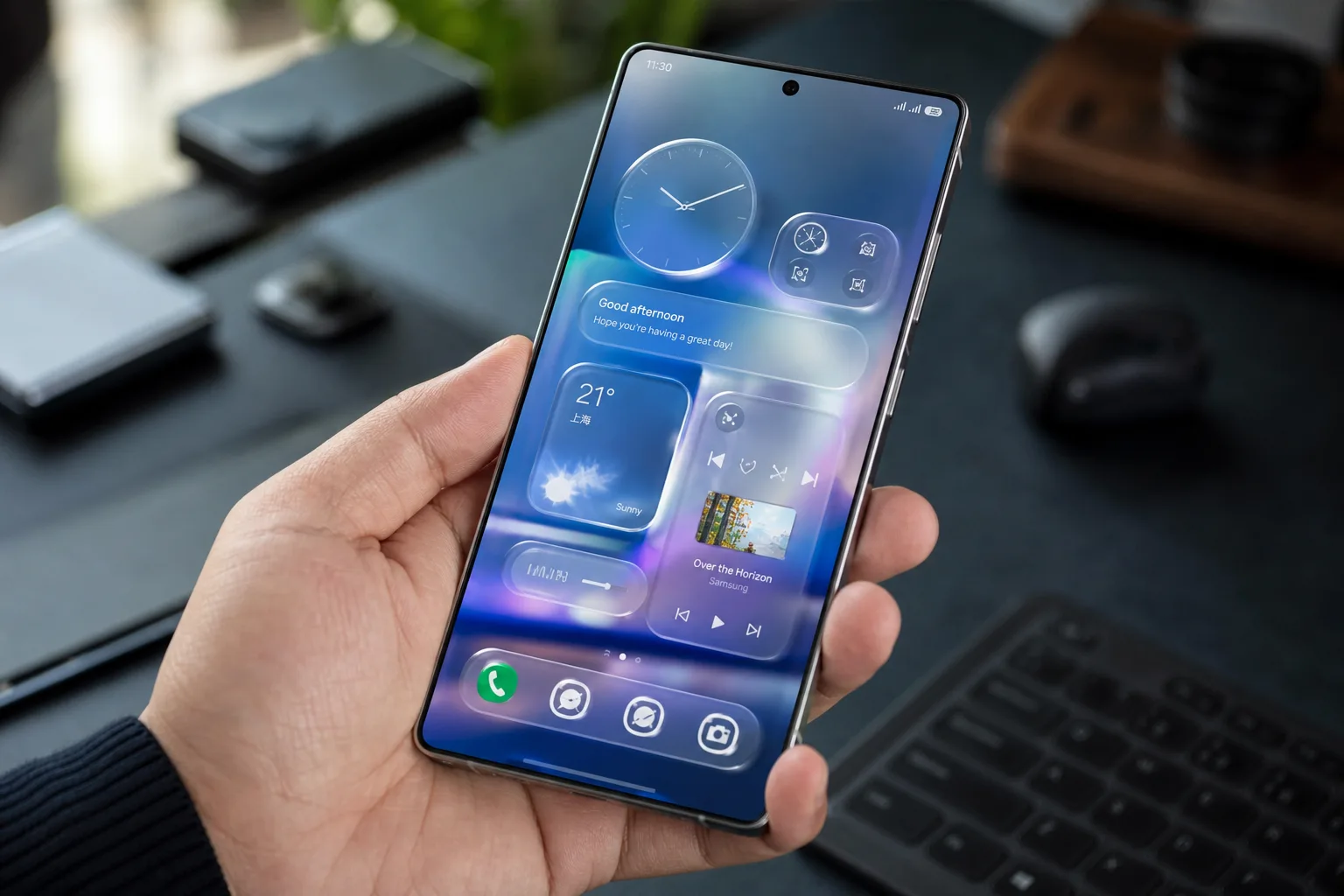
Honor has just become the most prominent example of a Liquid Glass clone in the Android world, and it isn’t even trying to hide it. The company’s upcoming MagicOS 11 — its Android 17-based skin — was teased this week through a series of videos posted to Weibo, and the footage makes one thing abundantly clear: Honor looked at Apple’s iOS 26 redesign and decided to replicate it, almost piece by piece.
- Honor’s MagicOS 11 is the most blatant Liquid Glass clone from any Android brand, openly mirroring Apple’s iOS 26 visual style.
- The MagicOS 11 Liquid Glass clone features waterdrop buttons, light refractions, and glows lifted almost directly from Apple’s design language.
- Honor is currently testing MagicOS 11 on the Magic 8 series, with a broader rollout expected later this year.
- Oppo’s ColorOS 16 and Vivo’s OriginOS 6 have also copied Apple’s style, but Honor’s effort is the most wholesale imitation so far.
Table of Contents
What MagicOS 11 Actually Looks Like
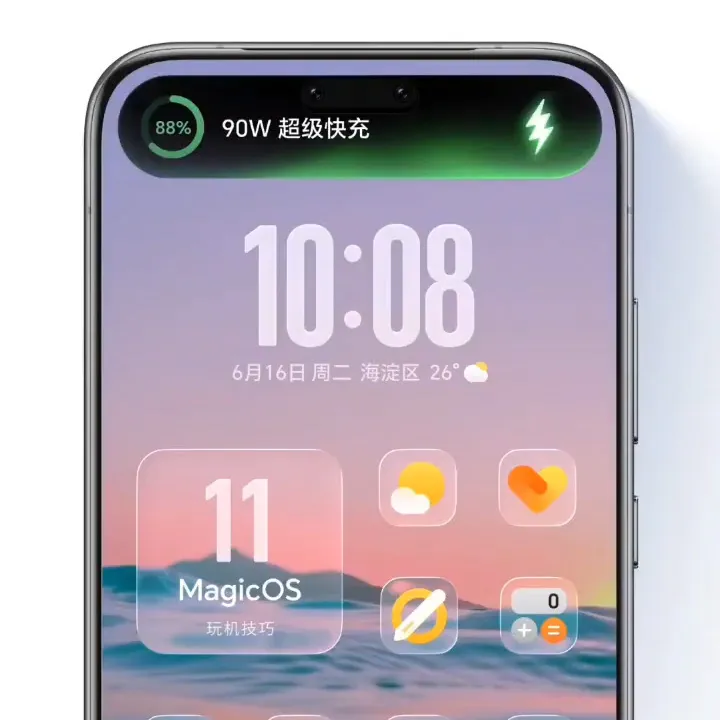
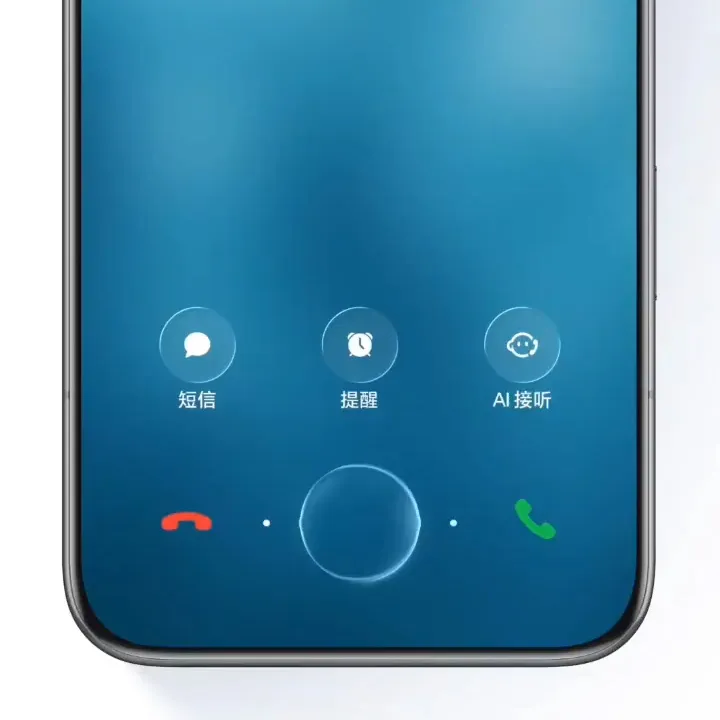
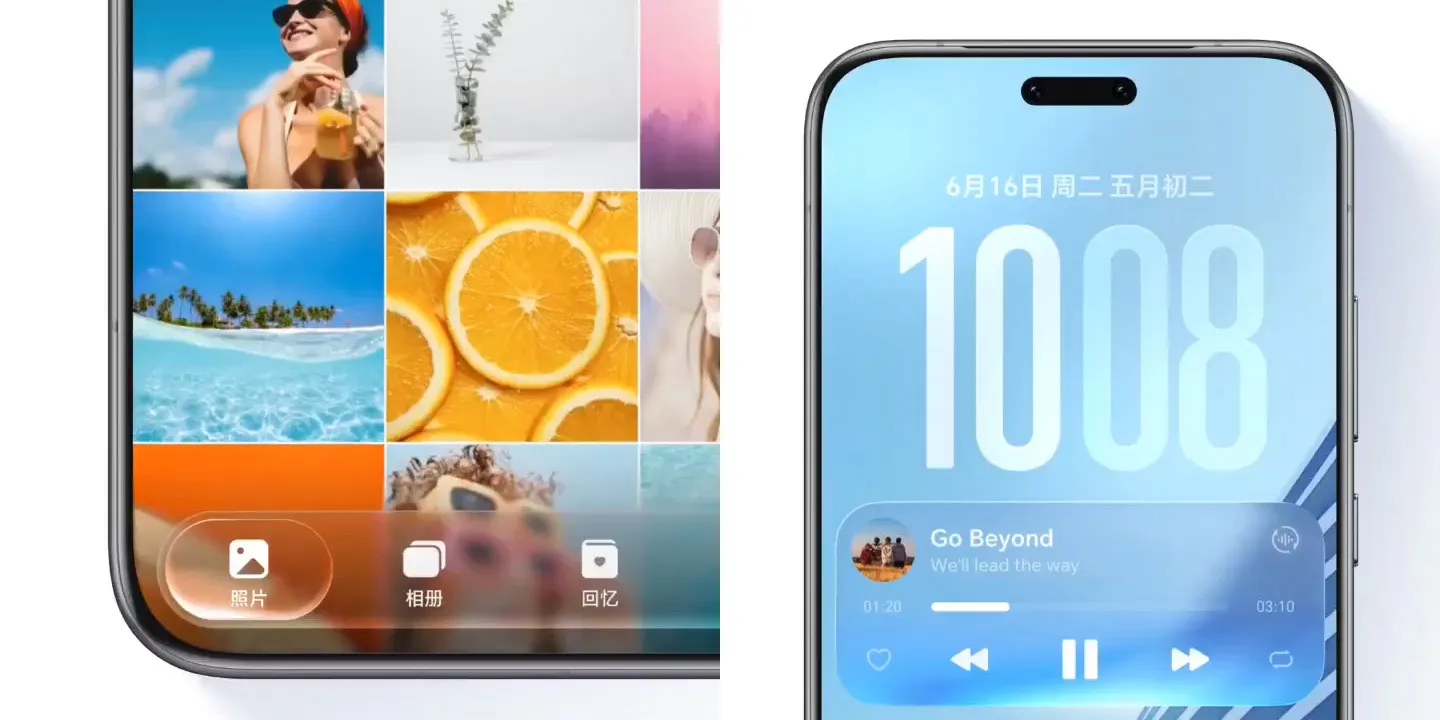
The Weibo teasers show a UI dripping with the hallmarks of Apple’s Liquid Glass aesthetic: waterdrop-shaped buttons with translucent depth, light refraction effects that seem to bend the UI behind them, and soft glows that pulse around interface elements. These aren’t subtle nods or loose interpretations. They’re a near-direct recreation of the visual language Apple debuted in iOS 26 — right down to the way glass-like surfaces catch and scatter light. As a Liquid Glass clone, MagicOS 11 is about as thorough as they come.
It’s the kind of thing that makes you do a double-take. If you trimmed the Honor logo from a screenshot and dropped it into a lineup of iOS 26 screens, a casual observer would struggle to pick it out. That’s not a coincidence. That’s a design decision.
Why This Keeps Happening — and Why Honor Is the Most Extreme Liquid Glass Clone Yet
Let’s be clear: this isn’t a new phenomenon. Chinese Android manufacturers have a long and well-documented history of borrowing heavily from Apple’s design playbook. Dynamic Island-style pills, iOS-style notification systems, lock screen customisation that arrived on Android skins before Google even shipped it to Pixel — the list goes on. A Liquid Glass clone was always going to follow the same path.
We’ve already seen early movers. Oppo’s ColorOS 16 and Vivo’s OriginOS 6 both made their Apple inspirations fairly obvious when they were announced. But Honor’s MagicOS 11 takes the concept further than either of them. Where ColorOS and OriginOS borrowed selectively — a frosted panel here, a translucent sheet there — Honor appears to have adopted the entire Liquid Glass visual framework. The clone is more systematic and more thorough.
Part of this comes down to competitive positioning. Honor, Oppo, and Vivo are all fighting for the same pool of Chinese mid-to-premium buyers, many of whom aspire to iPhone ownership or are switching between ecosystems. Delivering an Android skin that looks and feels like iOS — without carrying Apple’s price tag or its locked-down ecosystem — is a calculated move. It’s brand-adjacent borrowing as a sales strategy.
Google’s Absence Makes the Free-for-All Worse
There’s an interesting wrinkle here that makes this whole situation more chaotic: Google has publicly said it won’t bring Liquid Glass to stock Android or its own Pixel devices. That decision is entirely defensible from a design philosophy standpoint — Material You has its own identity and Google has invested heavily in it — but it creates a vacuum.
When the platform holder declines to adopt a widely-noticed visual trend, third-party skin makers don’t interpret that as a signal to hold back. They interpret it as an opening. Without a unified Android stance on Liquid Glass, every manufacturer can do whatever they want with it — and the result is a fragmented landscape where some Android phones look like a Liquid Glass clone of iOS and others look nothing like them. That inconsistency has long been one of Android’s messiest characteristics, and Liquid Glass is just accelerating it.
Apple, for its part, hasn’t shown any signs of taking legal action over design copying at the UI level — it tried and largely failed with Samsung over a decade ago, and courts have generally been reluctant to grant sweeping protection for interface aesthetics. So Honor isn’t taking much of a legal risk here. The reputational risk — being publicly called out as a copycat — clearly isn’t much of a deterrent either.
MagicOS 11 Rollout: What We Know So Far
According to HuaweiCentral, Honor has already started testing MagicOS 11 internally on its Magic 8 lineup. That includes the standard Magic 8, the Magic 8 Pro, the Magic 8 Pro Air, and the top-tier Magic 8 RSR Porsche Design variant. A broader rollout to other Honor devices is expected later this year, though no firm dates have been committed to publicly.
The Magic 8 series is Honor’s current flagship range, so testing there first makes strategic sense — these are the devices most likely to be compared directly with the iPhone in the premium segment. If you’re going to ship a Liquid Glass clone, you want it polished and visible on your best hardware first.
What This Signals for the Rest of the Android Skin Industry
If Honor is comfortable pushing this far with its Liquid Glass clone, expect the trend to accelerate across the wider Android ecosystem throughout 2026. Xiaomi’s HyperOS, Realme UI, and others haven’t yet made major Liquid Glass moves publicly — but they’re watching the same market dynamics that Honor is watching. The moment one manufacturer gets traction with a design that resonates with buyers, the rest follow.
The more telling question is whether consumers actually want this. Apple’s Liquid Glass redesign has been divisive even among loyal iOS users — some love the depth and tactility, others find it visually cluttered and prefer the cleaner Material You approach Google has championed. If MagicOS 11 ships and the reaction is lukewarm, it might prompt other Android brands to be more selective about what they borrow rather than copying the whole aesthetic wholesale.
Either way, Honor has drawn a very clear line in the sand. MagicOS 11 isn’t inspired by iOS 26. It’s a deliberate, comprehensive Liquid Glass clone — and in a crowded Android mid-premium market, that’s apparently a risk worth taking.