

IShowSpeed streaming has become so culturally dominant that when Darren Watkins Jr. — a 21-year-old from Cincinnati, Ohio — dropped a music video about the 2026 World Cup, FIFA had no real choice but to make it official. That’s not hyperbole. That’s just where we are.
- IShowSpeed streaming now reaches nearly 55 million subscribers, making him a one-man media network rivalling traditional sports broadcasters.
- His World Cup anthem clocked over 7 million YouTube views in 24 hours, forcing FIFA to add it to the tournament’s official album.
- Speed broke the English-language YouTube concurrent viewership record with 1 million live viewers during his Indonesia broadcast.
- His travel-based format — racing cheetahs, sparring Pacquiao, touring 25 US states nonstop — has turned streaming into something closer to a sport.
Table of Contents
The Song That Forced FIFA’s Hand
A few weeks before the 2026 World Cup kicked off, Speed released ‘World Cup (Champions),’ a bravado-soaked anthem that name-checks all 48 competing nations. Within 24 hours, it had cleared 7 million views on YouTube. The internet — functioning exactly as it does — immediately declared it the tournament’s unofficial song, largely ignoring the fact that the World Cup already had an official anthem. FIFA, reading the room with more self-awareness than it usually displays, added Speed’s track to the tournament’s official album. That’s a governing body with a century of institutional history bending to a 21-year-old’s pull. Let that land for a second.

It’s the clearest possible illustration of what IShowSpeed streaming has become: not just a content creator with a large following, but a genuine media force whose reach rivals — and in certain demographics eclipses — traditional broadcast networks. Nearly 55 million YouTube subscribers. Concurrent viewership records. A global touring schedule that makes most artists’ itineraries look modest. IShowSpeed streaming isn’t a hobby or a side hustle. It’s a network.
IShowSpeed Streaming Didn’t Follow the Playbook
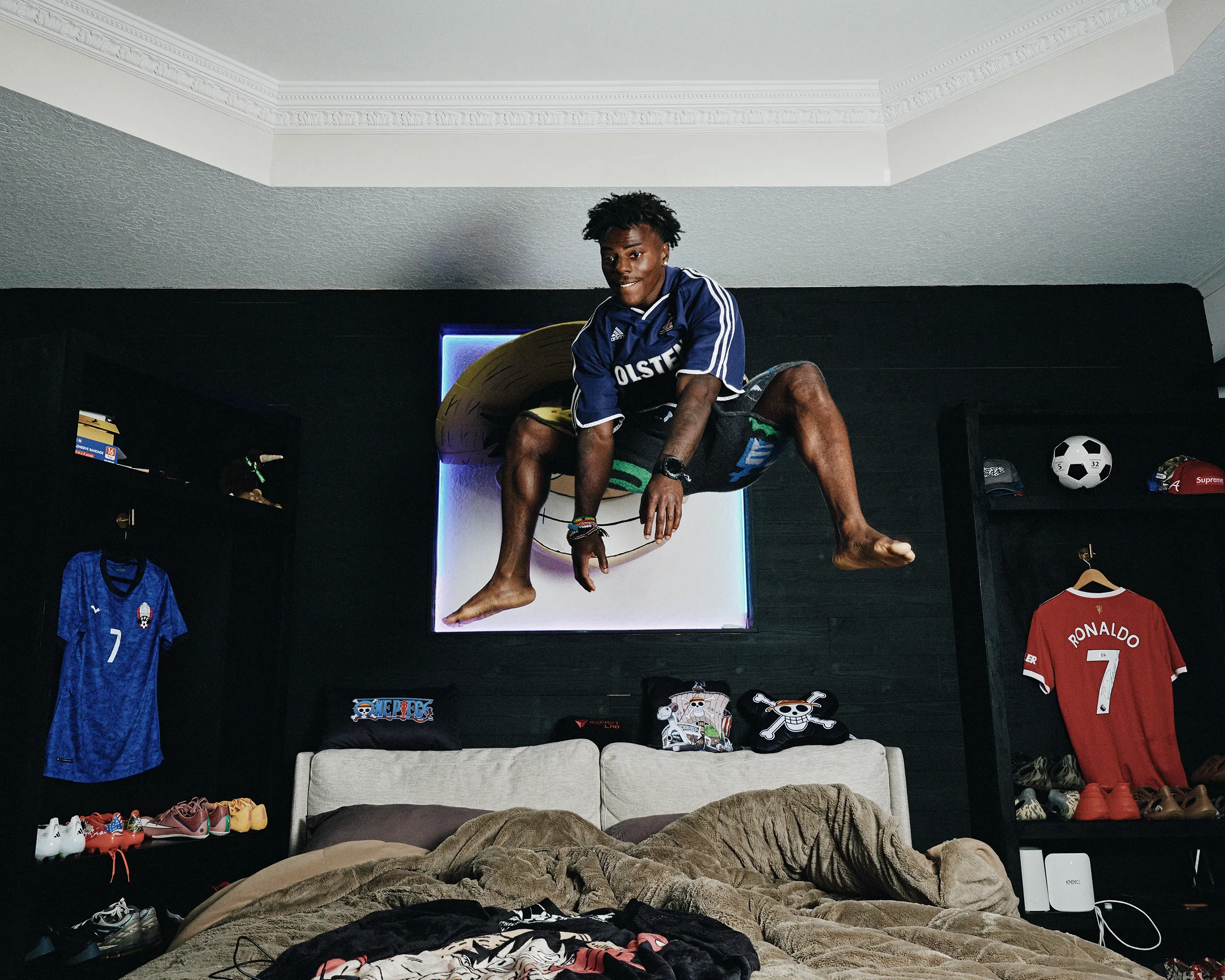
Speed’s origin story is well-worn territory for anyone who follows the creator economy. He started posting on YouTube back in 2017 as a teenager, grinding through gaming content — FIFA matches, NBA 2K sessions — powered by his obsession with soccer and his near-religious devotion to Cristiano Ronaldo. When the Covid lockdowns hit in 2020, he went all-in on IShowSpeed streaming full-time. The early virality came from exactly what you’d expect: high-decibel reactions, the kind of chaotic energy that algorithms reward, and enough controversy to keep the For You pages churning.
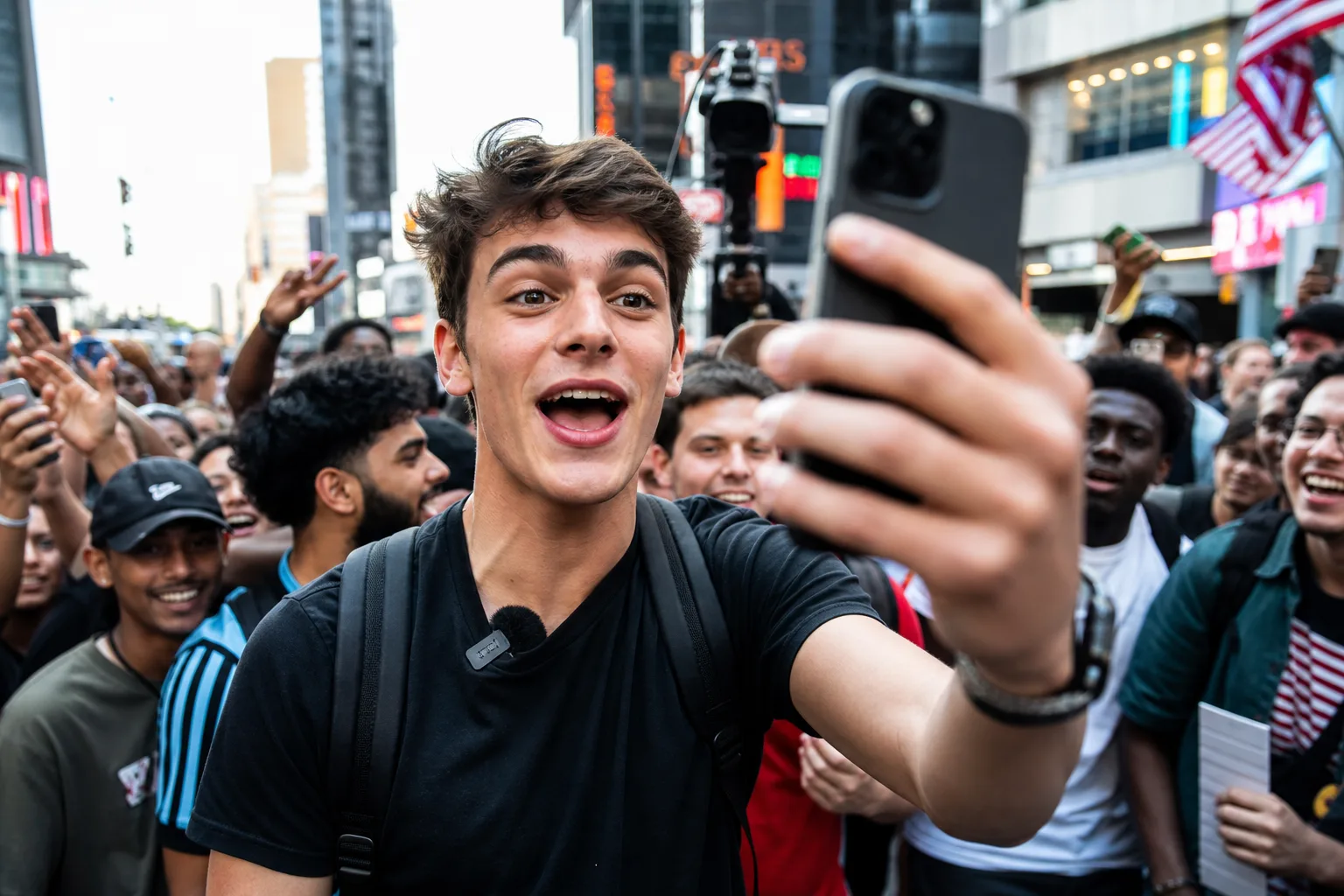
But here’s what separates him from the hundreds of streamers who blew up in 2020 and then quietly faded: Speed recognized that staying in a bedroom in front of a PC had a ceiling. He blew straight through that ceiling. Starting in 2024, IShowSpeed streaming pivoted toward something closer to a travel documentary series — except live, unscripted, and broadcast to millions of people simultaneously. He raced a cheetah in South Africa. He sparred with Manny Pacquiao in the Philippines. He got mobbed in Jamaica and Barbados in scenes that looked more like a Beatles arrival than a YouTuber on vacation.
The Indonesia broadcast is the stat that stops people cold: 1 million concurrent live viewers on YouTube. That made him the first English-speaking streamer to hit that number since the Chandrayaan-3 moon landing drew a global audience in 2023. To put that in context, plenty of primetime cable news programs in the United States don’t pull those kinds of simultaneous eyeballs. Then there was the 2024 US tour — a month-long, 25-state odyssey where IShowSpeed streaming never once went dark. Not while eating. Not while sleeping. The camera ran constantly, and people watched.
Why Traditional Sports Media Should Be Paying Attention
The conversation about linear television dying has been running for so long it’s almost become background noise. But IShowSpeed streaming puts a very specific, very human face on what replaces it. Nielsen’s own viewership data has tracked the steady erosion of traditional TV audiences among younger demographics for years. Streaming services were supposed to be the answer, but subscription fatigue is real — prices keep climbing, and churn rates follow. What Speed represents is something different: appointment viewing that costs nothing, runs on a platform people already live on, and carries a sense of unpredictability that scripted broadcasts fundamentally can’t replicate.
FIFA has quietly understood this shift for a while. The 2026 World Cup is projected to attract more than 6 billion total viewers globally across its month-plus run. That’s an enormous number, but it’s built on the assumption that the governing body can actually reach younger fans — a generation that’s increasingly unlikely to find the tournament through a cable package. IShowSpeed streaming from host cities across the US, Canada, and Mexico will pull viewers who might never have opened a traditional broadcast. FIFA adding his song to the official album wasn’t sentimentality. It was a distribution strategy.
On Access, Parasocial Risk, and Collapsing Live on Stream
In a recent interview with Wired, Speed was asked about access — how much of himself he’s actually willing to give. His answer was revealing: ‘I’m more of a personal streamer, as raw as it can get, and I want to be as close to the viewers as I can.’ That philosophy has consequences. He acknowledged that parasocial dynamics — fans who develop one-sided emotional attachments to streamers — came with the territory early in his career and genuinely bothered him when he was younger. He seems to have made peace with it, but it’s a tension that doesn’t fully resolve.

The starkest illustration came during his Caribbean tour this spring, when he collapsed on stream. He stayed conscious throughout — he describes being able to hear everything happening around him but being unable to open his eyes or move — and he was back on camera shortly after. His reaction: ‘Yup, GGs.’ Good game. Move on. He was sanguine about it in retrospect, pointing out that when IShowSpeed streaming spans five countries in a single day, the human body is eventually going to send a message. What’s striking isn’t the collapse itself — it’s the fact that it happened live, in front of millions of people, and Speed processed it with the same energy he brings to everything else.
He’s also thoughtful about the physical demands in a way that most commentators miss entirely. ‘My form of streaming is most definitely a sport,’ he told Wired. That’s not vanity talking. Six-to-eight-hour streams, full days of activities across multiple locations, the constant social and performative energy required to hold an audience — it’s genuinely grueling. The fact that it looks effortless on camera is the craft, not evidence that nothing is happening.
What Gen Z’s ESPN Means for the Industry
Speed is 21. He started building this audience before he was old enough to vote. When he says the streaming industry ‘is still being born,’ he’s not being falsely modest — he’s making an accurate structural observation. YouTube has been around since 2005, Twitch since 2011, but the creator economy as a genuine replacement for broadcast infrastructure is genuinely early-stage. The generation that grew up watching IShowSpeed streaming — Gen Z and the leading edge of Gen Alpha — doesn’t have the same relationship with ESPN or Sky Sports that their parents do. For them, IShowSpeed streaming is the sports broadcast. He’s where you go to feel the energy of a tournament.
The brands, the rights holders, and the broadcasters paying attention to this have a narrowing window to figure out how they fit into a media landscape where a 21-year-old from Ohio has more reach than most cable networks and the cultural credibility to get his song onto a FIFA album. Those who aren’t paying attention are building strategies for an audience that no longer exists.
Frequently Asked Questions
How did IShowSpeed streaming get so big so fast?
Darren Watkins Jr. started posting on YouTube in 2017 as a teenager, but his full-time streaming career took off during the Covid-19 lockdowns in 2020. His passion for soccer, Cristiano Ronaldo, and high-energy, unfiltered content drove rapid audience growth that now sits at nearly 55 million subscribers.
What YouTube record did IShowSpeed break?
During a broadcast from Indonesia, IShowSpeed hit 1 million concurrent live viewers — making him the first English-speaking streamer to break that record on YouTube since the Chandrayaan-3 moon landing.
What is IShowSpeed’s role at the 2026 World Cup?
Speed released a World Cup anthem that FIFA added to its official tournament album after the song surpassed 7 million YouTube views in under 24 hours. He’s also planned to livestream from multiple host cities throughout the tournament.
Why do sports broadcasters care about creators like IShowSpeed?
For Gen Z and Gen Alpha audiences, creators like Speed are a primary lens through which they engage with sport. Linear television is declining and streaming services struggle to retain viewers, and FIFA’s decision to officially embrace Speed’s music signals that rights holders recognize the massive reach creator-driven platforms can provide.

