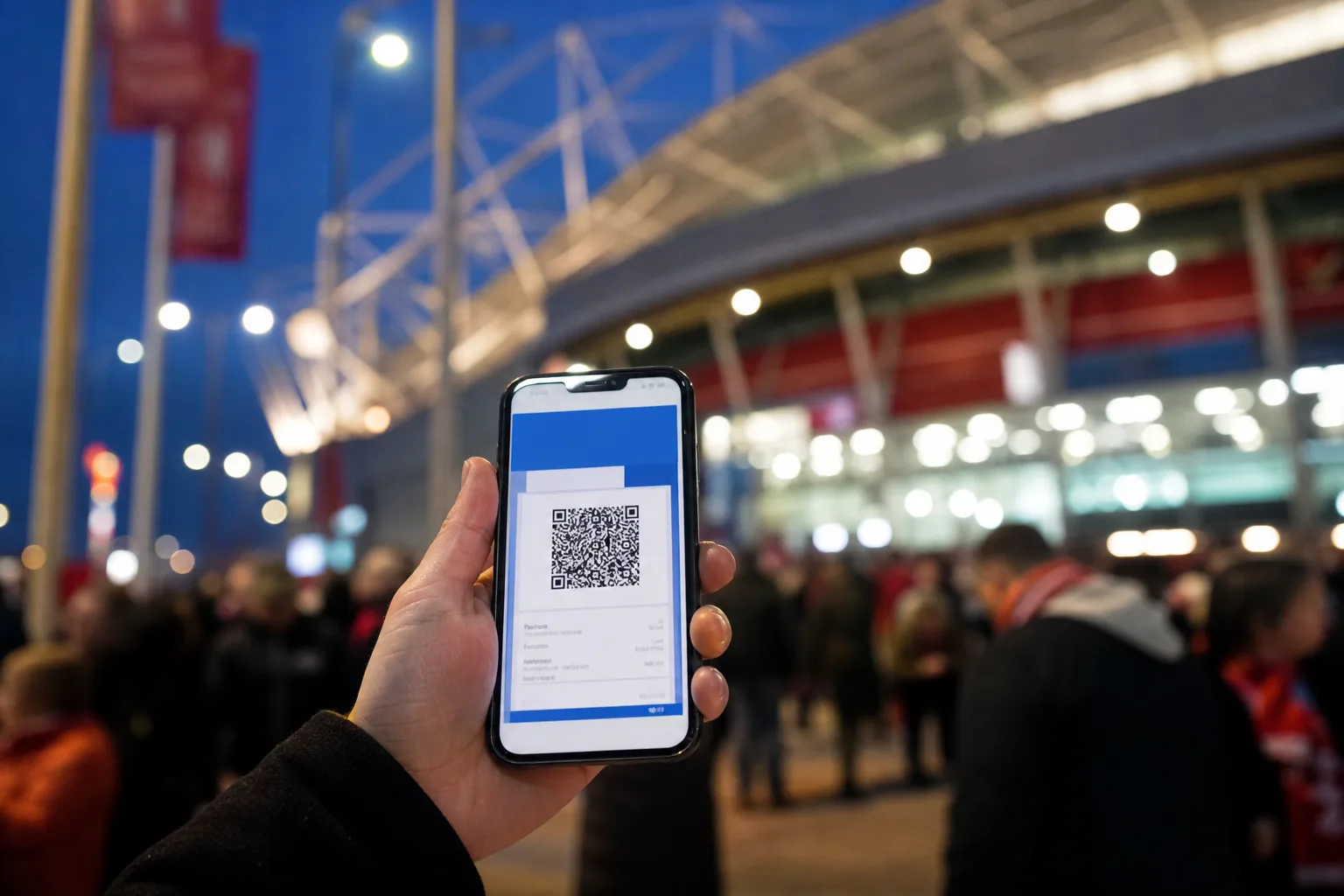
The 2026 FIFA World Cup is the biggest sporting event on the planet right now, but one of its most interesting experiments isn’t happening on the pitch. FIFA blockchain ticketing, built on the Avalanche network and quietly running in the background of the tournament, is one of the most consequential real-world tests the crypto industry has attempted in years — and the early numbers are hard to ignore.
- FIFA blockchain ticketing on Avalanche uses Right-to-Buy tokens to shift secondary market activity back inside FIFA’s own ecosystem.
- Over 100,000 RTBs have been issued and secondary market volume for RTTs in the FIFA blockchain ticketing system has already exceeded $15 million, with combined RTB and RTT trading volume surpassing $25 million.
- The system gives FIFA direct visibility into who is buying and trading tickets, data that previously lived on StubHub and Ticketmaster.
- Ava Labs wants fans to experience Web2 simplicity while blockchain handles verification and ownership entirely in the background.
Table of Contents
The Problem FIFA Was Trying to Solve
Ticket scalping at major sporting events isn’t a new problem, but it’s gotten structurally worse. Bots now dominate the first seconds of any high-demand ticket sale. Fans who genuinely want to attend — and are willing to pay face value — get shut out immediately, while the same tickets reappear on StubHub or Vivid Seats at three or four times the original price. The value created by overwhelming fan demand flows to secondary market platforms rather than back to the organization that created the event. FIFA blockchain ticketing is a direct attempt to reclaim that value flow.
Dominic Carbonaro, who leads the consumer enterprise vertical at Ava Labs — the main developer firm behind Avalanche — put it plainly: ‘It’s a little bit of the Taylor Swift problem. Concert gets announced, huge influx of buying comes in, primarily from bots. They buy all the tickets, and then the secondary market sales happen.’
FIFA clearly decided it had had enough of that dynamic heading into a tournament spread across the United States, Canada, and Mexico — one that would generate unprecedented global demand for tickets. The FIFA blockchain ticketing initiative is the federation’s most ambitious answer to that challenge yet.
How the FIFA Blockchain Ticketing System Actually Works
The mechanics of the FIFA blockchain ticketing system are worth understanding, because they’re more thoughtful than a typical ‘we put it on the blockchain’ announcement. FIFA’s approach runs through its FIFA Collect platform — the federation’s digital collectibles and fan hub — and is powered by both the Avalanche network and a company called Modex. The whole thing operates on a dedicated, customizable Avalanche Layer-1 chain referred to internally as the FIFA blockchain.
Rather than putting the match ticket itself on-chain, FIFA created two distinct digital instruments. The first is a Right-to-Buy (RTB): a digital entitlement that gives the holder priority access to purchase a specific ticket before it goes on general sale. Fans can acquire RTBs through FIFA Collect and trade them on secondary markets at whatever price the market sets. That’s intentional — FIFA isn’t pretending demand doesn’t exist. It’s acknowledging it and trying to own the environment in which that demand plays out.
When a fan is ready to actually buy a ticket, they redeem their RTB. It then converts into the second instrument: a Right-to-Ticket (RTT). The RTT can be used to purchase an official match ticket through FIFA’s existing ticketing infrastructure. The underlying ticket itself is still issued through traditional systems. What’s changed is everything upstream of that final transaction.
‘The tickets are now 100% verifiable onchain, so it reduces all types of fraud, fake secondary sales, etc.,’ Carbonaro said. For an event that routinely attracts counterfeit listings and elaborate scams targeting international fans, that’s not a trivial claim about what FIFA blockchain ticketing can deliver.
The Numbers Behind FIFA Blockchain Ticketing
Ava Labs shared a set of figures that, if accurate, suggest this isn’t just a proof-of-concept running in the shadows. More than 100,000 RTBs have been issued so far. Over 50,000 Club World Cup tickets were distributed in bundles paired with RTBs. Secondary market volume for RTTs alone has cleared $15 million. Combined RTB and RTT trading volume has exceeded $25 million.
Those aren’t speculative DeFi numbers driven by yield farmers looking for the next token to flip. They’re tied to real sporting events, real seats, and real fans trying to attend the World Cup. That distinction matters enormously for an industry that has spent the better part of three years trying to explain why blockchain is useful for anything other than speculation. FIFA blockchain ticketing is one of the clearest answers that industry has produced.
For Ava Labs specifically, the project represents a strategic pivot in how it talks about what the Avalanche network is for. ‘We want to deliver Web2 experiences with blockchain underneath,’ Carbonaro said. ‘The user should not even know they’re using blockchain.’ That’s a meaningful shift in messaging from the ‘own your digital assets’ framing that defined the NFT era. The focus here is on infrastructure, verification, and ownership rails — not on collectibles as an end in themselves.
FIFA’s Real Prize: Fan Data
There’s a dimension to this story that goes beyond anti-scalping mechanics, and it’s probably the one FIFA’s commercial team is most excited about. In the current ticketing ecosystem, the organization that actually runs the event — in this case FIFA — often has surprisingly little data about who attends it. Secondary market platforms like StubHub, SeatGeek, and Ticketmaster own the customer relationship when fans buy through their platforms. FIFA gets the money from the original face-value sale, but the rich data about fan behavior, resale patterns, and ultimate attendance sits with those intermediaries. FIFA blockchain ticketing changes that equation fundamentally.
‘The actual administrator of those tickets, FIFA, has no idea who the people are buying,’ Carbonaro said. ‘That data sits with SeatGeek, StubHub, Ticketmaster, Vivid Seats.’
The RTB and RTT system changes that. Because secondary market activity for FIFA’s World Cup tickets is now happening within FIFA’s own ecosystem rather than on third-party platforms, FIFA can track how ticket rights change hands, build a clearer picture of its actual fanbase, and use that information for future commercial decisions. Personal data stays off-chain — the blockchain records serve as a verification layer, not a surveillance tool — but the directional shift in who controls the customer relationship is significant.
Sports organizations are increasingly treating direct fan relationships as strategic assets in their own right. As AI tools get better at extracting insights from first-party behavioral data, the gap between an organization that owns that data and one that doesn’t will only widen. FIFA is clearly aware of this, and the FIFA blockchain ticketing experiment looks like one piece of a broader push to tighten its grip on everything from fan data to stadium branding and commercial operations around match venues.
Fair Questions Worth Asking
Not everyone will be convinced this system is unambiguously good for fans. The most pointed criticism is straightforward: introducing tradable purchase rights creates an additional layer between a fan and their ticket. Instead of simply buying a ticket, fans now need to acquire an RTB, understand its value, decide whether to trade it or redeem it, and then navigate the conversion to an RTT before finally accessing the official ticketing process. That’s more steps, not fewer — and it’s particularly complicated for older fans or those in markets where crypto literacy is low. Critics of FIFA blockchain ticketing are right to flag that complexity as a genuine barrier.
There’s also a question of whether the system genuinely reduces the cost fans pay to attend, or simply moves the premium from StubHub’s interface to FIFA Collect’s. If RTBs for the most desirable matches trade at significant premiums on FIFA’s own secondary market, fans with less capital are still priced out — the difference is that FIFA captures more of the upside rather than a third-party platform. That’s a better outcome for FIFA’s balance sheet, but it’s not obviously a better outcome for the average supporter.
Carbonaro’s framing — that the RTB model ‘shifts where the secondary sales market takes place’ — is honest about this. It’s not claiming to eliminate premium pricing. It’s claiming to bring that activity inside FIFA’s walls.
What Comes Next for Blockchain in Sports
Whether this model travels beyond the 2026 World Cup depends a lot on how the next few weeks unfold. If fraud incidents drop materially compared to previous tournaments, if fan complaints about the ticketing process don’t spike, and if FIFA’s internal data shows the on-chain verification is working as intended, there’s a strong case for expanding FIFA blockchain ticketing to the 2027 Women’s World Cup and beyond.
The broader sports industry is watching. The NBA, NFL, and major European football leagues have all experimented with blockchain ticketing to varying degrees, but nothing at this scale or with this level of institutional buy-in from a governing body. FIFA’s willingness to build a dedicated Layer-1 chain rather than bolt on an existing solution signals that FIFA blockchain ticketing is meant to be infrastructure for the long term, not a one-cycle marketing play.
For Avalanche, landing FIFA as a marquee client at the peak of global football’s calendar is exactly the kind of proof point the network needed. The question now is whether the tournament finishes without a high-profile failure that hands critics an easy headline. If it does, FIFA blockchain ticketing might end up being remembered less as a crypto experiment and more as the moment blockchain quietly became part of how major events are run.
Frequently Asked Questions
How does FIFA blockchain ticketing actually work at the 2026 World Cup?
FIFA issues Right-to-Buy (RTB) tokens through its FIFA Collect platform. Fans can buy, hold, or trade RTBs. When redeemed, an RTB converts into a Right-to-Ticket (RTT), which then unlocks the ability to purchase an official match ticket through FIFA’s existing ticketing infrastructure.
Does a fan need to understand crypto to use the FIFA ticketing system?
No. Ava Labs has specifically designed the experience so users interact with a familiar consumer app. The blockchain layer handles verification and asset ownership in the background, and fans are not required to manage wallets or understand how the underlying technology works.
How much trading volume has the FIFA blockchain ticketing system generated?
According to Ava Labs, secondary market volume for Right-to-Tickets has surpassed $15 million, while combined RTB and RTT volume across the FIFA blockchain ticketing system has exceeded $25 million.
Why does FIFA benefit from owning its ticketing data?
In traditional secondary markets, platforms like StubHub and Ticketmaster control customer data. FIFA’s RTB and RTT system keeps transaction records on-chain within its own ecosystem, giving FIFA direct insight into how ticket rights change hands and who ultimately attends its events.