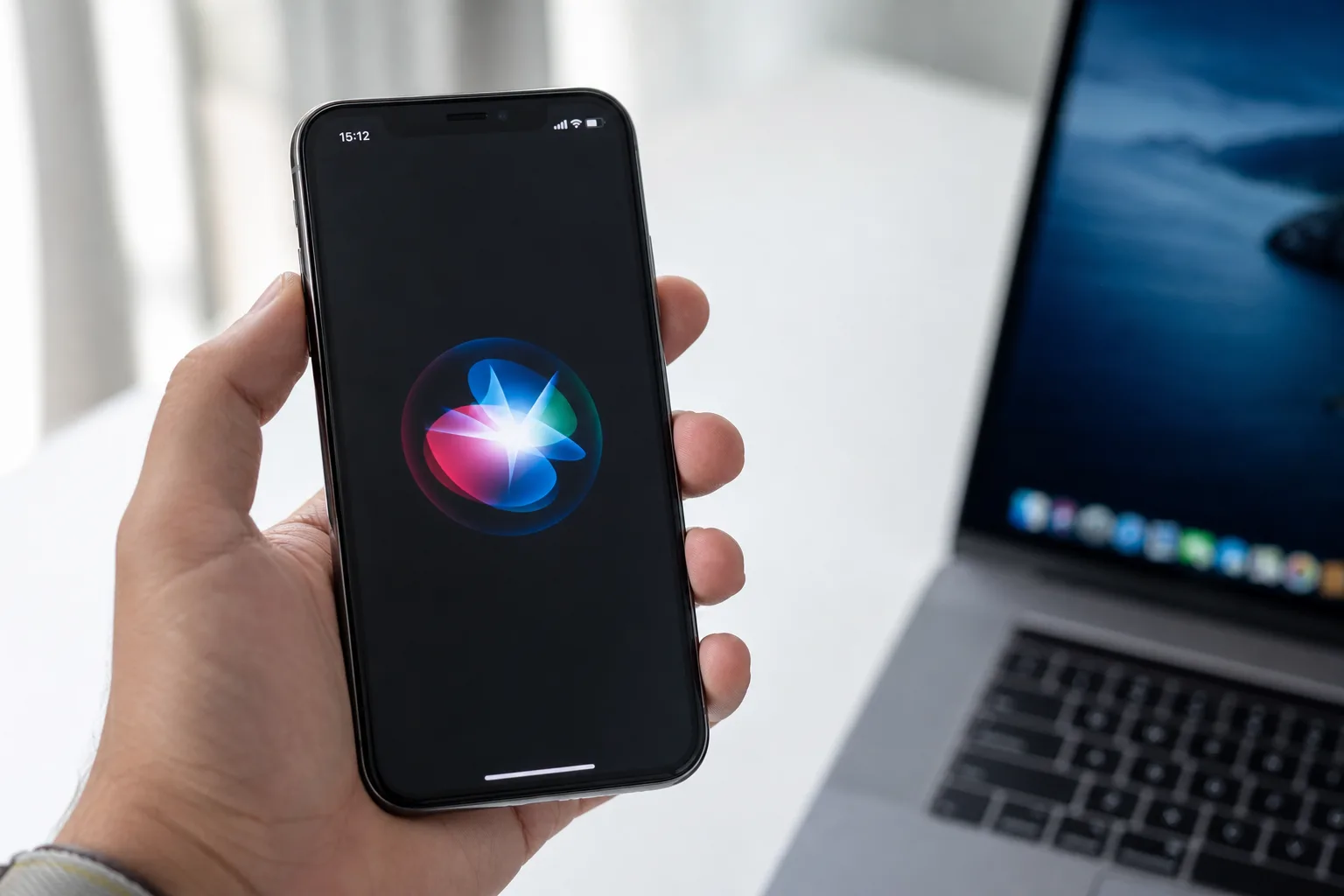
The Siri iOS 27 overhaul is the biggest change Apple has made to its voice assistant in over a decade — but it almost didn’t happen this way. At a press tech talk held shortly after the WWDC keynote, Apple executives revealed that the company had built, and then deliberately abandoned, an earlier version of AI-powered Siri before committing to the full rebuild that shipped with iOS 27.
- The Siri iOS 27 overhaul was delayed because Apple scrapped a working incremental version and chose a full rebuild instead.
- Mike Rockwell, who took over Siri leadership last year, confirmed Apple ‘tore it to the ground’ to deliver a genuinely new assistant.
- The new Siri is natively multimodal, privacy-first by design, and runs consistently across iPhone, iPad, Mac, Watch, Vision Pro, CarPlay, and AirPods.
- Apple’s willingness to throw away a working product signals how seriously the company is treating AI competition from Google and OpenAI.
Table of Contents
The Version Apple Threw Away
Mike Rockwell, who took over leadership of the Siri team last year, was unusually candid about the timeline. Speaking alongside Craig Federighi and AI chief Amar Subramanya, Rockwell confirmed what many Apple watchers had suspected: the delay wasn’t purely about engineering difficulty. It was a deliberate choice to do more.
‘Last year, we had actually built a first version of this that was sort of incremental on top of the original Siri that added tool calling, and we had it working. But we didn’t feel it was really delivering on the vision and the experience that we wanted to do.’
That’s a striking admission. Apple had a shippable product — a Siri that could call external tools and tap into large language model capabilities — and it walked away from it. In an industry where most companies race to ship anything with an ‘AI’ label slapped on it, Apple’s decision to pull back and start over says something real about internal standards. Whether you read that as admirable discipline or frustrating slowness probably depends on how long you’ve been waiting for Siri to catch up to Google Assistant or ChatGPT. The Siri iOS 27 overhaul is the direct result of that decision to hold back and rebuild properly.
What ‘Rebuilt From the Ground Up’ Actually Means for the Siri iOS 27 Overhaul
Rockwell’s language was emphatic — ‘tore it to the ground, rebuilt it from the ground up’ — and it’s worth understanding what that means technically. The original Siri, which Apple acquired back in 2010 and shipped with the iPhone 4S in 2011, was built on a fundamentally different architecture than what modern AI assistants require. It relied heavily on a patchwork of natural language parsing rules, a finite intent graph, and domain-specific back-ends. Adding a layer of generative AI on top of that foundation — which is what the scrapped first version apparently did — is a bit like bolting a turbocharged engine onto a 15-year-old chassis. It can work, but you’re fighting the underlying structure the entire time.
The Siri iOS 27 overhaul delivers a new Siri built natively on top of what Subramanya described as Apple’s new foundational models. Rockwell confirmed it’s ‘natively multimodal’ — meaning it can handle text, voice, images, and on-screen context without treating each as a separate mode bolted together. That’s the architecture difference that matters most for real-world use. When you show Siri a photo and ask a follow-up question, or ask it to act on something it can see on your screen, a natively multimodal system doesn’t have to hand off between subsystems. It just handles it.
Privacy as Architecture, Not a Feature Toggle
One phrase Rockwell used that deserves more attention than it’s gotten: ‘privacy from the ground up.’ Apple has long marketed privacy as a core value, but the old Siri architecture created real tensions — some requests had to be processed on Apple’s servers, personal context was inconsistently handled, and the system wasn’t designed with on-device inference as a first-class concern.
Building the Siri iOS 27 overhaul on Apple’s new model stack — which is closely tied to the Private Cloud Compute infrastructure announced last year — means privacy isn’t a feature that was added after the fact. The data handling decisions, the inference routing between on-device and cloud, the access controls for personal information: all of that was designed into the system rather than retrofitted. That’s a harder thing to build, and it’s almost certainly part of what made the timeline longer.
For users who care about where their data goes, this is meaningful. Apple’s approach to on-device intelligence has consistently emphasized that personal context should be processed locally where possible — and the Siri iOS 27 overhaul is the most direct expression of that philosophy yet.
One Siri Across Every Screen
The consistency story is arguably just as important as the AI capability story. Rockwell specifically called out that the new Siri runs across iPhone, iPad, Mac, Apple Watch, Vision Pro, CarPlay, and AirPods — and that it’s the ‘same Siri across all this.’ That might sound obvious, but it hasn’t been true historically.
The old Siri behaved differently depending on what device you were on. The Mac version lagged behind iOS. Watch Siri was stripped down. CarPlay integration was surface-level. Each platform had its own quirks, its own gaps, its own latency profile. Apple’s ecosystem advantage — the fact that hundreds of millions of people use multiple Apple devices daily — was being squandered because Siri couldn’t reliably hand context between them or behave consistently across them. The Siri iOS 27 overhaul addresses this directly by treating cross-device consistency as a core design requirement rather than an afterthought.
The Siri iOS 27 overhaul is the first version of Siri that’s genuinely been designed to span that whole device graph. That’s a platform bet as much as it is an AI bet. If Apple can make Siri the assistant that knows you across every screen — that picks up where you left off, that understands your context whether you’re on your Watch or in your car — that’s a genuinely differentiated position that Google and OpenAI can’t easily replicate, because they don’t own the hardware layer the way Apple does.
What This Tells Us About Apple’s AI Competitive Position
Apple’s approach to this Siri iOS 27 overhaul crystallizes something important about where the company sits in the AI race right now. It isn’t trying to win on raw model capability — OpenAI, Google DeepMind, and Anthropic have more research firepower and are moving faster in the foundation model space. Apple’s bet is integration: that an AI assistant deeply embedded in the operating system, aware of everything happening on your device, protected by strong privacy guarantees, and consistent across the world’s most cohesive hardware ecosystem, is worth more to most users than a marginally smarter chatbot.
Whether that bet pays off depends almost entirely on execution. The old Siri failed not because the vision was wrong, but because the engineering didn’t deliver on it. Rockwell’s willingness to scrap a working system and rebuild properly is at least evidence that Apple understands what went wrong before. The question now is whether the new foundation is genuinely as capable as Apple’s demos suggested — and whether developers will build on it in ways that make the assistant feel truly indispensable in daily life. The Siri iOS 27 overhaul gives Apple the architecture it always needed. Now comes the hard part.
Frequently Asked Questions
What specifically changed in the Siri iOS 27 overhaul?
Apple rebuilt Siri entirely from the ground up rather than patching the old system. The new version is natively multimodal, privacy-first by design, and delivers a consistent experience across iPhone, iPad, Mac, Apple Watch, Vision Pro, CarPlay, and AirPods.
Why did Apple take so long to upgrade Siri with AI features?
According to Mike Rockwell, Apple actually had a first version ready that added AI tool-calling on top of the original Siri. The team decided that incremental approach wouldn’t meet their quality bar, so they scrapped it and started over on a modern foundation.
Who is Mike Rockwell and what is his role at Apple?
Mike Rockwell is the Apple executive who took over leadership of the Siri team last year. He spoke publicly about the Siri rebuild at a Siri and Apple Intelligence-focused tech talk held following Apple’s WWDC keynote.
Does the new Siri in iOS 27 work the same way across all Apple devices?
Yes. Apple says the new Siri provides a common, consistent experience across iPhone, iPad, Mac, Apple Watch, Vision Pro, CarPlay, and AirPods — a deliberate design goal that the previous fragmented Siri architecture couldn’t deliver.