

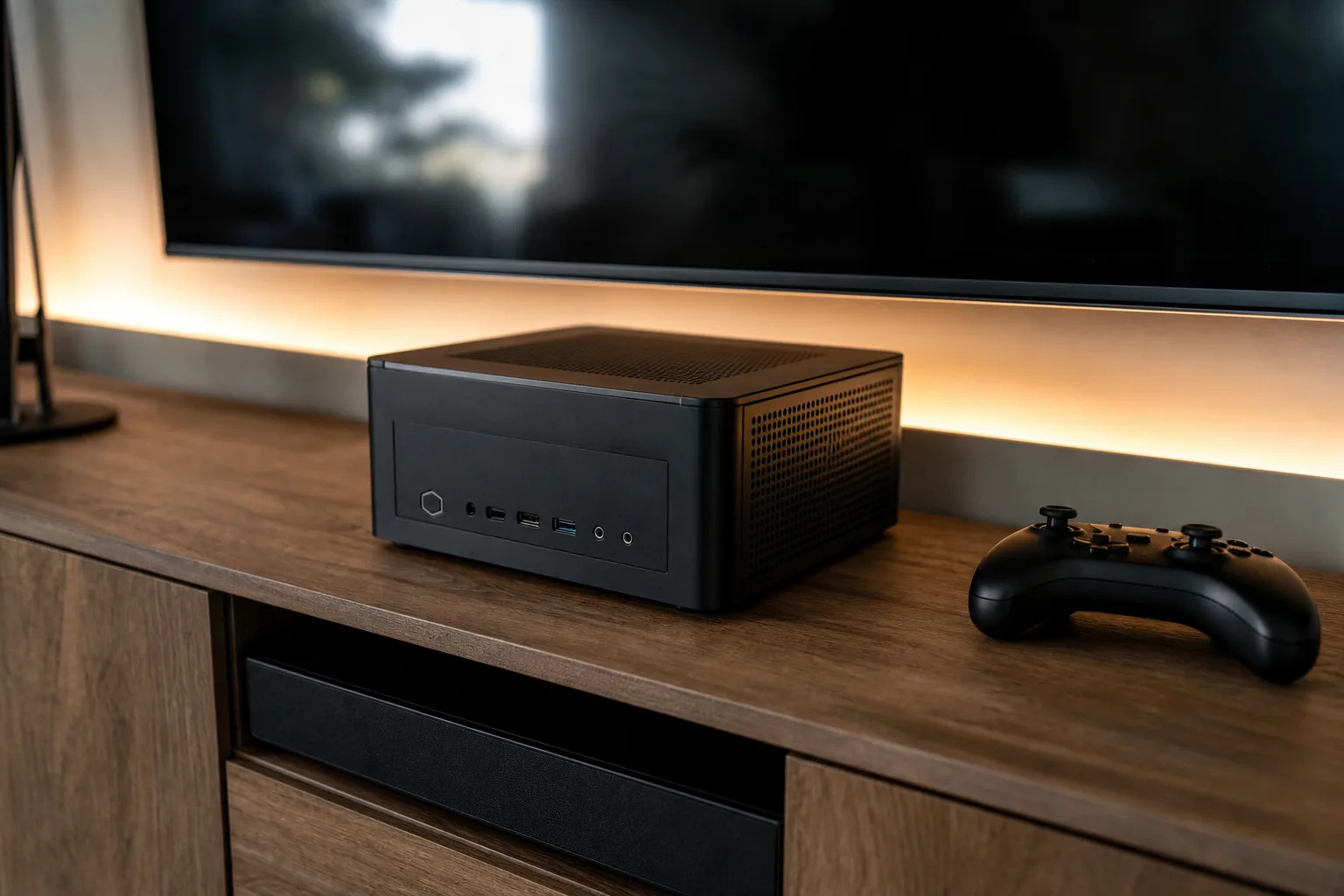
Valve’s Steam Machine launches on June 29 with a starting price of $1,050, and the company knows that’s a hard sell. But here’s the thing — Steam Machine alternatives are not only plentiful, some of them are outright better. If you’re a PC gamer who wants Steam in your living room without committing to Valve’s specific box, you have real options. And Valve, to its credit, isn’t trying to hide that fact.
- Steam Machine alternatives exist that deliver more raw power than Valve’s $1,050 hardware at a comparable or lower price.
- Valve itself acknowledges the Steam Machine’s price is a problem, admitting its ‘original goal for the price is no longer viable.’
- SteamOS is expanding beyond Valve’s own hardware, with growing support for Nvidia GPUs and Intel chips on third-party devices.
- Upcoming updates including FSR 4 upscaling and hardware-accelerated ray tracing could benefit all SteamOS machines, not just Valve’s.
Table of Contents
Valve Admits the Price Is a Problem
There’s a rare honesty in how Valve has handled the Steam Machine’s pricing announcement. In its official blog post, the company wrote that ‘our original goal for the price of the Steam Machine is no longer viable.’ That’s a candid admission, and it tells you a lot about the current state of PC component pricing. RAM, storage, and silicon have all gotten more expensive in ways that make a compact, powerful gaming PC feel like a luxury purchase rather than a mainstream play. For buyers already researching Steam Machine alternatives, that admission only sharpens the case for looking elsewhere.
Valve’s position here is philosophically distinct from what Sony and Microsoft do with their consoles. Those companies subsidise hardware — sometimes selling at a loss — to lock users into their ecosystems, where software margins more than make up the difference. Valve is taking a different stance. As one of the company’s software engineers, Yazan Aldehayyat, told Tom’s Hardware, the Steam Machine is ‘not subsidized by software sales.’ Valve confirmed to The Verge that when companies sell hardware below cost, ‘they’re doing that to build a more closed system, one where you don’t get to choose what software you want to use.’
Noble principle. Painful price tag. The irony is that Valve earns a 30% cut on every game sold through Steam, which is one of the largest digital storefronts in PC gaming. It’s not as though the company lacks revenue from software. Whether that framing holds up under scrutiny is debatable, but the message is clear: Valve wants this to feel like a PC purchase, not a console commitment. That framing is precisely why Steam Machine alternatives deserve serious attention rather than being treated as a fallback.

Steam Machine Alternatives Worth Considering Right Now
If you’re hunting for Steam Machine alternatives, the most compelling option at the moment is the Framework Desktop. It packs an AMD Strix Halo CPU, starts at $1,269, and delivers meaningfully more processing headroom than Valve’s six-core semi-custom APU — which, despite being described as ‘4K-ready,’ is built around a chip designed for efficiency as much as performance. The catch with Framework is that the base price doesn’t include an SSD or other components, so your total spend will climb. But for anyone who wants a modular, repairable, powerful small-form-factor PC that can double as a SteamOS machine, it’s a serious contender.
The broader mini-PC market has also matured considerably. Machines from Minisforum, Beelink, and ASUS have made it genuinely viable to build a living-room gaming setup without paying a premium for Valve’s industrial design or brand cache. Many of these ship with AMD hardware that’s already well-supported under SteamOS. That compatibility matters more than it might seem — getting SteamOS running smoothly on a third-party box is currently easier said than done, but the gap is narrowing fast. Each of these devices qualifies as a practical Steam Machine alternative for gamers who prioritise flexibility over brand loyalty.
SteamOS Is the Real Play Here
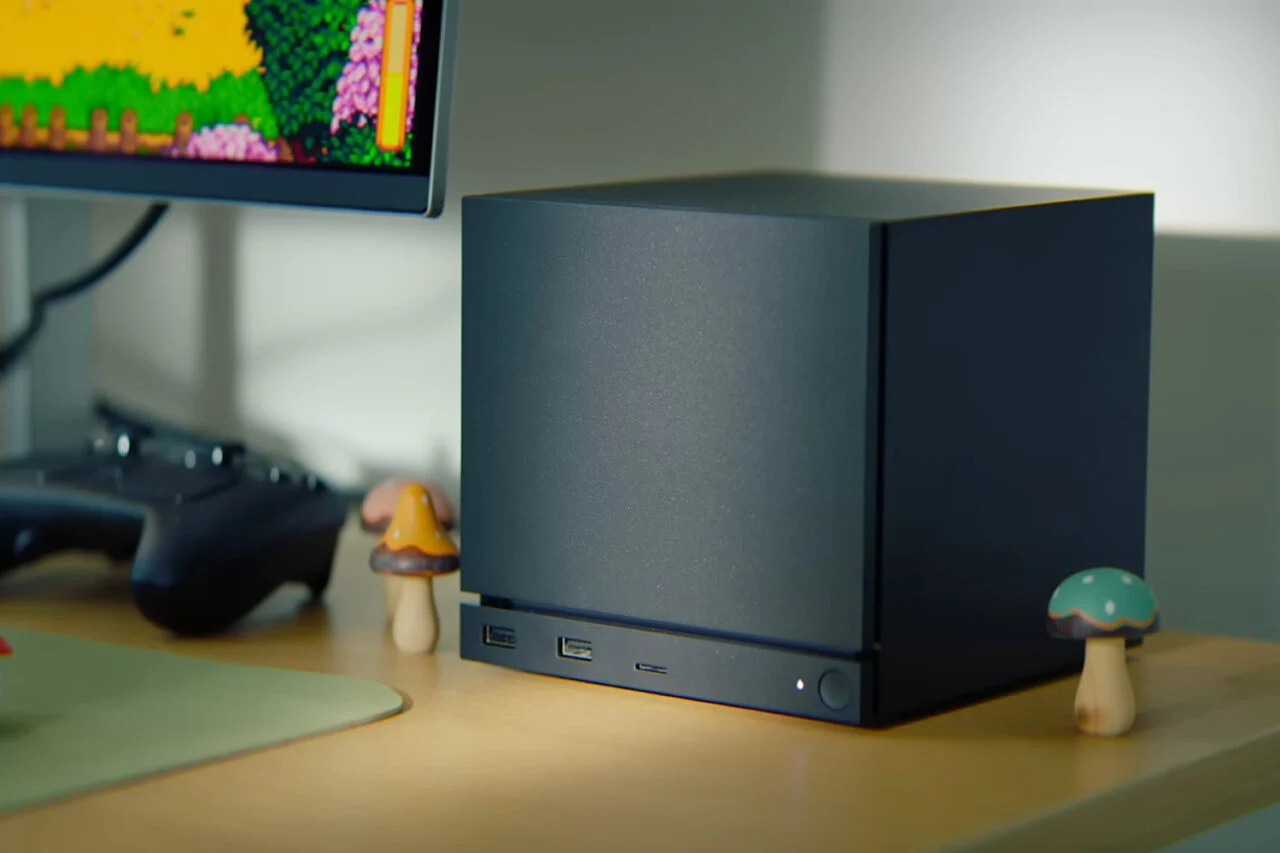
The most underappreciated angle in all of this is that Steam Machine alternatives running SteamOS could ultimately be more important to Valve than its own hardware. The Linux-based operating system has found a serious audience thanks to the Steam Deck, which — despite its own pricing woes — normalised the idea of a Linux-first gaming environment. SteamOS is now a genuine platform, not just a curiosity.
Right now, SteamOS is most comfortable on AMD hardware. But Valve software engineer Pierre-Loup Griffais told The Verge that the company is working directly with Nvidia to support its GPUs, though full compatibility likely won’t land until 2027 or later. That’s a long runway, but it signals intent. Nvidia’s dominance in the discrete GPU market means SteamOS can’t be a serious PC gaming OS without it. When that support arrives, the pool of viable Steam Machine alternatives will expand dramatically.
Intel is also entering the picture. The latest SteamOS update improved support for Intel’s Lunar Lake chips, specifically on the MSI Claw 8 AI+ handheld. Intel hasn’t made firm public commitments about future SteamOS compatibility, but support for the upcoming Claw 8 EX AI+ — which would mean current-gen chip support — looks increasingly likely. That’s a meaningful development. It suggests SteamOS is evolving from an AMD-centric environment into something that could realistically run across a wide range of x86 hardware.
If Valve can pull that off, SteamOS becomes the de facto operating system for anyone who wants a clean, gaming-focused Linux experience — regardless of whether they ever buy a Steam Machine. That’s a much bigger prize than selling a $1,050 box.

What’s Coming That Could Change the Value Equation
Valve isn’t standing still on the hardware side, either. The company has told multiple outlets it’s actively working to add hardware-accelerated ray tracing support and other performance improvements to the Steam Machine. Perhaps more interesting is what could arrive via software: Valve is reportedly exploring an upscaling solution similar to Sony’s PSSR technology on the PlayStation 5 Pro, which could bring AMD’s FSR 4 upscaler to the Steam Machine. Anyone evaluating Steam Machine alternatives should factor these incoming software improvements into their thinking, since most of them won’t be exclusive to Valve’s hardware.
Crucially, updates like FSR 4 integration wouldn’t necessarily be exclusive to Valve’s own hardware. If the implementation lands at the OS level, the same improvement would flow through to any machine running SteamOS. That’s the kind of thing that makes the entire ecosystem more attractive — and it’s the version of Valve’s strategy that makes the most sense. Build great software infrastructure, let the hardware be a reference point, and let third-party vendors and DIY builders fill in the gaps.
For PC gamers weighing up Steam Machine alternatives, that’s actually encouraging news. You don’t need to wait for Valve’s own hardware to improve. You need Valve’s software team to keep shipping updates — and right now, that team appears to be moving fast. SteamOS’s official page already reflects growing third-party device compatibility, and that list is only going to grow.
The Bigger Picture for PC Gaming
Here’s what’s easy to miss in the sticker-shock conversation around the Steam Machine’s price: Valve’s ambitions here are genuinely good for PC gaming, even if the execution on hardware pricing has been rough. The company is pushing for a more open living-room gaming experience — one that doesn’t require signing up for a walled ecosystem, doesn’t lock you into a specific storefront, and doesn’t prevent you from running whatever software you choose.
That philosophy, combined with a rapidly improving SteamOS and a growing ecosystem of compatible hardware, means the Steam Machine is less a product to buy and more a direction the industry is moving in. Whether you pick up Valve’s own unit, a Framework Desktop, or an MSI handheld running SteamOS, you’re participating in the same experiment — and the abundance of credible Steam Machine alternatives is proof that the experiment is already working. Valve just happens to be the one running it — and for once, the company seems genuinely comfortable with not being the only way in.
Frequently Asked Questions
What are the best Steam Machine alternatives right now?
The Framework Desktop, which packs an AMD Strix Halo CPU and starts at $1,269, is one of the stronger Steam Machine alternatives available. You’ll need to add an SSD and other components, but the processing horsepower may outpace Valve’s own hardware at a similar price point.
Can I install SteamOS on non-Valve hardware?
Yes, though it’s not as straightforward as installing it on Valve’s own devices. SteamOS works best with AMD CPUs and GPUs today. Valve is actively working with Nvidia for GPU support, though full compatibility may not arrive until 2027 or later.
Why is the Valve Steam Machine so expensive?
Valve is pricing the Steam Machine like a PC, not a subsidised console. The company says the cost reflects component prices secured over the past six months. Unlike Sony or Microsoft, Valve isn’t offsetting hardware costs through software sales — even though it earns a 30% cut on game sales on Steam.
Will FSR 4 come to Steam Machine alternatives running SteamOS?
Potentially yes. Valve is reportedly exploring AMD FSR 4 upscaling for the Steam Machine, similar to Sony’s PSSR approach on the PS5 Pro, and the update could extend to other systems as well — not just Valve’s own hardware.

