A Base sequencer bug knocked Coinbase‘s layer-2 network offline twice in the space of two days last week, prompting a detailed post-mortem that lays bare just how fragile centralised sequencer architecture can be. The incidents — lasting 116 minutes on Thursday and another 20 minutes on Friday — weren’t random gremlins. They traced directly to a single flaw in how Base’s block builder handled failed transactions.
- A Base sequencer bug caused stale journal state to persist after a failed transaction, halting block production for 116 minutes.
- The Base sequencer bug triggered a second outage of 20 minutes due to a race condition during the system reset.
- Base runs on a single sequencer — meaning one flaw can freeze the entire network instantly.
- Coinbase plans fuzz testing improvements and graceful recovery to reduce manual intervention in future incidents.
Table of Contents
What the Base Sequencer Bug Actually Did
The Base engineering team published their post-mortem on Saturday, and the technical explanation is worth unpacking. The bug lived inside the sequencer’s block-building logic. When the block builder received an invalid transaction — one that failed during execution — it was supposed to discard that transaction cleanly and move on. Instead, it left behind what the team called ‘stale journal state’: a residual record of the accounts and storage slots that had been touched during that failed execution.
That leftover data was enough to cause chaos. The sequencer couldn’t reconcile its state with the rest of the network, block production ground to a halt, and neither the sequencer nor validator nodes could advance past the poisoned block. Everything froze until engineers manually intervened with a patch. The Base sequencer bug effectively turned a routine transaction failure into a full network freeze.
In the team’s own words: ‘An invalid transaction was received by the block builder and failed during execution, as expected, but erroneously did not clear the journal state that contained the accounts and storage slots that had been accessed.’ It’s the kind of edge case that sounds minor in isolation — a cleanup step that didn’t run — but in a live network processing real transactions, the consequences are total. No new layer-2 blocks. Full stop.
Why a Single Bug Can Freeze the Entire Network
This is where the architecture matters. Base runs on a single sequencer. There’s no redundancy, no failover to a secondary node, no distributed consensus catching the problem before it propagates. One sequencer decides the order of transactions, builds the blocks, and keeps the chain moving. When it breaks, Base breaks — end of story.
That’s a deliberate design choice shared by virtually every major layer-2 network in operation today. L2Beat, which tracks layer-2 infrastructure health and security, lists Base as the second-largest layer-2 network by total value secured at just under $11 billion. That’s an enormous amount of capital riding on what is, architecturally speaking, a single point of failure. A Base sequencer bug of any severity can therefore have outsized consequences compared with a flaw on a more distributed network.
Base isn’t alone in this exposure. Arbitrum has suffered sequencer outages. So has OP Mainnet — the network Base itself is built on top of, as part of the OP Stack. zkSync Era has had its own incidents too. The pattern is consistent enough that at this point it’s less a Base problem and more a layer-2 industry problem. Centralised sequencers are fast and cheap to operate, which is why they dominate — but they trade decentralisation and resilience for that efficiency.
The Second Outage: A Race Condition Makes Things Worse
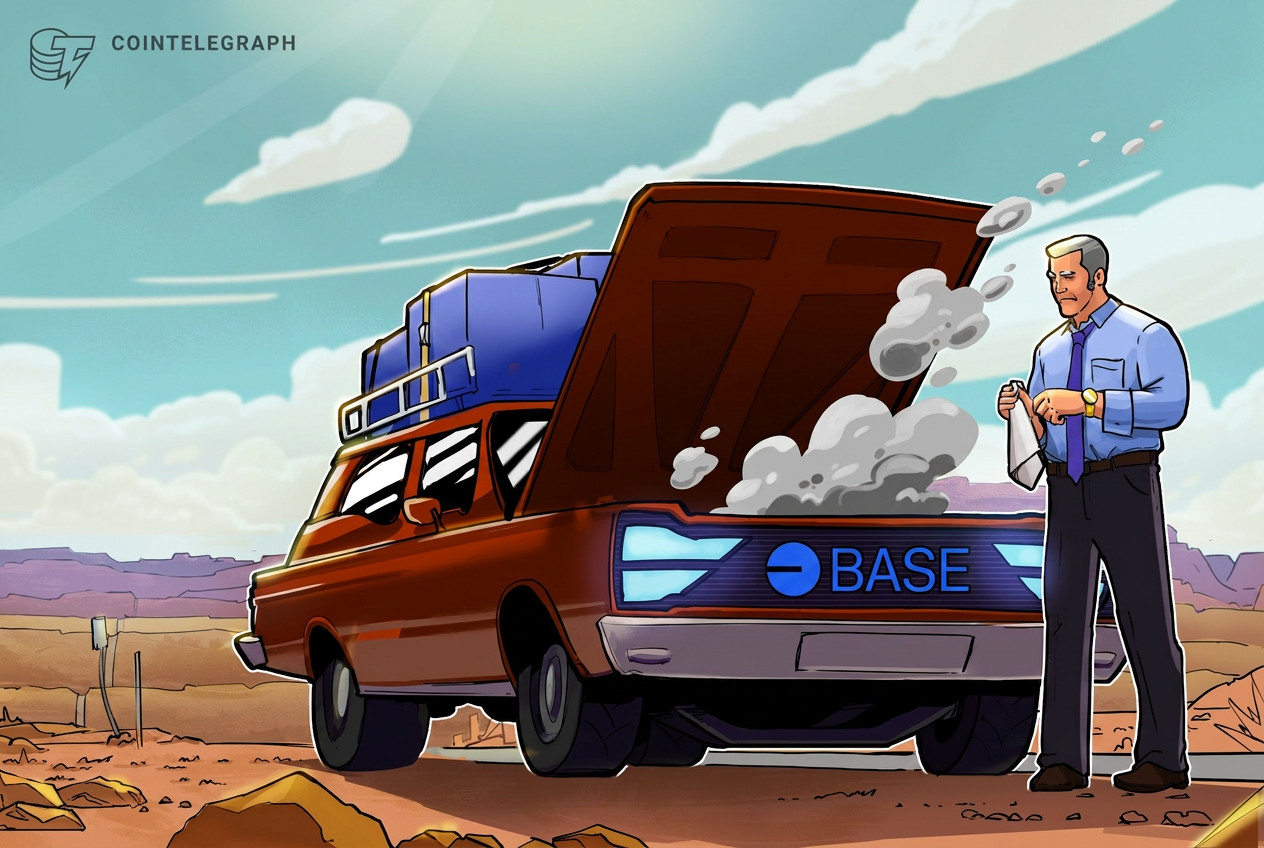
What made last week’s incident particularly messy was that fixing the first outage inadvertently triggered a second one. After engineers deployed a patch and reset the system, a race condition emerged. Essentially, different parts of the sequencer infrastructure came back online at slightly different times and in a conflicting state — and in that gap, the sequencers couldn’t catch up with the chain tip. This secondary Base sequencer bug was a direct product of the recovery process rather than the original flaw.
The result: a second block production halt lasting 20 minutes. Shorter than the first, but still a separate, distinct incident caused by the recovery process itself rather than the original bug. The team acknowledged that mitigation took longer than it should have ‘due to infrastructure conditions unrelated to the original bug’ — which is a careful way of saying the fix created its own complications.

Race conditions are notoriously difficult to anticipate in testing because they depend on precise timing between concurrent processes — something that’s hard to replicate in a controlled environment. They’re the kind of bug that tends to hide until exactly the wrong moment.
How Coinbase Fixed It — and What Comes Next
The immediate fix was a patch ensuring the journal state gets properly cleared after any transaction execution failure. Straightforward in principle, less so under pressure with a live network down and $11 billion in secured value in limbo.
Looking ahead, the Base team has outlined two meaningful improvements. First, they want to expand ‘fuzz testing’ — a technique that involves hammering the system with massive volumes of random, unexpected, or malformed inputs specifically to surface edge cases that normal testing misses. The Base sequencer bug that caused last week’s outage is exactly the kind of thing fuzz testing is designed to catch: an unusual transaction triggers an unexpected code path, and suddenly you’ve found your bug in a lab rather than on mainnet.
Second, they’re building what they describe as ‘graceful recovery’ — automation that lets validator nodes restart themselves during an incident without requiring engineers to manually intervene. That’s a critical gap right now. The 116-minute first outage was prolonged partly because humans had to diagnose, patch, and restore the system by hand. Automating that process won’t prevent outages, but it should significantly compress how long they last when they do happen.
Base Sequencer Bug History: This Isn’t the First Time
It’s worth putting last week in context. The Base sequencer bug story didn’t start there. In September 2024, Base went dark for 17 minutes due to a sequencer issue. In August 2025 — just weeks before the latest pair of incidents — the network suffered another halt lasting roughly half an hour. Each prior Base sequencer bug added to a growing record that three separate sequencer-related outages in under a year represents a pattern, not an anomaly.
None of this is unique to Base, but the frequency does raise questions about the pace of hardening work relative to the network’s growth. At nearly $11 billion in total value secured, Base is no longer an experimental chain. It’s core infrastructure for a significant slice of the crypto ecosystem, including projects building on Coinbase’s distribution and the broader OP Stack ecosystem. The expectations that come with that scale are different from what they were at launch.
The broader layer-2 industry is slowly moving toward decentralised sequencer designs — where transaction ordering is distributed across multiple nodes rather than handled by one — but that transition is technically complex and still years away from being the norm. Until then, single-sequencer architectures will keep producing outages, and post-mortems like this one will keep being published. The real question isn’t whether these networks will go down again. It’s how fast they can get back up — and how much of that recovery they can make automatic.
Frequently Asked Questions
What caused the Base sequencer bug that led to last week’s outages?
The bug was found in Base’s block-building logic. When an invalid transaction failed during execution, it didn’t clear the journal state tracking accounts and storage slots. That stale data prevented the sequencer from progressing, halting block production entirely.
Why did Base suffer a second outage after the first was fixed?
After engineers patched the first outage and reset the system, a race condition emerged that stopped the sequencers from catching up with the chain. That triggered a shorter but separate 20-minute halt on top of the original incident.
Is Base the only layer-2 network to suffer sequencer outages?
No. Sequencer failures have hit Arbitrum, OP Mainnet, and zkSync Era as well. Layer-2 networks rely on a single sequencer, making it a known single point of failure in this type of architecture.
How is Coinbase planning to prevent future Base outages?
The Base team plans to expand fuzz testing — throwing random, malformed inputs at the system to surface edge-case bugs — and to build graceful recovery so validator nodes don’t need manual restarts during future incidents.