

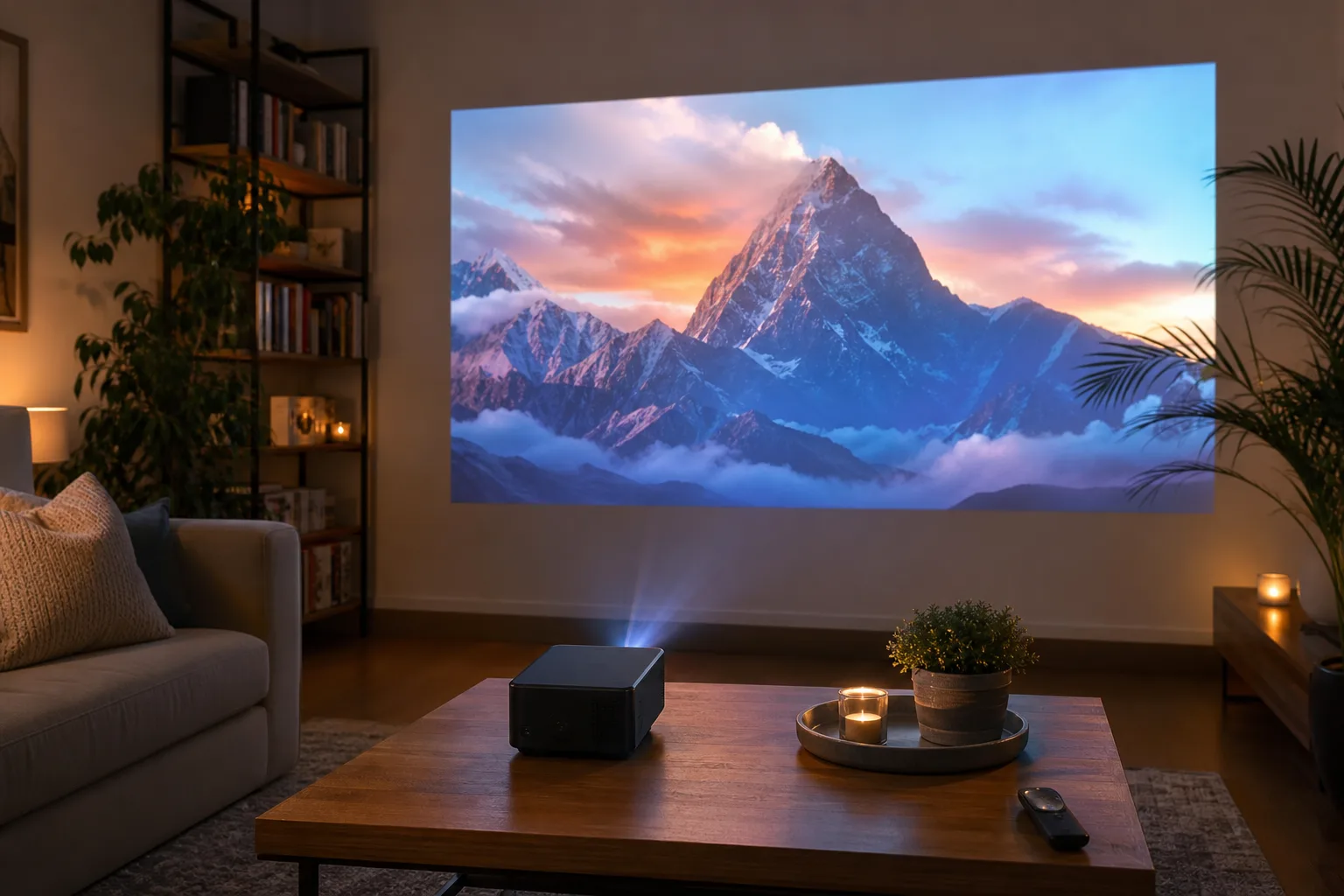
There’s a slow-burning rethink happening in living rooms, and it doesn’t involve choosing between OLED and QLED. More people are quietly arriving at the same conclusion: a Google TV projector might be the smarter purchase than yet another flat panel bolted to the wall. After spending extended time living with both a high-end Samsung display and a modern portable projector, the case for ditching the traditional TV is stronger than it’s ever been.
- A Google TV projector offers flexible screen sizing and room portability that no fixed TV panel can match.
- Unlike a traditional TV, a Google TV projector needs just a single power cable and leaves your walls completely free.
- Ultra-short-throw projectors can replace premium TVs like the Samsung Frame Pro at comparable or lower cost.
- Portable projector models with built-in batteries let you carry your entire streaming setup between rooms effortlessly.
Table of Contents
The Problem With Premium TVs Nobody Talks About
Walk into any living room in 2025 and you’ll find the same thing: a large, dark rectangle dominating the space whether it’s on or off. The TV industry has made half-hearted attempts to solve this — Samsung’s Frame TV line being the most visible — but the results are underwhelming. The Frame Pro, Samsung’s current flagship in the ‘lifestyle TV’ category, arrived with a brighter Neo QLED panel, a wireless One Connect box, and a faster processor. It’s genuinely impressive hardware. But Samsung’s software lets it down badly. Frame mode — the whole selling point — ends up disabled a significant portion of the time because the settings and ambient display options simply aren’t good enough. You pay a premium to avoid the black rectangle and end up with it anyway.
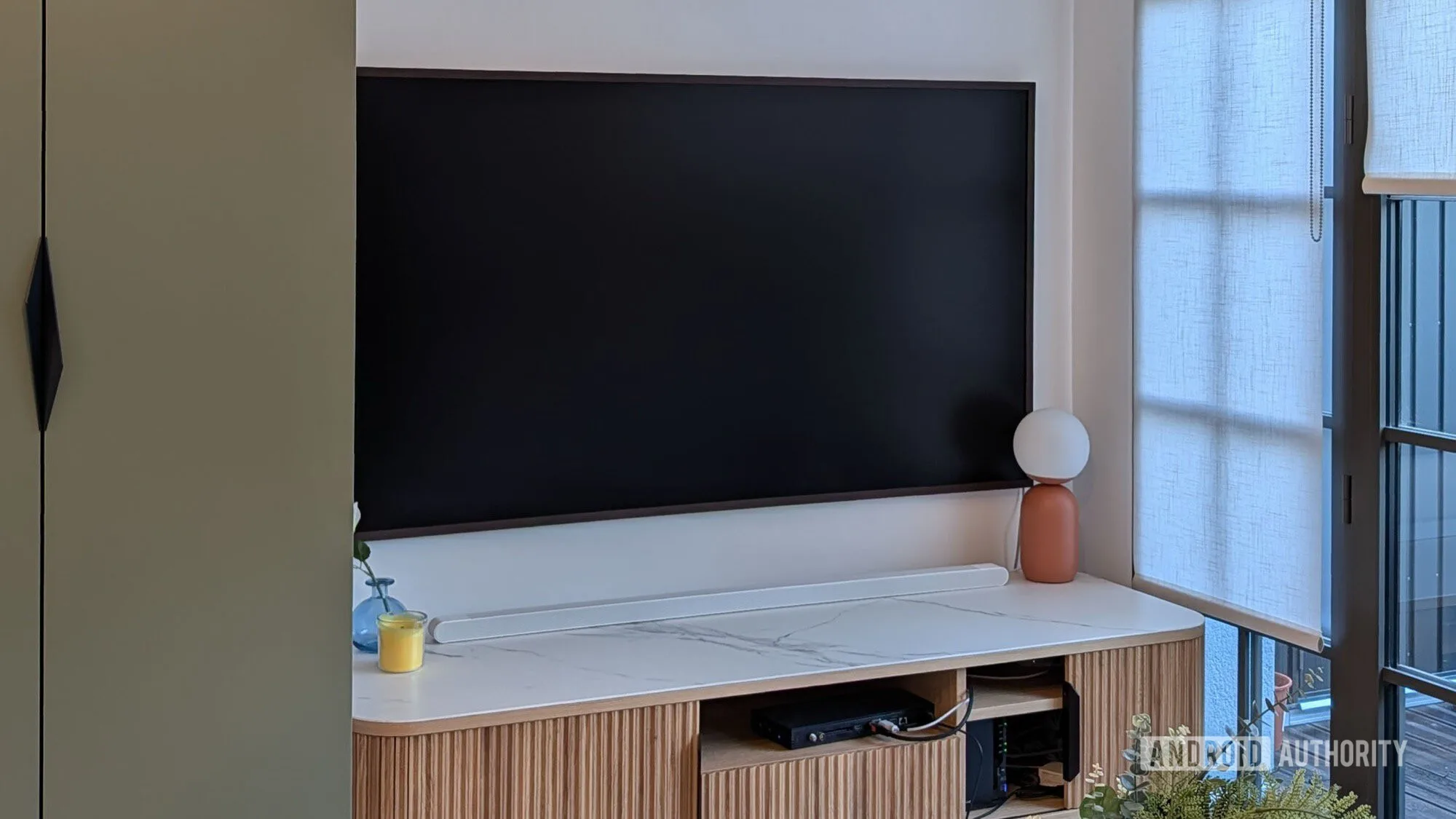
That’s a fundamental tension at the heart of the premium TV market right now. Manufacturers are selling aesthetic solutions to a structural problem. A TV, by its nature, is a fixed, visually dominant object. No amount of ‘art mode’ software changes that physics. A Google TV projector, on the other hand, sidesteps the problem entirely — because when it’s off, it’s just a small box sitting on a console, and your wall is your wall again.
Google TV Projector Freedom: Portability That Changes Everything
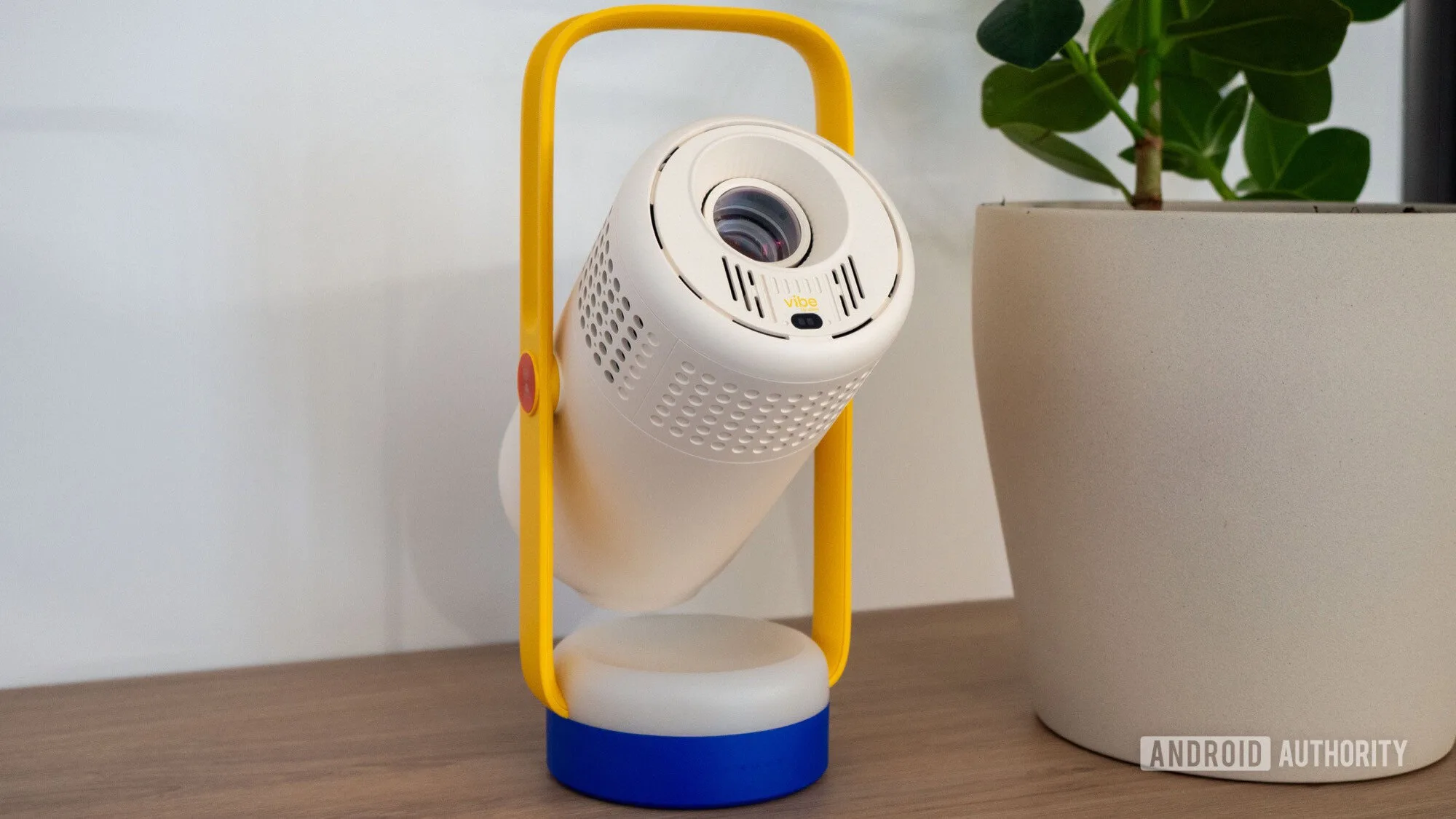
The underrated advantage of a modern Google TV projector isn’t the picture size — it’s the portability. Devices like the XGIMI Vibe One are battery-powered, self-contained units that include the display engine, built-in speakers, a streaming interface, and a stand all in one package. That means you can carry your entire home cinema — streaming, audio, and all — from the kitchen to the bedroom to the garden without touching a single HDMI cable or pairing a Bluetooth speaker.
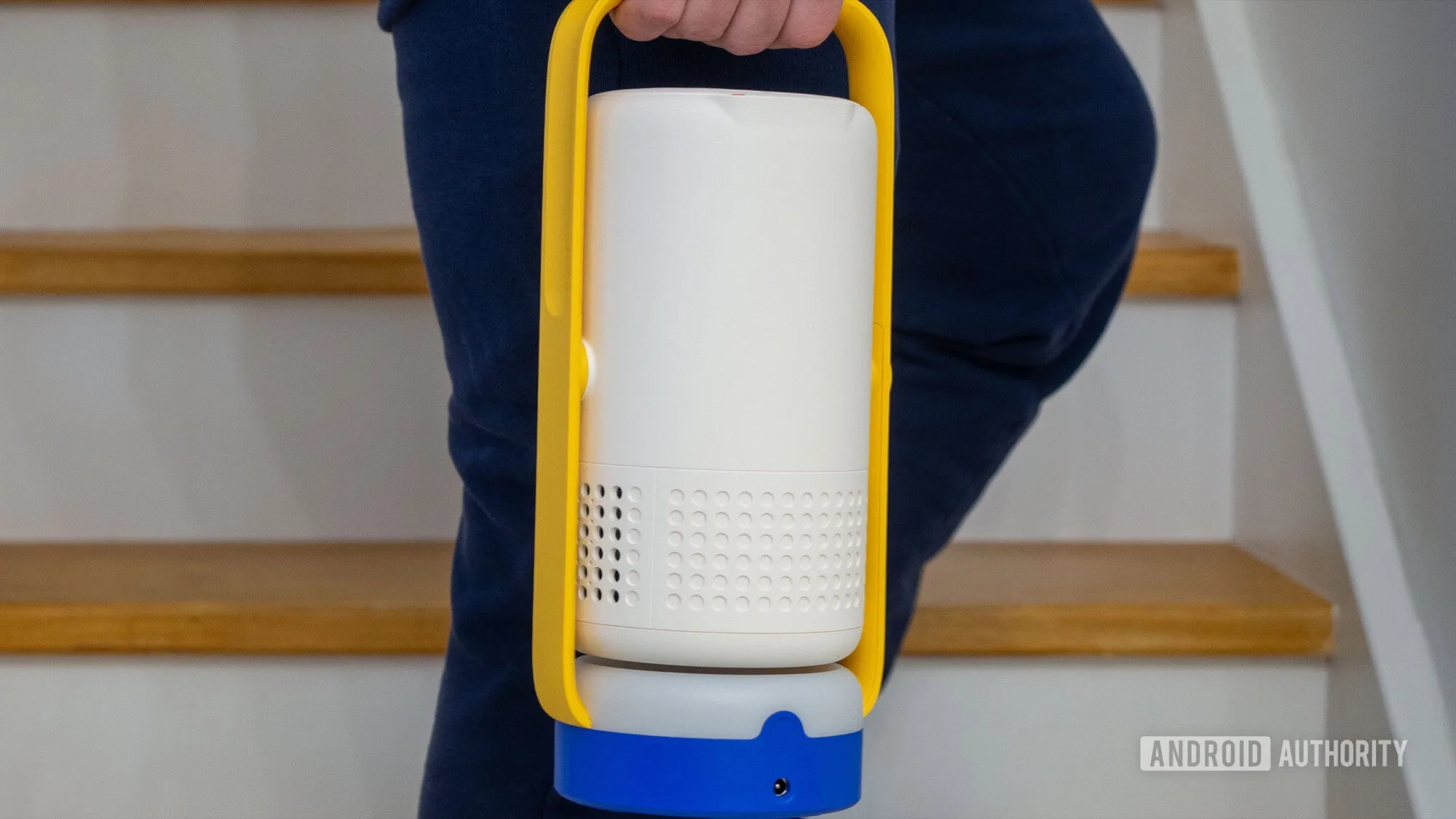
Think about what that actually means in practice. You’re watching YouTube while cooking, you want to move to the bedroom, you pick up the Google TV projector and go. No wrestling with dongles, no re-pairing remotes, no second streaming subscription on a second device. It’s a level of domestic flexibility that a 65-inch panel on a wall bracket simply can’t offer — and it’s one that TV manufacturers have no real answer to.
Cheaper portable models are ideal for intermittent or casual use: guest rooms, outdoor movie nights, Airbnb trips, taking round to a friend’s place. But the market has moved. Ultra-short-throw projectors — the kind that sit close to the wall and fire the image upward — are now genuinely capable of being ‘serious’ primary displays. They’re not a novelty anymore.
Installation Without the Headaches
Installing a large TV is a bigger ordeal than most people want to admit. A 75-inch panel can be extremely heavy. Getting it on the wall means drilling large fixings into plaster or brick, running cables discreetly (often a year-long project in itself), and hoping you never need to take it back down. When a Samsung Frame Pro panel died and needed warranty repair, the owner was required to fully unmount the TV before Samsung France would even begin the process — a two-person job with a non-trivial risk of physical damage.
A Google TV projector, even a heavy ultra-short-throw unit, maxes out at around 10kg (roughly 22lbs). Most portable models weigh far less. Setup means placing it on a surface, running one power cable, and pointing it at a wall. That’s it. Got a slanted ceiling in a converted loft? A projector adapts. Renting and can’t drill? A Google TV projector on a shelf works perfectly. Worried about toddler safety around a freestanding TV on a stand? A projector on a high console solves that too. Some models, like the XGIMI Mogo 4, even ship with dedicated floor stands included.
The practical installation gap between a TV and a projector is widening as panels get larger. A 65-inch TV was a lot five years ago; 85-inch and 98-inch panels are increasingly common in 2025, and they’re genuinely difficult to handle without professional help. Projectors scale in the opposite direction — the image gets bigger, but the device doesn’t.
Screen Size on Your Terms
This is where the projector argument gets particularly compelling. When you buy a 65-inch TV, you’ve bought a 65-inch TV. That’s the ceiling. A Google TV projector placed slightly further from the wall gives you 73 inches; move it to a larger room and you’re at 100 inches or more. The same device, zero additional cost. That’s a flexibility that no flat panel manufacturer can match, and it’s not a minor convenience — it fundamentally changes how you think about screen size as a purchase decision.
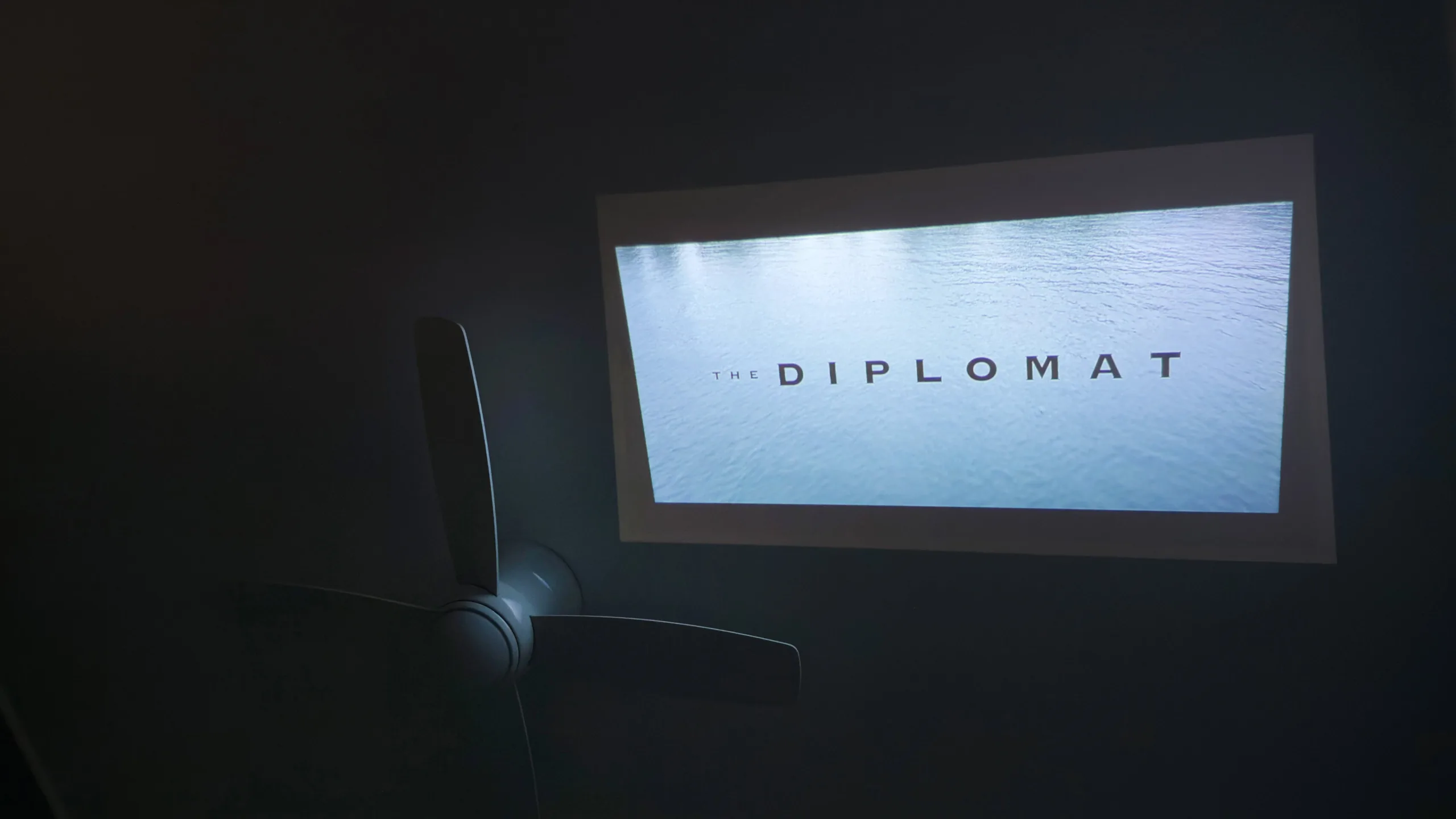
There’s also the surface question. Most people default to walls, but projectors work on white curtains, roll-down screens, painted ceilings — surfaces you can pull out when needed and hide when you don’t want them. Ceiling projection in a bedroom, for example, is something a TV can never offer. It transforms how you use a room.
The Case Against — and Why It’s Getting Weaker
A fair assessment has to acknowledge the downsides. Projectors still struggle in bright rooms — ambient light remains the enemy of contrast and colour accuracy. The picture quality ceiling of a high-end OLED like LG’s G5 series is still ahead of even the best consumer projectors in terms of black levels and peak HDR brightness. And projectors require a clean, light-coloured surface; a textured or coloured wall will degrade the image noticeably.
But those caveats are narrowing. Laser projectors have dramatically improved brightness output over the past few years. Google TV’s software platform — available on projectors from XGIMI, BenQ, and others — means you’re not compromising on smart features; you get the same interface, the same Google Play Store, the same Chromecast support you’d get on a Google TV panel. A number of BenQ models, for instance, ship with a Google TV projector interface natively and compete directly with entry-level smart TVs on both price and feature set.
The projector market’s trajectory is clear: better brightness, better contrast, better software, shrinking prices. The TV market’s trajectory is also clear: bigger panels, more complex installation, more aggressive upselling of features that don’t always work as advertised. Those two curves are converging fast. For anyone about to spend serious money on a next TV — especially one in the 75-inch-and-above bracket — a high-end ultra-short-throw Google TV projector deserves a genuine place in the comparison shortlist, not just an afterthought.
Frequently Asked Questions
Is a Google TV projector good enough to replace a regular TV?
For most casual and home-cinema viewing, yes. Modern Google TV projectors include built-in streaming and speakers, and ultra-short-throw models can project large images, making them credible alternatives to premium large-screen TVs.
What are the main drawbacks of using a projector instead of a TV?
Projectors typically need a darkened room to perform at their best, and ambient light can wash out the image. They also require a clean, light-coloured surface to project onto. Some high-end models are pricier upfront than comparable TV panels.
How does an ultra-short-throw projector differ from a regular portable projector?
Ultra-short-throw projectors sit on a media console and can fill a very large screen, making them practical permanent TV replacements. Regular portable projectors need more throw distance but are lighter, battery-powered, and ideal for moving between rooms or taking outdoors.
Does the XGIMI Vibe One have Google TV built in?
The source describes the XGIMI Vibe One as a Google TV projector, suggesting it runs Google TV natively with access to its interface and streaming capabilities without needing an external streaming stick.

