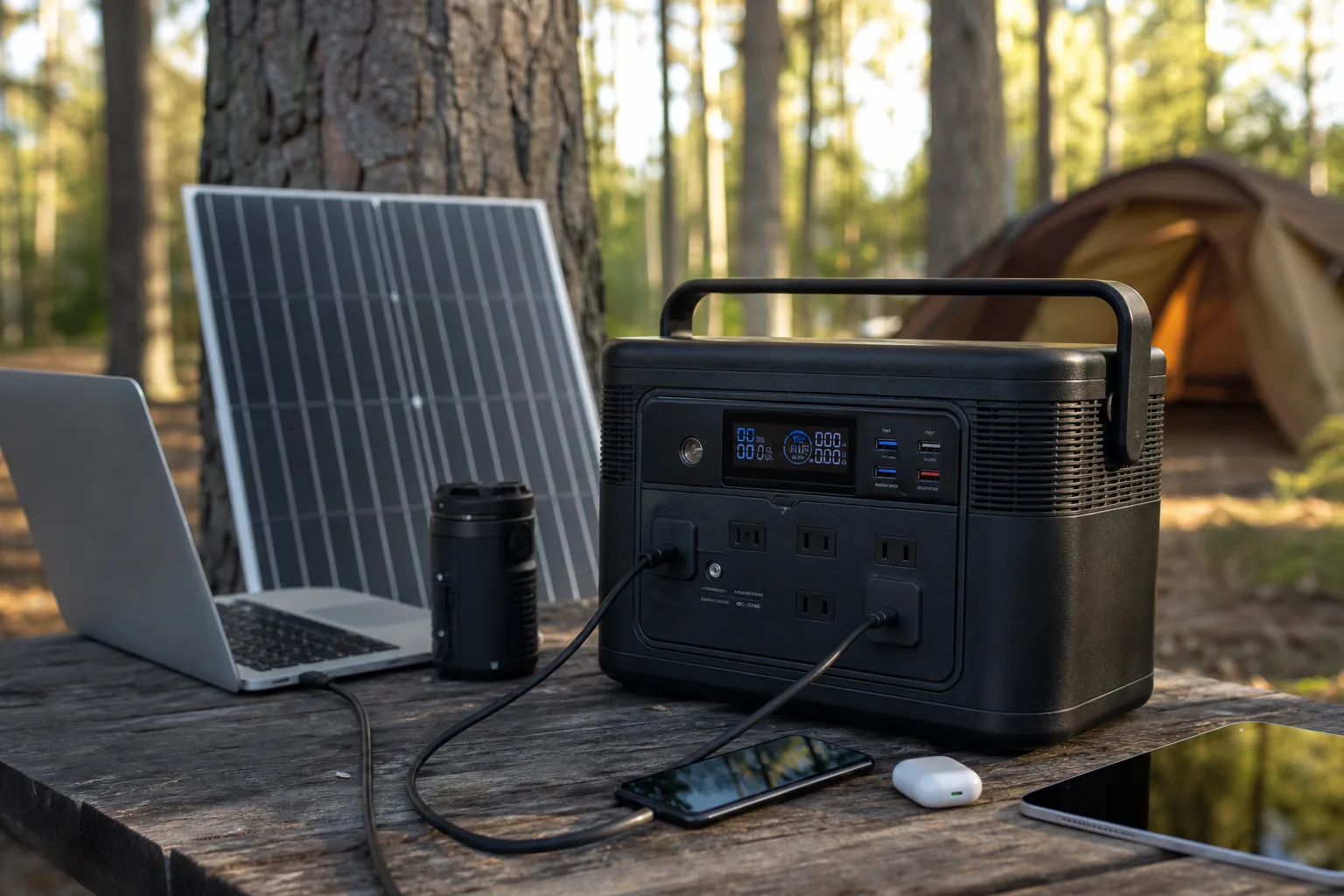
The market for portable power stations has transformed dramatically over the past few years. What was once a niche product for off-grid enthusiasts has become mainstream kit — bought by campers, homeowners nervous about grid reliability, and remote workers who can’t afford to lose power. Gas generators haven’t disappeared, but their noise, fumes, and maintenance overhead have pushed millions of buyers toward battery-based alternatives. The question is no longer whether to buy one. It’s which one is actually worth your money.
- Portable power stations have surged in popularity as cleaner, quieter alternatives to gas-powered generators for homes and campers.
- The best portable power stations range from 584Wh compact units to 6.4kWh home-backup behemoths — capacity matching your use case matters most.
- Fan noise is a bigger deal than most reviews admit — the EcoFlow Delta 3 Plus runs at 55dB constantly, even when idle.
- Bluetti’s Elite 300 has displaced the long-reigning Jackery Explorer 2000 Plus as the top pick for power-dense, compact backup.
Table of Contents
Why Portable Power Stations Are Having a Moment
The timing isn’t accidental. Extreme weather events have become more frequent, grid infrastructure in many parts of the US and Europe is aging, and battery technology has quietly gotten better and cheaper. Lithium iron phosphate (LFP) cells — which most premium portable power stations now use — offer longer cycle life than the older lithium NMC chemistry, meaning your investment lasts longer before capacity degrades. Meanwhile, brands like EcoFlow, Bluetti, and Jackery have poured serious money into industrial design, making units that look less like an industrial accident and more like something you’d actually want in your living room.
There’s also a solar angle here. As rooftop solar has grown, so has demand for battery storage at the smaller, portable scale. You don’t need a whole-home Powerwall to benefit from solar — a decent portable power station with a couple of 200W panels can meaningfully offset your dependence on the grid during daylight hours.
What Separates a Good Portable Power Station From a Great One
Capacity — measured in watt-hours — is the obvious starting point, but it’s not the whole story. Two portable power stations with identical capacity ratings can feel completely different in real use. Charge speed matters enormously: a 2,000Wh station that takes 12 hours to refill from a wall outlet is far less useful than one that charges in two. Output wattage determines what appliances you can actually run — a 1,800W continuous output handles most household essentials, but if you want to run a US electric kettle or a microwave, you need headroom above that.
Then there’s the fan problem. Several portable power stations on the market run their cooling fans aggressively — and loudly — even under minimal load. If you’re using a power station indoors or in a tent at night, a fan that kicks in at 55 decibels and won’t shut up is a genuine quality-of-life issue, not just an inconvenience. It’s something most spec sheets ignore entirely.
The Top Contenders: Portable Power Stations Worth Considering in 2026
Bluetti Elite 300 — The New Benchmark
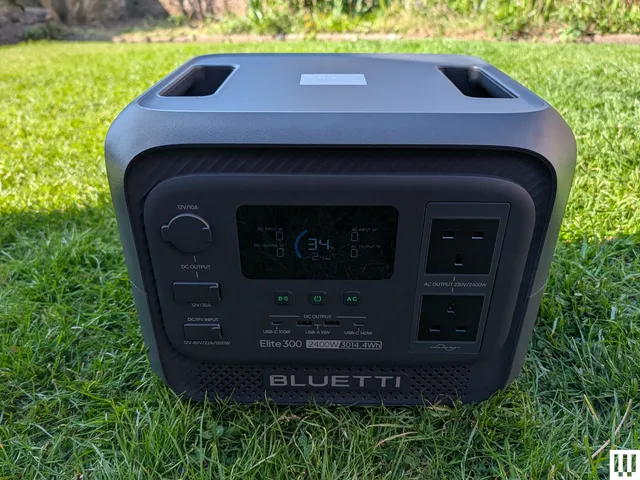
Bluetti’s Elite 300 has taken the top spot in our testing, displacing the Jackery Explorer 2000 Plus that held it for a long time. The core appeal is density — it packs more power into a smaller physical footprint than most of the competition, which matters when you’re trying to find somewhere sensible to store it. For most people evaluating portable power stations for home backup or serious camping, this is where the conversation should start.
Jackery Explorer 2000 Plus — Still Relevant, Especially on Sale
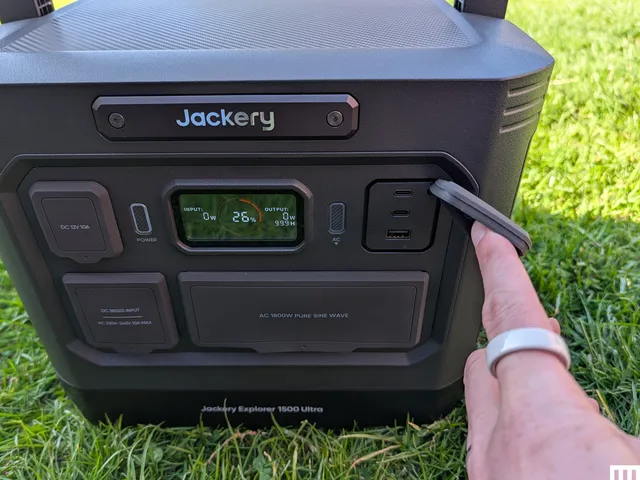
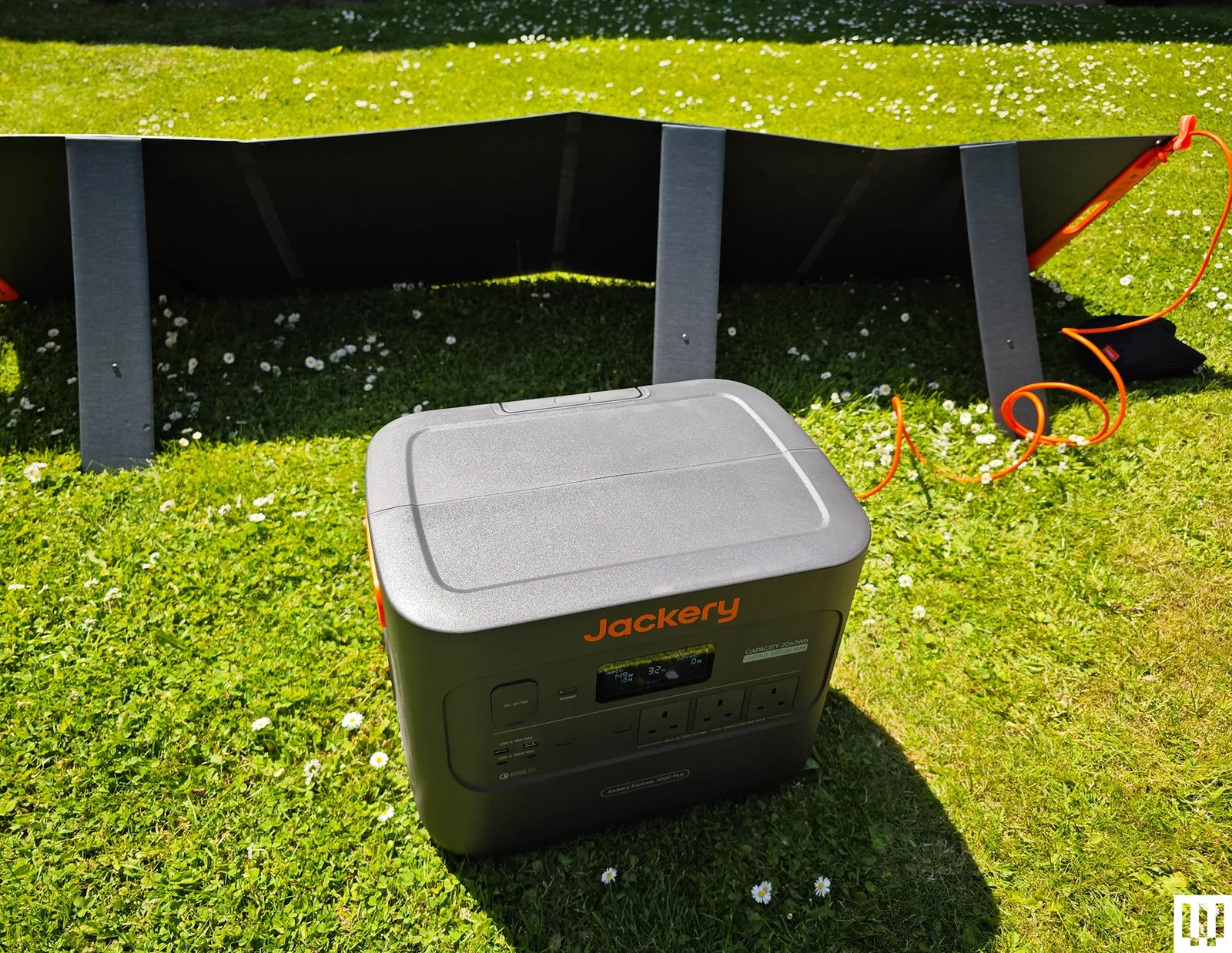
The Explorer 2000 Plus isn’t gone — it’s just been outpaced on the power-per-size metric. At 2,042Wh, it offers solid real-world capacity that consistently matches Jackery’s official figures, which isn’t something every brand can claim. Its standout feature is expandability: you can double or even triple the capacity by attaching additional battery packs, which makes it a compelling choice if you’re thinking about long-term, scalable backup power rather than a single unit.
It handled a 3,000W UK kettle without issue in testing, though that pulled 6% of the total charge in one go. Solar charging works well — a scorching day of strong sun with Jackery’s 200W SolarSaga panel brought it up significantly from 32%. The fan runs at around 30 decibels, which is notably quieter than several competing portable power stations. The main frustrations are physical: at 62 pounds it’s heavy, the port covers on the back are stiff to the point of requiring a screwdriver, and the Wi-Fi setup is a 2.4GHz-only process that requires pressing two buttons simultaneously — a step Jackery hasn’t bothered to document clearly anywhere.
EcoFlow Delta 3 Plus — Great Design, Frustrating Fan
EcoFlow has built one of the more elegant-looking units on the market with the Delta 3 Plus. The 1,024Wh capacity, one-hour charge time, and the impressively fast 10-millisecond UPS switchover are all genuinely strong selling points. Six AC outlets is more than most units at this price. The expandable battery option is compact and stackable, though at $599 for the add-on it pushes the total cost considerably higher.
The problem, and it’s a real one, is the fan. In testing, it ran constantly — at 55 decibels — even when the only load was charging a single smartphone. It kept going after the unit was fully charged and unplugged. There is a quiet mode, but it drops the charge rate to 200W, meaning a full charge takes over five hours. That’s a meaningful trade-off, not a minor footnote. Among portable power stations at this price point, the fan noise stands out as an unusual weakness.
Bluetti Elite 200 V2 — Solid Step-Down Option
If 2,074Wh is enough for your needs and the Elite 300 feels like overkill, the Elite 200 V2 at $799 offers nearly the same build quality and feature set. It delivers 2,600W continuous and 3,900W peak, with a 15ms UPS delay. The display is legible in daylight — something that sounds basic but plenty of portable power stations get wrong. It charges relatively quickly and handles small appliances confidently.
BioLite BaseCharge 1500 — The App-Free Choice
At $1,020, the BioLite BaseCharge 1500 is priced at the premium end for what it offers. Its appeal is philosophical as much as technical: there’s no app, no Wi-Fi dependency, no cloud account required. Everything works through physical buttons and a front-facing display. For people who are suspicious of companion apps — or who just want something that works without a smartphone — that’s genuinely attractive.
The hardware is competent: 29 pounds with recessed side handles, a wireless charging pad on top, and a standard High Power Port input that means you’re not locked into BioLite’s own solar panels. It handled an electric drill and blender without complaint. The weaknesses are charge speed and battery chemistry. Wall charging takes a full day. Solar from a single 100W panel takes several days. And the Li-NMC battery chemistry means it won’t cycle as many times over its lifetime as LFP-based competitors. The two-year warranty reflects that.
Ampace Andes 600 Pro — Compact but Outclassed
The Andes 600 Pro is a tidy, 19-pound unit with a one-hour charge time and a full suite of ports for the price. At 584Wh and 600W output, it’s squarely positioned as a camping companion for small gadgets. It works well enough, but the EcoFlow River 2 Pro exists at a lower price point with more output — making it hard to recommend the Andes 600 Pro over other portable power stations unless you find it at a significant discount.
What the Portable Power Station Market Tells Us About Energy Independence
The range of portable power stations now available — from sub-$500 compact units to multi-kilowatt home backup systems — signals something interesting about where consumer energy thinking is heading. People aren’t just buying portable power stations for camping trips. They’re building layered resilience: a smaller unit for day-to-day portability, a larger one permanently stationed at home, fed by solar panels on the roof or in the garden.
The entry of DJI into this category — a company best known for drones and cameras — is worth watching. When hardware companies with strong engineering pedigrees and distribution networks move into a product category, it tends to accelerate both innovation and price competition. Established players like EcoFlow and Bluetti will have to keep iterating on the details that actually matter to buyers: fan noise, charge speed, battery longevity, and physical usability. The specs war is largely won. The experience war is just getting started.
Frequently Asked Questions
What should I look for when buying portable power stations?
Focus on three things: capacity in watt-hours (how much energy it stores), output wattage (what it can run simultaneously), and charge speed. If you plan to use solar, check whether the unit supports multiple solar inputs. Weight matters too — anything above 30 pounds becomes genuinely difficult to carry.
Are portable power stations good for home backup during outages?
Yes, with caveats. A larger-capacity station can power essentials like a fridge, lights, and phone charging for several hours. Units with UPS functionality — like the EcoFlow Delta 3 Plus with its 10-millisecond switchover — can protect sensitive electronics during sudden outages automatically.
How long do portable power stations last on a single charge?
It depends entirely on what you’re running. A 1,000Wh station powering a 100W laptop runs for roughly 8–10 hours. Run a 1,500W kettle and that same station is empty in under an hour. Always divide capacity by your device’s wattage for a rough estimate.
Can portable power stations be charged with solar panels?
Most modern portable power stations support solar charging via a dedicated solar input port. Some, like the Jackery Explorer 2000 Plus, can be fully charged in a single sunny day using a compatible solar panel. Charge time varies significantly by panel wattage and sunlight availability.