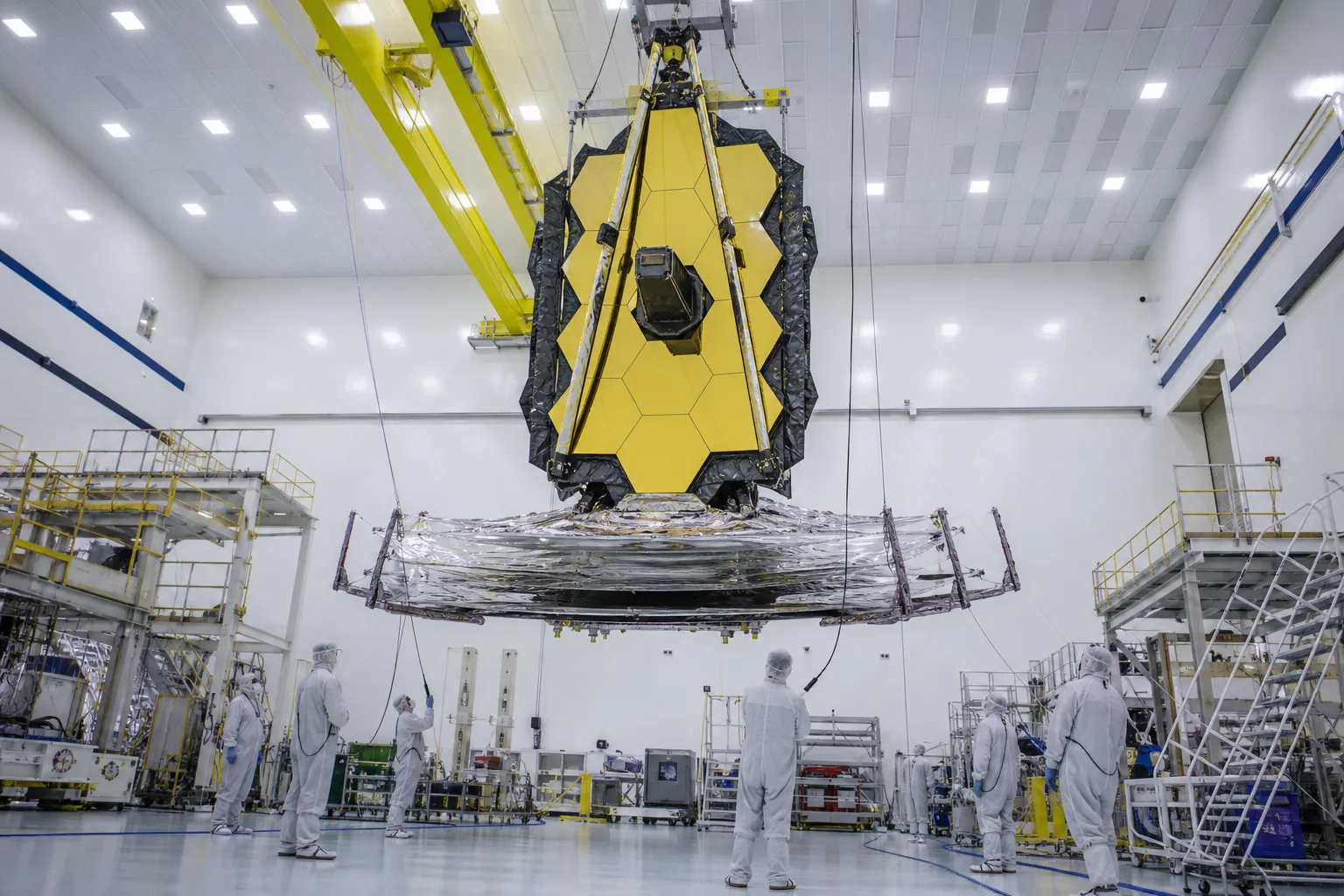
NASA’s Roman Space Telescope is less than two months away from its scheduled August 30, 2026 launch — and right now, it’s hanging from a crane inside a spotless clean room at Kennedy Space Center, inching closer to the moment scientists have spent years anticipating. A photo taken on June 26 captures the telescope mid-lift inside the Payload Hazardous Servicing Facility, suspended in the air as technicians carefully lower it into a specialised support stand. It’s an oddly serene image for what is, in reality, one of the most consequential pieces of hardware NASA has built in a generation.
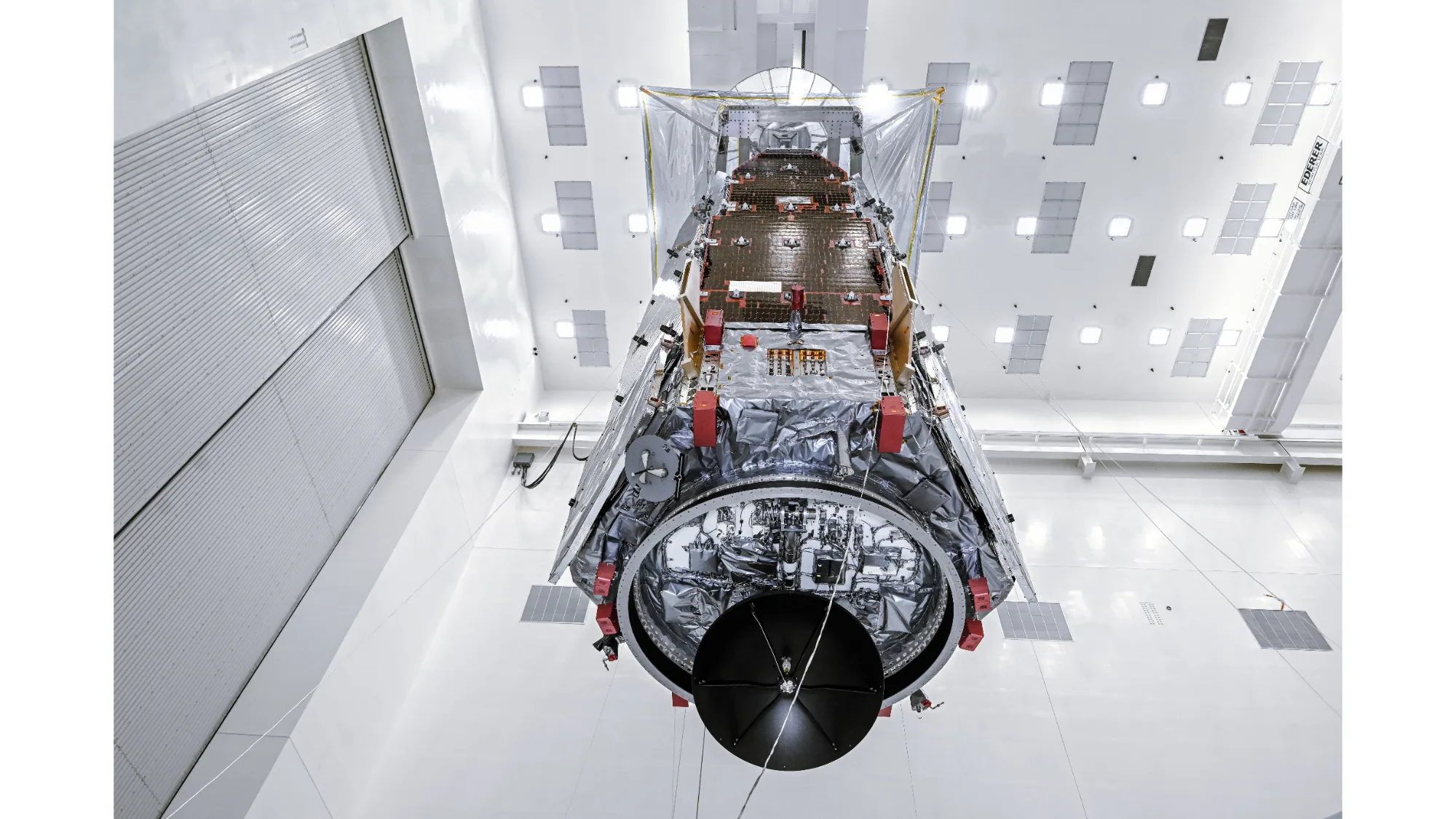
- NASA’s Roman Space Telescope is now at Kennedy Space Center, on track for an August 30, 2026 launch.
- The Roman Space Telescope has a field of view at least 100 times wider than Hubble, enabling vast cosmic surveys.
- Roman will probe dark matter and dark energy while directly imaging exoplanets with its onboard Coronagraph Instrument.
- The mission is named for Nancy Grace Roman, NASA’s first chief of astronomy and a pioneer of space-based science.
Table of Contents
What the Roman Space Telescope Actually Is
The Roman Space Telescope is NASA’s next flagship-class astrophysics mission — the kind of once-in-a-decade project that reshapes how humanity sees the cosmos. Flagship missions don’t come cheap or quick. Roman has been in development for years, with the bulk of its assembly and testing taking place at NASA’s Goddard Space Flight Center in Maryland. Having recently made the journey south to KSC, the telescope is now in the hands of the teams responsible for fuelling it, running final checks, and preparing it for encapsulation ahead of launch.
The Payload Hazardous Servicing Facility — where the Roman Space Telescope currently sits — is one of those facilities most people never hear about but that does genuinely critical work. It’s where spacecraft meet propellants, where last-chance diagnostics happen, and where any error could have mission-ending consequences. The fact that Roman is in there right now means the program is progressing on schedule, which, for a project of this complexity, is not something you take for granted.
A Field of View That Changes Everything
Here’s the number that keeps coming up in conversations about the Roman Space Telescope, and for good reason: its field of view is at least 100 times larger than that of the Hubble Space Telescope. Let that sink in. Hubble has spent over three decades producing some of the most iconic images in scientific history — images that required the telescope to stare at a tiny patch of sky for hours or even days. Roman can cover that same patch in a fraction of the time, and then move on to the next one, and the next.
This isn’t just a spec-sheet flex. It has real scientific implications. Wide-field surveys are essential for studying large-scale cosmic structures — the kind of work that helps astronomers map how matter is distributed across billions of light-years, trace the growth of galaxies over time, and get a statistical handle on phenomena that require huge sample sizes to understand properly. Roman isn’t replacing Hubble so much as it’s complementing it, filling a gap in our observational toolkit that’s been wide open since we started dreaming about what comes after Hubble.
NASA’s official Roman mission page describes it as capable of imaging an area of sky equivalent to about 100 Hubble fields simultaneously — a genuinely different mode of doing astronomy.

Chasing Dark Matter, Dark Energy, and Alien Worlds
The Roman Space Telescope’s two headline science objectives are dark matter and dark energy — which is a bit like saying you’re going fishing for things no one has ever actually caught. Dark energy is the name we’ve given to whatever is causing the universe’s expansion to accelerate. Dark matter is the invisible scaffolding that appears to hold galaxies together despite there not being nearly enough visible mass to do the job. Together, they account for roughly 95% of the universe’s total energy content, and we have almost no idea what either of them actually is.
Roman will attack these problems primarily through weak gravitational lensing surveys and baryon acoustic oscillation measurements — techniques that don’t detect dark matter or dark energy directly, but instead map their influence on the distribution of visible matter across the universe. It’s detective work on a cosmic scale, and the Roman Space Telescope’s wide-field capability makes it uniquely suited for this kind of statistical, population-level science.
Then there’s the Roman Coronagraph Instrument. Technically classified as a technology demonstration rather than a primary science instrument, the Coronagraph is designed to do something genuinely difficult: block out the blinding glare of a star well enough that the comparatively faint light of an orbiting exoplanet becomes detectable. Direct imaging of exoplanets is one of the hardest problems in observational astronomy — a planet orbiting a star is roughly like trying to spot a firefly hovering next to a searchlight from kilometres away. If the Coronagraph performs as hoped, it won’t just produce pretty pictures of distant worlds; it’ll prove out the technology that future missions will need to look for biosignatures in exoplanet atmospheres.
Named for a Pioneer Who Made This Kind of Science Possible
The telescope carries the name of Nancy Grace Roman, and it’s worth understanding why that choice matters. Roman served as NASA’s first chief of astronomy and expanded our understanding of the universe, and she was one of the architects of space-based astronomical observation as a discipline. Naming this particular mission after her isn’t just a gesture. The Roman Space Telescope is, in a sense, the direct continuation of the programme she helped make possible — built to ask the questions that earlier observatories opened up but couldn’t fully answer.
What Comes Next Before Launch
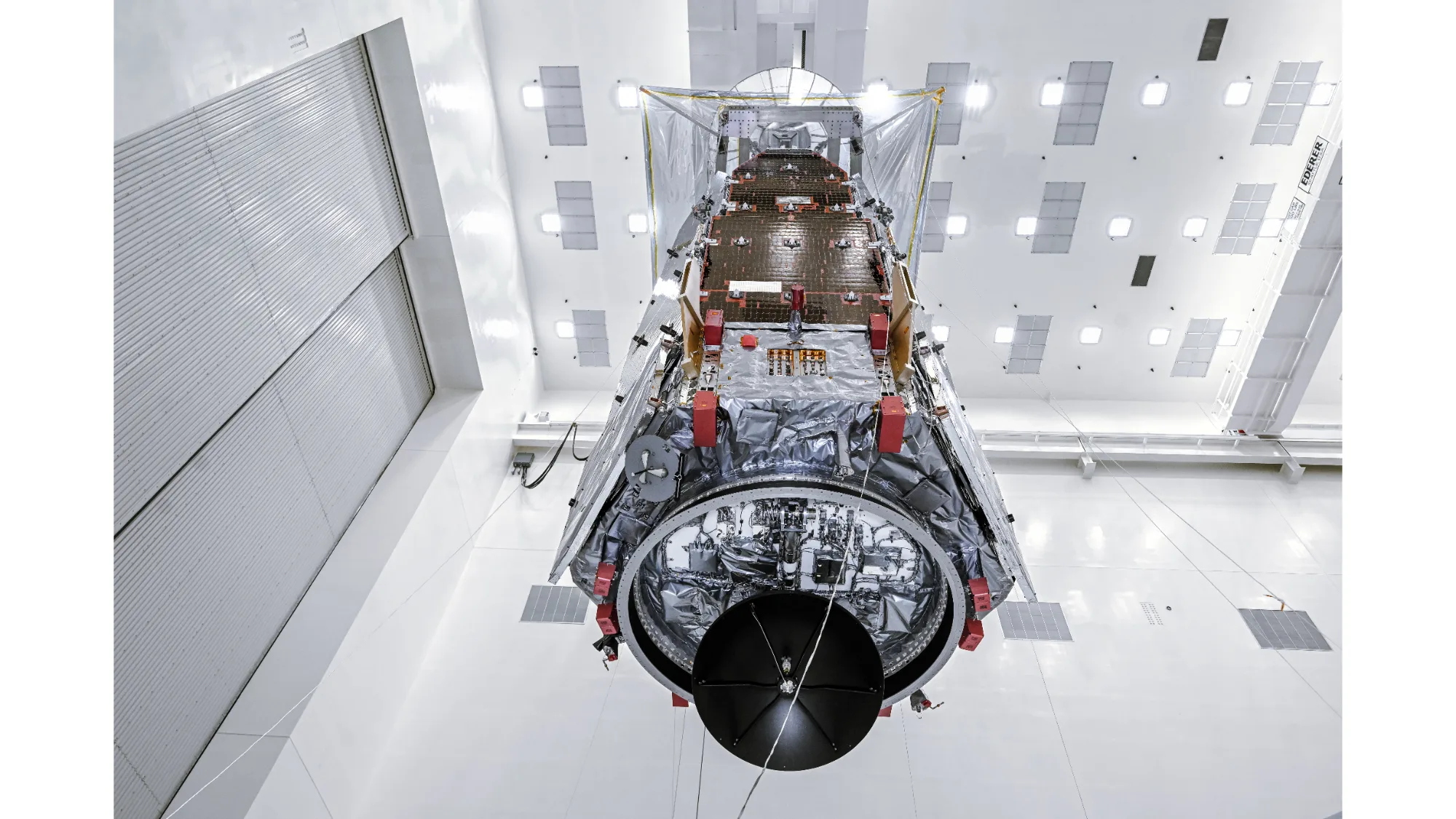
Between now and August 30, the Roman Space Telescope still has a full checklist to get through. Fuelling, final systems checks, integration with its launch vehicle, and encapsulation in the payload fairing all lie ahead. Each step introduces its own risks — propellant loading is among the most hazardous phases of any mission’s pre-launch timeline, which is precisely why it happens in a dedicated facility like the one Roman is currently inside.
Once in space, the Roman Space Telescope will head to the Sun-Earth L2 Lagrange point — the same gravitational sweet spot where the James Webb Space Telescope operates — roughly 1.5 million kilometres from Earth in the direction away from the Sun. It’s an ideal location for astronomical observation: thermally stable, shielded from Earth and solar interference, and offering an unobstructed view of the cosmos.
The broader context here is significant. Webb has already upended expectations about what space telescopes can achieve, pushing back our view of the early universe and raising new questions faster than existing missions can answer them. Roman isn’t competing with Webb — the two observatories work in complementary wavelength ranges and scientific modes — but together, they represent a genuinely powerful one-two punch. Webb goes deep and narrow; Roman goes wide. If both perform as designed, the next decade of astrophysics could be one of the most productive in history. August 30 can’t come fast enough.