China’s space program has just cleared one of the biggest technical hurdles in modern rocketry. On July 10, the country achieved its first-ever China rocket landing during a live orbital mission, catching the Long March 10B’s first stage in a net deployed from a ship at sea — and the ripple effects for the global launch industry could be significant.
- China’s first-ever China rocket landing succeeded on July 10, with the Long March 10B’s booster caught in a sea-based net.
- The China rocket landing used a unique net-recovery system on a ship — a world first that differs from SpaceX’s propulsive leg landings.
- CASC plans to refly the recovered Long March 10B first stage before the end of 2025, testing full reusability.
- Several other Chinese companies are developing their own reusable boosters, signalling a broader national push to cut launch costs.
Table of Contents
What Actually Happened on July 10
The Long March 10B lifted off from the Hainan Commercial Space Launch Site at 12:15 p.m. Beijing time (0415 GMT) on a Friday morning, carrying a satellite that CASC confirmed reached its ‘predetermined orbit.’ That alone would have been a routine success. What made it historic was what happened to the rocket afterward.
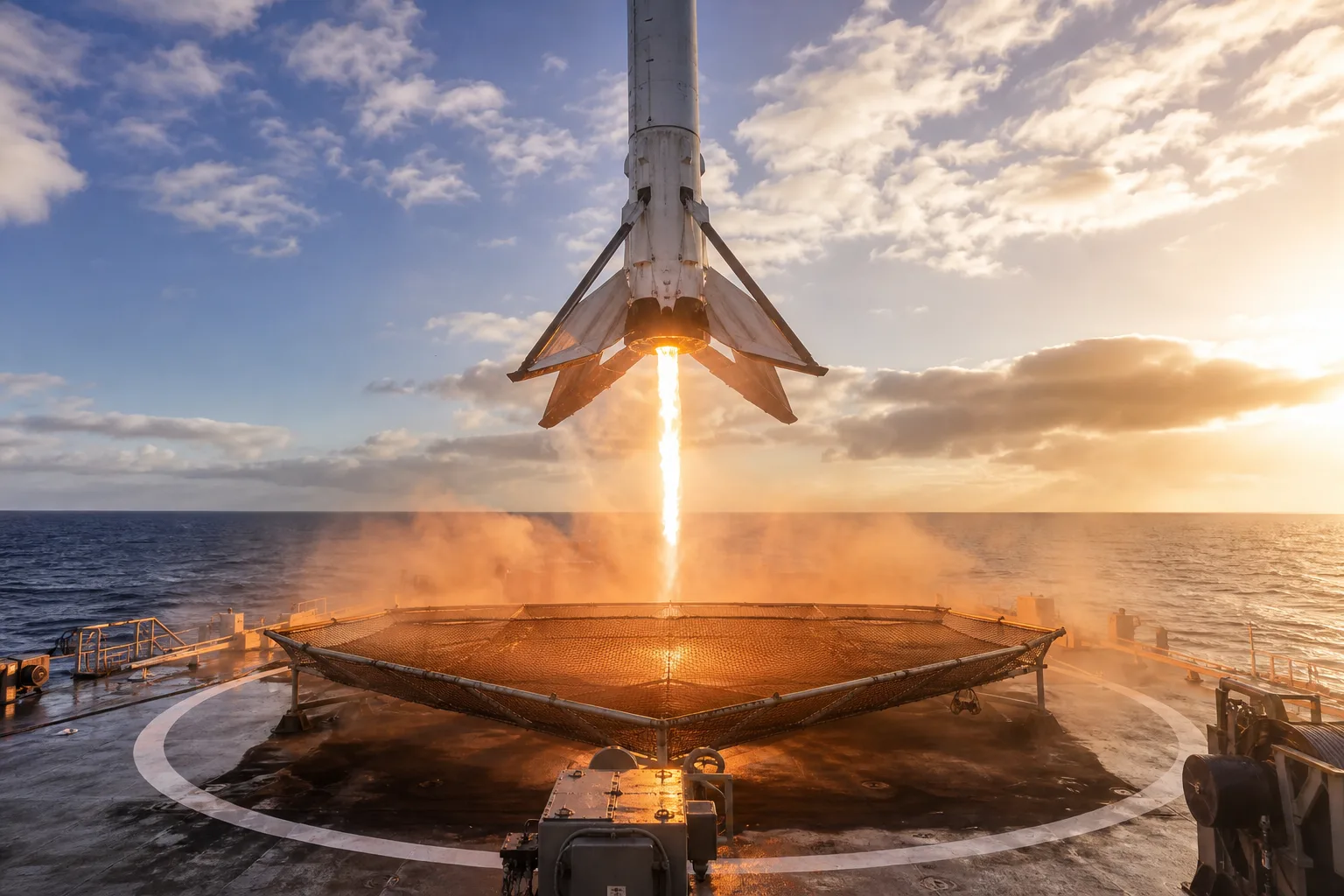
Roughly six minutes after first and second stage separation, the first stage executed a controlled vertical descent back toward the ocean surface — and instead of touching down on legs like a Falcon 9, it settled into a net-like recovery structure mounted on a waiting ship. No legs, no landing pad, no flame trench. Just a net. This China rocket landing approach marked a genuine departure from every recovery method attempted before it.
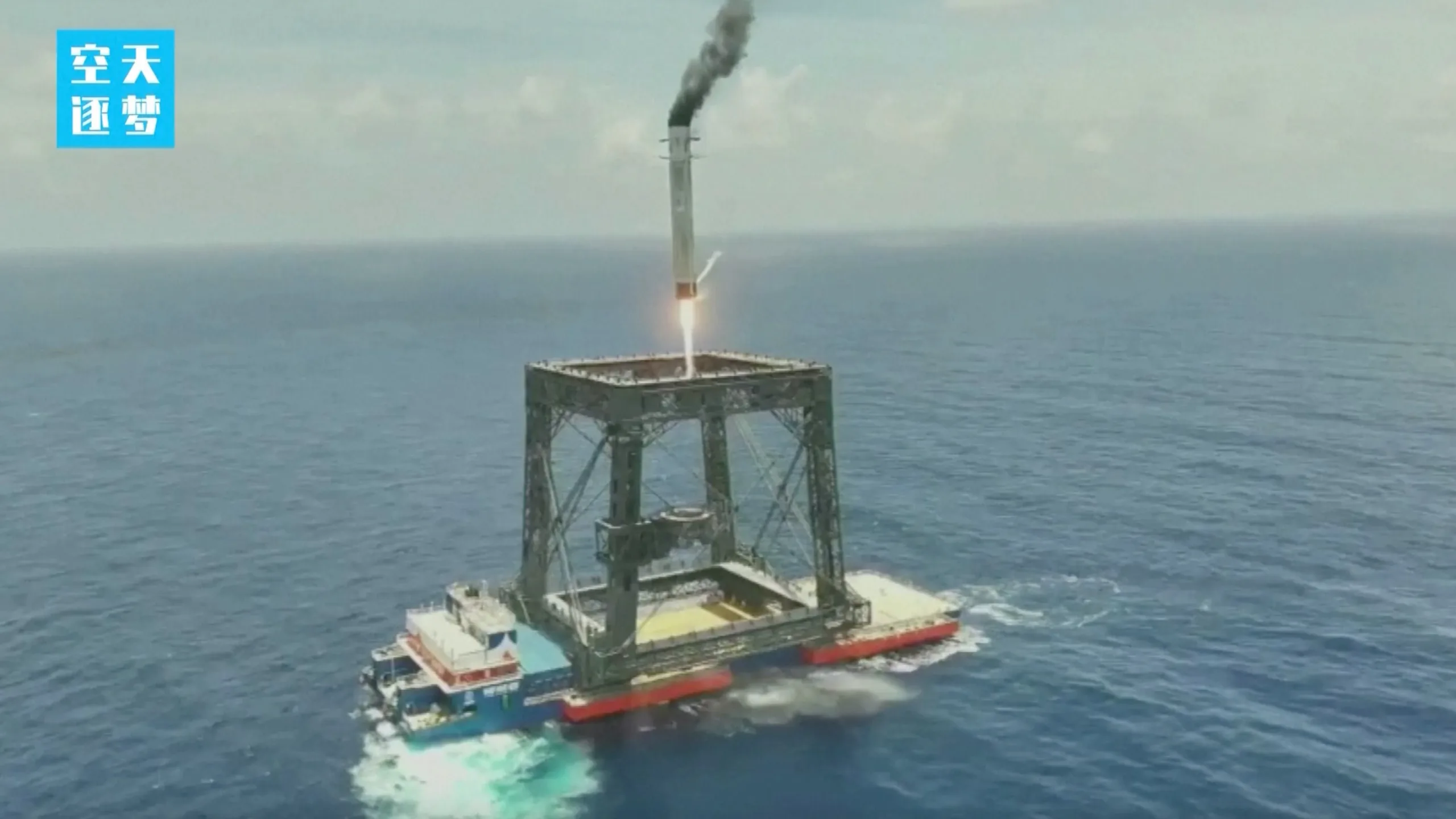
The China Aerospace Science and Technology Corporation — CASC, the state-owned prime contractor behind China’s flagship space efforts — announced the result via social media with unmistakable pride: ‘This mission marks my country’s first successful controlled recovery of a launch vehicle and the world’s first network-based recovery of a launch vehicle.’ That second claim is the one worth sitting with. SpaceX has been sticking rocket landings since 2015, but it’s always done so with engines firing and landing legs deploying. China just introduced a structurally different approach to the same problem.
The Long March 10B: Specs and Capabilities
The Long March 10B stands about 207 feet tall — roughly 63 meters — and runs on a first stage burning kerosene and liquid oxygen, while the upper stage switches to LOX and liquid methane. In its reusable configuration, the rocket can haul approximately 16 metric tons to low Earth orbit. That’s a serious capacity figure. For context, SpaceX’s workhorse Falcon 9 delivers around 22.8 tonnes to LEO in expendable mode, so the Long March 10B is competitive, especially for a vehicle on its maiden flight.
CASC was clear about why this matters commercially: the reusable design ‘significantly reduces launch costs, offering advantages of large payload capacity and high cost-effectiveness.’ That’s not just chest-thumping. It’s a direct acknowledgment that the era of cheap, reusable access to orbit is now the only race worth running — and China intends to run it hard. Every successful China rocket landing makes that economic case more compelling.
Why This China Rocket Landing Changes the Competitive Landscape
Before July 10, vertical landing of orbital-class boosters was effectively SpaceX’s exclusive domain. Elon Musk’s company has now pulled off more than 600 such landings, transforming what once seemed like an aerospace fantasy into a near-routine operation. That track record of reuse is the single biggest reason SpaceX controls such a dominant share of the global commercial launch market — when you can refurbish and refly a booster ten or fifteen times, your per-launch economics are simply in a different league from competitors flying expendable hardware.
China’s achievement with this China rocket landing doesn’t instantly close that gap. CASC is working from a much smaller base of operational experience, and catching a booster in a net at sea is a novel method that will need many more flights to prove out its reliability. But the fact that it worked on the very first attempt is a meaningful signal. CASC says it plans to refly this specific first stage before the end of 2025 — if that happens on schedule, it will mark China’s first ever reflight of an orbital booster, which is arguably even more consequential than the initial catch.
A Crowded Chinese Reusability Pipeline
What’s most striking isn’t just this single milestone — it’s the sheer number of Chinese programs now chasing the same goal in parallel. The Long March 10B isn’t even CASC’s only reusable vehicle in development; the Long March 12A is also in the works. Then there’s Landspace’s Zhuque-3, a Beijing-based private company’s methane-fuelled rocket that made its debut last December. Both the 12A and Zhuque-3 reached orbit on their respective first flights that month but fell short on booster recovery. Close, but not quite.
Beyond those two, a cluster of Chinese commercial space startups are building their own reusable vehicles. CAS Space is developing the Kinetica-2. Galactic Energy is working on the Pallas-1. Deep Blue Aerospace has the Nebula 1. These aren’t vaporware — they’re funded, engineering-led programs at various stages of testing. Each team is studying what a successful China rocket landing looks like in practice, and learning from CASC’s July demonstration. The pace of activity looks less like a single national program and more like a gold rush, with multiple companies betting that reusable launch is the defining technology of the next decade of space commerce.
Net Recovery vs. Leg Landing: Does the Method Matter?
The engineering choice to catch the Long March 10B in a net rather than land it on legs is worth examining. Landing legs add mass and mechanical complexity to the booster — mass that doesn’t contribute to payload capacity. A net system offloads that hardware to the recovery vessel instead, potentially keeping the rocket itself lighter. The tradeoff is that you’re now dependent on a ship being in precisely the right position with a net properly deployed, which introduces its own operational challenges, particularly in rough sea conditions.
Whether this approach proves more scalable than SpaceX’s leg-landing method is an open question. But CASC calling it a ‘world first’ for net-based recovery suggests they see it as a genuine technical contribution rather than simply a copy of an existing playbook. Each future China rocket landing using this method will add critical data on whether net recovery can be made reliable enough for commercial cadences. If the reflight later this year goes smoothly, that argument gets a lot stronger.
What Comes Next
The geopolitical dimension here is impossible to ignore. For years, the narrative around China’s space program has been that it is capable but perpetually a few years behind the frontier. This China rocket landing — successful, net-based, on a first flight — complicates that story meaningfully. It’s one data point, not a pattern. But combined with the breadth of programs in development across both state-owned and private Chinese aerospace companies, the trajectory is clear.
SpaceX isn’t standing still either. The company is actively working to catch and reuse Starship’s Super Heavy booster, having successfully done so at the Starbase launch site in Texas. The bar keeps rising. But if Chinese rockets start returning from orbit with anything approaching the frequency of Falcon 9 — which has now crossed 600 landings — the global launch market will look very different by the end of this decade. Every additional China rocket landing that succeeds narrows the experience gap a little further. The race isn’t just on. It’s accelerating.
Frequently Asked Questions
How does the China rocket landing method differ from SpaceX’s approach?
SpaceX uses propulsive landings on concrete pads or drone ships, where the rocket fires its engines to touch down on deployable legs. China’s Long March 10B instead descended vertically into a net-like structure carried by a ship at sea — a recovery method CASC describes as a world first.
What payload did the Long March 10B carry on its debut flight?
The rocket carried a satellite that reached its predetermined orbit according to CASC, though the agency did not publicly name the spacecraft or disclose its orbital parameters in its post-launch update.
When will China refly the recovered Long March 10B first stage?
CASC officials stated after the launch that they plan to refly the recovered first stage by the end of the year, which would confirm the booster’s readiness for operational reuse.
How many times has SpaceX landed an orbital rocket?
SpaceX has now landed orbital-class rockets more than 600 times, primarily using its Falcon 9 booster. That track record of reuse is a core reason the company dominates the global commercial launch market.