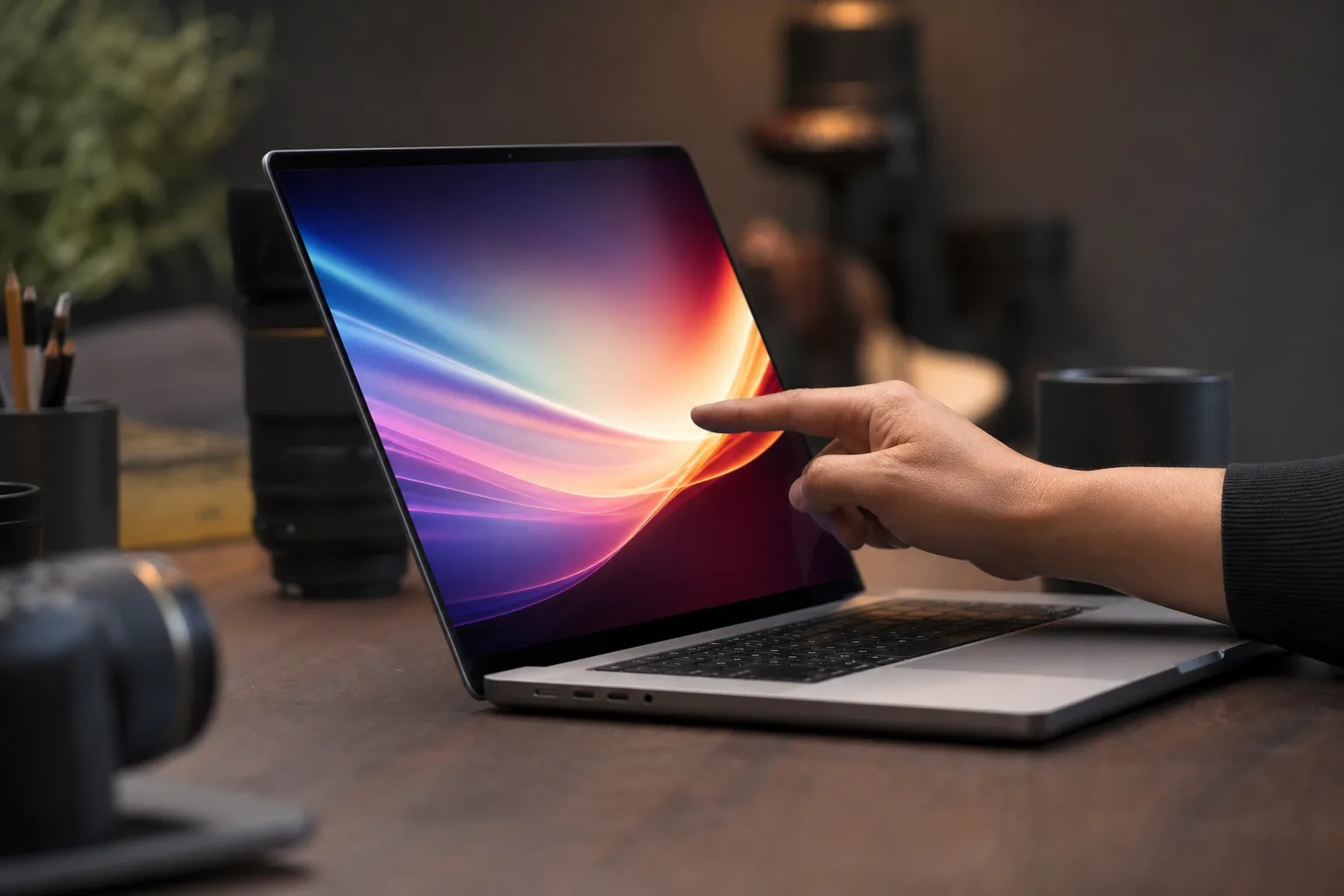
- The OLED MacBook Pro reportedly pairs Apple’s first Mac OLED panel with touch controls designed into macOS rather than tacked on.
- Apple may ship the OLED MacBook Pro with existing M5 Pro and M5 Max chips, prioritizing design changes over a processor jump.
- Rumors point to a thinner enclosure, a hole-punch camera, and a Mac version of Dynamic Island for live status information.
- A late-year launch remains plausible, though Apple could push the redesigned professional laptops into early next year.
Table of Contents
The OLED MacBook Pro could finally make Apple’s position on touch look outdated
For more than a decade, Apple has insisted that a Mac needs a keyboard and trackpad, while touch belongs on an iPad. The rumored OLED MacBook Pro would be a remarkably direct reversal of that doctrine. Reports now point to a redesigned professional laptop with an OLED screen, touch input, a slimmer body, and a camera cutout that may borrow the iPhone’s Dynamic Island playbook.
That’s a lot to hang on one product refresh, so a little skepticism is healthy. Apple’s laptop rumors routinely combine credible supply-chain details with speculative software flourishes. Still, the broad outline has surfaced repeatedly through analysts including Ming-Chi Kuo and reporting from Bloomberg’s Mark Gurman. My read is that the display change is the safest bet; touch is the part that would make this launch genuinely consequential for the OLED MacBook Pro.
Apple already has a strong incentive to rethink the MacBook Pro. The current machines are excellent workhorses, but their basic visual identity dates to the 2021 redesign. They are sturdy, port-rich, and unapologetically chunky. A major screen and chassis update would give Apple a clear reason to reset the premium end of its laptop line without pretending that a routine chip bump changes anyone’s life.
Why the OLED MacBook Pro display matters more than a spec-sheet upgrade
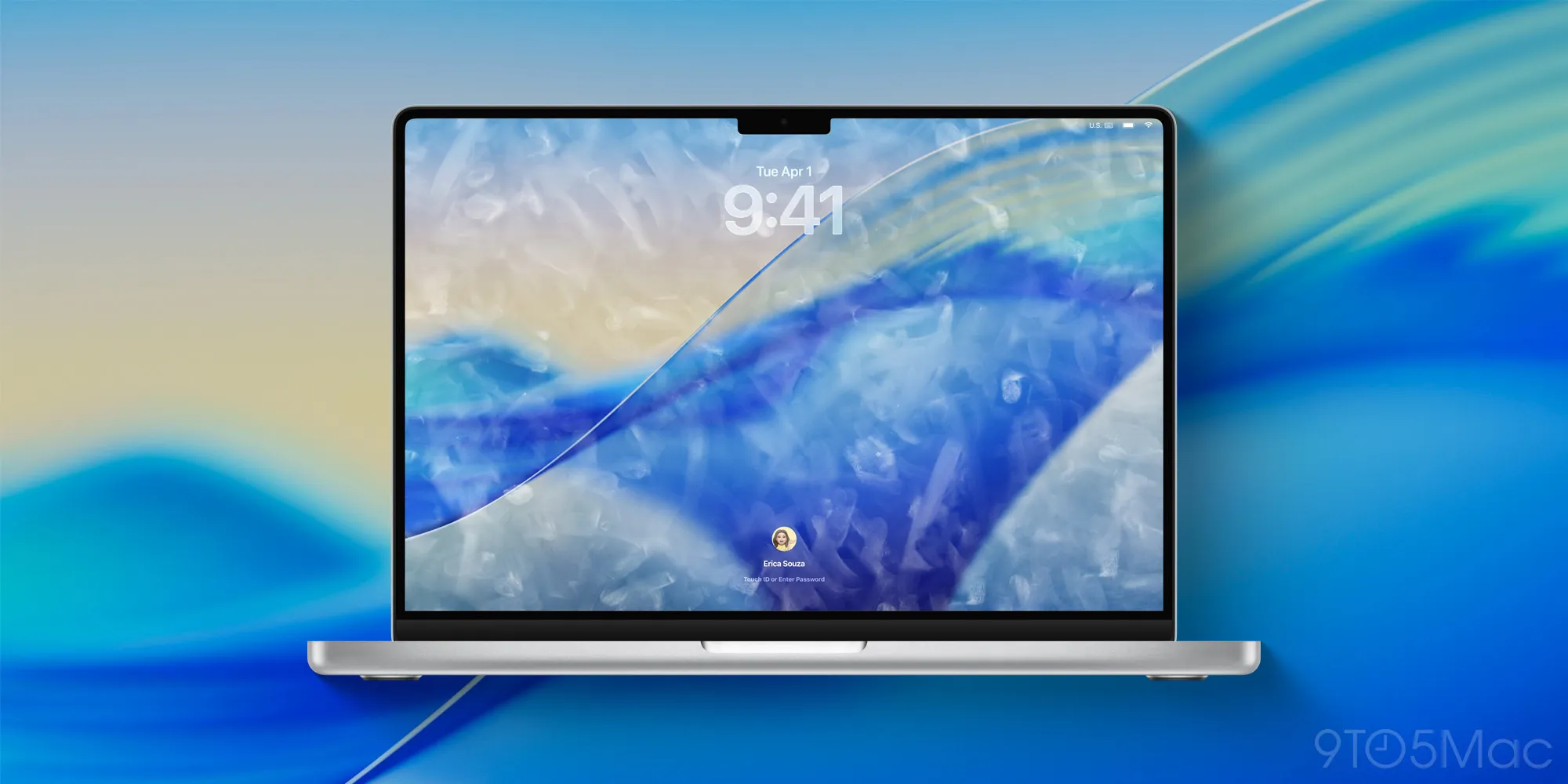
An OLED panel would replace the mini-LED technology Apple uses in today’s high-end MacBook Pro models. OLED pixels create their own light and can turn fully off. That means true black levels, extremely high contrast, and tighter control when bright and dark elements share the same image.
Mini-LED has been very good, particularly for HDR video. But it still uses a backlight divided into zones, which can produce blooming around bright objects against dark backgrounds. Editors working on HDR footage, photographers grading dark scenes, and anyone watching a movie in a dim room can see it. The OLED MacBook Pro should handle those edge cases more cleanly, assuming Apple can meet its usual brightness targets.
There are trade-offs. OLED panels raise familiar questions around burn-in, longevity, and sustained brightness, especially on a computer that displays static menu bars, timelines, tool palettes, and spreadsheets all day. Apple has considerable experience managing OLED on the iPhone, Apple Watch, and iPad Pro, but a desktop-style interface is a different workload. It will need smart panel management, pixel shifting, and conservative brightness behavior behind the scenes. Nobody buying an OLED MacBook Pro that could cost well above $2,000 wants to baby its display like an old plasma television.
That upside is hard to ignore. Apple’s current MacBook Pro already targets creative professionals with reference modes and high-end HDR capabilities. OLED could improve the experience while also allowing a thinner lid assembly. That last point may be central to the whole redesign.
Touch would require macOS to do more than accept taps
The more contentious claim is that the next MacBook Pro will have a touchscreen. Microsoft, Lenovo, HP, Dell, and practically every major Windows PC maker settled this question years ago: touch is useful on a laptop, even if it is not always the primary control method. Apple has resisted because macOS was built around small targets, dense windows, and precise pointer input.
Bloomberg reports that Apple is preparing macOS behavior specifically for touch interaction. The rumored approach is not merely allowing a finger to click an existing button. Tap a menu-bar element, for example, and relevant controls could grow larger. Pinch-to-zoom and rapid scrolling would also be supported in the expected way.
That distinction matters. A touchscreen MacBook Pro with unchanged macOS would feel like putting a doorbell on a filing cabinet: technically functional, vaguely annoying. Apple needs to preserve the speed and information density that makes macOS useful for serious work while making occasional taps feel natural. The trackpad would still be the better tool for detailed editing, but touch could be excellent for reviewing photos, annotating a presentation, scrubbing video, or moving through a dense document while standing at a desk.
Frankly, Apple has already done much of the conceptual work through iPadOS. The challenge is avoiding an awkward halfway house where macOS becomes oversized and simplified in pursuit of touch, yet remains too fiddly to use comfortably by finger. If the OLED MacBook Pro is real, it will be Apple’s most revealing answer yet to the question it has dodged since the first iPad launched: why should customers need two Apple computers to get both touch and desktop software?
A thinner MacBook Pro must not repeat Apple’s worst design era
Reports also suggest a thinner enclosure, a hole-punch camera replacing the display notch, and a Dynamic Island-style software area around that cutout. The latter could show timers, media activity, calls, file transfers, and other live status signals. It sounds plausible, though the Mac has much more screen room than an iPhone, so Apple will have to prove this is useful rather than decorative.
The thinner body deserves more scrutiny. Apple made the 2016 through 2020 MacBook Pro models notably slim, then spent years dealing with complaints around shallow butterfly keyboards, thermal limits, and a miserly port selection. The 2021 redesign was effectively an apology expressed in aluminum: MagSafe returned, HDMI returned, the SD card slot returned, and the keyboard became dependable again.
Apple silicon gives the company more room to slim down without Intel-era heat constraints. But ports remain valuable to the people who buy Pro machines. An OLED MacBook Pro that sacrifices HDMI or SD card access for a few millimeters would be a frustrating case of Apple relearning a lesson it already paid for. Thin is nice. Being able to plug in a camera card at 1 a.m. before a client deadline is nicer.
The M5 chip twist may change the whole sales pitch
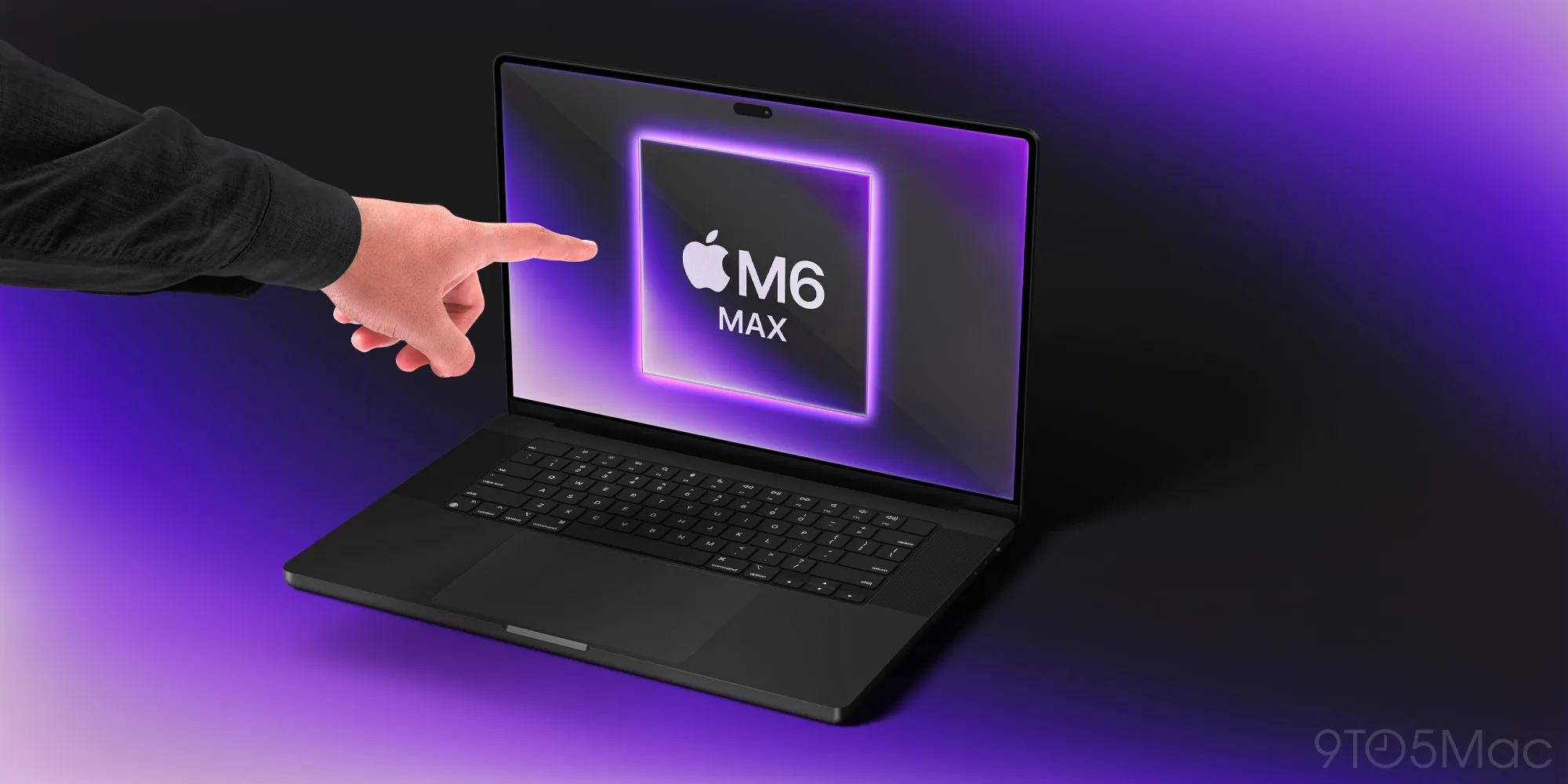
Perhaps the oddest rumor is that this substantial redesign could use M5 Pro and M5 Max processors rather than M6 Pro and M6 Max silicon. The claim is that Apple may offer a standard M6 but skip its higher-tier variants, then put its heavier AI-performance push into the subsequent M7 family.
That would explain why Apple might refresh the MacBook Pro twice in a relatively short window. A March update built around M5 chips could be followed by the OLED MacBook Pro later this year or in early next year, with the same core silicon but a radically different physical package. It is unusual, but Apple has separated design transitions from chip transitions before when its roadmap demanded it.
It also creates a marketing problem. Gurman has floated the possibility of Apple calling the new machines ‘MacBook Ultra,’ a name that would signal a tier above the ordinary Pro lineup. I’m not convinced Apple needs another name. A MacBook Pro with OLED and touch already communicates a premium story. More importantly, branding cannot disguise the fact that buyers who just purchased an M5 Pro model may feel burned if a visually dramatic successor arrives months later.
For now, the timing remains fluid, with late this year and early next year both reportedly in play. The real test is not whether Apple can put an OLED panel in a Mac; the company has the scale and the supply relationships to do that. It is whether the OLED MacBook Pro can make touch on a Mac feel inevitable rather than like a feature it spent fifteen years explaining away.