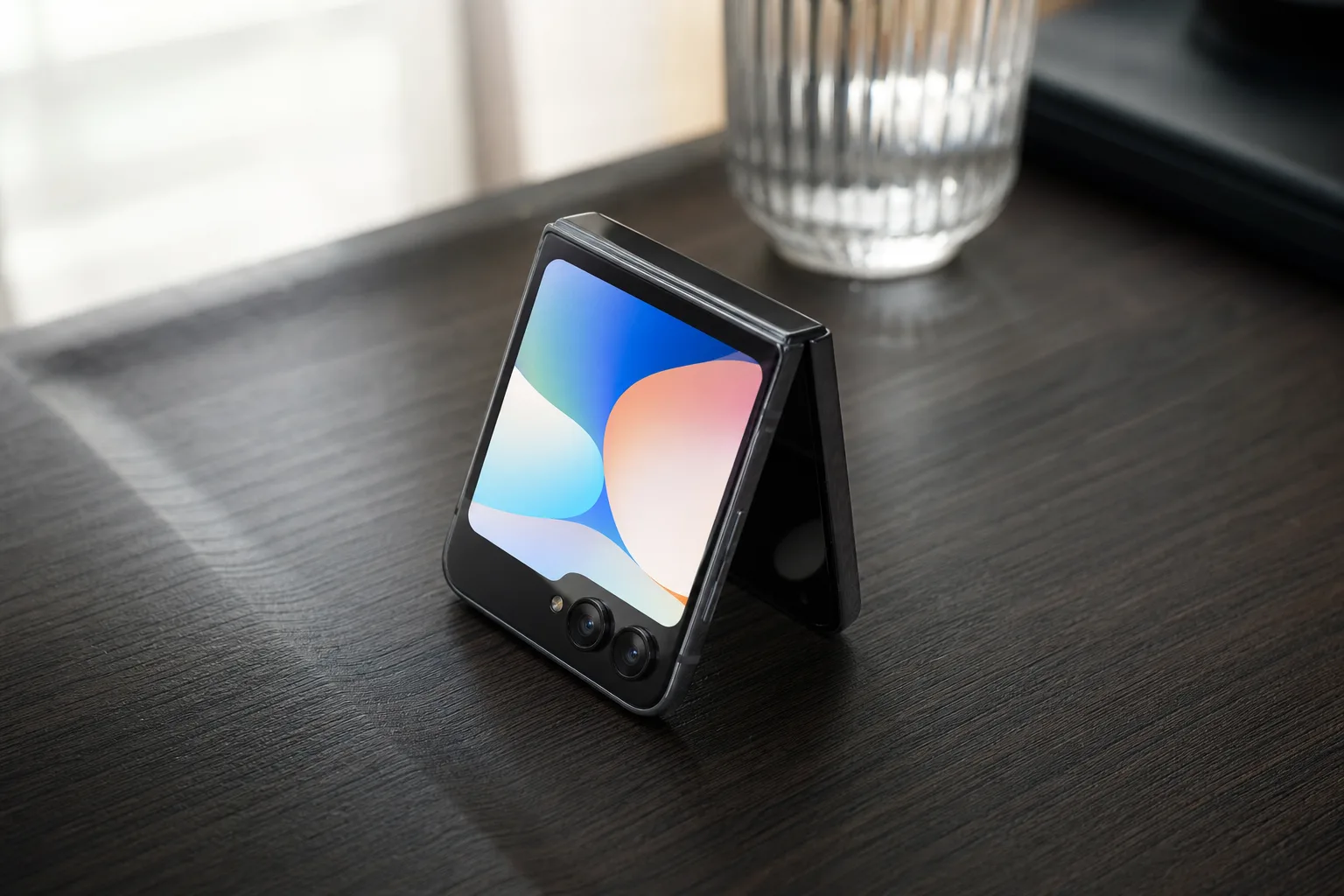
- The Galaxy Z Flip 8 is rumored to retain almost all Flip 7 hardware, apart from a newer Qualcomm processor.
- A near-identical Galaxy Z Flip 8 would test Samsung’s ability to justify a possible €1,299 starting price.
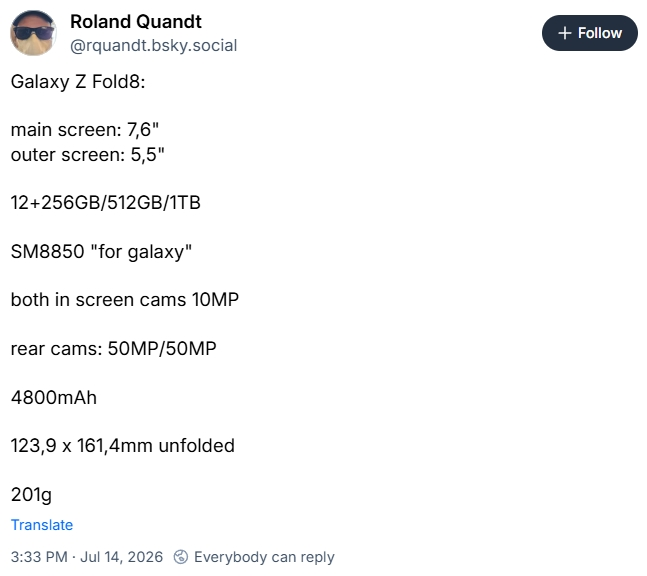
- The Galaxy Z Fold 8 leak suggests a lighter 201g design, 7.6-inch internal screen, and dual 50MP rear cameras.
- Samsung is expected to reveal its next foldables on July 22; that’s when the rumors about pricing and upgrades face their first real test.
Table of Contents
Galaxy Z Flip 8 could be Samsung’s least ambitious foldable yet
Samsung’s clamshell foldable has always sold on a fairly simple promise: a normal-sized smartphone that folds into something you can forget is in your pocket. The Galaxy Z Flip 8, if a fresh leak is accurate, may ask buyers to pay flagship money for that same proposition with scarcely any new hardware attached.
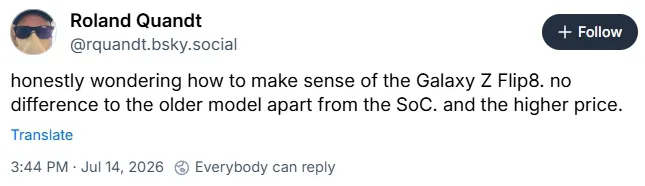
That is the awkward headline from Roland Quandt, a long-running product leaker who posted alleged specifications for Samsung’s incoming foldables ahead of the company’s July 22 launch event. His claim on the Flip is brutally plain: it is effectively the previous model with a newer chipset and a higher price. No redesigned displays. No camera leap. No battery breakthrough mentioned.
Leaks deserve caution, obviously. Retail listings and early spec sheets can be incomplete, and Samsung could still hold back software features or a design change not reflected in a simple configuration list. But if the broad outline holds, the Galaxy Z Flip 8 would represent Samsung taking its most forgiving product line for granted.
The Flip can get away with annual refinement more easily than the book-style Fold. Most people don’t need a folding phone, after all; they buy one because it feels fun and compact. Yet there’s a line between refinement and standing still. Samsung appears perilously close to crossing it.
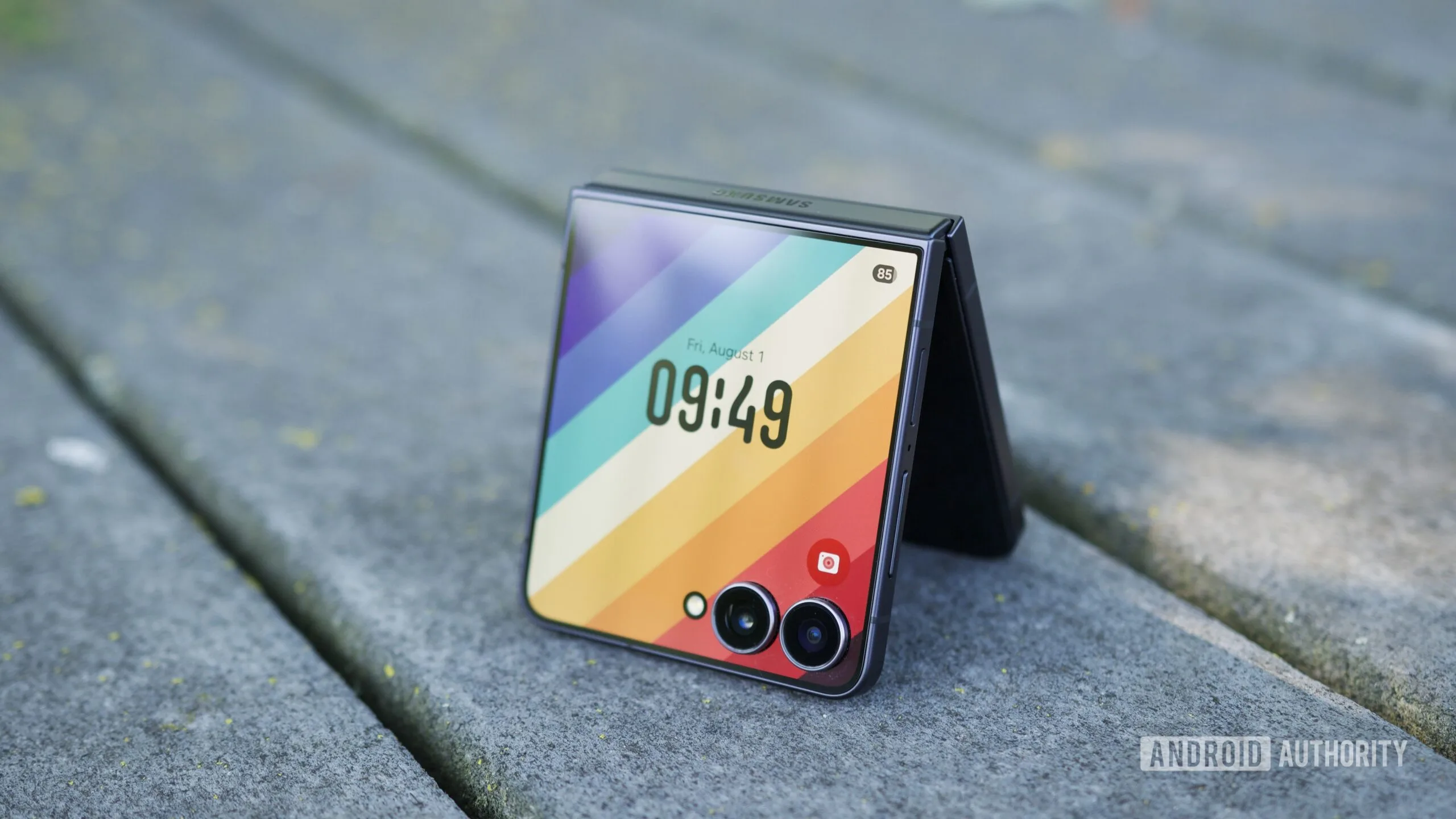
The Galaxy Z Flip 7’s cover display is shown powered on in the available imagery, a reminder that Samsung already made its most visible recent clamshell change by expanding the outer-screen experience.
A new chip is useful, but it is not a reason to upgrade
The rumored processor is likely Qualcomm’s Snapdragon 8 Elite Gen for Galaxy, a chip already present on the Galaxy S26 Ultra. It should improve performance, image processing and perhaps power efficiency. Nobody is going to complain about a faster phone.
But chips are the easiest annual spec upgrade in the business. They arrive on schedule whether a phone maker has solved its bigger problems or not. For a Galaxy Z Flip 8 owner, faster app launches and better benchmark scores are unlikely to outweigh a familiar camera system, familiar panels and what may be the same physical package. You don’t replace a working kitchen because the new refrigerator has a slightly quicker compressor.
Samsung has been here before. The company often reserves its bolder work for alternating generations, while the Flip line has moved in small steps: a revised hinge one year, a bigger cover screen another, modest camera or battery tuning later. That strategy works when the price stays defensible and rivals are not moving quickly.
Rivals are moving quickly. Motorola’s Razr line has become a credible alternative, particularly for buyers who want a larger external display and less of Samsung’s familiar, iterative rhythm. Chinese brands including Oppo and Honor have repeatedly demonstrated that foldables can be thinner, lighter and equipped with less compromised cameras, even if availability varies sharply by market. Samsung still owns the global foldable mindshare, but mindshare has a shelf life.
Quandt’s post about the rumored Galaxy Z Flip 8 specification situation captures the concern: the expectation is a platform update, not a meaningful new device.
The Fold 8 appears to be getting the attention
The Galaxy Z Fold 8 leak at least paints a more tangible picture of a revised device. Quandt’s reported configuration includes a 5.5-inch external display, a 7.6-inch inner panel, 12GB of RAM, and 256GB, 512GB or 1TB of storage. The alleged unfolded dimensions are 123.9 by 161.4mm, while weight could fall to 201 grams.
That last number matters more than it looks. Foldables live or die on the tiny daily irritations: the heft in a jacket pocket, the one-handed reach to the cover screen, the sense that you are carrying a tablet with a hinge bolted to it. At 201 grams, the Fold 8 would land much closer to conventional large phones than older Fold models did. Samsung’s own Galaxy Z Fold product page shows just how much the company has spent years trying to narrow that gap.
The cameras, however, sound restrained. The leak calls for two 50-megapixel rear cameras and 10-megapixel cameras on both the inner and outer displays. Specs alone never tell the whole imaging story, but Samsung’s Fold buyers have long wanted the company to stop treating camera quality as the price of admission for a folding screen. A premium model rumored to start at $1,899 needs to do more than merely avoid embarrassment.
The supplied material also shows Quandt’s social post containing the alleged Fold 8 information.
Pricing will decide how harshly buyers judge the Galaxy Z Flip 8
Price is where this rumor becomes genuinely uncomfortable. Earlier reporting has pointed to a European starting price of €1,299 for the 256GB Flip, or roughly $1,486 when directly converted. Currency conversion is not a US price prediction; regional taxes, carrier promotions and Samsung’s own pricing strategy can make the final number look very different. Still, it establishes the territory Samsung is playing in.
If the Galaxy Z Flip 8 arrives at or above its predecessor’s price without visible hardware progress, Samsung will be relying on trade-in deals and carrier installments to soften the blow. Those tools work, but they also disguise the underlying value proposition. A buyer paying monthly may not feel the full cost today, yet they will notice next year when the device looks almost indistinguishable from what they already own.
My read is that Samsung needs one of two things to make this make sense: a meaningful price cut, or meaningful improvements that have not yet leaked. Better battery life would count. A noticeably stronger main camera would count. A less visible crease, tougher inner glass or a genuinely useful AI feature that runs well on-device might count, though Samsung has used the AI well a little too freely as a substitute for hardware progress.
On July 22, Samsung gets its chance to fill in the blanks. If the Galaxy Z Flip 8 really is an almost unchanged handset with a new chip, the more interesting question will not be whether it is a good phone. It probably will be. The question is whether even Samsung’s most loyal foldable customers still see a reason to trade up.